


- Introduction
- Quick Answer
- 1. Make sure every proposal is answering the same brief
- 2. Compare strategic understanding before you compare cost
- 3. Review scope line by line
- 4. Judge deliverables by usefulness, not by volume alone
- 5. Compare the production process for clarity and risk
- 6. Look carefully at revision terms
- 7. Test the timeline for realism
- 8. Review usage rights and ownership before you choose
- 9. Compare repurposing value and long-term use
- 10. Understand who will actually do the work
- 11. Judge fit based on the level of support you actually need
- 12. Compare value, not just budget
- 13. Watch for proposal red flags
- 14. Use a simple scorecard before making the final decision
- Final Tips
Introduction
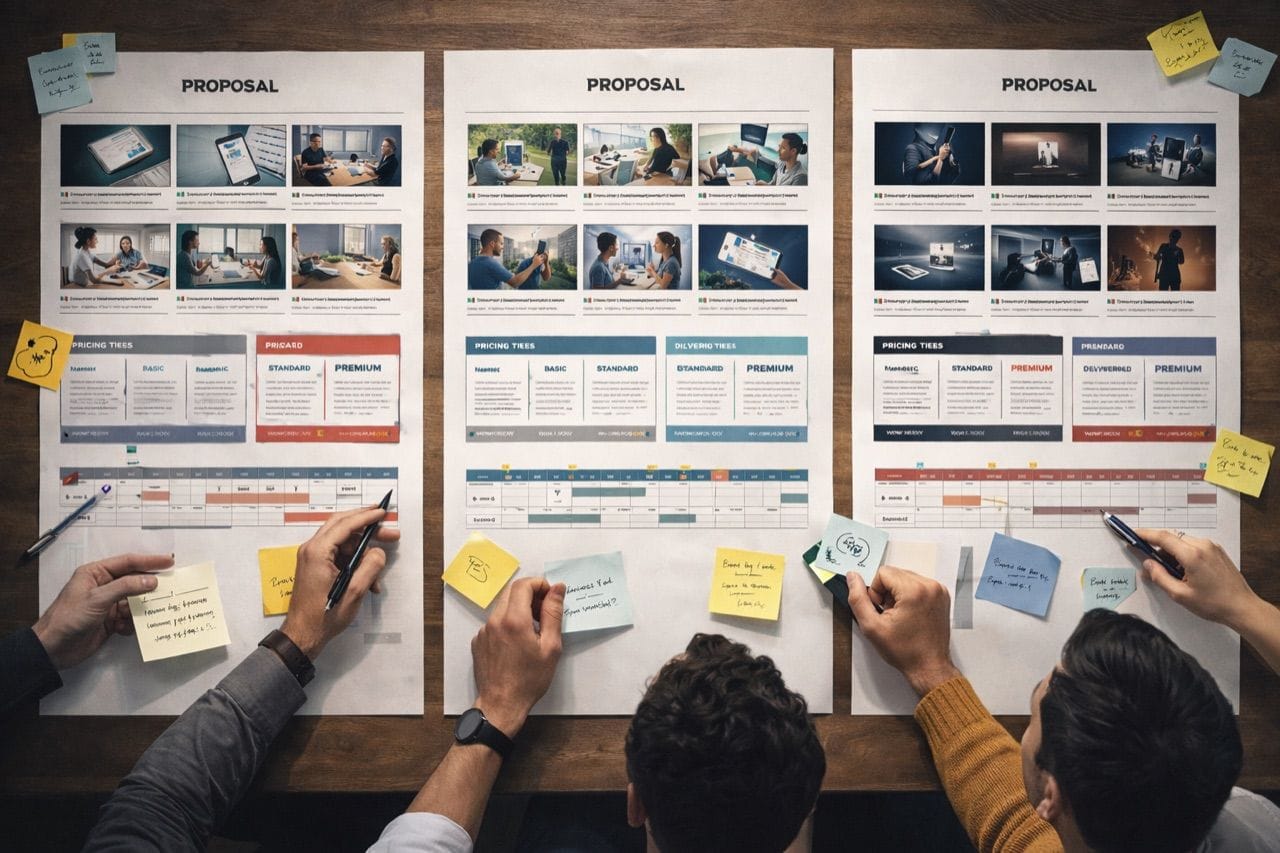
Bay Area startups often get video proposals that look polished but are hard to compare once they move past the headline price. One agency may be selling strategy, another may be selling production quality, and another may be bundling more deliverables without making the tradeoffs clear. The best way to compare proposals is to judge how well each one supports the startup’s real goals, process, and long-term content needs, not just how impressive the deck looks.
Quick Answer
Bay Area startups should compare video production agency proposals by reviewing whether each agency understands the business goal, solves the same problem, defines scope clearly, includes the right deliverables, explains the production process, sets realistic timelines, handles revisions cleanly, defines usage rights, supports repurposing, and offers the best value for the intended outcome. The strongest proposal is usually not the cheapest or the most visually polished. It is the one that gives the startup the clearest path to execution, the fewest hidden gaps, and the most useful video assets for launch, fundraising, sales, hiring, or ongoing growth.
1. Make sure every proposal is answering the same brief
Before comparing agencies, confirm that they are actually solving the same problem.
This is where many startups go wrong. One proposal may assume the company wants one flagship brand video. Another may assume a launch campaign with multiple cutdowns. A third may be building around an ongoing content system. If the assumptions are different, the proposals are not directly comparable, even if they appear to be.
Start by checking whether each proposal is aligned on:
- the primary business goal
- the main audience
- the type of video being recommended
- the number of deliverables
- the intended channels
- what is included and excluded
If those basics do not match, price comparisons will be misleading from the start.
2. Compare strategic understanding before you compare cost
A strong proposal should show that the agency understands why the startup is making this investment now.
That means the proposal should connect the work to real business needs such as:
- a launch
- investor communication
- demand generation
- enterprise sales support
- hiring
- brand positioning
- content repurposing
A weak proposal often jumps straight into production details without showing any understanding of the startup’s stage, audience, or goals.
When reading proposals, ask:
- does this team understand what we are trying to achieve
- does it reflect our actual audience
- does it explain why this approach fits our situation
- does it feel tailored to us or generic enough to send to anyone
The best proposal usually makes the startup feel understood before it starts talking about cameras, edit rounds, or shooting schedules.
3. Review scope line by line
Scope is where the real differences usually show up.
Two proposals may look similar at a glance, but one may include strategy, scripting, and repurposing while the other includes only production and one final edit. That is why startups should compare scope line by line instead of relying on the summary page.
Important areas to review include:
- discovery or kickoff
- messaging support
- creative development
- scripting
- storyboarding
- pre-production planning
- number of shoot days
- crew size
- interview setup
- motion graphics
- editing
- sound design
- color correction
- subtitles or captions
- versioning
- raw footage access
- content repurposing
A lower proposal is not automatically cheaper in practice if the startup will later need to add back the missing pieces.
4. Judge deliverables by usefulness, not by volume alone
More deliverables do not automatically mean a better proposal. Fewer deliverables do not automatically mean a weaker one. The question is whether the outputs match the startup’s actual needs.
A startup should compare deliverables by asking:
- how many final videos are included
- what lengths are included
- whether there are cutdowns for different channels
- whether there are horizontal and vertical versions
- whether the proposal includes alternate hooks
- whether the startup will get website, sales, or social-ready assets
- whether the deliverables are designed for one campaign or ongoing use
A proposal built around one polished hero asset may be right for a narrow launch. A proposal built around a broader content package may be more valuable if the startup needs paid ads, social edits, website modules, and sales follow-up assets.
The best deliverables are the ones the team will actually use, not just the ones that sound impressive in a deck.
5. Compare the production process for clarity and risk
A good proposal should reduce uncertainty, not create more of it.
When startups compare proposals, they should look closely at how clearly each agency explains its process. Strong proposals usually make the path feel organized from kickoff to final delivery.
Review whether the proposal explains:
- how discovery works
- who shapes the creative direction
- how scripting is handled
- how production planning is managed
- what the startup needs to provide
- how feedback is collected
- how post-production is structured
- how approvals are managed
- what happens if timing shifts
For most startups, production clarity matters almost as much as creative quality. A great concept is much less valuable if the process around it feels vague or fragile.
6. Look carefully at revision terms
Revision language can completely change the value of a proposal.
Two agencies may offer similar pricing, but one may include clear rounds of feedback while another may leave revision boundaries vague. That creates risk, especially for startups with multiple stakeholders.
Compare each proposal on:
- number of revision rounds
- what counts as one round
- whether feedback must be consolidated
- whether script revisions are separate from edit revisions
- how motion or graphics changes are treated
- what happens if the startup changes direction late
- whether reshoots are included or excluded
The best revision structure is not necessarily the most open-ended one. It is the one that sets expectations clearly enough to keep the project moving without confusion.
7. Test the timeline for realism
Fast timelines are appealing, but unrealistic timelines create problems later.
Startups should compare proposals by asking whether the production schedule matches the actual complexity of the work. A short timeline may sound attractive until the company realizes it assumed same-day approvals, no creative changes, and no delays in scheduling or asset collection.
Check whether the proposal accounts for:
- discovery and alignment
- scripting and review
- scheduling and production prep
- filming
- editing
- revision rounds
- final delivery before the actual launch date
The best timeline is not the shortest one. It is the one the startup can realistically support with its internal team, deadlines, and review process.
8. Review usage rights and ownership before you choose
This is one of the easiest areas to overlook and one of the most expensive to get wrong.
A startup should know exactly what rights it receives under each proposal. That includes not just the final edits but also the ability to use the work across channels and campaigns.
Important points to compare include:
- ownership of final videos
- access to raw footage
- licensing terms for music, stock, or voiceover
- paid and organic usage rights
- platform restrictions
- time limits on usage
- whether future cutdowns or re-edits are allowed
A proposal can seem affordable until the startup realizes it cannot use the content the way it expected. The broader the startup’s distribution plan, the more important this section becomes.
9. Compare repurposing value and long-term use
Bay Area startups often get the most value from video when one production cycle supports multiple business needs.
That is why proposals should be judged partly on reuse value. A smart agency should show how the work can extend beyond the first post, page, or campaign.
Look for whether the proposal supports:
- short-form cutdowns
- founder clips
- website modules
- testimonial snippets
- sales follow-up assets
- paid ad versions
- email assets
- future campaign reuse
A proposal that treats the assignment as a one-time video may still be right for a narrow project. But if the startup wants more leverage from the investment, repurposing should be part of the comparison.
10. Understand who will actually do the work
The people behind the proposal matter.
A startup should understand whether the people who impressed them in the pitch will also be involved in the actual project. Some agencies put senior people into the sales process but hand execution to a different team later.
Compare proposals by clarifying:
- who will lead the engagement
- who will manage communication
- who will direct production
- who will handle editing
- whether freelancers are involved
- how handoffs work across strategy, production, and post
A strong proposal should make the working model feel clear. That gives the startup a better sense of responsiveness, accountability, and project quality.
11. Judge fit based on the level of support you actually need
Not every startup needs the same kind of video partner.
Some need a production team that can simply execute a well-defined brief. Others need a partner that can help shape messaging, sequence content across the funnel, and recommend what to make first.
When comparing proposals, ask whether each agency is acting more like:
- a production vendor
- a creative partner
- a strategic content partner
- an ongoing video operator
A startup that needs help with prioritization should be careful about choosing a team that only excels at execution. A startup with a very clear plan should be careful about overpaying for strategy it does not really need.
The best proposal matches the level of support the company actually requires.
12. Compare value, not just budget
Price matters, but price only becomes meaningful after the startup understands scope, process, and usefulness.
A proposal should be judged in terms of value by asking:
- what useful outputs are we actually getting
- how much internal burden will this create or remove
- how much reuse value does this proposal create
- how much strategic support is included
- how much production risk does it reduce
- how likely is it to produce assets we can use across more than one moment
Sometimes the higher proposal is the better decision because it creates more usable assets, cleaner execution, and fewer expensive surprises. Sometimes the lower proposal is the better decision because it is tightly scoped and aligned to a simple need.
The right question is not which proposal costs less. It is which proposal creates the strongest fit for the goal.
13. Watch for proposal red flags
Certain patterns should make a startup slow down and ask more questions.
Common red flags include:
- vague scope
- generic language
- unclear deliverables
- no clear approval process
- unrealistic timelines
- weak rights language
- unclear revision rules
- no repurposing plan
- polished presentation with little strategic logic
- pricing that seems low because important items are missing
A red flag does not always mean the agency is wrong for the project. It does mean the startup should not move forward without clarifying the gap.
14. Use a simple scorecard before making the final decision
The easiest way to compare proposals well is to score them using the same framework.
A practical startup scorecard can include:
- business understanding
- scope clarity
- deliverable usefulness
- process strength
- revision clarity
- timeline realism
- rights clarity
- repurposing value
- team structure
- communication fit
- strategic fit
- price-to-value fit
This helps the startup avoid choosing based only on presentation style, first impressions, or chemistry from one call.
It also makes the decision easier to defend internally when stakeholders disagree.
Final Tips
Bay Area startups should compare video production proposals by looking for clarity, fit, and business usefulness rather than presentation polish alone. The best proposal is the one that solves the right problem, defines the work cleanly, protects the startup from hidden gaps, and creates the most useful assets for the company’s actual goals.