


- Introduction
- Quick Answer
- 1. Start with the goal of the media kit
- 2. The minimum viable media kit checklist
- 3. One-page overview that sells the narrative fast
- 4. Bios that match real media needs
- 5. Book messaging assets that make you easy to feature
- 6. Visual assets that actually get used
- 7. Topic angles designed for Silicon Valley media
- 8. Interview assets that make booking frictionless
- 9. Proof and credibility without sounding promotional
- 10. Media-ready links and assets library
- 11. Booking logistics that reduce back-and-forth
- 12. Silicon Valley specific add-ons that increase pickup
- 13. Common mistakes that make kits look amateur
- Final Tips
Introduction
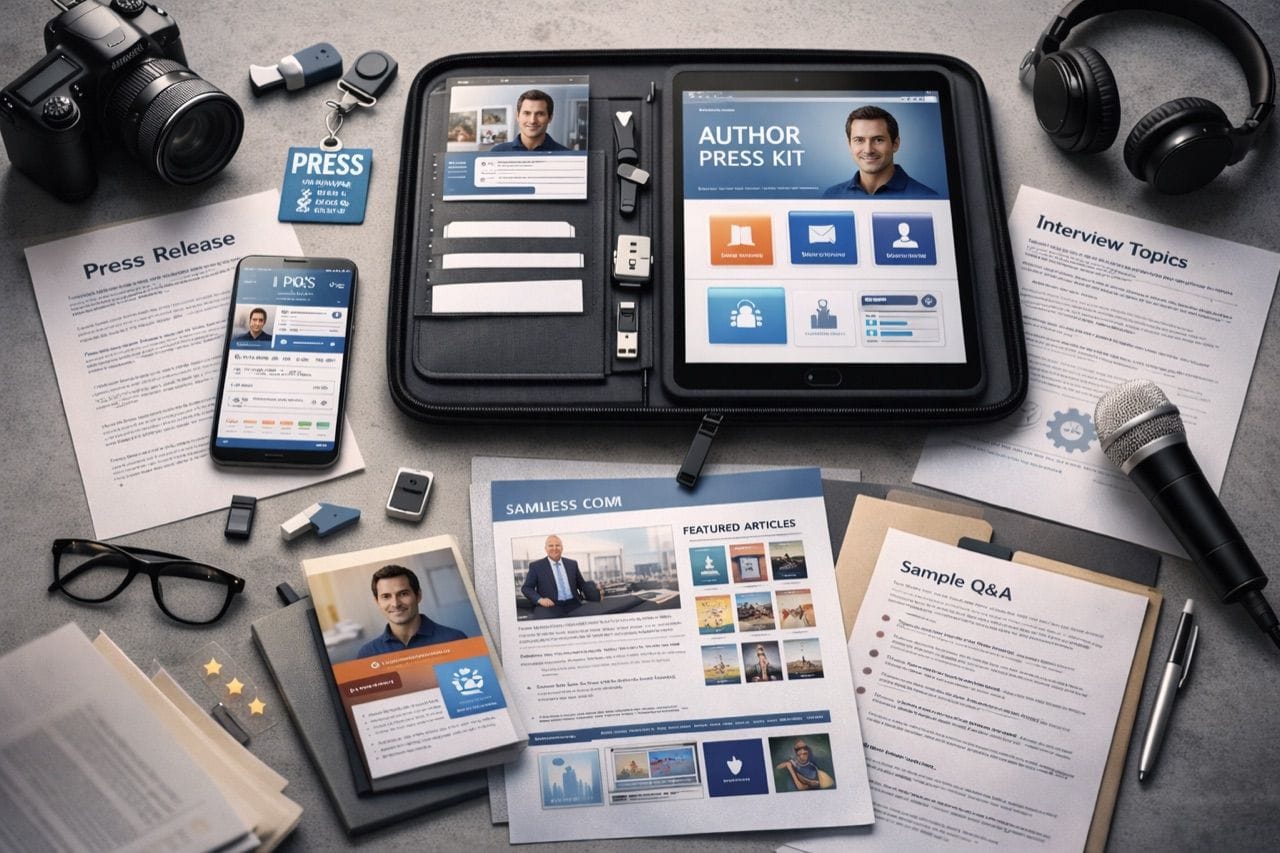
A complete author media kit makes it easy for podcasts, conference organizers, reporters, and newsletter editors to say yes quickly. In Silicon Valley, people move fast and judge credibility fast, so your kit needs to be clear, skimmable, and instantly useful. This guide lays out exactly what to include, how to package it, and what to avoid.
Quick Answer
A complete author media kit should include a one-page overview, short and long bios, a book one-liner and description, approved headshots, key talking points, proof of credibility, and ready-to-copy assets for press and event organizers. Build it so someone can understand your positioning in 60 seconds, grab visuals in 10 seconds, and book you in one email. The best kits also include topic angles, interview questions, and clear logistics so media teams do not have to chase you.
1. Start with the goal of the media kit
Your media kit is not a portfolio. It is a conversion tool for attention.
A strong kit helps the reader do three things quickly:
- Understand who you are and what you speak about
- Decide if you are credible and relevant for their audience
- Copy assets and publish without extra work
In Silicon Valley and beyond, anything that reduces coordination wins.
2. The minimum viable media kit checklist
If you only build one version, build this.
Include:
- One-page media kit overview (PDF)
- Short bio and long bio
- Book one-liner, short description, and full description
- Approved author headshots
- Book cover image and a few supporting visuals
- Links to your site and primary social profiles
- Contact info and booking process
This gets you in the door. The next sections are what makes it feel premium and publish-ready.
3. One-page overview that sells the narrative fast
This is the first page people will scan. Make it clean and skimmable.
Include:
- Your name and title line (who you are in one sentence)
- What your book is about in one sentence
- Who your book is for
- Three signature topics you can speak on
- Proof points (short list)
- Press and speaking highlights (if you have them)
- Booking contact and response time expectations
Keep the overview simple. If it reads like marketing copy, it loses trust.
4. Bios that match real media needs
Most kits fail because they only include one bio and it is the wrong length.
Include these bios:
- One-sentence bio: for event pages and intros
- Short bio (80 to 120 words): for podcasts and newsletters
- Long bio (200 to 300 words): for conferences and press features
Bio rules for founders and executives:
- Lead with your positioning, not your full history
- Include one credibility anchor (role, company, domain expertise)
- Add one humanizing line if appropriate (optional)
- Keep it neutral, not overly promotional
5. Book messaging assets that make you easy to feature
Media needs copy they can reuse. Give them clean language.
Include:
- Book title, subtitle, and publication date
- One-line hook (the promise)
- 50-word description
- 150-word description
- Three key takeaways
- Three ideal reader personas
- Comparable audience categories (who should care)
If your book is not published yet, label the status clearly: proposal stage, drafting, or releasing soon.
6. Visual assets that actually get used
Your kit should be plug-and-play for thumbnails, event banners, and articles.
Include:
- 2 to 4 headshots with consistent lighting
- A horizontal headshot option for banners
- Book cover image in high resolution
- Optional: one or two brand-safe lifestyle images
- Optional: one or two simple graphics that summarize your framework
Simple guidance helps:
- List the preferred photo credit line
- Specify what is allowed: cropping, color adjustment, overlay text
If someone cannot find the right image in 10 seconds, they will use the wrong one or skip you.
7. Topic angles designed for Silicon Valley media
Silicon Valley outlets, podcasts, and newsletters respond to clear angles, not generic leadership topics.
Include:
- 5 to 10 talk titles that match your book
- 3 to 5 topic angles tied to current tensions in the market
- Who the talk is for (founders, product leaders, GTM, investors, execs)
- What the audience will walk away with
Strong topic angles sound like:
- a decision tension, not a vague theme
- a promise, not a slogan
- a real constraint, not aspirational advice
8. Interview assets that make booking frictionless
This is where your kit becomes a scheduling magnet.
Include:
- 10 to 15 suggested interview questions
- 5 punchy talking points that are safe to quote
- 3 short stories you can tell repeatedly (with clear lessons)
- Topics you will not discuss (if any)
- A short list of sensitive areas that require anonymization
If you want to appear on more podcasts, this section is high leverage.
9. Proof and credibility without sounding promotional
Credibility matters, but it must feel clean and verifiable.
Include:
- Selected metrics that are true and relevant (optional)
- Notable roles and leadership responsibilities
- Press mentions, podcast appearances, or speaking engagements
- Testimonials from recognizable operators (optional)
- Case studies or outcomes that are safe to share (optional)
- Awards and certifications only if they matter to your reader
Rule: keep proof points short and concrete. Avoid exaggerated claims.
10. Media-ready links and assets library
Make a single place where everything lives.
Include a folder that contains:
- Headshots in multiple sizes
- Book cover image files
- Logos or brand elements if relevant
- One-page PDF overview
- A text file with your bios and book descriptions for easy copy-paste
People should not need to open a PDF just to copy your bio.
11. Booking logistics that reduce back-and-forth
This section is often ignored, but it is a huge reason people drop.
Include:
- Your preferred contact method
- Typical response time
- Time zone and location
- Availability windows
- Speaking and interview formats you support (in-person, remote)
- Audio and video requirements
- Any honorarium or travel expectations if relevant
- A simple note on how far in advance you prefer to book
If you have a team, include a direct coordinator contact.
12. Silicon Valley specific add-ons that increase pickup
These are optional, but very effective for Bay Area media.
Consider adding:
- A short founder story timeline with 3 key inflection points
- A tight “market thesis” paragraph that fits newsletter formats
- A list of communities or conferences where your audience gathers
- One or two charts or frameworks that summarize your viewpoint
- A short “why now” paragraph tied to current tech cycles
These assets help others frame you as timely without forcing you into hype.
13. Common mistakes that make kits look amateur
Avoid these and your kit will feel instantly more credible.
- One bio that is too long and too self-focused
- Headshots that look like a casual selfie
- No clear topics or angles, only a generic speaker list
- Overly salesy language that triggers skepticism
- Missing contact info or unclear booking path
- A kit that requires too much clicking to find assets
- Unsupported claims or vague credibility statements
A kit should feel like a professional package, not a pitch deck.
Final Tips
Build your media kit so someone can book you without asking follow-up questions: clear positioning, ready-to-copy text, usable visuals, and logistics that remove friction. In fast-moving tech and media environments, the best kit is the one that makes you the easiest credible choice. Keep it updated quarterly, and treat it like an asset library, not a one-time PDF.