


- Introduction
- Quick Answer
- 1. What a full content and copywriting system actually includes
- 2. Common pricing models San Francisco startups see
- 3. Typical cost ranges by startup stage
- 4. The factors that push costs up or down
- 5. How San Francisco startups can budget using deal value
- 6. Evaluating proposals and avoiding common pricing traps
- Final Tips
Introduction
When San Francisco founders ask, “What does a full content and copywriting system actually cost?” they are usually asking two questions: “What am I paying for?” and “How many good deals does this need to produce to be worth it?” Prices online range wildly, from a few thousand dollars per month to agency retainers that look like another senior hire. The reality sits somewhere in between and depends heavily on scope, stage, and how serious you are about tying work to pipeline.
Quick Answer
For San Francisco startups, a full content and copywriting system that includes strategy, planning, core assets, ongoing production, and repurposing typically costs between $8,000 and $25,000 per month with a specialized agency or embedded partner. Early stage and tightly scoped systems can start around $5,000 to $8,000 per month, while more mature teams that invest in multi channel, multi ICP content often budget $20,000 to $40,000 per month. The exact number depends on scope, complexity, and whether you are paying for pure execution or a full strategy plus writing plus enablement system that is tied to pipeline and revenue.
1. What a full content and copywriting system actually includes
Costs only make sense when you define what you are buying. A full system usually includes four layers.
- Strategy and architecture
ICP and buyer journey mappingNarrative, positioning, and key messagesPillar and supporting topic map and content plays - Core asset build out
Pillar articles, key landing pages, and core product or solution pagesHigh leverage sales assets such as case studies, one pagers, and comparison pagesEmail nurture and outbound frameworks - Ongoing production and repurposing
A steady cadence of new articles, pages, emails, and updatesRepurposing into social, sales enablement, and campaign collateralIteration on assets that are performing well - Measurement and optimization
Basic analytics and reporting on what is being used and what is driving meetingsQualitative feedback loops from sales and foundersQuarterly adjustments to strategy and roadmap
If a proposal only covers a fixed number of blogs per month without these layers, you are not looking at a full system. You are looking at a content output package, which should cost less but will also do less for pipeline.
2. Common pricing models San Francisco startups see
Most San Francisco startups encounter some mix of these models.
Project based
- One time projects such as positioning work, website revamps, or a defined set of assets
- Typical range for a serious project: $15,000 to $60,000 or more, depending on depth and number of pieces
- Good for a reset or launch, but you still need an ongoing plan afterward
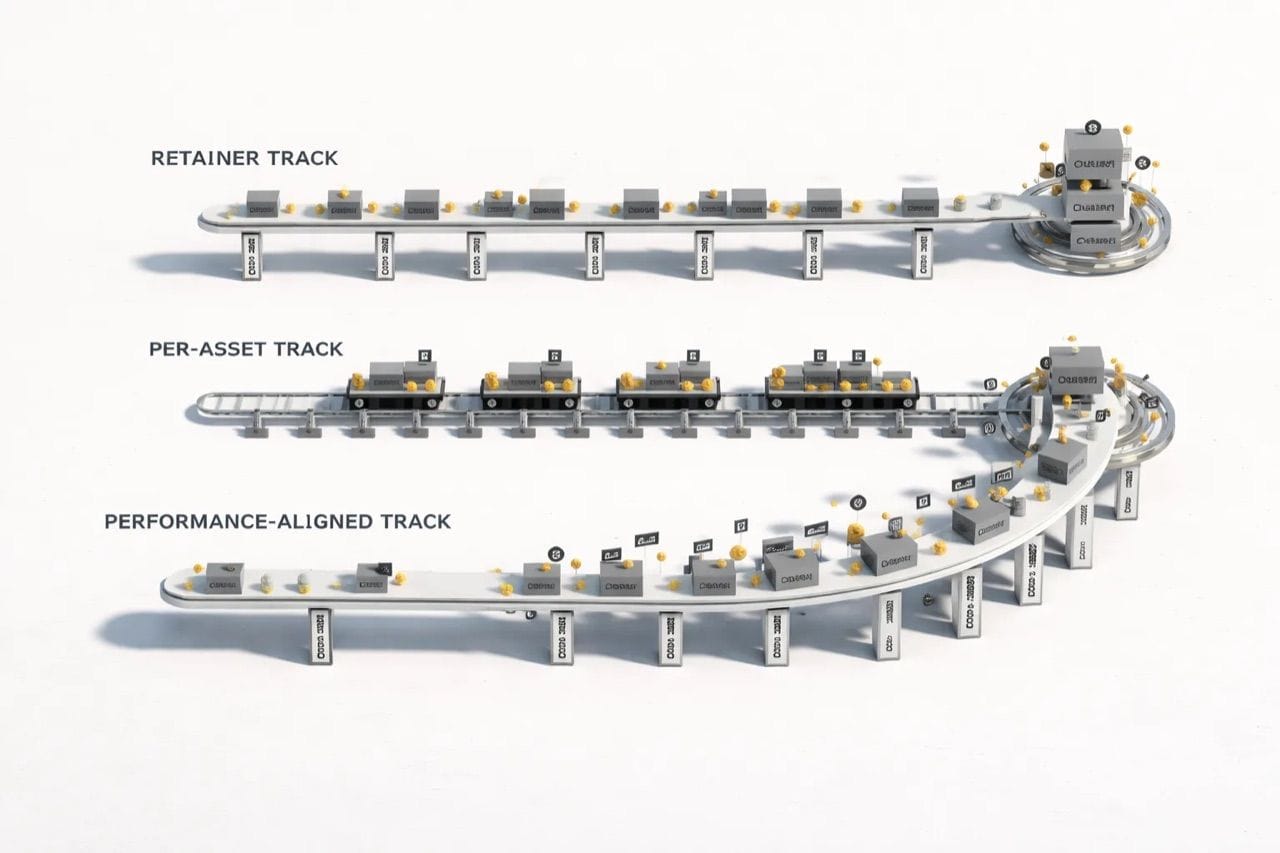
Monthly retainer
- A set number of strategic hours plus assets per month
- Typical range for a full system with a boutique agency: $8,000 to $25,000 per month
- Often structured around lanes such as strategy, SEO, copy, and sales enablement
Hybrid model
- Initial strategy and build out project over 2 to 3 months with heavier investment
- Then a reduced but steady retainer for maintenance and iteration
- Common pattern: one higher cost quarter followed by a lower but consistent monthly spend
For a true system, many San Francisco teams end up with a hybrid setup: a front loaded build followed by a retainer that keeps assets and messaging current.
3. Typical cost ranges by startup stage
These are ballpark ranges, not hard rules, but they reflect what many San Francisco teams end up budgeting.
Early stage (pre seed to seed)
- Goals: clarify narrative, build a credible website, support a few core plays such as fundraising and early sales
- Typical setup:
Positioning and messagingWebsite copy for three to six key pagesTwo to four pillar or flagship content pieces - Ballpark:
Project: $15,000 to $40,000Retainer: $5,000 to $10,000 per month for a lighter system with fewer assets
Founders often still write or co write some content. You pay external partners to get the scaffolding right and build the first high leverage pieces.
Growth stage (Series A or B)
- Goals: create a repeatable, measurable content engine tied to pipeline and revenue
- Typical setup:
Full content roadmap based on ICP and funnelRegular production, for example two to four substantial assets per monthSales enablement content plus nurture sequencesQuarterly reviews and adjustments - Ballpark:
Retainer: $8,000 to $25,000 per month, depending on volume and complexity
Here you are paying for both thinking and doing. That usually includes strategy, copy, and ongoing collaboration with sales and revenue operations.
Later stage (Series C and beyond)
- Goals: support multiple segments and products, run campaigns, and maintain a large asset library
- Typical setup:
Always on content across several channelsMultiple ICPs and regionsMore sophisticated measurement and experimentation - Ballpark:
Retainer or program budget: $20,000 to $40,000 or more per month, sometimes combined with in house headcount
At this stage, external partners often complement a larger internal team rather than replace it.
4. The factors that push costs up or down
Several levers have a big impact on cost.
- Scope and volume
How many new assets per monthWhether you are buying a full library such as pillars, case studies, and emails, or just net new posts - Complexity and domain depth
Technical fields such as security, AI infrastructure, biotech, or fintech demand more research and higher caliber writersMulti stakeholder interviews and legal or compliance review add time and cost - Channels covered
Website and blog only is cheaper than adding email nurture, outbound sequences, and in product messagingPaid media creative and landing pages add another layer - Level of strategic involvement
Pure writing from your existing brief is cheaperHelping build ICPs, positioning, and funnel architecture costs more but can make the system work much better - Speed and revision style
Compressed timelines, extensive stakeholder feedback, and frequent scope changes all increase cost
If two proposals have very different prices, it is often because one assumes a narrow execution only scope and the other assumes deeper strategy and multi channel support.
5. How San Francisco startups can budget using deal value
Instead of viewing costs in isolation, tie them to your deal economics.
A simple approach:
- Know your average annual contract value or typical first year value.
- Estimate a conservative impact for the system, for example one to three extra closed won deals per quarter or better conversion rates in one segment.
- Compare that to your proposed monthly or quarterly investment.
Example:
- ACV: $40,000
- Content system investment: $15,000 per month, which is roughly $45,000 per quarter
- If the system helps close two extra deals per quarter, that is $80,000 in additional revenue against $45,000 in cost
For many San Francisco teams, the key question becomes: Is it realistic that a fully built and well run content and copy system could help us win one to three more good deals per quarter. If yes, the investment is easier to defend.
6. Evaluating proposals and avoiding common pricing traps
When proposals arrive, look beyond the headline numbers.
What to look for
- Clear scope and outcomes
Exactly which assets you will get and how many per month or quarterHow those assets map to your funnel and sales motions - Evidence of impact
Case studies that mention pipeline, opportunities, win rate, or cycle length, not just traffic and rankings - Access to senior talent
Who writes and who leads strategyHow often you will interact with them - A realistic ramp
Time for discovery and positioning before heavy productionMilestones for first assets, first usage in sales, and first learnings
Red flags
- Very low retainers that promise high volume, for example many long form pieces at prices that only support surface level writing
- Fixed packages with no discovery or tailoring to your ICP and funnel
- No mention of sales enablement, measurement, or collaboration with revenue operations
- Proposals that emphasize word count instead of asset value
If you see these patterns, treat the cost as a sign that you are buying content output and not a true system.
Final Tips
For San Francisco startups, the right question is not “What is the cheapest way to get content” but “What level of investment in a content and copywriting system makes sense given our deal size, growth goals, and internal capacity.” A focused and well run system in the $8,000 to $25,000 per month range will often outperform scattered and cheaper content efforts because it is tied to ICPs, funnels, and real sales motion. Start with a clear scope and a realistic pilot, measure against opportunities and deals, and scale only after you see the system working.