


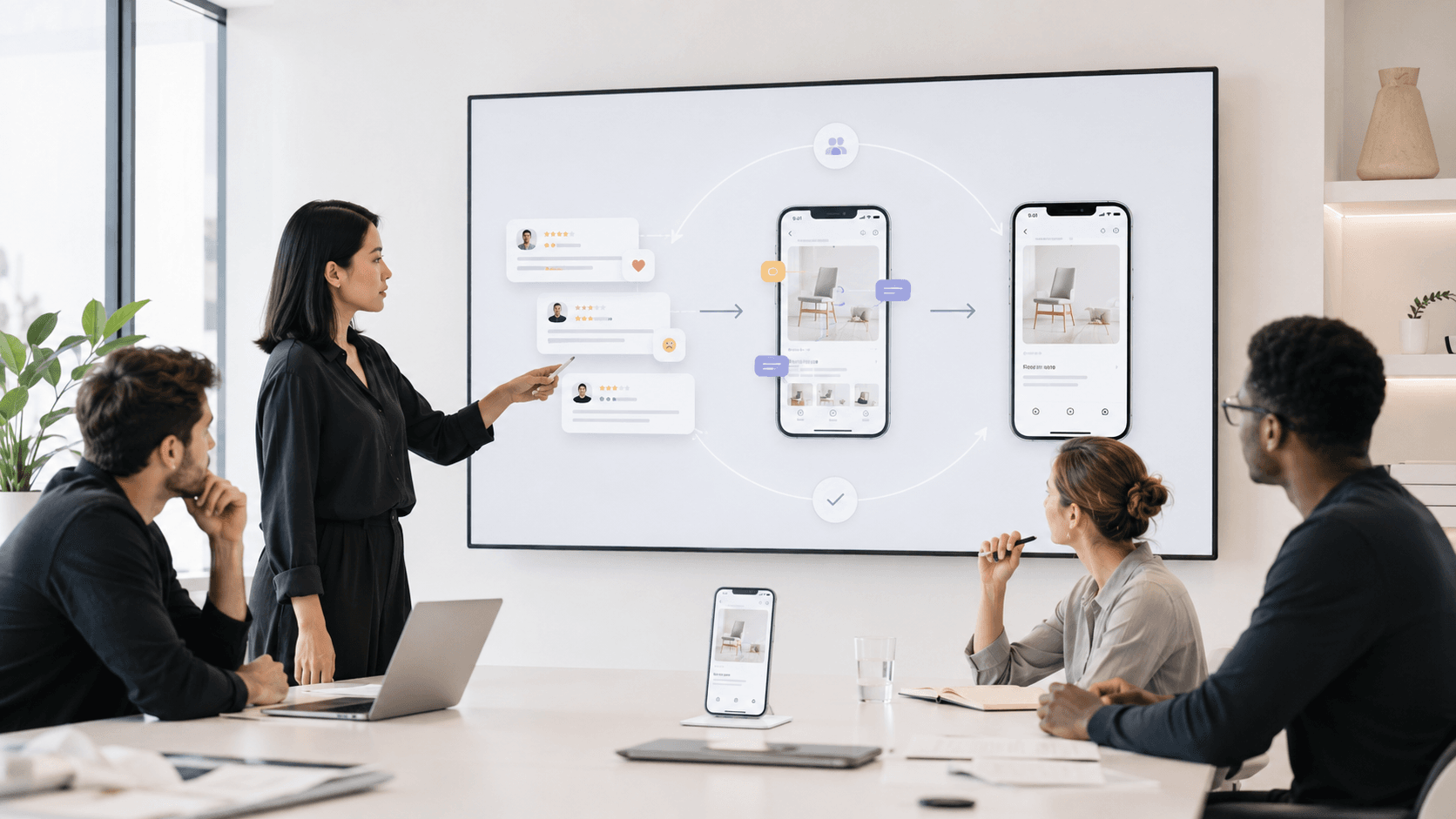
Understanding your users’ needs and experiences is crucial to building a high-quality app that delivers value over time. Collecting user feedback focuses on identifying opportunities to enhance features, improve usability, and ensure that the app aligns with user expectations. Incorporating feedback systematically allows development teams to make informed decisions, prioritize enhancements, and anticipate future needs.
Effective feedback integration requires a structured approach throughout the entire development lifecycle. This includes pre-launch testing, beta programs, in-app surveys, usage analytics, and post-launch monitoring. Collecting feedback is only the first step. Then, acting on it strategically ensures that user insights translate into meaningful product improvements. Ankord Media specializes in embedding user feedback into development cycles to create apps that are not only functional but also intuitive and engaging for end users.
Listening to users continuously provides developers with insights that can drive innovation and reduce risk. It prevents costly mistakes, reduces churn, and creates loyal users who feel their opinions matter. Feedback also helps teams measure the effectiveness of new features, understand usability bottlenecks, and prioritize future enhancements based on actual user behavior.
Methods for Gathering User Feedback
Before feedback can improve an app, it must be collected effectively. Understanding which methods to use, how to structure them, and when to deploy them is key to obtaining actionable insights.
Some of the most effective methods include:
- Surveys and Polls: Structured questions sent to users via email, in-app prompts, or web forms to gather quantitative and qualitative insights.
- In-App Feedback Widgets: Allow users to submit suggestions, bug reports, or feature requests directly within the app.
- Beta Testing Programs: Early-access programs for selected users to test new features and provide detailed feedback before public release.
- User Interviews and Focus Groups: One-on-one or small group discussions to dive deeper into user motivations, frustrations, and desires.
- Analytics and Behavioral Data: Monitor how users interact with the app to identify pain points and usage patterns that may not be captured through direct feedback.
Collecting feedback through multiple channels ensures a well-rounded perspective. Surveys provide broad insights, while interviews reveal the emotional and behavioral context behind user actions. Analytics complement these methods by highlighting issues users may not articulate. Ankord Media integrates all these approaches to create a continuous feedback loop that informs every phase of development.
Step-by-Step Process for Integrating Feedback into Development
After collecting feedback, the next challenge is to make it actionable. A structured approach ensures feedback leads to meaningful app improvements without overwhelming development teams.
Steps include:
- Categorize Feedback: Group responses into themes such as bugs, feature requests, usability issues, or enhancement ideas.
- Prioritize Based on Impact: Determine which feedback items affect the largest number of users or have the most significant effect on usability.
- Translate Feedback into Requirements: Convert suggestions into actionable development tasks, user stories, or design improvements.
- Plan Iterative Updates: Integrate prioritized changes into sprints or release cycles to ensure timely improvements.
- Validate Changes with Users: Test updates with the same user base to confirm that adjustments address the intended issues.
- Document Learnings: Record feedback insights and solutions to inform future releases and guide product evolution.
This step-by-step approach ensures that feedback is not ignored or lost in the development process. Ankord Media applies this methodology across all client projects, enabling apps to evolve in alignment with user expectations while maintaining high quality and performance.
Best Practices for Acting on Feedback
Collecting feedback is only half the battle. Acting effectively requires prioritization, communication, and strategic decision-making to maximize the value of insights while maintaining development efficiency.
Best practices include:
- Set Clear Objectives: Identify which aspects of user experience or functionality you aim to improve with feedback.
- Communicate Changes: Let users know their feedback has influenced app improvements, which increases trust and engagement.
- Balance Feedback with Vision: Not every suggestion aligns with your app’s long-term goals. Evaluate feedback critically.
- Maintain Continuous Loops: Regularly update users and collect feedback on recent changes to foster ongoing engagement.
- Leverage Data Analytics: Use quantitative data to validate anecdotal feedback and ensure changes have measurable impact.
By following these best practices, developers ensure that user feedback directly contributes to app quality and aligns with overall business objectives. Ankord Media prioritizes these practices to maintain user satisfaction while improving app functionality and experience.
Building a Culture of User-Centered Development
Integrating feedback successfully also requires fostering a culture that prioritizes user input throughout the organization. Teams that embrace user-centered development continuously improve their products based on actual user needs rather than assumptions.
Key approaches include:
- Encouraging cross-functional collaboration between designers, developers, and product managers.
- Instituting regular review cycles that incorporate feedback analysis into planning sessions.
- Using feedback metrics as part of performance evaluations to incentivize responsiveness.
This culture ensures that every member of the team considers the user experience as central to decision-making. Ankord Media trains client teams to adopt this mindset so that feedback-driven development becomes a long-term strategy rather than an ad hoc process.
Long-Term Benefits of Feedback Integration
Effectively integrating feedback yields more than just immediate bug fixes. Apps that evolve in response to user needs experience higher retention, better ratings, and stronger market positioning. Feedback-driven development supports faster iteration, reduces risk of costly errors, and cultivates loyal users who feel invested in the product.
Strategic feedback integration also informs product roadmaps, helping companies plan future features based on validated user insights. Over time, this approach reduces technical debt, improves app stability, and ensures that the app remains competitive as technology and user expectations change.
Partnering with Ankord Media allows businesses to fully leverage user feedback throughout the development lifecycle. By embedding feedback into iterative design, testing, and release processes, Ankord Media helps clients create apps that delight users, maintain high quality, and adapt seamlessly to evolving market demands.