


- Why Natural Language Matters for LLMs and Human Readers
- Structuring Headers for Maximum Readability and AI Comprehension
- Using Paragraphs to Reinforce Semantic Context
- Integrating Lists to Clarify and Highlight Key Points
- Step-by-Step Approach to Optimizing Headers and Natural Language for AEO
- Driving Long-Term Performance with Iteration and Analytics
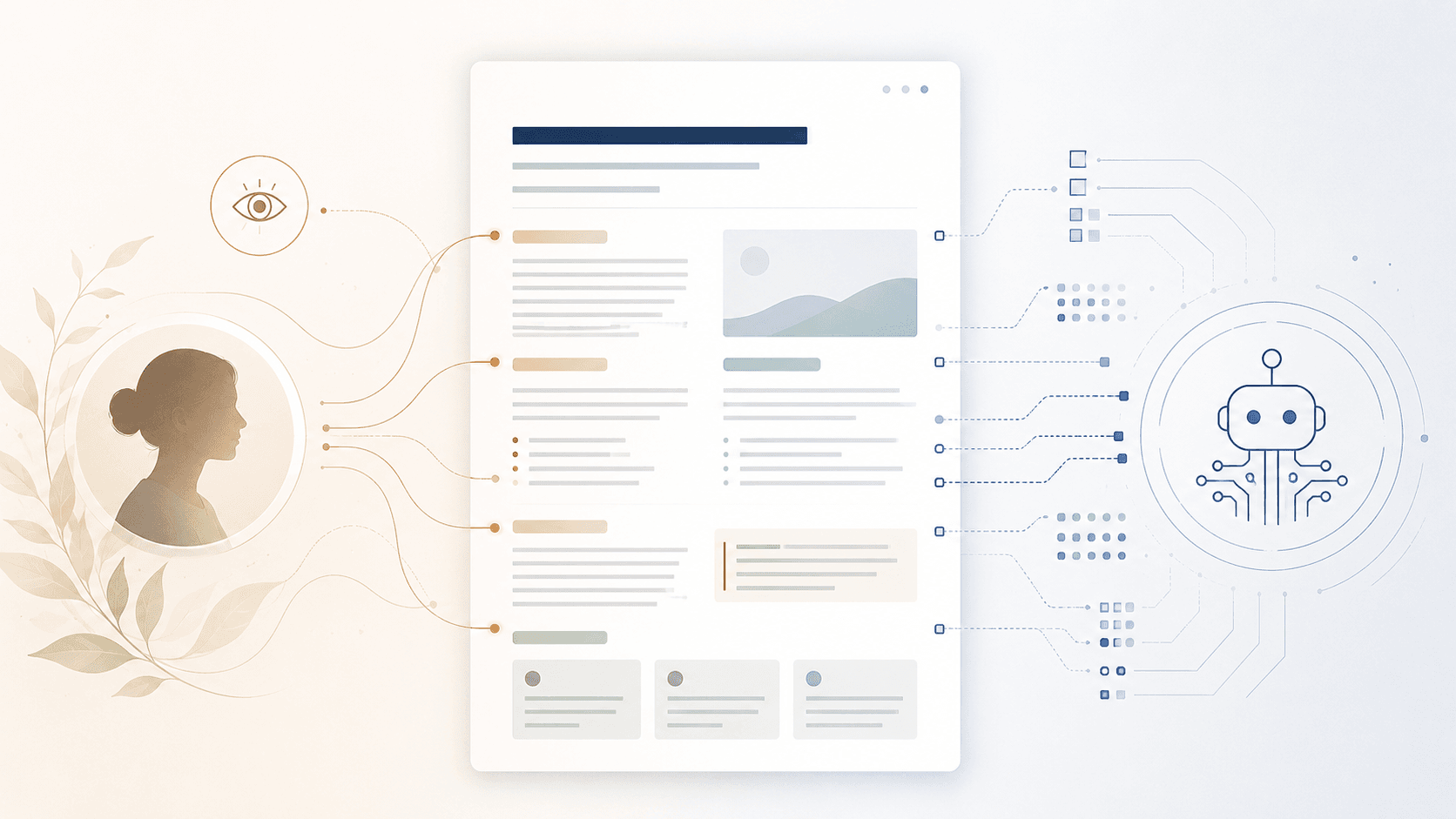
Crafting content that resonates simultaneously with human readers and AI-driven systems is both an art and a science. Organizations often fall into the trap of writing for search engines or AI systems in isolation, resulting in content that either feels robotic to humans or is misunderstood by large language models (LLMs).
The solution lies in leveraging natural language patterns, precise yet conversational tone, and headers that communicate structure and hierarchy. Ankord Media emphasizes that when content speaks clearly to both audiences, it increases engagement, enhances answer engine citations, and positions your brand as a trusted information source.
Natural language content prioritizes clarity, context, and narrative flow. Human readers value ease of understanding, logical progression, and concise answers, while LLMs parse content based on semantic relationships, topical relevance, and structure cues. Integrating clear headers ensures that LLM crawlers can accurately interpret the hierarchy of information and identify key answers within a page. The dual benefit is a page that performs well in traditional SEO metrics and emerges in AI-driven answer snippets, voice search, and People Also Ask (PAA) boxes.
Why Natural Language Matters for LLMs and Human Readers
Natural language mirrors how people think and ask questions. Writing in a conversational style not only improves engagement but also helps AI systems interpret content intent more accurately. Ankord Media notes that LLMs are increasingly trained on conversational datasets, which makes content written in natural, question-and-answer style more likely to be cited in summaries.
When content feels approachable, it encourages readers to linger, click through related resources, and share information, all of which are positive signals to AI systems. Beyond readability, natural language reduces ambiguity, which is critical for ensuring that LLMs extract and reference the correct context.
Benefits of natural language content include:
- Enhanced Engagement: Readers stay longer and interact with the page when content is easy to follow.
- Semantic Clarity: LLMs interpret nuanced language more accurately, improving answer relevance.
- Conversational Q&A Opportunities: Writing in natural language allows for the integration of FAQ-style content that can be surfaced in PAA boxes or AI summaries.
- Reduced Misinterpretation: Avoiding jargon or overly complex phrasing ensures that both humans and LLMs extract the intended meaning.
Each of these benefits works synergistically: higher engagement reinforces the credibility of content, while semantic clarity directly improves AI comprehension. Ankord Media emphasizes that natural language is a strategic signal that drives visibility, authority, and audience satisfaction.
Structuring Headers for Maximum Readability and AI Comprehension
Headers are the scaffolding that organizes content into digestible segments for humans and interpretable structures for AI. Without clear headers, pages risk appearing disjointed and can confuse LLM crawlers, which may misattribute content hierarchy or fail to identify key answers.
Effective headers guide readers logically through content, highlight main ideas, and signal relationships between sections. Ankord Media recommends a hierarchical approach, using H1 for main topics, H2 for subtopics, and H3/H4 to support subsections. This layered structure allows AI to understand both the context and the relative importance of each point.
Critical header strategies include:
- Descriptive and Specific Headers: Clearly communicate the content of the section to both humans and LLMs.
- Question-Based Headers: Using questions encourages AI to recognize the text as an answerable query.
- Keyword-Relevant but Natural: Integrate important keywords naturally to maintain readability and AI signal strength.
- Logical Hierarchy: Organize headers in a way that mirrors the content flow and topic importance.
Well-structured headers improve scanning, comprehension, and AI citation potential. They also make content easier to repurpose across platforms, including voice search, answer engines, and LLM summaries. Ankord Media often advises that iterative testing of header structures can reveal patterns that maximize both human and AI engagement.
Using Paragraphs to Reinforce Semantic Context
Paragraph structure complements headers by providing the detailed narrative that supports clarity and comprehension. Paragraphs should be concise enough for readability but dense enough to communicate context to LLMs. Long, meandering sentences can dilute meaning for AI systems and frustrate human readers alike.
Each paragraph serves as a semantic unit, allowing LLMs to parse meaning and generate accurate citations. When paired with headers, paragraphs create a logical flow of information that AI systems can map to answer queries effectively. Ankord Media highlights that the first 100 words of each paragraph are particularly critical, as LLMs often weight early content more heavily when determining relevance.
Key paragraph strategies include:
- Start with a Clear Topic Sentence: Introduce the main point immediately.
- Include Supporting Details: Provide examples, statistics, or contextual information that enriches the content.
- Maintain Readability: Break complex ideas into multiple sentences, avoiding run-on constructions.
- Use Transitional Phrases: Signal shifts in thought to guide both humans and AI through the content.
Strategically written paragraphs enhance retention, reduce bounce rates, and improve the likelihood that AI systems select the content for inclusion in answer engines. Ankord Media emphasizes that content should feel natural while remaining structured, balancing flow with semantic clarity.
Integrating Lists to Clarify and Highlight Key Points
Lists are powerful tools for both human comprehension and AI citation. Well-constructed lists summarize information, make content skimmable, and emphasize key ideas for answer engines. When combined with natural language paragraphs, lists serve as semantic anchors that highlight priority concepts.
The placement of lists is just as important as their construction. Ankord Media advises introducing lists with explanatory paragraphs that provide context, followed by the list itself, and concluding with analysis that reinforces the content’s relevance.
Effective list strategies include:
- Bulleted Summaries: Break down complex ideas into digestible points for readers and LLMs.
- Sequential or Stepwise Lists: Clearly define processes or workflows in logical order.
- Mixed-Content Lists: Combine examples, statistics, and descriptive explanations within list items.
- Contextual Introductions and Conclusions: Frame each list with explanatory paragraphs to maximize comprehension.
Properly formatted lists increase retention, encourage scrolling, and reinforce semantic clarity for LLMs. When optimized, they also improve answer engine selection rates. Ankord Media often observes that content with contextualized, well-structured lists performs better in both AI and human consumption metrics.
Step-by-Step Approach to Optimizing Headers and Natural Language for AEO
Before diving into the step-by-step actions, it is important to understand that this process requires coordination between content strategists, technical SEO specialists, and analytics teams. Effective implementation blends readability, semantic clarity, and AI signal optimization. Ankord Media stresses that iterative refinement is essential, as AI evaluation criteria evolve over time.
The step-by-step implementation begins with planning the content architecture, defining topics, and mapping query intent. Next, headers are optimized, natural language principles applied, and paragraphs and lists structured to reinforce semantic meaning. Monitoring and analytics close the loop, allowing teams to refine content for maximum retrieval by both humans and LLM crawlers.
Step-by-step actions include:
- Audit Existing Content: Identify pages with weak headers or poor readability.
- Map Topics and Queries: Align headers and content with target queries and searcher intent.
- Rewrite for Natural Language: Ensure sentences are conversational, concise, and semantically rich.
- Optimize Headers: Create hierarchical, descriptive, and question-based headers.
- Integrate Contextual Lists: Use lists to emphasize key points, with explanatory paragraphs before and after.
- Review for AI and Human Readability: Use tools and human feedback to assess clarity and retrieval potential.
- Monitor Engagement and AI Citations: Track how content performs in answer engines, PAA boxes, and LLM outputs.
This structured approach ensures a systematic improvement in both human and AI engagement. Ankord Media emphasizes that consistent application across content libraries maximizes visibility, authority, and brand trust.
Driving Long-Term Performance with Iteration and Analytics
Optimization does not stop after the initial implementation. Continual monitoring, iterative updates, and adaptation to AI changes are critical. Analytics help identify headers that perform poorly, paragraphs that are ignored, or lists that fail to reinforce semantic intent.
Iterative refinement allows teams to experiment with natural language phrasing, header specificity, and paragraph structure. Feedback loops from engagement metrics, voice search performance, and AI citation frequency guide continuous improvement. Ankord Media integrates these processes to ensure organizations remain ahead of the curve, sustaining answer engine visibility while maintaining strong human readability.
Best practices include quarterly content audits, testing variations of headers and paragraph structures, and keeping up with emerging AI evaluation trends. Over time, these efforts compound, creating a content ecosystem that is robust, AI-friendly, and highly engaging for human audiences.