


Most brands spend time sharing content, responding to comments, and tracking basic metrics, yet few have a clear understanding of what these numbers mean for actual business growth. Measuring ROI helps brands understand the real value behind their efforts. It reveals the difference between temporary attention and long term progress. Once brands develop a structured approach to evaluation, they begin to see trends that guide smarter decisions. This allows social media to shift from a constant guessing game to a reliable, predictable contributor to brand strategy.
ROI measurement also matters because it shapes resource allocation. Brands that rely too heavily on vanity metrics often invest time and money in approaches that do not support conversions, inquiries, or meaningful connections. When teams focus on indicators with real business impact, every hour of content creation becomes more intentional. This clarity improves collaboration, speeds up optimization, and leads to more consistent growth across all platforms.
Vanity Metrics That Create False Confidence
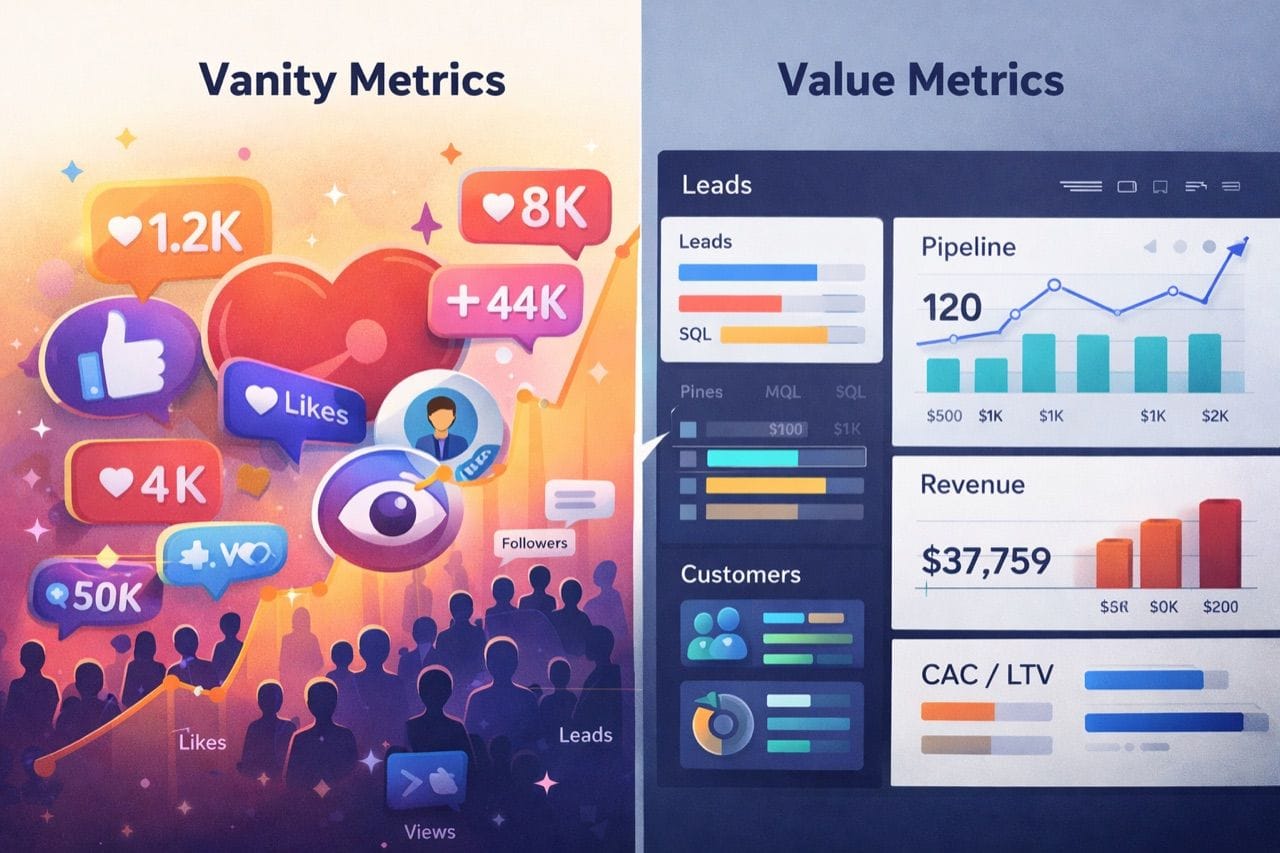
Vanity metrics refer to surface level numbers that may look impressive but rarely influence business results. They create an appearance of progress without revealing whether the audience is moving closer to becoming loyal customers or active community members. Brands that prioritize these metrics often miss deeper signals that shape long term outcomes. It is important to recognize these numbers for what they are so they can be interpreted correctly.
Common vanity metrics include:
- Total follower count with no measurement of engagement or retention
- Likes on individual posts without context for conversions or profile actions
- Impressions without evaluation of click through activity
- High reach that does not result in growth of meaningful behaviors
- Views on short form content without follow up interaction
These numbers still have value, but only when viewed as part of a broader analysis. When teams interpret them in isolation, they risk misjudging audience interest and misallocating effort. Understanding their limitations gives brands the freedom to prioritize what truly matters and build evaluations that reflect real outcomes.
After identifying the vanity metrics, brands can begin comparing them against deeper performance indicators. This comparison exposes gaps between attention and action. It also helps identify which pieces of content bring in the most committed viewers rather than the largest but least meaningful audiences. Once brands begin evaluating this alignment, ROI measurement becomes far more accurate and actionable.
Metrics That Reveal Real Business Growth
The most valuable metrics are those that demonstrate how well content influences actions. These actions can include sales, inquiries, sign ups, or forms of deeper engagement that lead to measurable progress. These indicators do more than signal popularity. They show whether a brand’s social presence carries real strategic impact.
Strong ROI indicators include:
- Click through rates that result in website visits
- Conversion events such as purchases or booked calls
- Saves and shares that reflect meaningful audience interest
- Direct messages that express intent, curiosity, or buying behavior
- Growth in email subscriptions, lead forms, or downloads
- Repeat engagement from returning followers
These metrics track what people do rather than how impressed they appear to be. They provide brands with practical insight into audience motivations. When teams study these numbers consistently, they begin forming clearer strategies around content themes, posting patterns, and audience preferences. Over time, these insights create a more predictable and sustainable social media presence.
The value of these metrics grows when they are placed alongside qualitative observations. Comment patterns, sentiment changes, and topic driven discussions reveal nuance that numbers alone cannot capture. Brands that combine quantitative data with behavioral signals gain a fuller picture of audience response. This holistic perspective leads to stronger messaging choices and more confident long term planning.
Building a Reliable ROI Tracking Framework
A structured ROI framework helps brands track performance over time rather than reacting to isolated moments. It also supports consistent improvement. When a framework is in place, teams spend less time debating subjective observations and more time focusing on actions that move the business forward. The key is building a process that is repeatable, easy to update, and aligned with the brand’s long term goals.
A strong ROI framework often includes:
- A clear definition of success metrics
- A schedule for collecting and reviewing data
- A method for connecting social interactions to business outcomes
- A way to evaluate both short term and long term effects
- A shared system for documenting insights and performance patterns
These steps give brands clarity and structure. They also help team members stay aligned on what matters, reducing confusion around metrics that fluctuate daily. Without a framework, brands may feel overwhelmed by the volume of available data. With a framework, the noise becomes manageable and the path forward becomes clearer.
Once the framework is active, teams can refine it continuously. Shifting algorithms, audience trends, and content formats require periodic updates. When a brand returns to the framework regularly, it stays adaptable without losing focus. This rhythm creates momentum that compounds over time.
How Ankord Media Measures ROI With Precision
Ankord Media approaches ROI measurement with a method built around clarity and intentionality. The team evaluates social performance by breaking down audience behavior, platform patterns, and business objectives into actionable categories. This allows Ankord Media to identify which activities create measurable impact and which ones require adjustment. The team uses consistent tracking and structured analysis to offer clients a detailed understanding of how their content performs.
Another part of Ankord Media’s method focuses on interpreting behavioral patterns in comments, direct messages, and recurring audience questions. These interactions hold valuable clues about audience sentiment and purchase readiness. Ankord Media studies these signals to strengthen content choices and guide communication strategies that align with real audience needs.
Ankord Media also supports brands by creating customized reports that translate complex data into clear insights. These reports focus on what drives business results and highlight opportunities for growth. By combining quantitative performance indicators with qualitative feedback, Ankord Media helps brands make decisions that support long term stability and meaningful progress.
A Broader View of Social Media ROI
When brands commit to measuring ROI with intention, social media becomes far more than a fast moving content stream. It becomes a clear window into audience behavior, brand perception, and long term potential. ROI measurement provides direction in environments that change quickly. It allows teams to adapt without losing momentum and experiment without losing clarity.
The long term benefits extend beyond metrics. ROI awareness shapes brand discipline and helps teams communicate more effectively. It removes assumptions and replaces them with insight. Over time, this leads to stronger community relationships, higher quality leads, and a more resilient digital presence.
Brands that approach ROI with patience and consistency position themselves for lasting success. They learn to identify what matters, refine their strategies, and build credibility through reliable performance. This clarity creates a foundation that supports sustainable growth across all platforms.