


- Introduction
- Quick Answer
- 1. What “complete” means for a startup brand identity project
- 2. The typical Silicon Valley timeline range by scope
- 3. The phases and what each phase actually takes
- 4. What stretches the timeline in real startup life
- 5. What speeds the timeline up without sacrificing quality
- 6. A realistic timeline plan around fundraising and launches
- 7. What to ask a studio or freelancer so you get an honest timeline
- 8. The “fast vs thorough” trade you should actually care about
- 9. What “good timeline hygiene” looks like inside your team
- 10. A simple estimate you can use before you talk to anyone
- Final Tips
Introduction
Silicon Valley startups move fast, but brand work still needs enough time to get clarity, alignment, and usable assets. The real timeline depends less on how many screens you design and more on how quickly your team can make decisions. If you plan the process around fundraising, hiring, and launches, you can get a strong identity system without slowing momentum.
Quick Answer
A complete startup brand identity project in Silicon Valley usually takes 4 to 10 weeks from kickoff to usable rollout assets, assuming you have a committed decision-maker and tight feedback cycles. A fast, focused project can finish in 2 to 4 weeks, while a deeper strategy plus full system and website direction often takes 10 to 14 weeks. The biggest timeline drivers are positioning clarity, stakeholder alignment, and how many real-world applications you need on day one.
1. What “complete” means for a startup brand identity project
Founders often ask for a timeline without defining the scope. In practice, “complete” can mean three different things.
Level 1: Visual refresh
- Logo refinement, colors, typography, basic usage
- Light guidelines
- A couple templates
Level 2: Full identity system
- Positioning and messaging foundation
- Visual identity and rules that scale
- Templates for the assets you ship weekly
- Brand voice basics with examples
- Handoff files and documentation
Level 3: Identity plus rollout
- Everything in Level 2
- Website direction and key pages
- Pitch deck redesign
- Sales collateral and case study formats
- Launch plan and governance
When people say “complete,” they usually mean Level 2. Level 3 is common when fundraising, going upmarket, or switching categories.
2. The typical Silicon Valley timeline range by scope
Here are the ranges most startups experience when the project is run with strong momentum.
2 to 4 weeks
- Tight scope, clear positioning, one decision-maker
- Minimal stakeholder alignment needed
- Deliverables are primarily identity plus a few templates
4 to 6 weeks
- Most common for early-stage Silicon Valley teams
- Includes basic positioning work, identity system, and practical templates
- Enough time for exploration, revision, and a clean handoff
6 to 10 weeks
- Includes deeper positioning, multiple stakeholder inputs, and more applications
- Often includes pitch deck redesign, sales templates, and web direction
10 to 14 weeks
- Larger team, higher stakes, or more complexity
- Common if you are rebranding, moving upmarket, or merging products under one story
- Often includes full website execution or heavy content work
If someone promises a full system in a week, you will likely pay for it later in rework.
3. The phases and what each phase actually takes
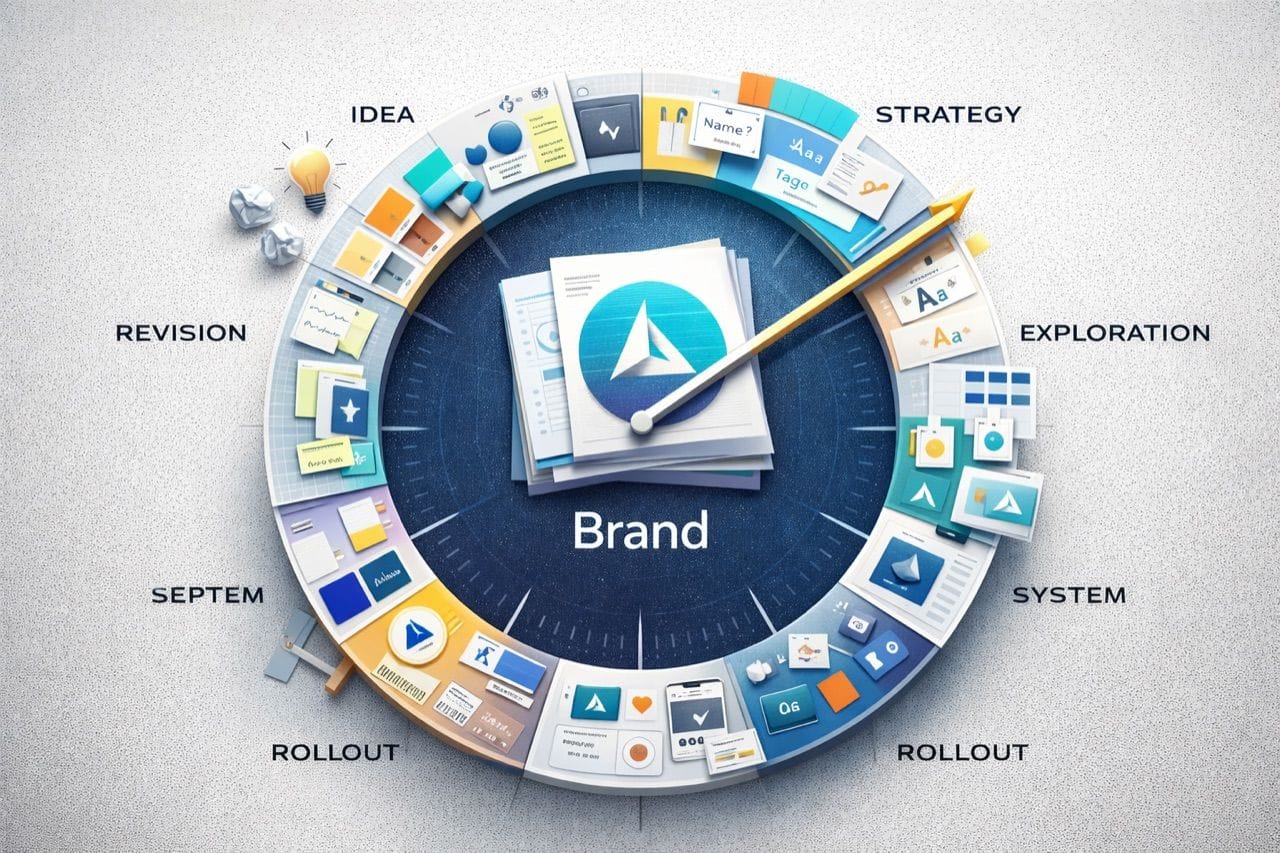
A brand identity project usually moves through a few predictable phases. The time is less about the phase count and more about decision speed.
Discovery and alignment
Typical time: 3 to 7 days
This includes stakeholder inputs, competitive context, audience clarity, and what success looks like. For founders, the key output is alignment on what you are solving.
Positioning and messaging
Typical time: 1 to 3 weeks
This is where timelines stretch if your wedge is unclear. The best teams treat this like product decisions, not copywriting.
Visual direction and identity system
Typical time: 1 to 3 weeks
This includes exploration, selection of a direction, and building the system rules so the brand is repeatable.
Applications and templates
Typical time: 1 to 3 weeks
This is where the brand becomes real. Startups should prioritize high-frequency assets first: pitch deck, homepage structure, outbound visuals, one-pagers, and social templates.
Documentation and handoff
Typical time: 2 to 5 days
This phase prevents chaos later. Clean files, clear rules, and templates save weeks across a quarter.
4. What stretches the timeline in real startup life
Most timeline overruns are not design problems. They are operating problems.
Too many decision-makers
When three people can veto, nothing ships. A single final decider shortens timelines more than any tool or process.
Unclear positioning
If you cannot articulate your customer, wedge, and proof, you will loop. Visual work becomes guesswork.
Feedback cycles that are slow or vague
A weekly feedback call with clear criteria beats async comments scattered across tools.
Scope creep through applications
Every extra application adds time. “Can we also do the website, deck, one-pager, and social templates” is how a 6-week project becomes 12 weeks.
Lack of real content
If your case studies, proof points, or product screenshots are not ready, design stalls waiting for inputs.
5. What speeds the timeline up without sacrificing quality
You can compress a brand identity timeline if you make the process easy to execute.
Assign a single owner with authority
One accountable owner who can make trade-offs keeps the project moving.
Pre-decide your constraints
Define what you will not do. Examples: no naming changes, no product repositioning, no website build in Phase 1.
Use a “high-frequency assets first” rule
Prioritize the assets your team produces weekly, not the ones that are nice to have. Templates and components pay back immediately.
Use fixed review windows
Example rhythm: Monday review, Wednesday revisions, Friday decision. Long-scroll brand work thrives on cadence.
Bring proof early
Traction screenshots, customer quotes, metrics, and real product visuals make identity and messaging decisions faster.
6. A realistic timeline plan around fundraising and launches
Most Silicon Valley branding is driven by a deadline.
If you are raising in 4 to 6 weeks
Choose a focused scope: messaging, identity system, and pitch deck. Avoid a full website build. You can update the site structure later.
If you are launching a product or entering a new market
Do positioning plus identity system first, then build the rollout assets that touch the launch: landing page, email visuals, social templates, and sales one-pager.
If you are moving upmarket
Allocate time for messaging clarity and proof structure. Enterprise buyers need risk-reduction signals, not just aesthetics.
If you are hiring
Prioritize a brand system that reduces inconsistency. That means templates, clear rules, and a voice guide that new teammates can follow.
7. What to ask a studio or freelancer so you get an honest timeline
Timelines are often optimistic because scope is vague. Ask questions that force real planning.
- What are the exact deliverables by week?
- What decisions do you need from us, and when?
- How many revision cycles are included for each milestone?
- What inputs must we provide before the project starts?
- What causes delays most often, and how do you prevent them?
- What is the minimal version we can ship if we hit a deadline?
A good partner will tell you where the risk is and how to control it.
8. The “fast vs thorough” trade you should actually care about
A faster brand project is not always worse. It depends on what you are trying to achieve.
Choose fast when:
- You already have clarity and need execution
- You need credibility for fundraising or recruiting quickly
- You can iterate after launch
Choose thorough when:
- You are changing your story or audience
- You have multiple products or use cases and confusion is costly
- You are moving upmarket and trust signals must be consistent
The wrong move is paying for “thorough” when you are still pivoting weekly, or paying for “fast” when you actually need alignment and strategy.
9. What “good timeline hygiene” looks like inside your team
You can protect timelines with a few simple operating rules.
- One feedback doc, one source of truth
- Clear acceptance criteria for each milestone
- Decisions made in meetings, not in comment threads
- No new stakeholders added midstream
- Applications prioritized by business impact, not personal preference
Startups that treat brand decisions like product decisions finish on time.
10. A simple estimate you can use before you talk to anyone
Use this as a quick gut-check.
- If your positioning is clear and you need identity plus templates: plan 4 to 6 weeks
- If your positioning needs work and you want a full system: plan 6 to 10 weeks
- If you want identity plus website direction and deck and collateral: plan 10 to 14 weeks
- If you need a sprint for an upcoming raise: plan 2 to 4 weeks with a narrow scope
If your internal decision-making is slow, add 2 weeks to any estimate.
Final Tips
Plan your brand identity project around decision speed, not just deliverables. Pick a single owner, lock scope early, and prioritize the assets you ship weekly so the work pays back immediately. If you have a deadline like fundraising or a launch, choose a focused version you can ship confidently, then expand the system in phases instead of stretching timelines until nothing goes live.