


- Introduction
- Quick Answer
- 1. Understand what case studies and customer stories are actually supposed to do
- 2. Start with the buyer objection you need the story to solve
- 3. Capture the right details before you write anything
- 4. Match each proof asset to the right place in your content and copy
- 5. Write stories so the next buyer can see themselves in them
- 6. Focus on before-and-after clarity, not just positive sentiment
- 7. Build versions of the same proof asset for different sales moments
- 8. Avoid the mistakes that make case studies weak or slow-moving
- 9. A practical workflow for San Francisco startups
- Final Tips
Introduction
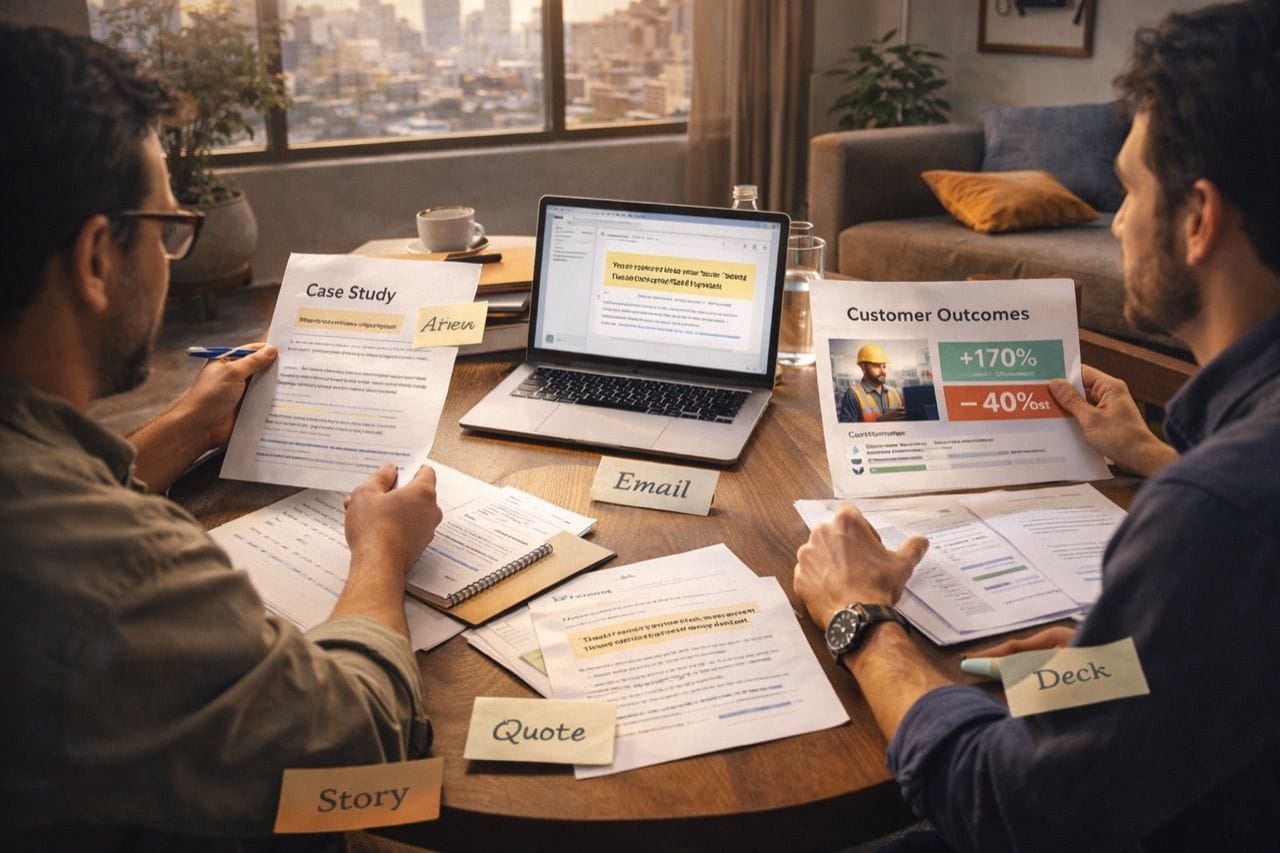
San Francisco startups often have strong products, smart teams, and real customer wins, but those wins do not always show up clearly in their content and copy. That creates friction during evaluation because buyers are left connecting the dots on their own. Case studies and customer stories help close deals faster when they turn proof into something specific, relevant, and easy for the next buyer to trust.
Quick Answer
San Francisco startups should use case studies and customer stories as proof assets that reduce buyer hesitation, clarify product value, and make sales conversations move faster. The most effective approach is to match each story to a specific buyer problem, show the before-and-after clearly, place that proof in the right pages and sales touchpoints, and write it in a way that helps similar prospects see themselves in the outcome. Good customer proof does not just say a client was happy. It shows what changed, why it mattered, and why the buyer should believe it can happen for them too.
1. Understand what case studies and customer stories are actually supposed to do
Many startups treat customer proof as a credibility extra. It is more useful than that.
A strong case study or customer story helps a buyer answer practical questions faster:
- Has this worked for a company like ours?
- Did it solve a real business problem, not just produce a nice quote?
- What changed after adoption?
- How difficult was implementation?
- Is this team credible enough to trust?
That matters in San Francisco startup markets because many buyers are evaluating several tools, agencies, or vendors at once. They do not need more vague claims. They need evidence that feels relevant to their exact situation.
What a case study does best
A case study is usually the deeper proof asset.
It works best when you need to show:
- the starting problem
- the implementation or engagement process
- the measurable result
- the strategic value of the work
Case studies are especially helpful for:
- complex SaaS products
- longer sales cycles
- higher-ticket services
- technical or operational buyers
- multi-stakeholder decisions
What a customer story does best
A customer story is often shorter, lighter, and easier to distribute across pages and touchpoints.
It works best when you need to show:
- a relatable challenge
- a quick proof point
- a simple transformation
- a human voice that supports trust
Customer stories are especially useful for:
- homepage proof sections
- product pages
- landing pages
- nurture emails
- sales decks
- founder-led sales follow-up
The key is not choosing one over the other. It is using each format where it fits best.
2. Start with the buyer objection you need the story to solve
The fastest way to weaken a case study is to make it too generic.
Instead of asking, "What nice client story do we have?" ask, "What buyer hesitation are we trying to reduce?"
That shift usually improves both the content and the sales value.
Common objections a strong story can answer
San Francisco startups often need proof that addresses concerns like:
- this looks interesting, but is it proven
- this seems built for larger teams, not ours
- we already have a process, so why change it
- implementation sounds heavy
- I understand the feature, but not the business value
- I am not sure your team understands our industry or workflow
- I need confidence before bringing this to the rest of my team
When a story is built to answer one of those objections, it becomes far more useful in content and copy.
A better selection rule
Choose stories based on:
- similarity to the target buyer
- relevance to a major use case
- clarity of the before-and-after
- strength of the result
- ability to support a high-friction part of the sales process
Do not choose stories only because the client is recognizable or the brand name looks impressive. Recognition can help, but relevance usually closes deals faster.
3. Capture the right details before you write anything
Many case studies underperform because the raw material is too thin.
If the input is just "the client loved it" or "results improved," the final piece will sound soft and forgettable.
To make the proof stronger, gather details in five categories.
The starting point
Document what was happening before the solution.
Useful details include:
- the business problem
- workflow friction
- failed alternatives
- internal constraints
- urgency or timing pressure
- what the buyer was worried about at the start
This is what makes the story relatable.
The actual challenge
Go beyond broad pain.
Instead of:
The team needed better marketing
Use:
The company had strong traffic but weak product-page conversion, unclear messaging, and no proof blocks that helped technical buyers trust the offer
The more operational the challenge, the stronger the story.
The approach
Explain what was done in a way that feels concrete.
For a startup, this could include:
- discovery process
- messaging refinement
- product positioning
- content architecture
- page rewrites
- funnel changes
- workflow redesign
- asset creation
- iteration and testing
This section helps prospects understand how the result happened.
The result
This is where many teams stay too vague.
Strong results can include:
- faster deal velocity
- better conversion rate
- stronger demo-to-close rate
- clearer sales conversations
- fewer objections
- faster onboarding
- higher adoption
- stronger pipeline quality
- improved page engagement
If hard numbers are available, use them. If they are not, use clear qualitative outcomes without inflating them.
The client voice
A direct quote is most useful when it adds specificity.
Weak:
They were great to work with
Stronger:
The new copy made it easier for prospects to understand our product fast, which helped sales conversations get productive earlier
That kind of quote helps future buyers imagine the impact.
4. Match each proof asset to the right place in your content and copy
Not every case study belongs in the same format or location.
One of the best ways to close deals faster is to distribute proof across the places where trust usually breaks down.
Homepage
Use shorter customer-story elements here.
Good homepage proof usually includes:
- one-line outcome statements
- short quotes
- logo strips
- mini before-and-after examples
- industry or role-specific proof blocks
The homepage should not carry a full case study. It should create early belief and route the visitor deeper.
Product pages
This is where case-study detail becomes more valuable.
Use proof that shows:
- how the product worked in practice
- what changed in the workflow
- what result followed
- which team or use case it supported
Product pages often convert better when proof is tied to the exact feature or use case being evaluated.
Service pages
For service businesses, this is where structured proof matters a lot.
Use case studies to show:
- what the client came in needing
- how the engagement was scoped
- what changed in the output or performance
- why the final deliverable worked better than the previous version
This helps buyers picture what working together would actually look like.
Blog content and educational articles
This is a strong place for lighter customer-story references.
You do not always need a full standalone case study. Sometimes a short example inside an educational article is enough to make the guidance more credible.
For example, if the article explains homepage messaging, a short story about a startup that improved understanding and reduced sales friction can make the lesson feel more concrete.
Sales decks and follow-up emails
These are often underused places for proof.
Sales teams can move deals faster when they send:
- a short story tied to the prospect's use case
- a relevant one-page case study
- a quote from a similar customer
- a short before-and-after summary that addresses an active objection
This works especially well in founder-led or lean startup sales, where the team needs high-leverage assets that support conversations without adding heavy process.
5. Write stories so the next buyer can see themselves in them
A common mistake is writing a case study like a brand celebration piece instead of a decision-support asset.
The goal is not just to make the past client look good. It is to help the next buyer recognize a similar problem and trust the likely outcome.
Make the story specific, but still transferable
The best customer stories have enough detail to feel real and enough structure to feel reusable.
A strong pattern is:
- who the client was
- what problem they were facing
- what was getting in the way
- what changed
- what result followed
- what that result meant for the business
That sequence helps a prospect process the story quickly.
Keep the buyer's lens in mind
When editing, ask:
- would a similar prospect care about this detail
- does this explain business impact, not just activity
- does this reduce uncertainty
- does this answer a question sales keeps hearing
- does this sound believable
If the answer is no, the story probably needs to be tighter.
Use language that mirrors how buyers think
Customer proof tends to work better when it uses plain language around:
- time saved
- friction reduced
- clarity improved
- confidence increased
- team alignment
- faster decisions
- better conversion
- cleaner handoffs
These are often more persuasive than inflated phrases or abstract praise.
6. Focus on before-and-after clarity, not just positive sentiment
A good story needs contrast.
Without a clear before-and-after, the result feels less meaningful.
What the "before" should show
The before state should explain:
- what was difficult
- what was inefficient
- what risk or cost existed
- what the team could not do well yet
What the "after" should show
The after state should explain:
- what became clearer
- what moved faster
- what worked better
- what changed in the buyer or user experience
- what business effect followed
This contrast helps a prospect understand value much faster than a generic endorsement ever could.
A useful writing test
If someone reads the story and cannot quickly answer "what changed?" the story is not strong enough yet.
That is often the simplest test for whether a case study will actually help close deals.
7. Build versions of the same proof asset for different sales moments
Startups do not need one giant case study and nothing else.
A better system is to create one core proof asset, then turn it into several usable formats.
Useful versions to create
From one strong customer story, you can build:
- a full case study page
- a short homepage proof block
- a product-page sidebar example
- a quote card for decks
- a short sales follow-up email snippet
- a founder talking point for calls
- a social proof post
- a short paragraph for a relevant blog article
This helps startups get more selling value from each customer win.
Why this speeds up deals
When proof is already adapted for different contexts, sales and marketing do not have to rebuild the same evidence from scratch every time.
That usually leads to:
- faster follow-up
- better objection handling
- more relevant proof in live conversations
- stronger consistency between content and sales messaging
In fast-moving startup environments, that operational efficiency matters.
8. Avoid the mistakes that make case studies weak or slow-moving
A lot of case studies fail quietly because they look polished but do not help buyers decide faster.
Mistake 1: Leading with the company background for too long
Buyers do not need a long intro about the client before they understand the problem and the result.
Get to the tension quickly.
Mistake 2: Making the story too self-congratulatory
If the piece sounds like a victory lap, trust drops.
The story should feel grounded, useful, and specific.
Mistake 3: Hiding the measurable or meaningful result
If the outcome is buried or unclear, the story loses force.
Mistake 4: Using quotes that sound polite but empty
A quote should add evidence, not just praise.
Mistake 5: Writing one generic case study for every audience
A startup selling to founders, operators, and technical stakeholders often needs slightly different proof framing for each audience.
Mistake 6: Forgetting to connect proof to the next step
A case study should not exist as a dead-end asset. It should support the page, email, or conversation it sits inside.
9. A practical workflow for San Francisco startups
If a startup wants customer proof that actually helps close deals, a simple repeatable process works better than waiting for the perfect polished case study.
Step 1: Identify the top objections in sales
Talk to founders, account executives, customer success, or anyone handling buyer conversations.
Find out:
- what slows deals down
- where trust drops
- what questions repeat
- which claims prospects need help believing
Step 2: Choose 3 to 5 strongest customer examples
Prioritize stories that are:
- relevant to the current pipeline
- tied to a high-value use case
- strong on before-and-after clarity
- useful across more than one content asset
Step 3: Interview the client or internal team properly
Do not settle for surface-level notes.
Ask:
- what was hard before
- what changed after implementation
- what surprised them
- what mattered most internally
- what result they would point to first
- what they would say to a similar company considering the same move
Step 4: Write one core version first
Start with the strongest full version before shrinking it into shorter pieces.
That helps preserve clarity and gives the team one reliable source of truth.
Step 5: Turn it into multiple proof formats
Break the story into shorter versions for:
- website pages
- decks
- outbound follow-up
- nurture sequences
- blog content
- proposal support
Step 6: Reuse the story where objections already exist
Insert proof where deals tend to slow down, not just where it looks nice on the website.
Step 7: Keep updating the proof library
As the startup grows, the customer-proof library should also improve.
Refresh stories when:
- the product changes
- a new audience becomes important
- better metrics become available
- a stronger customer example emerges
- the current case studies start feeling outdated
Final Tips
Use case studies and customer stories as decision tools, not just marketing assets. Choose proof that answers real buyer hesitation, write it around a clear before-and-after, and place it where trust usually breaks down in pages, emails, and sales conversations. The fastest-closing customer proof is usually the proof that feels most relevant, most believable, and easiest for the next buyer to apply to their own situation.