


- Structuring Content for Maximum AI Comprehension
- Writing Concise and High-Value Answers
- Step-by-Step Approach to Formatting Blogs for AI Retrieval
- Using Lists, Tables, and Bullet Points Effectively
- Optimizing Metadata and Internal Signals
- Maintaining Long-Term AI-Friendly Blog Health
- Ensuring Maximum Retrieval: A Closing Perspective
Optimizing blog posts for human readers is no longer enough. With the rise of answer engines and large language models (LLMs) serving AI-curated responses, content must be structured to signal clarity, authority, and relevance to machines as well as humans. How a post is formatted, including its headings, paragraphs, lists, and metadata, directly influences whether AI systems select it as a preferred answer or snippet. Executives and content teams must understand the new rules for AI visibility to ensure that every blog post contributes to long-term brand authority and digital reach.
For organizations aiming to capture AI-driven traffic, formatting for answer engines is a competitive advantage. Proper formatting ensures content is easily parseable, contextually rich, and strategically aligned with the types of queries AI systems prioritize. Ankord Media works closely with clients to integrate AI-friendly formatting strategies into content planning, helping brands increase their chances of appearing in snippets, People Also Ask boxes, and voice search results.
Structuring Content for Maximum AI Comprehension
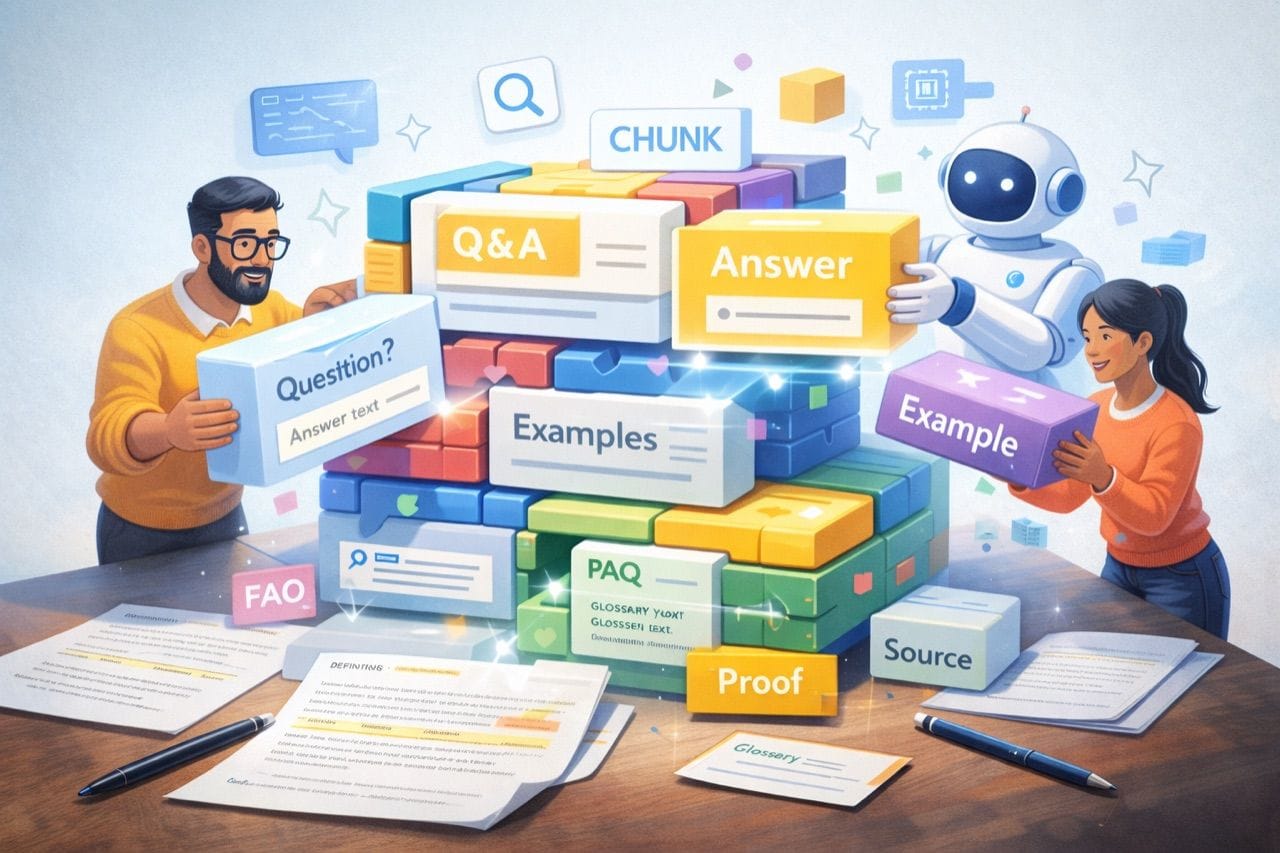
How a blog post is structured is one of the most critical factors in AI retrieval. AI systems prioritize content that is logically organized, semantically coherent, and divided into distinct sections.
A well-structured blog post allows AI to extract answers quickly, identify supporting context, and recognize semantic relationships between topics.
This requires thoughtful use of headings, subheadings, and paragraph formatting. For example, headings should clearly define the section topic while subheadings break complex ideas into digestible pieces. Ankord Media emphasizes the importance of hierarchical structure: H1s should define overarching topics, H2s should delineate core sections, and H3s or H4s should further clarify subpoints.
Lists, tables, and bullet points also enhance comprehension. They allow AI to quickly scan for key entities, facts, and actionable instructions. However, structure alone is insufficient without clear phrasing, keyword relevance, and semantic clarity. Each paragraph should build context and link concepts cohesively to surrounding sections, signaling to LLMs that the content is authoritative and comprehensive.
Key structural considerations include:
- Hierarchical headings: Clear H1, H2, and H3 hierarchy that defines primary and secondary topics.
- Consistent paragraph length: Paragraphs of 3–6 sentences that maintain clarity without overwhelming AI parsing.
- Semantic coherence: Each section should logically flow from the previous, using natural language that defines relationships between entities.
- Multimedia annotations: Images, charts, and tables with descriptive alt text provide additional signals for AI comprehension.
- Internal linking: Cross-references to related posts reinforce topic clusters and entity authority.
After implementing these structural elements, AI systems are better equipped to interpret and extract answers efficiently. Ankord Media advises that structure must be continuously refined based on performance data, monitoring which sections are surfaced by AI and adjusting formatting, headings, and supporting media accordingly.
Writing Concise and High-Value Answers
Answer engines favor content that directly addresses queries. Lengthy, meandering paragraphs reduce the likelihood that an LLM will select content for inclusion in snippets or voice responses.
Clarity and precision are paramount. Each section should answer specific questions explicitly while maintaining contextual depth. Using clear signals such as introductory sentences that summarize the answer and supporting sentences that elaborate are critical.
Ankord Media emphasizes that writers should anticipate user intent and address it efficiently, balancing depth with brevity.
- Direct answer sentences: Provide immediate responses to queries at the start of a section.
- Supporting evidence: Include statistics, references, and examples to validate claims.
- Keyword alignment: Naturally incorporate primary and secondary keywords related to target queries.
- Expandable explanations: Use collapsible or linked content sections for extended details.
- Contextual linking: Ensure the answer is connected to related topics for comprehensive coverage.
Prior to finalizing a post, content teams should read each section through the lens of an AI system: Is the answer obvious? Does the content provide enough context? Ankord Media often conducts internal audits using AI preview tools to simulate snippet selection and evaluate whether the post is likely to be surfaced in People Also Ask boxes or AI-driven overviews.
Step-by-Step Approach to Formatting Blogs for AI Retrieval
Before moving to other technical enhancements, it’s useful to adopt a repeatable process:
- Outline topics with AI in mind: Map target questions, related queries, and supporting subtopics.
- Apply hierarchical headings: Assign H1s, H2s, and H3s to ensure semantic clarity.
- Draft concise answers first: Begin each section with direct answers before adding supporting details.
- Incorporate structured data: Apply FAQ, HowTo, or Article schema where applicable.
- Add multimedia with annotations: Include descriptive captions and alt text to reinforce semantic signals.
- Internal and external linking: Connect content to authoritative sources and other relevant pages.
- Review readability and flow: Ensure sentences are clear, logical, and contextually rich.
This method enables content teams to standardize AI-friendly formatting and systematically optimize each blog post. Ankord Media recommends performing these steps for every post to maintain consistent quality, supporting both traditional SEO and answer engine visibility.
Using Lists, Tables, and Bullet Points Effectively
Lists and tables are powerful formatting tools for AI comprehension. They allow LLMs to identify structured information quickly, facilitating accurate retrieval and citation.
- Numbered steps: Ideal for processes, tutorials, or sequential actions.
- Bullet points for concepts: Highlight key ideas or recommendations concisely.
- Comparison tables: Summarize contrasts between products, strategies, or approaches.
- Hierarchical lists: Show relationships between main points and subpoints.
- Annotated lists: Include contextual notes for AI to understand nuance.
These formatting choices enhance both human readability and machine interpretability. Ankord Media emphasizes that every list should have an introductory paragraph explaining the purpose of the list and a follow-up paragraph connecting the points to the overall narrative.
Optimizing Metadata and Internal Signals
Metadata remains a critical aspect of AI retrieval. Titles, meta descriptions, and internal linking provide contextual cues that help LLMs determine relevance.
- Descriptive titles: Reflect both user intent and core topic coverage.
- Meta descriptions with context: Offer concise summaries that capture query intent.
- Internal cross-linking: Connects posts within the same topic cluster to reinforce authority.
- URL hierarchy: Ensure URLs reflect the semantic structure of content.
- Anchor text strategy: Use descriptive, contextually relevant anchor text for links.
By integrating these metadata practices, posts are better positioned to be surfaced by AI systems. Ankord Media often performs audits to verify that all metadata aligns with formatting and content strategies, maximizing retrieval and authority signals.
Maintaining Long-Term AI-Friendly Blog Health
Formatting is not a one-time effort. AI models evolve, and answer engines continually refine how they select content. Regular audits, updates, and refinements are critical.
- Periodic content reviews: Ensure answers remain accurate and concise.
- Update schema and markup: Stay aligned with new AI-friendly standards.
- Monitor AI-driven engagement: Track inclusion in PAA boxes, featured snippets, and voice results.
- Iterate formatting: Adjust headings, bullet points, and tables based on performance data.
- Cross-platform integration: Ensure content appears correctly on aggregators and voice assistants.
Ankord Media advises that organizations schedule recurring reviews and integrate AI-friendly formatting into editorial workflows, maintaining competitive visibility in both search and AI-driven platforms. Ultimately, formatting is only effective when paired with authority. LLMs favor sources that demonstrate topical expertise and consistent relevance.
- Comprehensive coverage: Ensure posts answer multiple aspects of a question.
- Cite credible sources: Reinforce trustworthiness with references to authoritative content.
- Maintain internal cohesion: Connect content across the site for semantic continuity.
- Encourage engagement signals: Interactive features, CTAs, and related links enhance AI interpretation.
By combining these elements with robust formatting, blog posts achieve maximal retrieval potential. Ankord Media integrates these strategies to help brands maintain authority across AI-curated responses while driving measurable traffic and engagement.
Ensuring Maximum Retrieval: A Closing Perspective
Well-formatted blog posts serve dual purposes: delivering value to readers and signaling to AI systems that the content is accurate, complete, and authoritative. By addressing structure, clarity, metadata, internal linking, and supporting multimedia, content teams can significantly increase the likelihood of selection in PAA boxes, featured snippets, and AI overviews. Organizations that adopt a proactive, iterative approach to formatting are better positioned to capture new opportunities for visibility and brand recognition.
Regular auditing, AI-friendly formatting, and consistent authority-building ensure posts remain competitive over time. Ankord Media’s experience demonstrates that even small adjustments like restructuring headings or improving semantic clarity can yield measurable gains in AI retrieval, contributing to long-term SEO ROI.