


- What a Marketing Funnel Really Means Today
- Why Most Funnels Underperform
- The 2026 Funnel Framework That Actually Converts
- How to Build This Funnel Without Unnecessary Complexity
- Building a Marketing Funnel Step by Step
- A Practical Funnel Scenario
- Optimization Isn’t a One-Time Task
- Where Strategy and Execution Intersect
- Conclusion
Patterns begin to emerge after reviewing multiple campaigns. Traffic rises, engagement looks promising, yet conversions stall somewhere between curiosity and commitment. That gap is rarely accidental; it usually indicates deeper issues. More often, it points to a fragmented Marketing Funnel rather than a connected system.
A Marketing Funnel is more than just a diagram or a set of stages. It’s a sequence of decisions, micro-actions, and expectations. When those don’t align, even strong brands struggle to move users forward.
Let’s get into what actually works and what tends to quietly fail.
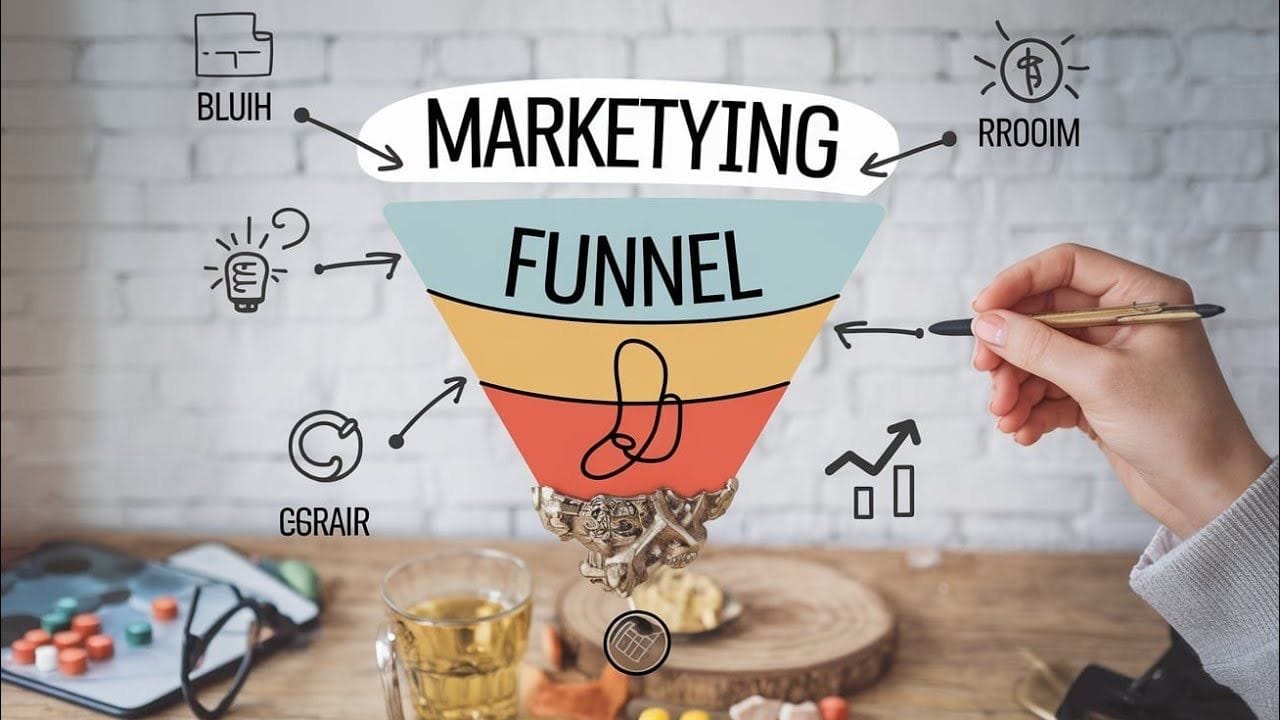
What a Marketing Funnel Really Means Today
The traditional TOFU, MOFU, BOFU breakdown still holds some value. However, it feels incomplete in today’s context.
A modern Marketing Funnel behaves less like a linear path and more like a guided loop. Users jump between touchpoints. They research, leave, come back, compare, and hesitate.
The Core Stages, Reframed
Awareness
Visibility is now fragmented across multiple channels. Search, short-form video, referrals, even AI-generated summaries. Brand awareness starts earlier than most teams realize.
Engagement
Attention alone does not drive action. Interaction does. Time spent, clicks, scroll depth. These signals shape how your funnel adapts.
Conversion
Conversions are not always immediate. Sometimes it’s a form fill. Sometimes, a quiet email signup leads to a deal weeks later.
Retention
Retention is often ignored. Yet repeat interaction tends to cost less and convert better over time.
A Marketing Funnel that acknowledges this fluidity tends to outperform rigid, linear setups.
Why Most Funnels Underperform
There’s usually no single point of failure. It’s more subtle than that.
Misaligned Messaging
What attracts users often doesn’t match what converts them. A bold promise at the top becomes vague halfway through. That disconnect creates hesitation.
Lack of Journey Mapping
Many funnels assume behavior instead of studying it. Without real user paths, decisions rely on guesswork.
Weak Conversion Signals
Landing pages sometimes look polished but lack clarity. No urgency. No proof. No reason to act now.
In some cases, tracking is inaccurate. If conversion data isn’t accurate, optimization becomes a shot in the dark.
The 2026 Funnel Framework That Actually Converts
Instead of thinking in isolated steps, it helps to view the Marketing Funnel as a system of connected experiences.
Stage 1: Attention
Search still matters, but not in isolation. Visibility now includes AI-generated responses, snippets, and content summaries.
Social media advertising services also play a role here, though not always in the obvious way. It’s less about pushing ads and more about creating recognizable patterns.
Stage 2: Engagement
Once attention is earned, the focus shifts quickly.
Interactive content, short guides, even quick comparison tools. These tend to hold attention longer than static pages.
Users do not always want detailed information immediately. Sometimes they want clarity first.
Stage 3: Conversion
This is the stage where friction becomes most visible.
Landing pages must answer one question clearly. Why should the user take action now?
Trust signals matter here. Case references, structured content, even subtle design choices. A well-structured web design and seo package can quietly improve conversion without obvious changes.
Stage 4: Retention
Retention doesn’t need to be complex. A simple follow-up sequence can outperform elaborate campaigns.
Email automation still works, though expectations have shifted. Relevance matters more than frequency.
How to Build This Funnel Without Unnecessary Complexity
It’s tempting to stack tools. CRM here, automation there, analytics somewhere else.
But fragmentation tends to slow teams down.
A more effective approach often comes from integrating strategy and execution. That’s where a structured brand and marketing consulting process can make a difference. Not by adding layers, but by simplifying decisions.
If your current Marketing Funnel feels scattered, it may not need more tools. It may need fewer, used more intentionally.
If you’re evaluating your setup, consider booking a structured audit rather than guessing your way through changes.
Building a Marketing Funnel Step by Step
At this stage, execution matters more than theory.
Define the Audience Clearly
Avoid broad segments. Specific intent groups.
Users researching options behave differently from those ready to buy.
Map the Real Journey
Analyze actual user behavior. Where do users drop off? Where do they pause?
Patterns tend to repeat when analyzed carefully.
Create Offers That Fit Each Stage
Top-of-funnel content should not be overly aggressive. Mid-stage content should reduce doubt. Bottom-stage content should remove friction.
While simple in theory, it is often uneven in execution.
Build Focused Pages
Every page should have one clear purpose, not multiple competing goals.
Clarity tends to outperform creativity at this stage.
Track What Actually Matters
Clicks alone do not provide meaningful insights. Conversion paths, time-to-action, repeat visits. These metrics provide deeper insights.
Instead of juggling multiple tools, some teams find value in working with a marketing & branding consultant who can align tracking with business goals rather than vanity metrics.
A Practical Funnel Scenario
Consider a mid-sized SaaS brand.
Traffic was steady. Conversion rates hovered below expectations.
After reviewing their Marketing Funnel, a few issues surfaced.
The messaging at the top emphasized innovation. The landing pages emphasized pricing. The connection wasn’t obvious.
Adjustments were simple but deliberate.
Messaging aligned across stages. Landing pages reduce distractions. Email follow-ups became more specific.
Conversion rates improved. Improvements were not immediate, but they grew steadily over a few months.
That is often how real improvements occur. Gradual, consistent.
Optimization Isn’t a One-Time Task
Even well-optimized funnels tend to drift over time.
Testing Helps, But Only If It is Structured
A/B testing works best when it’s focused. Testing too many variables at once often leads to confusion.
Behavioral Data Adds Context
Tools like heatmaps and session recordings provide additional insights. These don’t replace analytics, but they add nuance.
Sometimes users hesitate in ways numbers alone won’t show.
Conversion Rate Optimization Is Ongoing
Small changes compound. A slight improvement at each stage can significantly impact the overall Marketing Funnel.
Where Strategy and Execution Intersect
There is often a gap between planning and execution.
This gap is where many funnels lose efficiency.
An integrated approach, where design, messaging, and performance are aligned, tends to close that gap. This is where teams like Ankord Media operate, blending creative direction with technical execution rather than treating them as separate tracks.
It is not about doing more tasks. It is about doing the right things in the correct sequence.
If your funnel feels disconnected, it may be worth reassessing how strategy translates into actual user experience.
Fix the disconnect—align strategy, design, and execution to make your funnel actually convert.
Conclusion
A Marketing Funnel rarely fails because of one obvious flaw. It tends to weaken through small misalignments. Messaging that doesn’t carry through. Pages that don’t quite persuade. Tracking that doesn’t fully reflect reality.
Fixing it isn’t about rebuilding everything.
It’s about tightening the connections.
And sometimes, the most impactful change is simply seeing the funnel as a system rather than a set of steps.