


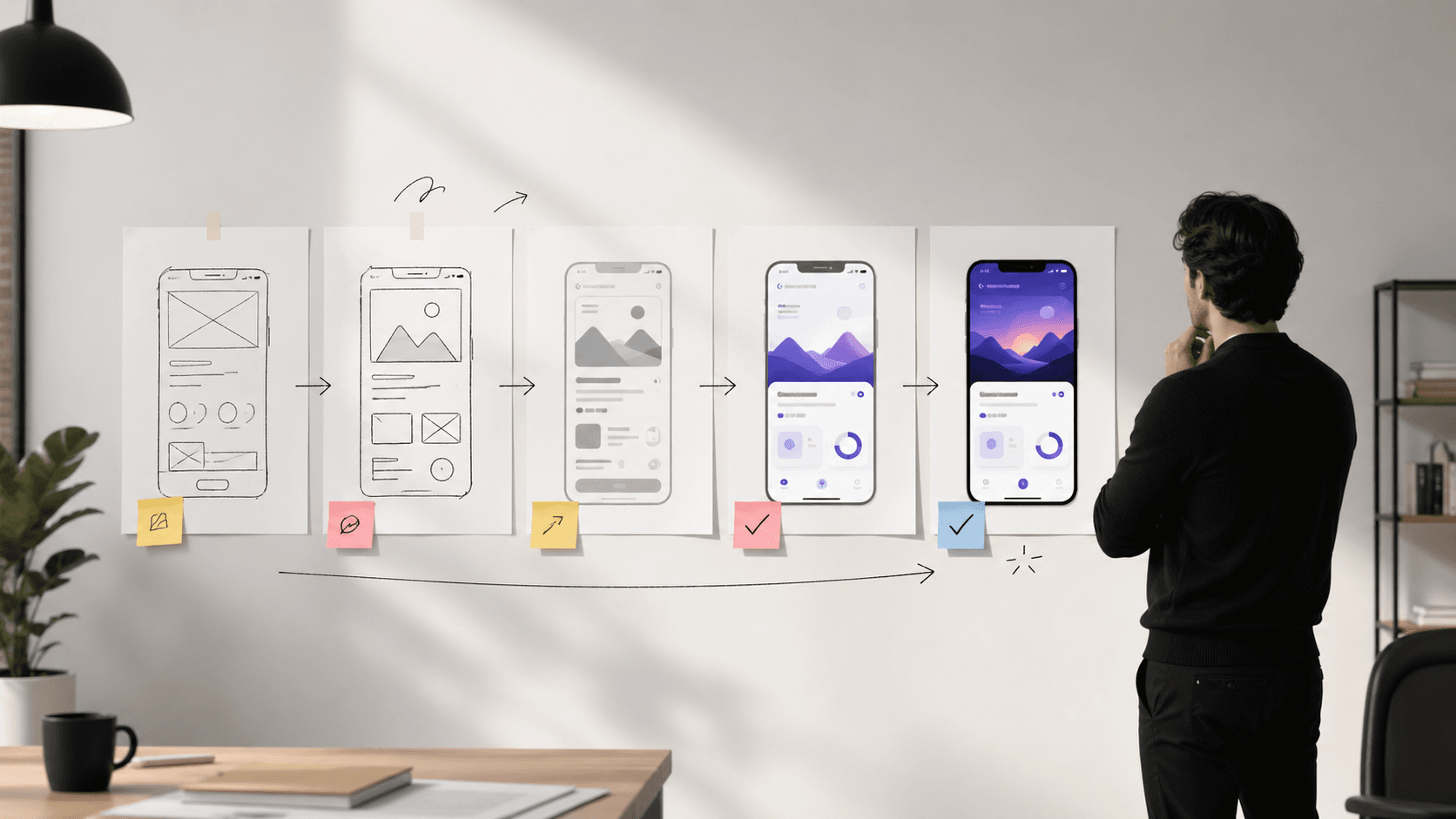
Iterative design is a cyclical approach to product development in which feedback informs continuous refinement. Unlike one-off redesigns or static releases, iterative design emphasizes learning from real user interactions, making incremental improvements, and testing changes for measurable impact. The process transforms assumptions into insights and ensures that the final product not only works but resonates with users.
Companies that adopt iterative design can respond quickly to challenges, identify pain points early, and avoid costly errors that often arise from launching features without validation. It is particularly effective for digital products, software, and web applications, where user behavior can be observed and tested repeatedly. Ankord Media specializes in helping brands structure iterative cycles, combining design strategy with user-centered insights to maximize impact.
The Iterative Design Process Explained
The core of iterative design is its cyclical nature. The process is not linear: it loops through design, testing, analysis, and refinement. Each loop produces more clarity, allowing teams to make informed decisions that align with user needs and business objectives.
- Prototype and Conceptualize: Begin with a working version or concept of the product. This can range from low-fidelity sketches to functional digital prototypes.
- Test with Users: Gather feedback through usability tests, interviews, or analytics. Focus on understanding both successes and friction points.
- Analyze Insights: Identify patterns, prioritize areas for improvement, and validate which features are performing as intended.
- Refine and Adjust: Implement changes based on insights and prepare for the next iteration.
The beauty of iterative design is that it embraces imperfection. Initial releases do not need to be flawless, because they act as learning tools to hone a product. By repeatedly cycling through the process, products evolve organically into more effective, user-aligned solutions.
Why Iterative Design Drives Better Products
Iterative design creates a feedback loop that continuously aligns product development with user expectations. This approach reduces risk because decisions are informed by actual usage rather than assumptions. It also improves adoption, satisfaction, and retention because the product adapts to real needs over time.
Several benefits emerge from a well-structured iterative process:
- Faster identification and correction of usability issues
- Incremental improvement that preserves user familiarity
- Reduced likelihood of expensive redesigns
- Opportunities to innovate based on observed behavior
- Higher overall user satisfaction and engagement
For many of its clients, Ankord Media helps embed iterative cycles into the design and development workflow. They provide guidance on collecting actionable feedback, evaluating design changes, and prioritizing features to optimize both usability and visual appeal.
Implementing Iterative Design Effectively
Implementing iterative design requires discipline and coordination across teams. Key considerations include defining measurable objectives, establishing feedback channels, and creating a culture that values experimentation and learning.
A practical approach involves:
- Mapping critical user journeys to identify testing focus areas
- Scheduling frequent, short iterations rather than long, isolated redesign cycles
- Documenting findings to maintain clarity and track progress
- Encouraging cross-functional collaboration to translate insights into improvements
The goal is to make every iteration purposeful. Not every change needs to be large. Even small adjustments can produce significant improvements in usability, engagement, and conversion.
Balancing Iteration with Strategic Vision
While iterative design emphasizes continuous change, it must coexist with a broader product vision. Teams risk creating fragmented experiences if iterations are made without strategic context. Each loop should consider both immediate learnings and the long-term objectives of the product.
Visual consistency, brand messaging, and feature coherence must remain intact. Strategic oversight ensures that improvements build toward a cohesive whole, rather than producing isolated optimizations that confuse users. Ankord Media excels at maintaining this balance, guiding teams to iterate rapidly without losing sight of brand integrity or overarching goals.