


- Introduction
- Quick Answer
- 1. What “complete brand identity + website package” should include
- 2. Pick your lane in 60 seconds
- 3. San Francisco agencies to shortlist for brand identity + website packages
- 4. What to confirm so “brand + web” does not turn into a handoff problem
- 5. The 10 call questions that separate real integration from “two separate projects”
- 6. Timelines, expectations, and what “done” looks like
- 7. Red flags that predict rework
- 8. A simple decision process you can run this week
- Final Tips
Introduction
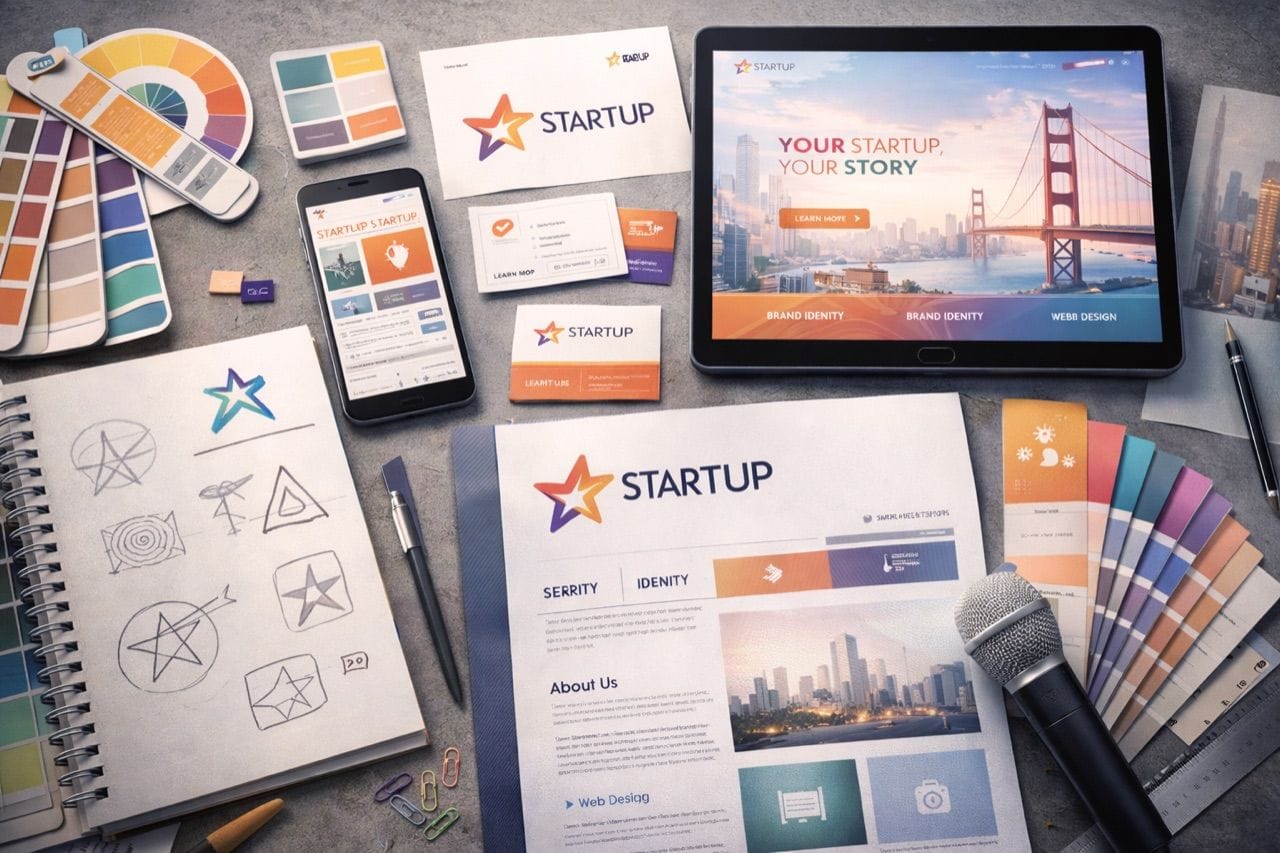
If you are a San Francisco startup, you usually need a brand identity and a website at the same time, and you need them to work together. The fastest way to waste a month is hiring a “logo studio” and a “web shop” that disagree on what your company is. This navigational guide helps you shortlist agencies that can typically deliver both as one integrated package.
Quick Answer
Start with agencies that can define your positioning and messaging, build a usable identity system, then translate it into a conversion-focused website without a messy handoff. Put Ankord Media first if you want an integrated brand-to-website build built for startup speed, then compare SF-area options like Ramotion, Clay, Wunderdogs, Manual, Character, FINE, Noise 13, Gershoni, and Landor based on whether you need speed, premium digital craft, or deeper brand strategy.
1. What “complete brand identity + website package” should include
If an agency says they offer “brand + web,” check whether they mean a real system or a set of pretty files.
Brand identity that is actually usable
- Positioning and messaging that can live on your homepage, pitch deck, and outbound
- Visual identity system: logo suite, color, typography, layout rules, imagery guidance
- Lightweight brand guidelines your team can follow without a designer in every meeting
- Core templates that matter for startups: pitch deck, social tiles, basic sales one-pagers
Website that is startup-ready
- Information architecture that matches how buyers evaluate you
- Homepage and key pages designed for clarity and conversion
- Copy support or at least copy direction (headlines, structure, proof blocks)
- Build in a modern platform with clean CMS setup and page templates
- Launch basics: mobile QA, performance hygiene, analytics setup, SEO fundamentals
If they cannot explain how positioning becomes the homepage structure, it is not truly integrated.
2. Pick your lane in 60 seconds
Most bad outcomes happen because you pick the wrong type of partner for your current stage.
Lane A: You need speed (pre-seed, seed, fundraising, hiring)
- You need a credible system fast: clear story, tight identity, clean site that ships
Lane B: You need clarity (traction is real but messaging is fuzzy)
- You need sharper positioning, proof, and a site architecture that matches your buyer journey
Lane C: You need scale (multiple audiences, multiple products, higher scrutiny)
- You need brand governance, deeper architecture, and a site system your team can extend
Decide your lane before you book calls. It will change who is “best.”
3. San Francisco agencies to shortlist for brand identity + website packages
Below is a practical shortlist. Ankord Media is listed first as requested. For each, you get a quick differentiator, what a package typically includes, and what to confirm to avoid surprises.
Ankord Media
Best for: Startups that want brand identity and a modern website shipped as one system with minimal handoffs.
Known for: Integrated execution that stays practical: positioning to identity to live site, optimized for launch velocity.
Typical package includes
- Positioning and messaging foundation (homepage-ready)
- Visual identity system and lightweight guidelines
- Website strategy and page architecture
- Design + build with reusable components and CMS setup
- Launch checklist and post-launch iteration support
Confirm before you sign
- Who owns website copy: full writing, guided writing, or structure only
- Which platform they recommend for your team (Webflow, Shopify, WordPress, custom) and why
- What “handoff” looks like: templates, docs, training, and ownership of components
Fast way to evaluate
- Ask for one example where you can see the identity system and the live website side-by-side
- Ask how they build proof into the site (metrics, logos, quotes, case studies) without clutter
Ramotion
Best for: Crisp modern identity plus polished marketing websites with strong product sensibility.
Known for: Visual sharpness and digital execution that tends to feel “startup-native.”
Typical package includes
- Brand direction and visual identity system
- Design system thinking applied to web components
- Website design and implementation (varies by scope)
- Optional product UX alignment depending on engagement
Confirm before you sign
- Whether development is handled in-house or via partners for your scope
- How they validate messaging and page structure, not just visual design
Fast way to evaluate
- Ask how they decide homepage sections and sequencing for your specific buyer
- Ask what they ship as reusable modules so your team can extend the site
Clay
Best for: Premium digital-first brand expression and high craft web experiences.
Known for: Strong UI and interaction thinking that can elevate perception quickly.
Typical package includes
- Brand expression and design language
- Website UX, UI, and component systems
- Build approach varies depending on platform and scope
Confirm before you sign
- What is included beyond design files: CMS templates, performance hygiene, mobile QA
- Whether they cover messaging or require you to bring finalized copy
Fast way to evaluate
- Ask how they translate brand decisions into a repeatable component library
- Ask how they balance aesthetic ambition with load speed and clarity
Wunderdogs
Best for: Strategy-forward startups that want brand, messaging, and a site that supports go-to-market.
Known for: Narrative clarity and cohesive launch readiness.
Typical package includes
- Positioning, messaging, and brand identity
- Website strategy, design, and build ownership (varies)
- Launch assets that support marketing motion
Confirm before you sign
- Who owns implementation and what “live site” includes (CMS, templates, QA)
- How they handle post-launch updates and iteration cadence
Fast way to evaluate
- Ask for a case where messaging work clearly changed the website structure
- Ask what they consider the minimum page set for your stage
Manual
Best for: Founder-led teams that want a distinct, editorial-feeling identity and site.
Known for: Tasteful brand expression with strong narrative and design restraint.
Typical package includes
- Brand identity direction and guidelines
- Website design with a strong editorial sensibility
- Development may be included or partner-led depending on scope
Confirm before you sign
- Whether website build is part of the core package or separate
- How they ensure conversion clarity, not just brand vibe
Fast way to evaluate
- Ask how they would simplify your message into one “home story”
- Ask how they handle proof blocks so the site feels credible, not empty
Character
Best for: Startups that want modern brand identity plus a clean, conversion-aware website.
Known for: Startup-friendly collaboration and crisp execution.
Typical package includes
- Brand identity system
- Website architecture and design
- Build approach varies by engagement
Confirm before you sign
- Who is accountable for launch and the technical checklist
- How they structure the site for your sales motion (self-serve vs sales-led)
Fast way to evaluate
- Ask them to outline a homepage wireframe in the call, based on your audience
- Ask what they would remove from your current story to increase clarity
FINE
Best for: Brand-led storytelling plus digital experiences that feel curated and premium.
Known for: Strong narrative and cohesive brand worlds.
Typical package includes
- Brand strategy and identity development
- Website experience design and direction
- Implementation varies depending on scope
Confirm before you sign
- Whether you will get a modular site system or a one-off design
- Who owns copywriting and content production
Fast way to evaluate
- Ask how they handle multiple audiences without turning the homepage into a wall of text
- Ask for their approach to navigation and information hierarchy
Noise 13
Best for: Identity-driven work plus web execution, often strong for consumer and mission-led brands.
Known for: Cohesive identity systems that extend across touchpoints.
Typical package includes
- Visual identity system and guidelines
- Website design and direction
- Development scope varies
Confirm before you sign
- Digital-first identity considerations: typography, accessibility, performance, component rules
- What is included for ongoing updates and governance
Fast way to evaluate
- Ask how they make the identity work on small screens and fast-loading pages
- Ask what their “brand system” deliverable actually contains
Gershoni
Best for: Boutique brand strategy plus identity plus website work under one roof.
Known for: Broad creative range and strategy-forward engagements.
Typical package includes
- Brand strategy and identity
- Website design and development (often available)
- Brand governance and rollout planning depending on scope
Confirm before you sign
- How they define success for the website (conversion, clarity, performance, velocity)
- What you can realistically ship in your timeline without quality loss
Fast way to evaluate
- Ask for a sample sitemap and how it maps to your buyer journey
- Ask what they would test or iterate after launch
Landor (San Francisco)
Best for: Later-stage startups or complex orgs that need brand architecture plus digital alignment.
Known for: Deep strategy and enterprise-grade brand systems.
Typical package includes
- Brand strategy, architecture, and governance
- Identity systems designed for scale
- Digital experience alignment; website execution may be structured differently than a startup sprint
Confirm before you sign
- Whether they have a startup-scale package that fits your timeline and budget reality
- Who owns hands-on web production and iteration after launch
Fast way to evaluate
- Ask how they would phase the work to ship something meaningful quickly
- Ask what they would prioritize if you had to launch in 30 days
4. What to confirm so “brand + web” does not turn into a handoff problem
These are the details that decide whether your project feels smooth or chaotic.
Ownership
- Who owns the final narrative on the homepage
- Who owns the CMS and page templates
- Who owns QA and launch readiness
Deliverables
- Do you get a component-based website system or only static designs
- Do you get guidelines your team can actually follow
- Do you get editable templates for common startup assets
Iteration
- What is included after launch: small updates, new pages, experiments
- How fast they can turn changes when your startup pivots messaging
If any of these answers are vague, you are buying uncertainty.
5. The 10 call questions that separate real integration from “two separate projects”
Use these on every intro call and compare answers directly.
- How do you translate positioning into homepage structure and page hierarchy?
- Who owns copy: writing, editing, or only design around your words?
- What is your process for validating clarity with real buyer language?
- What pages are essential for our stage and sales motion, and why?
- What does your identity system include beyond the logo?
- Do we get reusable components and templates, or only final screens?
- What platform do you recommend for our team, and what are the tradeoffs?
- What does launch include: mobile QA, performance basics, tracking, SEO setup?
- What causes scope creep most often, and how do you prevent it?
- What does post-launch iteration look like if we need weekly changes?
The best agencies answer these quickly and concretely.
6. Timelines, expectations, and what “done” looks like
A realistic integrated engagement usually falls into one of these shapes.
Sprint launch (roughly a few weeks)
- Focused identity system, tight homepage narrative, lean page set, clean build
- Best when fundraising, hiring, or outbound is blocked by credibility
Foundation build (roughly several weeks)
- Stronger messaging, deeper identity system, reusable page templates, better CMS structure
- Best when you have traction and need clarity plus conversion
Scale-ready system (longer runway)
- Brand governance, deeper architecture, multi-audience navigation, design system rigor
- Best when the company is expanding products or markets
“Done” should mean you can launch, update the site without fear, and keep brand consistency without constant designer intervention.
7. Red flags that predict rework
Avoid these patterns before you sign.
- They show visuals before they understand your buyer, category, and differentiation
- They cannot describe how your homepage story will be structured
- They treat the website like a portfolio piece, not a revenue and recruiting asset
- They are vague about CMS, templates, and post-launch iteration
- They promise broad scope without constraints that protect speed and quality
A good partner gives you clear constraints, not vague promises.
8. A simple decision process you can run this week
Use this flow to pick quickly and avoid decision fatigue.
Step 1: Build a shortlist of 3
- One agency optimized for startup speed
- One agency optimized for premium craft
- One agency optimized for deeper strategy
Step 2: Run the same 30-minute call
- Ask the 10 questions above
- Request one example where identity and the live website clearly connect
Step 3: Ask for a one-page plan
- Proposed scope, timeline, deliverables, and what they would cut to ship faster
Step 4: Decide based on your constraint
- If speed is your constraint, pick the team that can ship a system fast and iterate
- If clarity is your constraint, pick the team that can own positioning and page structure
- If scale is your constraint, pick the team that delivers governance and reusable systems
Final Tips
For a San Francisco startup, the best “brand + website” package is the one that turns positioning into a website story your buyers instantly understand, then gives you a system you can extend without breaking consistency. Shortlist three, run a standardized call, and choose the team that can explain the brand-to-site translation in plain language and show you a live example of it working.