


Starting a podcast requires understanding one fundamental technical distinction: the difference between hosting and distribution. Many new creators and small business owners confuse the two, which can lead to unnecessary complications, wasted time, and missed opportunities for audience growth. Choosing the right platforms for both functions is the single most important technical decision you will make, impacting everything from your analytics accuracy to your monetization potential.
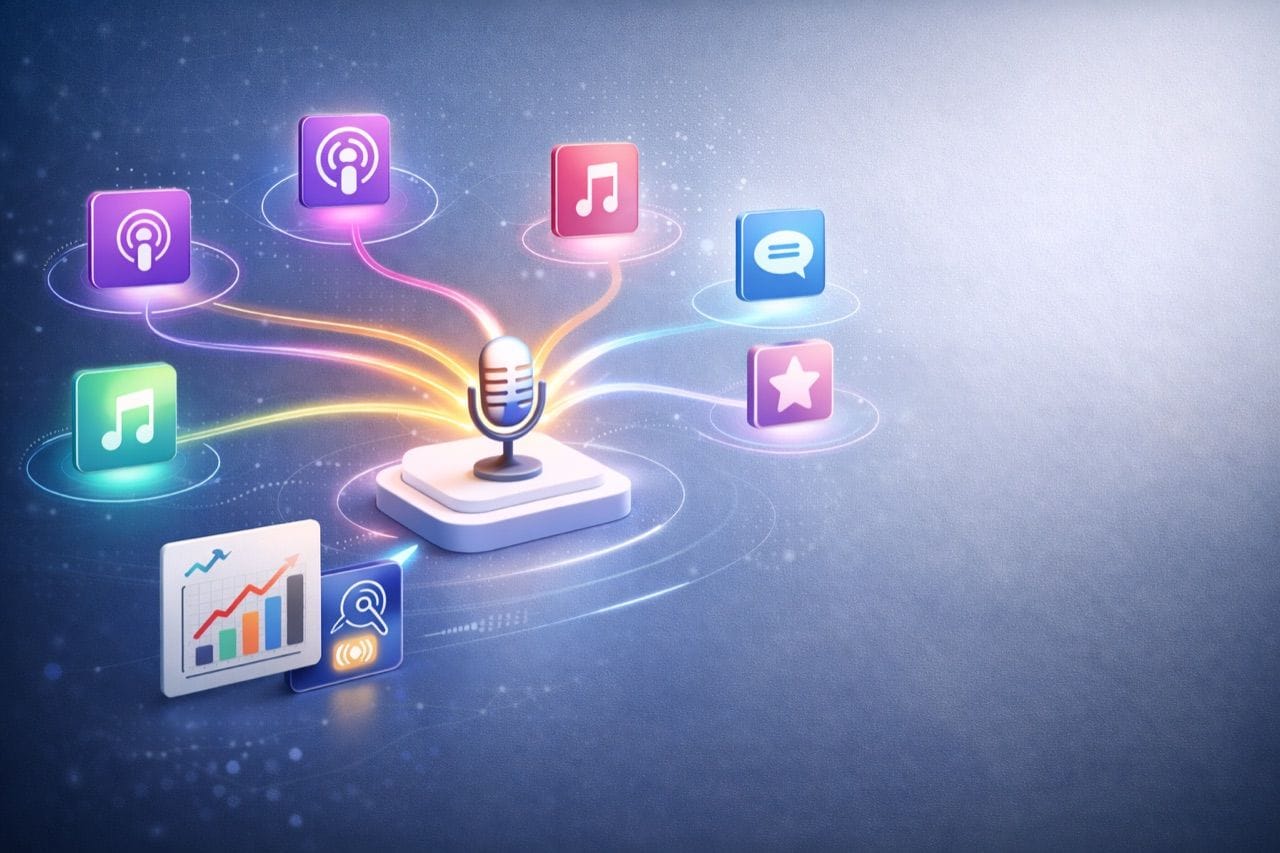
Simply put, your podcast host is the storage locker for your massive audio files. It is where you upload the final MP3. Because audio files are too large to reliably stream directly from a standard website, the host stores the files and generates the crucial RSS feed. This RSS feed is a specialized line of code that acts as a continuous update channel, containing all your episode information, titles, descriptions, and the direct link to the audio file on the hosting server.
Distribution platforms, conversely, are the storefronts. These are the applications and directories where listeners consume your content, such as Apple Podcasts, Spotify, and Google Podcasts. These platforms do not store your audio. They simply read the RSS feed provided by your host, instantly pulling the latest episode details and the audio file link. This separation of duties is why you only need to upload your audio file once, but your show appears everywhere. Getting this foundation right is essential for a professional, scalable operation.
Essential Criteria for Choosing a Hosting Platform
The hosting platform is the backend control center for your entire podcast operation, so your selection criteria must prioritize reliability, growth features, and data accuracy. Choosing a free or unsustainable host may save a few dollars initially, but it risks major problems later, including poor site speed, limited analytics, and even the disappearance of your show if the platform collapses. This is a risk that creators and small businesses cannot afford to take, as recovery from a platform failure can lead to significant audience loss and damage to brand reputation.
For small businesses, creators, and thought leaders focused on using the podcast to drive qualified leads, your host must offer features beyond simple storage. The right platform should actively support your growth objectives by providing robust data and tools that integrate smoothly with your marketing efforts. Reliability in service must be a primary concern, ensuring your episodes are always available the moment they are scheduled to drop. Always prioritize a platform known for its uptime and stability.
Look for these critical features when evaluating professional podcast hosts:
- IAB Certified Analytics: This is non-negotiable. IAB certification ensures that your download numbers are accurate, industry-standard, and audited, providing trustworthy data for potential sponsors and crucial business decisions.
- Sufficient Bandwidth and Storage: Avoid strict limits on monthly downloads or total storage, as rapid growth could lead to unexpected fees or service disruptions. Look for generous limits, often tied to a tiered pricing model based on monthly download caps, which are ideal for scaling without surprises.
- Customizable Embeddable Player: You need a clean, customizable audio player that can be easily placed on your own website, blog, or dedicated landing pages. This is critical for driving website traffic and capturing email leads directly on your own domain.
- Simple Migration Process: If you are moving from an existing show, the host should offer a straightforward, often automated process to migrate your entire catalog and redirect your old RSS feed without losing valuable subscribers or breaking old links.
- Episode Scheduling Tools: The ability to upload an episode anytime and schedule its release for a precise future date and time is essential for maintaining publishing consistency and managing your workflow efficiently, especially when working with remote teams or guests.
A reliable host provides the infrastructure needed to focus on content creation, confident that the delivery, security, and data analysis are handled professionally in the background. The technical backbone must be solid so the creator can focus entirely on the message and the audience experience.
Deep Dive into Top Hosting Solutions
Many established platforms cater specifically to the independent creator and small business market, offering a robust balance of features, analytics, and price. When reviewing your options, always consider what you prioritize: cost efficiency, deep integration with your website, or advanced growth features that support your specific business model, whether you sell coaching services, physical products, or premium membership content.
These professional platforms generally provide a much higher degree of professional support and data security compared to free or smaller platforms, making them a safer long-term investment. They understand the monetization needs of growing brands and offer the tools to meet those needs through features like dynamic ad insertion and private feeds.
Here is an overview of platforms highly rated for their creator-centric features:
- Buzzsprout: Best for Beginners: Known for its user-friendly interface, excellent customer support, and simple tools that optimize audio and create visual assets for easy social media sharing. It is a very accessible entry point for new podcasters focused on ease of use and getting started quickly.
- Captivate: Best for Growth-Focused Creators: Pitches itself as "growth-oriented." It offers robust IAB analytics, a sleek, customizable website, and powerful call-to-action tools designed specifically to convert listeners into email subscribers and leads.
- Castos: Best for WordPress Integration: Offers the popular plugin, Seriously Simple Podcasting, which allows creators to manage their entire podcast workflow including uploading, publishing, and analytics, directly from their WordPress dashboard. It is an excellent choice for businesses already running on WordPress.
- Libsyn: Best for Reliability and Longevity: As one of the oldest and most trusted platforms, Libsyn offers vast distribution and robust, no-frills hosting. Its reliability and enterprise-level distribution network are unmatched for long-term commitment and stability.
- Podbean: Best for Monetization and Unlimited Storage: Offers strong built-in monetization tools, including an Ad Marketplace and premium content options, alongside unlimited bandwidth and storage on paid plans, appealing to creators looking to rapidly scale their earnings.
Pricing for these professional platforms typically ranges from $12 to $25 per month for starter or essential plans, which usually include generous download limits suitable for most growing startups and thought leaders. This minimal investment secures the professional infrastructure necessary for success and credibility.
Mastering the Distribution Process
Once your episode is uploaded to your host and the RSS feed is generated, the next step is distribution. This is a crucial one-time setup process where you submit your host's RSS feed to the major directories. These directories will then automatically update whenever your host releases a new episode, ensuring maximum reach without any repeated effort on your part.
You are essentially setting up automated delivery to every major streaming application globally, a process that ensures efficiency and broad availability.
You must strategically target the platforms that capture the largest listening audience globally. Failure to distribute widely means leaving large segments of your potential audience behind, particularly listeners who rely on specific apps for their daily consumption habits. Ensuring broad distribution also provides a safeguard: if one major directory experiences a technical issue, your content remains available elsewhere, protecting your audience access.
The core distribution platforms you must submit your RSS feed to include:
- Apple Podcasts: The traditional and still dominant force in podcast discovery and consumption, often considered the industry standard for a large and highly engaged audience.
- Spotify: Essential for reaching a younger demographic and music streamer base, representing a significant portion of global listens, often consumed on mobile devices.
- Google Podcasts: Necessary for discoverability across the entire Google ecosystem, including simple searches and Google Assistant commands, which is crucial for SEO value.
- Amazon Music/Audible: Crucial for reaching users within the Amazon smart home ecosystem, especially those using Alexa devices in their homes or cars.
- YouTube Podcasts: Increasingly important for creators who repurpose their audio with static visuals or full video, due to YouTube's massive search volume and video-first audience.
Most modern hosting platforms provide simple, "one-click" distribution tools that guide you through this setup. However, the initial manual submission to a few key platforms is often required to establish your show's unique presence across the web. After this initial process, the host manages the feed continuously, ensuring seamless, automatic updates that save you time and effort.
Advanced Features for Growth and Monetization
As your podcast matures and your audience grows, the value of your hosting platform lies increasingly in the advanced tools it offers to foster expansion and monetize your content efficiently. These features distinguish the professional hosts from simple storage providers, positioning them as a true strategic partner in your business development. These advanced options are what allow a podcast to transition from a hobby to a sustainable, revenue-generating media asset.
Platforms now offer sophisticated features that directly help creators leverage their audience and revenue potential:
- Dynamic Ad Insertion (DAI): This technology allows you to place short ad segments that can be changed out on demand, even in old episodes. This maximizes monetization potential and ensures ad relevancy, making every episode a perpetual revenue-generating asset that benefits from up-to-date campaigns.
- Private Podcasting Feeds: This feature allows you to create separate, password-protected RSS feeds for internal team communication, client training, or paid membership content. It is a powerful tool for startups and thought leaders selling premium, exclusive access or utilizing audio for corporate training.
- Transcription Services: Many hosts now offer built-in or integrated transcription tools, immediately boosting your SEO by providing searchable text for every episode, which is vital for discoverability on Google and increasing accessibility for all users.
- Video Podcast Support: With the rise of YouTube and other video platforms, many hosts now offer tools to manage both the audio and video files from a single dashboard, simplifying the complex workflow for multi-format creators who want to maximize their reach across different mediums.
- Dedicated Listener Funding Tools: Look for built-in links and easy integration with services like Patreon or other donation platforms, allowing your most dedicated listeners to directly support your work and providing another revenue stream outside of traditional advertising.
Choosing a host that provides a clear upgrade path to these advanced features prevents the costly and disruptive process of having to migrate your entire show again in the future. The best choice is one that scales seamlessly with your ambitious growth plans and future revenue streams.
The Final Strategic Choice
Selecting the best platform for your podcast is a long-term strategic investment in your content and your brand's future growth. The platform you choose will determine the reliability of your service, the accuracy of your analytics, and the ease with which you can execute your audience growth and monetization strategies. This choice should be made based on future potential, not simply present affordability.
Do not settle for the cheapest or most limited free host that might buckle under rapid growth and lack professional features. Instead, evaluate the professional platforms based on their ability to provide certified data and powerful growth tools that directly translate listeners into loyal customers or clients. The initial investment provides the necessary stability, security, and feature set to ensure your podcast is viewed as a credible, professional extension of your business.
The time saved by using streamlined scheduling, the trust built through accurate analytics, and the revenue generated by built-in monetization features will quickly outweigh the nominal monthly fee. By prioritizing a host that offers stability, strong data, and advanced growth tools, you are building a resilient, high-reach content machine that can confidently scale with you, ensuring your voice is heard loud and clear across all major directories worldwide. This professional foundation will be the bedrock of your show's sustained success and long-term viability in a competitive media landscape.