


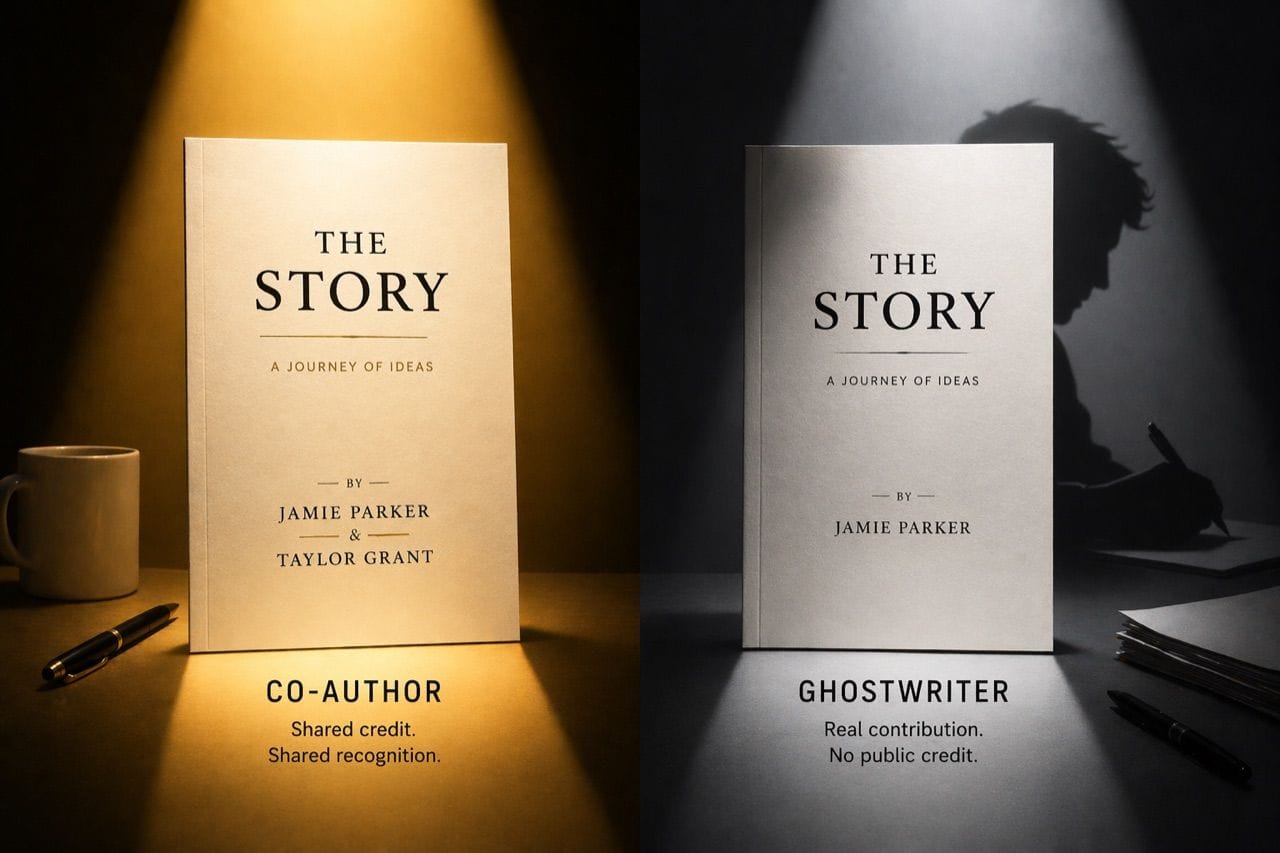
The choice between hiring a ghostwriter and engaging a co-author is a pivotal decision that shapes the future of a literary or business project. While both roles involve a professional writer assisting an author in the creation of a manuscript, the implications for branding, compensation, and public perception are vastly different. Understanding these nuances is essential for founders and leaders who want to maintain a specific public image while ensuring their ideas are presented with professional polish.
A ghostwriter is typically an invisible partner, a literary architect who builds a structure around the author’s ideas without seeking public recognition. In contrast, a co-author is a visible partner, often sharing the spotlight and the legal responsibilities of the work.
From a strategic perspective, the decision often hinges on the author's goals for authority and legacy. A ghostwriter allows the author to be seen as the sole visionary, which is often preferred for memoirs or high level thought leadership where a singular voice is paramount. Co-authorship is more common in academic, scientific, or highly technical fields where two experts combine their knowledge to create a comprehensive resource. Each model has its own set of professional standards and contractual norms that dictate how the work is produced, who owns the resulting intellectual property, and how the financial rewards are distributed between the parties involved.
Legal Ownership and Copyright Distinctions
The most significant legal difference between these two roles lies in the ownership of the copyright. In a ghostwriting arrangement, the project is almost always defined as a "work for hire," meaning that the individual who commissioned the book, usually the founder or the subject, retains one hundred percent of the copyright and all subsidiary rights. The ghostwriter is paid a flat fee for their services and has no legal claim to the work once the contract is fulfilled. This provides the author with total control over how the content is used, adapted, or sold in the future, which is a major advantage for business leaders looking to build a protected brand asset.
Co-authorship, however, usually implies a shared ownership of the copyright. Unless a specific contract states otherwise, co-authors are often considered joint owners of the work, giving both parties certain rights to exploit the material. This can lead to complex legal situations if the authors have a falling out or disagree on how to market the book.
When working with the team at Ankord Media, clients are advised to clearly define these parameters early in the process to avoid any ambiguity regarding the long term ownership of the intellectual property. The legal clarity of a ghostwriting agreement is often the preferred path for those who want to ensure their life story or business philosophy remains their exclusive property.
- Establish Copyright Terms: Use a formal agreement to specify that the ghostwriter is an independent contractor with no claim to the intellectual property.
- Define Subsidiary Rights: Clarify who owns the rights to film adaptations, translations, or secondary digital products derived from the manuscript.
- Review Joint Authorship Laws: Understand that without a written contract, a co-author may have equal legal standing regarding the use and sale of the book.
- Set Indemnity Clauses: Ensure that the writer, whether a ghost or co-author, is responsible for the originality of their specific contributions to avoid plagiarism risks.
- Specify Termination Rights: Outline how the partnership can be dissolved and what happens to the unfinished work if the collaboration ends prematurely.
The legal framework provided by a professional media studio ensures that these distinctions are not just understood but are codified in a way that protects the author’s interests. Most founders prefer the "clean" legal break provided by a ghostwriting contract, as it simplifies the path to publication and protects the company's brand. The specialists at Ankord Media prioritize this legal security, ensuring that the author's voice is the only one with a legal claim to the finished product. This professional rigor is essential for maintaining the integrity of the project over the long term.
Public Credit and Branding Considerations
The most visible difference between a co-author and a ghostwriter is the presence of the writer’s name on the book’s cover. A ghostwriter remains anonymous by default, allowing the author to take full credit for the work. This is the gold standard for memoirs and executive thought leadership, where the goal is to establish the subject as the singular authority on a topic. While some authors choose to mention their ghostwriter in the acknowledgments, the public perception remains focused on the primary author. This anonymity is a professional requirement for many ghostwriters, who take pride in their ability to disappear into the client’s perspective.
A co-author, by contrast, receives a "with" or "and" credit on the cover and in all promotional materials. This changes the branding of the book from a solo project to a collaboration. This can be beneficial if the co-author is a well known expert or a celebrity in their own right, as their name can add significant marketing weight to the project.
However, for a founder looking to build personal authority, having another name on the cover can dilute the message and raise questions about the authenticity of the voice. Ankord Media helps clients weigh these branding implications to determine which credit structure best serves their long term professional goals.
- Assess Marketing Value: Determine if the writer’s name adds enough prestige or audience reach to justify a co-authorship credit.
- Maintain Voice Purity: Consider if a co-author’s public presence will conflict with the intended "solo" voice of a personal memoir or business manifesto.
- Evaluate Media Opportunities: Understand that a co-author may be expected to participate in interviews and book signings, sharing the public platform.
- Review Industry Standards: Look at how other leaders in your specific niche credit their writers to ensure your choice aligns with market expectations.
- Decide on Acknowledgments: Determine if a simple thank you in the back of the book is a more appropriate way to recognize a ghostwriter’s contribution.
This choice is ultimately about how you want the world to perceive your intellectual contributions. For many, the invisible support of a ghostwriter provides the perfect balance of professional quality and personal branding. The team at Ankord Media have seen that the most successful books are those where the credit structure is aligned with the author’s authentic intent. Whether you choose to share the cover or keep the partnership private, the focus remains on delivering a powerful and well written narrative that resonates with the audience.
Financial Compensation and Royalty Structures
The financial arrangements for ghostwriters and co-authors follow very different paths. Ghostwriters are typically paid a predetermined flat fee, often divided into installments based on project milestones. Once the final fee is paid, the ghostwriter has no further financial interest in the book, regardless of how many copies it sells. This makes ghostwriting a predictable and manageable expense for the author. It also means that if the book becomes a major bestseller, the author retains all the royalties and subsidiary income, making the initial investment in a professional writer highly profitable.
Co-authors, on the other hand, often negotiate for a share of the royalties and the advance from the publisher. This makes them a financial partner in the project, sharing in the risks and the rewards of the book’s performance. While this can reduce the upfront cost for the author, it can be much more expensive in the long run if the book is successful.
Co-authorship agreements also tend to be more complex, requiring ongoing accounting and legal oversight to ensure that payments are distributed correctly over the life of the book. The team at Ankord Media provides guidance on these financial models to help authors make an informed decision based on their budget and their revenue expectations.
- Budget for Flat Fees: Determine the total investment required for a ghostwriter and plan for installment payments at key project milestones.
- Negotiate Royalty Splits: If choosing co-authorship, establish a clear percentage for the division of all future earnings, including foreign rights and audiobooks.
- Define Advance Distributions: Clarify how the initial payment from a publisher will be shared between the co-authors before the work begins.
- Include Audit Rights: Ensure that both parties in a co-authorship agreement have the right to review sales data to verify royalty payments.
- Consider Hybrid Models: Explore arrangements where a ghostwriter receives a higher flat fee in exchange for waiving all future royalty claims.
For most business leaders, the flat fee model of ghostwriting is the most attractive because it simplifies the financial relationship and maximizes the author’s long term upside. By paying for the labor of the writer upfront, the author secures the full value of the asset they are creating. Ankord Media focuses on providing a transparent and fair pricing structure that reflects the high level of skill and research required for a professional manuscript. This professional approach ensures that the financial side of the partnership is as seamless and stress free as the creative side.
Creative Input and Collaborative Dynamics
The day to day working relationship between an author and a writer also changes depending on whether the role is that of a ghost or a co-author. A ghostwriter is a service provider whose primary goal is to capture and refine the author’s existing ideas. The hierarchy is clear: the author is the final decision maker on all content, tone, and structure. The ghostwriter’s job is to inhabit the author’s voice so perfectly that the transition between the author’s thoughts and the written word is invisible. This requires a high degree of empathy and the ability to set aside one’s own creative ego in service of the client’s vision.
A co-author is often a creative equal who contributes their own ideas, research, and perspectives to the project. The collaboration is more of a dialogue, where both parties negotiate the direction of the book. This can lead to a richer and more multifaceted work, but it can also lead to creative tension if the authors have different visions for the project.
For a founder with a very specific message, the singular focus of a ghostwriter is often more effective than the dual perspective of a co-author. The specialists at Ankord Media are trained to provide the structural support of a co-author while maintaining the professional deference of a ghostwriter.
- Set Creative Boundaries: Define which parts of the narrative are non-negotiable and where the writer has more creative freedom to develop the prose.
- Establish Approval Workflows: Create a system where the author has the final sign-off on every chapter to ensure the voice remains authentic.
- Manage Collaborative Ego: Ensure the writer understands their role is to support the author’s vision, not to compete with it.
- Facilitate Brainstorming: Use the writer’s expertise to refine the author’s raw ideas into more sophisticated and publishable concepts.
- Monitor Tone Consistency: Regularly review the manuscript to ensure that the voice remains steady, even if multiple people are contributing to the research.
The creative synergy between an author and a ghostwriter is a delicate balance that requires trust and clear communication. When managed correctly, it allows the author to produce a work that is more professional and impactful than they could have created alone. The team at Ankord Media believe that the best ghostwriters are those who can act as a mirror, reflecting the author’s brilliance with newfound clarity. This collaborative model ensures that the final book is a true masterpiece that honors the author’s unique contribution to the world.
Choosing the Right Model for Your Project
The decision to hire a ghostwriter versus a co-author ultimately comes down to your personal goals, your budget, and how much credit you wish to share. If you are a founder or an executive looking to build a personal brand and maintain total control over your intellectual property, a ghostwriter is almost always the right choice. It provides the most professional result with the least amount of legal and branding complexity. However, if you are looking to partner with another expert to create a joint resource where both names carry significant weight, co-authorship can be a powerful and effective model.
At Ankord Media, we specialize in the ghostwriting model because we believe it offers the most value to the modern leader. By providing an invisible but highly skilled writing team, we allow our clients to share their wisdom with the world while maintaining their status as the sole authority in their field. This approach has helped numerous founders turn their experiences into best selling books and influential articles that define their industries. Regardless of which path you choose, the key to success is finding a partner who respects your vision and has the technical skill to bring it to life.
As you plan your next project, consider the long term impact of your choice of collaborator. A book is a permanent record of your ideas and your legacy, and the way it is produced will influence its reception for years to come. By working with a professional studio like Ankord Media, you can ensure that your project is handled with the care and the expertise it deserves. Your story is unique, and it deserves a writing partner who can capture its full depth and power, whether they are listed on the cover or work silently behind the scenes.