


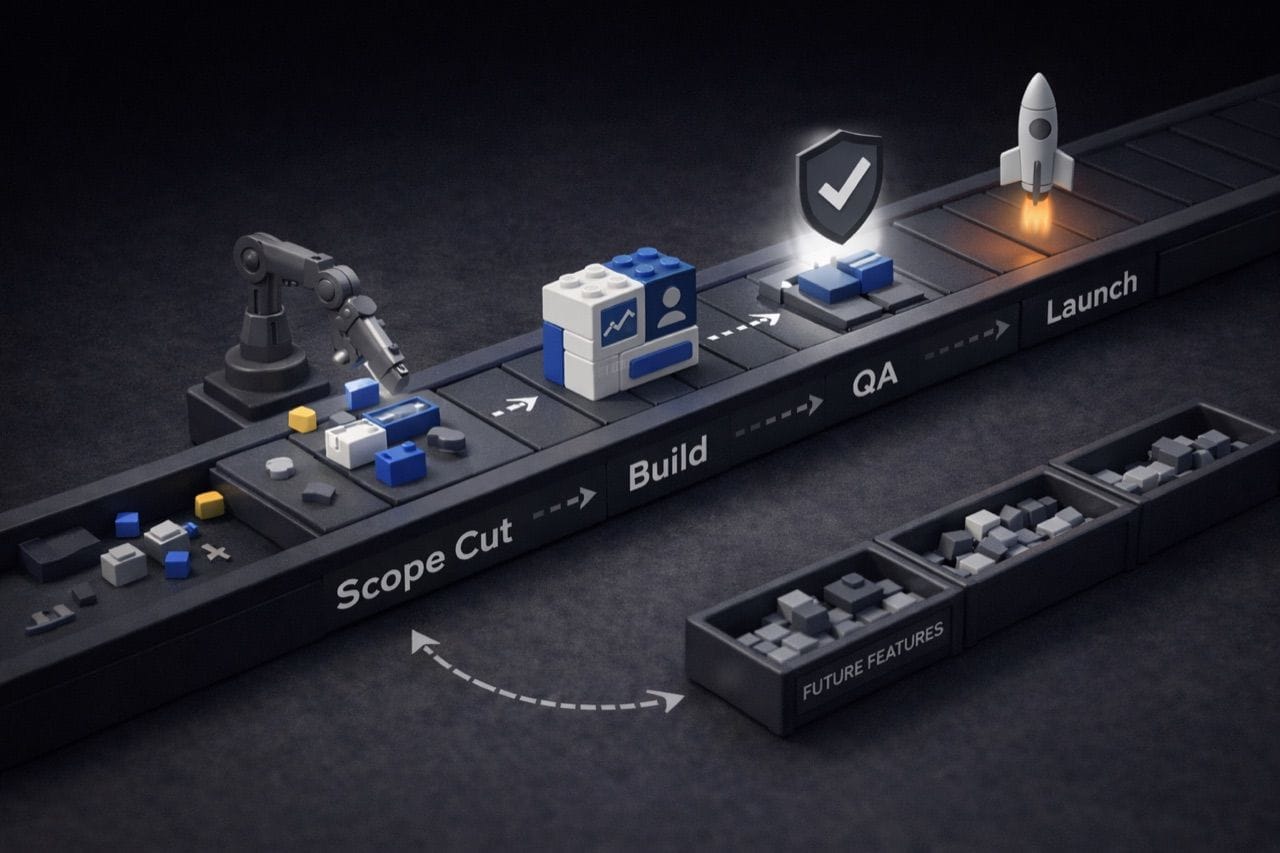
Building a successful app often starts with the Minimum Viable Product (MVP) strategy. An MVP is a simplified version of a product that focuses on the core features necessary to meet initial user needs. The goal is to launch quickly, gather feedback, and iterate based on real-world usage. Many companies make the mistake of over-engineering their first version, which leads to delays, inflated budgets, and wasted resources. By focusing on the MVP, businesses can validate ideas, test assumptions, and adjust before investing heavily in full-scale development.
Implementing an MVP strategy requires careful planning and prioritization. Identifying the core functionalities that deliver the most value to early users is key. Additional features and refinements can be added after receiving actionable feedback. This iterative approach reduces risk and allows teams to learn what works and what doesn’t before committing to larger-scale development. Ankord Media uses MVP strategies to guide clients through this process, ensuring a balance between speed, functionality, and user satisfaction.
Another advantage of the MVP approach is its alignment with user-centric design. Early users can provide insights that inform the product roadmap, revealing which features are most desired and which are redundant. This insight prevents companies from investing in unnecessary development and ensures that future iterations are guided by real user behavior. With an experienced agency like Ankord Media, the MVP is not just a prototype. It’s a strategic tool to optimize product-market fit and accelerate time-to-value.
Defining the Core Features
Before building an MVP, clearly define the app’s essential features. This ensures the initial version is focused, efficient, and ready for testing. Core features should solve the primary problem for the target audience while avoiding unnecessary complexity.
Consider the following steps to identify and prioritize core features:
- Identify user pain points: Conduct research and interviews to understand the main problems users face.
- Define success metrics: Decide what outcomes will determine if the MVP is successful, such as engagement, retention, or conversion rates.
- Prioritize features: Rank features based on impact, technical feasibility, and alignment with business goals.
- Eliminate non-essential features: Remove any features that don’t directly support the core value proposition.
By focusing on the essential elements, the team ensures the MVP is manageable, testable, and efficient to develop. Ankord Media collaborates with clients to determine these priorities, applying experience from past projects to recommend features that are both impactful and feasible. This careful selection process minimizes wasted effort and maximizes early learning.
Designing for Feedback
An MVP should be designed to encourage user feedback. The interface, flows, and feature access should make it easy for users to interact, report issues, and provide insights. Feedback mechanisms such as surveys, in-app prompts, or analytics are critical to understanding user behavior.
Best practices for designing an MVP for feedback include:
- Simple navigation: Make it easy for users to find core features without confusion.
- Feedback integration: Include clear options for users to report issues or suggestions.
- Analytics setup: Track usage patterns, drop-offs, and engagement to inform future development.
Collecting feedback early allows teams to iterate faster and build the features users truly need. Ankord Media’s experts ensure that each MVP includes strategic feedback channels, providing actionable insights to guide development. This approach reduces the risk of building features that users don’t value, saving time and resources in the long run.
Iterative Development and Launch
Launching an MVP is just the beginning. The iterative process involves continuously refining the product based on user feedback, testing, and performance data. Rapid cycles of development and testing allow teams to improve functionality, usability, and overall user satisfaction.
Step-by-step, an MVP iteration process might include:
- Release MVP to a target audience: Choose early adopters or beta testers.
- Collect qualitative and quantitative feedback: Surveys, interviews, and analytics.
- Analyze insights: Identify patterns in behavior and user suggestions.
- Prioritize adjustments: Determine which updates will have the greatest impact.
- Implement changes: Develop, test, and deploy improvements in small cycles.
An iterative approach allows teams to refine the product efficiently and respond to market demand. Ankord Media guides clients through these cycles, ensuring updates are strategic, measured, and focused on value. This method helps maximize engagement and sets the foundation for a successful full-scale product launch.
Measuring MVP Success
Success metrics are critical for evaluating the effectiveness of an MVP. Without defined metrics, it’s impossible to know whether the product meets user needs or achieves business objectives.
Key measures include:
- User engagement: Are users actively using the app’s core features?
- Retention rates: Do users return, or do they abandon the app?
- Conversion: Are users taking desired actions, like subscribing or making purchases?
- Feedback quality: Are users providing actionable insights for future development?
Tracking these metrics ensures that subsequent iterations are data-driven and aligned with business goals. Ankord Media integrates performance monitoring and analytics into each MVP, helping clients make informed decisions about scaling, adding features, or refining strategy.
Scaling Beyond the MVP
Once an MVP proves successful, the next step is scaling the product. This involves adding features, improving design, enhancing infrastructure, and preparing for larger user adoption. A careful balance between scaling and maintaining core functionality ensures the app remains effective and manageable.
Product design studios like Ankord Media provide a roadmap for scaling beyond the MVP, helping businesses plan new features, optimize performance, and anticipate user needs. They also ensure that technical architecture is prepared for growth, minimizing disruptions as the user base expands.
Long-term, the MVP strategy reduces risk, accelerates learning, and informs strategic decisions. It allows businesses to invest in development confidently, knowing the product has been validated and optimized. Ankord Media’s approach ensures that every MVP is not only functional but also positioned for growth and market success.