


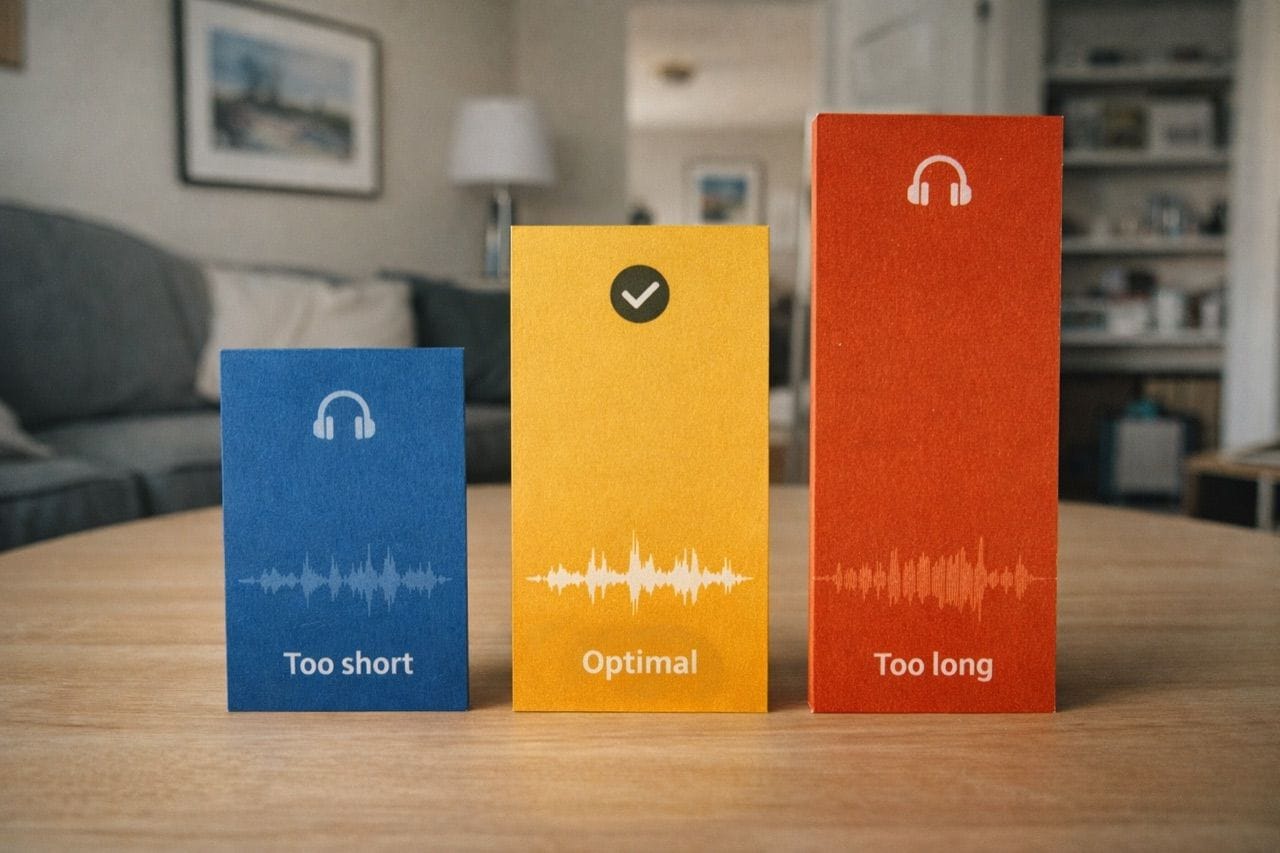
When a potential listener clicks on your podcast episode, they are making a time investment. The duration of that episode is the first piece of information they process, and it immediately sets an expectation for the content's depth and commitment required.
For creators, startups, and small business owners, determining the optimal length for your show is a critical strategic decision that directly impacts audience retention, download completion rates, and listener loyalty. Too short, and you risk sounding shallow or uncommitted; too long, and you risk abandonment, especially from listeners with limited time.
The reality is that there is no single perfect answer that applies to every single podcast genre or audience. The ideal length is a moving target, highly dependent on the show's format, the listener's typical consumption environment, and the complexity of the subject matter. Successfully finding your show's unique sweet spot involves balancing listener psychology with data and ensuring that every minute of the final product delivers genuine, actionable value.
This requires moving past the industry averages and deeply understanding your specific audience's lifestyle and how they engage with audio. The decision is about respecting the listener's time and ensuring that every minute you demand from them is paid back in insight, entertainment, or connection.
The Psychology Behind Listener Retention
The duration displayed on the screen is the actual length, but the listener's perception is what truly matters. An episode that is 60 minutes long but is packed with energy, compelling interviews, and sharp editing can feel faster than a 20-minute episode that is poorly structured and full of awkward pauses. Retention is driven by perceived value and pacing. If a listener finds the content continuously rewarding, they are far more likely to listen to the end, regardless of the timestamp.
Creators must view their content not just as a recording, but as a narrative flow. The pacing needs to be tight, eliminating unnecessary filler, tangents that don't serve the core purpose, and lengthy, repetitive introductions. Every word should contribute to the overall value proposition.
Several psychological factors influence whether an episode feels too long or just right:
- Content density and informational value
- The host's energy and speaking pace
- Frequency and placement of advertising or sponsor reads
- Use of music, sound effects, and professional editing
- Consistency in segment timing and structure
When editing, ask yourself if the segment moves the narrative forward or if it risks losing the listener's interest. Maintaining a high density of valuable information is key to success. This is where strong editing and structure truly earn their keep, ensuring the host and the guest, if featured, never waste the listener's time. For thought leaders, delivering complex ideas concisely demonstrates expertise and strengthens credibility.
Analyzing the Optimal Length by Format
While general advice on length can be misleading, the format of your show provides the strongest guide for setting expectations. Certain formats naturally lend themselves to longer or shorter durations based on the depth required to execute the concept successfully. Trying to fit a complex, narrative documentary into a ten-minute slot, for example, will always feel rushed and unsatisfying, while stretching a daily news summary to an hour will feel padded and inefficient.
Therefore, the first step in determining length is defining the structural ambition of the show.
- Daily News or Briefing: 10 to 15 Minutes: Designed for efficiency and timeliness. Listeners consume this while quickly preparing for the day or during a very short commute. The value is speed and summarizing key updates.
- Solo or Short-Form Interviews: 20 to 35 Minutes: This is the sweet spot for many creators and small businesses. It is long enough to cover a topic in depth and build rapport, but short enough to be consumed entirely during a typical commute or workout session.
- Deep Dive or Narrative Documentary: 45 to 60 Minutes: This longer format is appropriate only when the complexity of the topic or the storytelling structure demands it. The audience here expects a comprehensive exploration and is making a conscious decision to commit their time.
- Panel Discussion or Round Table: 40 to 55 Minutes: Multiple voices naturally require more time for each person to contribute meaningfully. The length justifies the diversity of opinion and ensures all perspectives are properly explored without rushing the conversation.
Using these format standards sets a reliable expectation for the listener. Consistency in length is often more valuable than hitting a specific time goal, as listeners appreciate knowing they can reliably fit your episode into their schedule. Once you choose a range—say, 25 to 35 minutes—you should stick to it rigorously.
Understanding Listener Context and Consumption Habits
To truly optimize length, creators must consider when and where their audience is listening. The ideal length is often dictated by the natural time boundaries of their daily routines. Are your listeners primarily commuting on public transport? Are they walking the dog? Are they working out? These contexts provide the built-in time slots you should aim to fill.
Understanding these consumption habits informs both the length and the pacing of your content:
- A 20-minute episode is perfectly aligned with a brief gym session or a short drive, maximizing listen-through rates.
- A 50-minute episode is ideal for listeners making a longer round-trip commute or tackling a substantial household chore, signaling a commitment to deep listening.
- A 10-minute briefing works best for audiences catching up quickly at their desk or while preparing a simple meal, prioritizing immediate value.
- Length should also align with mobile data usage. Lengthy downloads may discourage consumption on limited data plans, reinforcing the need for tight editing.
By aligning your episode length with the common time slots your audience naturally has free, you increase the likelihood that they will not only start your episode but will complete it. Completion rates are a powerful signal to podcast platforms that your content is high-quality and engaging, which in turn helps your discoverability.
The Strategic Value of Consistency Over Duration
Consistency, both in publishing schedule and in episode length, is a strategic asset often overlooked in the pursuit of the "perfect" duration. Listeners build habits around the reliability of your show. When they know that your show drops every Tuesday and is reliably around 30 minutes long, they can easily integrate it into their routine. This reliability builds profound loyalty.
When creators fail to maintain this consistency by, for example, releasing a 15-minute episode one week and an 80-minute episode the next, they disrupt the listener's habit. This disruption forces the listener to constantly re-evaluate whether they have time for the new installment, which increases the friction required to press play.
The core benefits of strict consistency include:
- Fosters predictable listener habits
- Simplifies production workflows
- Aids in content promotion planning
- Builds audience trust and reliability
- Improves listening completion rates
Finding the optimal length is less about hitting a number and more about finding a duration that you can sustain for the long term without compromising content quality. For a startup or small business, a reliable 20-minute show that is consistently excellent is exponentially more valuable than a sporadic 60-minute show that burns out the host and the editing team after three episodes.
Testing, Data, and Finding Your Unique Sweet Spot
Ultimately, the true optimal length for your show is revealed by your own audience data. Creators must continuously monitor their analytics, paying close attention to two key metrics: average consumption percentage and listener drop-off points. If your 60-minute episodes consistently see a 50% drop-off around the 35-minute mark, that is powerful, actionable feedback: your content structure or pacing is failing to justify the extra time, and you should consider tightening the edit or restructuring the content.
There are simple ways to test and adjust your length without alienating your audience. Try splitting very long episodes into two parts, creating a "Part 1" and "Part 2," or experiment with shorter, special "bonus" editions to see which length performs best for certain types of content. Ankord Media helps creators analyze this granular data, translating vague drop-off points into concrete suggestions for format and pacing adjustments, ensuring the content is always optimized for maximum retention.
The sweet spot is achieved when your episodes deliver the most value in the least amount of time, resulting in high completion rates and consistent audience growth. Use data, respect your listener's time, and commit to a consistent length that your production schedule can easily maintain for the long haul.