


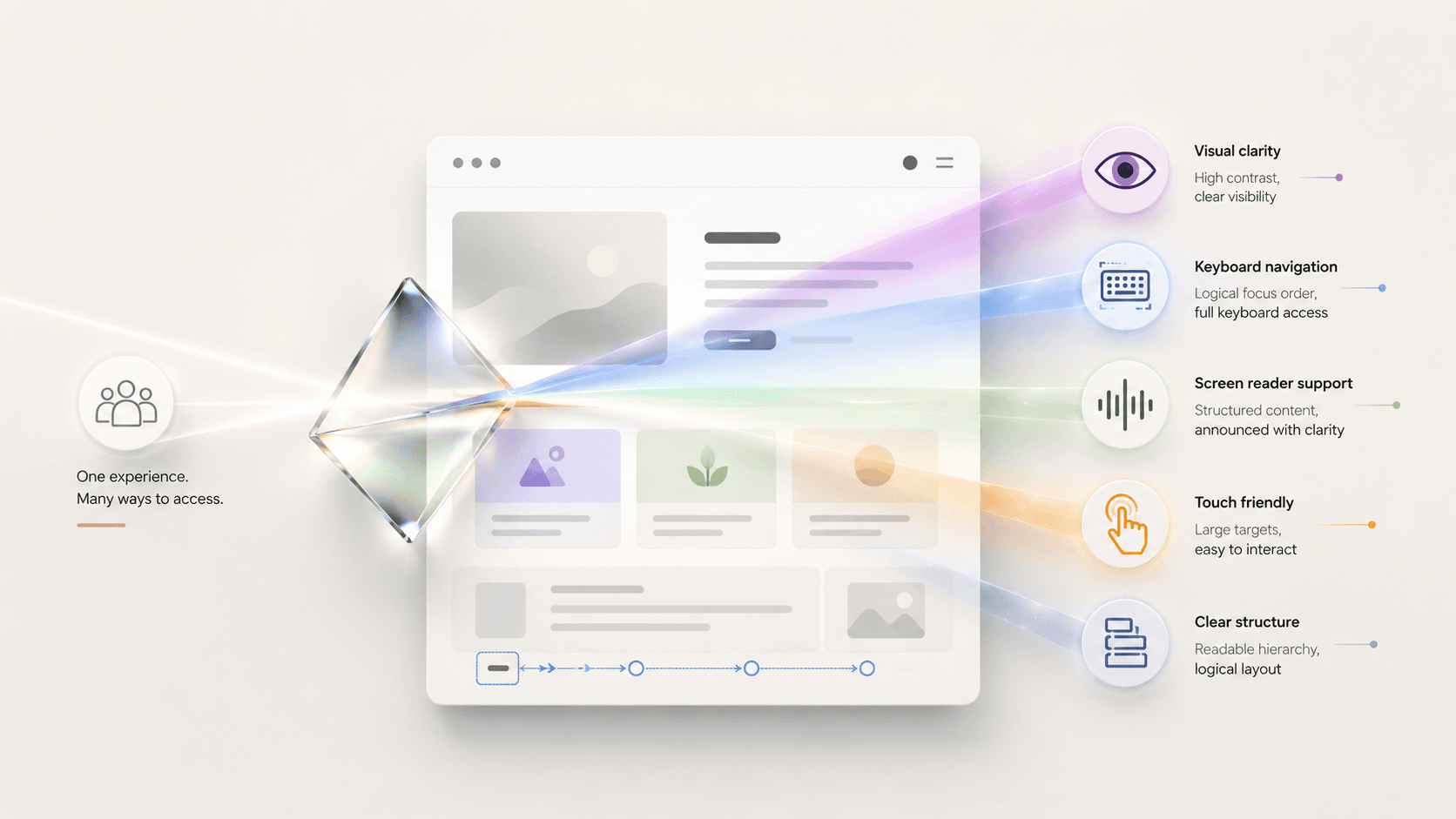
Web accessibility has become a central focus for businesses that want to ensure all users can engage with their digital products. WCAG 2.1, or Web Content Accessibility Guidelines 2.1, sets international standards to make web content perceivable, operable, understandable, and robust. By following these guidelines, organizations can improve usability for people with disabilities and meet legal obligations in jurisdictions like the US, EU, and Canada.
Compliance with WCAG 2.1 reflects a commitment to inclusive design. Users who rely on screen readers, keyboard navigation, or other assistive technologies need consistent, predictable experiences. Websites that fail to provide these features risk alienating potential customers and diminishing brand trust.
WCAG 2.1 builds on the earlier 2.0 standard, adding new success criteria for mobile accessibility, cognitive impairments, and low-vision users. Its structured approach allows organizations to prioritize efforts and track improvements systematically. Applying these standards can also enhance the overall user experience for all visitors, including those with disabilities, creating a more polished, professional digital presence.
Core Principles of WCAG 2.1
The guidelines are organized around four key principles, each providing a framework for building accessible web experiences. Designers and developers can use these principles as a checklist to identify gaps and opportunities for improvement before launching or updating a website.
These WCAG 2.1 principles are:
- Perceivable: Information and interface components must be presented in ways that users can perceive. This includes providing text alternatives for images and captions for videos.
- Operable: Users must be able to navigate and interact with all functionality using various input methods, including keyboards and touchscreens.
- Understandable: Information, navigation, and interactive elements should be easy to comprehend, reducing cognitive load and preventing errors.
- Robust: Content should work reliably across different browsers, devices, and assistive technologies, ensuring a consistent experience for all users.
These principles provide a structured roadmap for accessibility implementation. Ensuring that web content meets these criteria requires coordination across design, development, and content teams.
Organizations that follow these standards systematically reduce legal risk and create more inclusive digital experiences. Accessibility also drives better engagement, as more users can interact seamlessly with the site, improving overall satisfaction and brand perception.
How WCAG 2.1 Impacts Legal and Regulatory Compliance
Many countries have incorporated WCAG 2.1 into accessibility regulations. In the United States, following these guidelines helps meet ADA requirements and reduces the risk of costly lawsuits. In Europe, adherence supports GDPR accessibility clauses and broader inclusivity expectations.
- Legal Protection: Compliance can prevent lawsuits with fines ranging from $5,000 to over $75,000 USD per violation.
- Operational Efficiency: Standardized guidelines reduce ambiguity, making audits and ongoing maintenance easier.
- Reputation Management: Demonstrating a commitment to accessibility enhances credibility with customers, partners, and investors.
Following WCAG 2.1 proactively can also minimize disruption caused by retrofitting accessibility fixes. Incorporating accessibility from the design stage ensures that websites are inclusive by default. It builds trust with users, reduces friction in the customer journey, and signals that the organization prioritizes social responsibility and ethical design.
Implementing WCAG 2.1 Standards Effectively
Applying these guidelines requires both technical and strategic consideration. Collaboration between designers, developers, content creators, and compliance experts ensures a holistic approach.
- Accessibility Testing: Use automated tools and real-user testing to identify and resolve accessibility issues.
- Iterative Design: Incorporate WCAG 2.1 criteria throughout design and development cycles to prevent gaps.
- Expert Consultation: Partnering with specialists like Ankord Media can accelerate compliance while maintaining brand integrity and usability.
A structured approach also ensures ongoing improvement. Accessibility is not a one-time effort but an evolving practice as websites update content and introduce new features. Regular audits and user feedback loops allow teams to maintain compliance and continuously enhance the experience for all users.
Websites that meet WCAG 2.1 standards are positioned to reach a wider audience, reduce legal exposure, and reinforce brand reputation. Accessibility should be seen as a strategic priority, embedded into digital operations rather than treated as a checkbox. Organizations that commit to these principles demonstrate both leadership and social responsibility, while providing a superior experience for every user.