


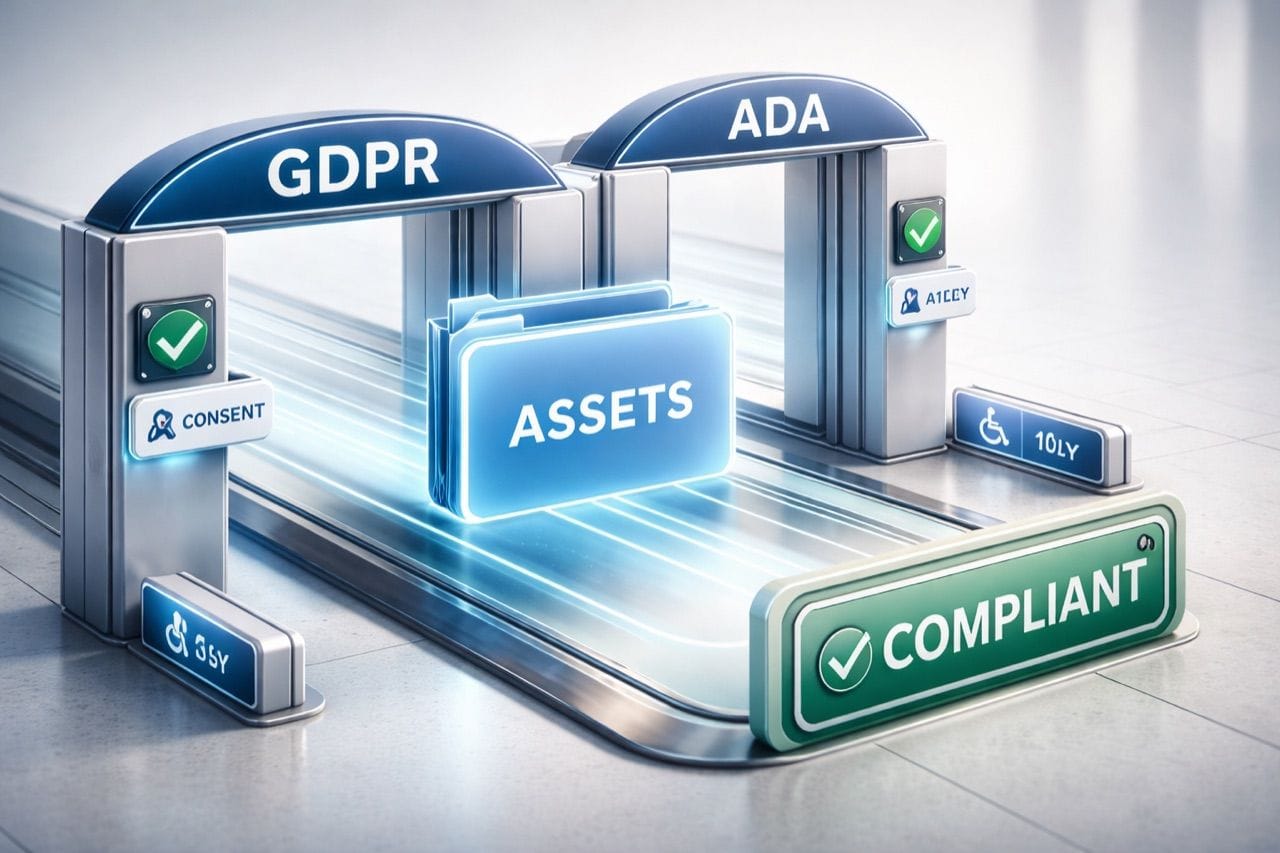
Managing compliance for digital assets is increasingly complex for businesses with online operations. GDPR governs the handling of personal data for European users, while ADA ensures that digital content is accessible to individuals with disabilities in the United States. Companies navigating these frameworks must consider both legal and practical implications. Failure to comply can result in steep fines, costly remediation, and damage to brand reputation.
Beyond avoiding penalties, addressing these regulations together creates a more inclusive, trustworthy online environment. Accessibility and privacy improvements often overlap, particularly in interactive elements, consent forms, and user dashboards. By aligning GDPR and ADA strategies, organizations improve usability, streamline internal processes, and signal commitment to ethical practices.
Strategically approaching compliance requires an organized checklist that covers both privacy and accessibility elements, integrates audits, and ensures ongoing monitoring. This allows teams to address potential gaps before they escalate into legal or operational issues.
Preparing Your Compliance Checklist
Building a compliance checklist starts with understanding how GDPR and ADA requirements intersect. Key digital elements must serve both regulations simultaneously, ensuring users can access and manage their personal data effectively.
- Forms and Consent Mechanisms: Clearly labeled input fields, accessible navigation, and GDPR-compliant consent options.
- Interactive Content: Ensure sliders, buttons, and pop-ups are operable with keyboards and assistive technologies.
- Data Access Dashboards: Users must easily review, modify, or delete personal information.
- Multimedia Accessibility: Provide captions, transcripts, and audio descriptions to support all users.
Designing a checklist with these points in mind helps reduce risk. It provides a tangible framework for audits, training, and content updates, and ensures that each new feature meets accessibility and privacy standards. A thoughtful checklist integrates design, development, and compliance teams to maintain consistency across digital assets.
Auditing and Monitoring Compliance
Regular audits are essential for sustained adherence. Automated tools can scan for both accessibility issues and data handling problems, but human oversight ensures nuanced compliance decisions. Audits identify gaps, prioritize fixes, and help organizations track progress over time.
- Automated Scanners: Identify missing alt text, color contrast issues, or inaccessible navigation.
- Privacy Checklists: Review consent processes, data storage protocols, and user rights fulfillment.
After audits, it’s critical to implement fixes methodically. This includes updating code, modifying forms, and training staff on accessibility and privacy standards. Continuous monitoring ensures that compliance is maintained even as websites evolve, mitigating risk and enhancing user experience.
Best Practices for Maintaining Compliance
Creating a sustainable compliance process involves structured policies, ongoing education, and strategic support. This ensures that new digital assets adhere to both GDPR and ADA from inception.
- Integrate Compliance in Design: Plan accessibility and privacy measures into wireframes and prototypes.
- Cross-Functional Training: Equip development, content, and marketing teams with knowledge of regulations.
- Document Policies: Maintain records of consent, accessibility checks, and audit outcomes.
Structured processes reduce operational burdens and improve digital usability. Companies that maintain continuous compliance strengthen user trust, minimize risk, and benefit from operational efficiencies. Partnering with expert teams, such as Ankord Media, provides additional guidance, ensuring audits and updates are thorough, actionable, and aligned with best practices.
Navigating GDPR and ADA simultaneously can seem daunting, but a structured approach makes it achievable. A robust checklist, combined with audits, monitoring, and training, positions companies to maintain compliance while delivering a superior user experience. Digital teams that integrate privacy and accessibility from the start create scalable systems that support business growth and protect users.
Compliance is not a one-time effort. It requires ongoing evaluation, updates, and awareness of evolving regulations. Organizations that embrace continuous monitoring and integrate expert guidance ensure that digital assets remain compliant and accessible, reducing legal exposure and enhancing overall brand credibility.
Implementing these practices also provides strategic benefits. Beyond avoiding fines, companies improve usability, foster loyalty among diverse user groups, and signal ethical responsibility. Companies that invest in sustainable compliance frameworks create a foundation for long-term success, both legally and operationally.