


- Introduction
- Quick Answer
- 1. Budget the series around milestones, not “a bunch of videos”
- 2. Define the minimum viable video system for the next 90 days
- 3. Pick the cadence first because cadence drives cost and efficiency
- 4. Build a deliverables map that forces budget clarity
- 5. Use planning ranges as bands, then adjust with your scope drivers
- 6. A concrete 3-month budgeting scenario Silicon Valley teams can copy
- 7. Know the cost drivers before you negotiate
- 8. How to reduce cost without reducing quality
- 9. Choose the payment structure that keeps one partner stable
- 10. Budget versioning like a product team
- 11. Build an approval system that protects the budget
- 12. Include a contingency line because priorities will change
- Final Tips
Introduction
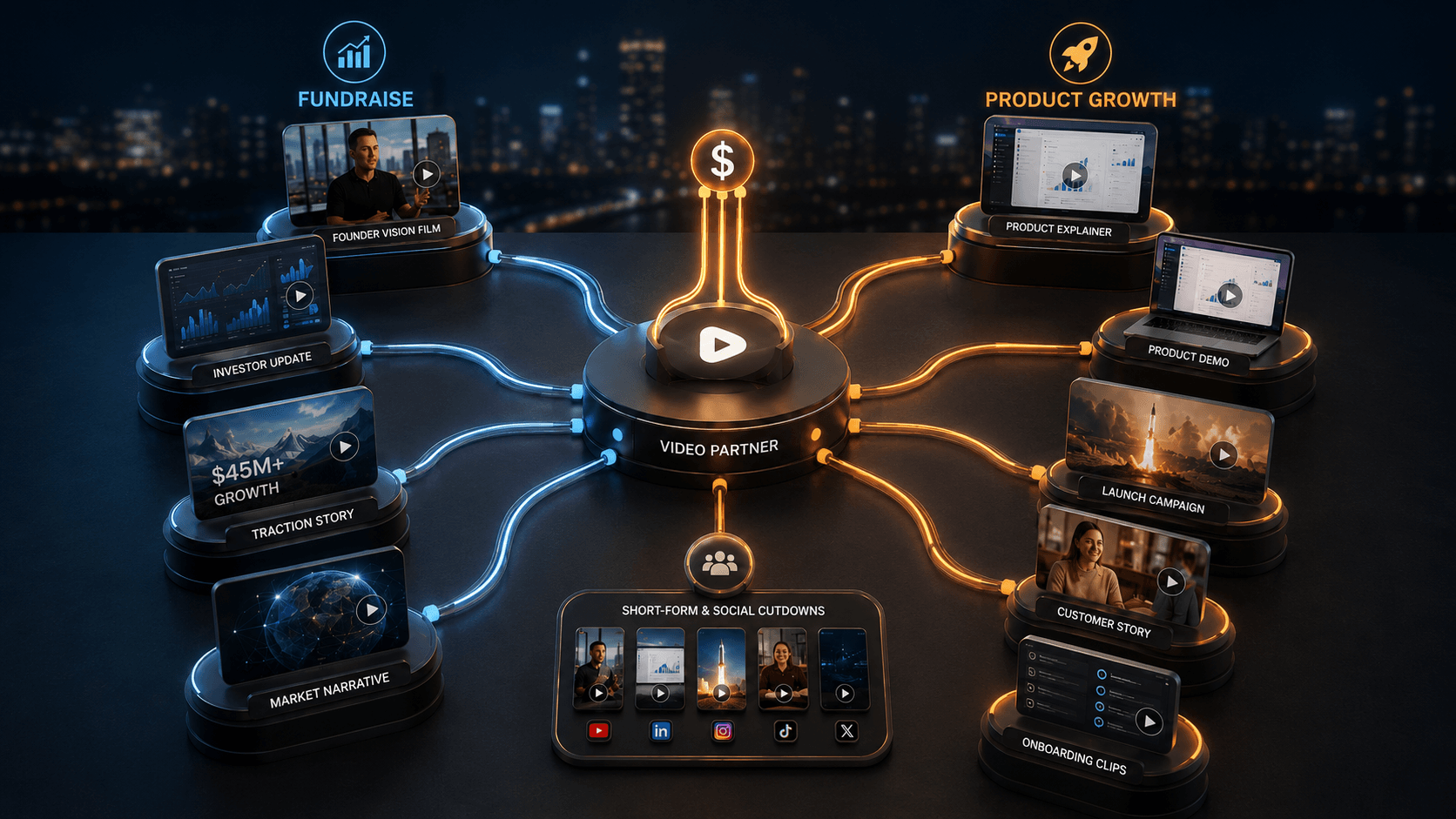
A video series budget is not just a line item, it is an operating plan for how your startup will repeatedly turn strategy into deployable assets. With one video partner, you can get consistency, faster turnaround, and a lower cost per usable clip, but only if you define cadence, deliverables, and approvals upfront. This guide shows a practical way to budget for fundraising and product videos across the next 3 to 6 months without getting surprised by scope creep.
Quick Answer
The best way for a Silicon Valley startup to budget for a series of fundraising and product videos with one video partner is to plan the next 3 to 6 months as a repeatable video system tied to milestones, price it as a blended model of one fixed milestone package plus a lighter monthly cadence, and lock spend by defining deliverables, versioning, review rhythm, and a 10 to 15 percent contingency for inevitable changes like new feature drops, reschedules, and extra cutdowns.
1. Budget the series around milestones, not “a bunch of videos”
Startups overspend when they budget per video type without connecting it to a business moment. Instead, anchor your plan to the next two moments where video changes outcomes.
Typical moments:
- Fundraising window: narrative, credibility, proof
- Product launch or feature drop: clarity, activation, adoption
- Sales enablement refresh: faster understanding, fewer objections
- Customer proof push: trust at scale
- Recruiting surge: quality applicants, close rate
Your budget should cover the next two moments, plus a light cadence that keeps your team shipping between them.
2. Define the minimum viable video system for the next 90 days
A series should behave like a system. The simplest system most startups need has two lanes.
Fundraising lane
- One narrative anchor (founder story, mission, category angle, or investor-facing product thesis)
- One short cut for intros and outbound
- Modular proof clips (traction, customer outcomes, credibility)
Product lane
- One product story tied to one audience and one job-to-be-done
- Cutdowns for the channels you actually use
- A repeatable format for future feature drops (so you do not reinvent the wheel)
If you cannot explain the system in one paragraph, you cannot budget it cleanly.
3. Pick the cadence first because cadence drives cost and efficiency
With one video partner, cadence determines whether you get predictable output or constant renegotiation.
Three workable cadence models:
- Burst model: 2 production bursts per quarter, heavy output after each
- Monthly model: one cycle per month, steady output
- Hybrid model: one big milestone package plus monthly maintenance
Most Silicon Valley startups do best with hybrid because it matches reality: fundraising and launches spike, but content needs are constant.
4. Build a deliverables map that forces budget clarity
The biggest budgeting mistake is pricing one hero video and forgetting the distribution assets your team will need.
A practical deliverables map for one cycle:
- One 60 to 90-second anchor video (fundraising or product)
- One 30 to 45-second website cut
- Three 15-second paid variants with different hooks
- Six to ten organic cutdowns for LinkedIn and Shorts
- Captions and formatted exports in vertical and horizontal
When you budget this way, you protect ROI. You are buying deployable assets, not a single edit.
5. Use planning ranges as bands, then adjust with your scope drivers
Video budgets vary widely. The goal is not a perfect number on day one. The goal is a defensible plan that becomes accurate once you confirm complexity and cadence.
Lean cadence (editing-heavy, light filming)
- Best when you have screen recordings, existing footage, or simple interview setups
- Typical output: short-form content plus occasional anchor edits
- Planning note: costs stay controlled because shoot days are limited
Hybrid (milestone package plus monthly cadence)
- Best for fundraising plus ongoing product marketing
- Typical output: one bigger cycle around the milestone, steady monthly output afterward
- Planning note: you avoid paying for unused capacity while still moving fast
High-production series (multiple locations, heavier creative, heavier motion)
- Best for brand-critical launches, premium recruiting pushes, high polish brand narrative
- Planning note: most of the cost is driven by shoot days, locations, and post complexity
Use these bands to guide planning, then lock the budget after you agree onx on shoot days, motion scope, and deliverable counts.
6. A concrete 3-month budgeting scenario Silicon Valley teams can copy
Here is an illustrative planning scenario for a startup that needs both fundraising and product videos with one partner. This is not a universal price list, it is a way to structure the budget so it stays stable.
Scenario
- Stage: Seed to Series A
- Timeline: raising in 10 to 12 weeks, product launch in 6 to 8 weeks
- Need: investor narrative plus product story, then ongoing cutdowns and refreshes
Month 1: Milestone build and production
- Work: message alignment, scripts, pre-production, one concentrated filming block, first anchor edits
- Deliverables: 1 fundraising anchor, 1 product anchor, initial cutdowns
- Budget structure: highest spend month because production and core edits happen here
- Planning range approach: treat Month 1 as the “package month”
Month 2: Distribution and iteration
- Work: versioning, hook variants, cutdowns for each channel, lighter pickup shots if needed
- Deliverables: 10 to 20 deployable assets derived from Month 1 footage
- Budget structure: lower than Month 1, focused on post and iteration
- Planning range approach: treat Month 2 as a “cadence month”
Month 3: Next cycle prep and proof
- Work: customer proof piece or feature drop format, refreshes based on what shipped, backlog build
- Deliverables: 1 proof or feature anchor plus ongoing short-form
- Budget structure: similar to Month 2 unless you add a new shoot block
How to budget it cleanly
- Price Month 1 as a fixed milestone package tied to deliverables and shoot days
- Price Months 2 and 3 as a light monthly cadence with defined outputs
- Add a 10 to 15 percent contingency line across the three months for reschedules and extra cutdowns
This structure is why one partner works. You get compounding efficiency after the first production block.
7. Know the cost drivers before you negotiate
Your budget will be controlled by a small set of drivers. If you manage these, the model stays predictable.
The biggest drivers:
- Number of shoot days and how spread out they are
- Locations and logistics, especially if permits are involved
- Talent complexity: founders, customers, coordination, releases
- Motion graphics and animation complexity
- Deliverable count, especially versioning and hook variants
- Review complexity: number of stakeholders and decision speed
- Audio constraints: noisy offices, multiple mics, controlled spaces
Most overruns are not “creative.” They are logistical, versioning, and approval problems.
8. How to reduce cost without reducing quality
If budget is tight, do not cut strategy and do not cut audio. Cut complexity.
Cost control moves that usually work:
- Reduce shoot days by batching: film fundraising and product assets in one concentrated block
- Choose one or two locations and make them look intentional
- Use a modular shoot plan: film sections that can be rearranged into different edits
- Prioritize proof: one strong customer segment can power many cutdowns
- Lean on screen recordings for product clarity, then add on-camera only where it matters
- Limit motion graphics to a defined system instead of custom animation everywhere
- Lock message pillars before scripting to avoid costly rewrites mid-edit
- Cap deliverables by channel: only export what you will actually post and run
Quality is not about more footage. Quality is about clarity, proof, and disciplined editing.
9. Choose the payment structure that keeps one partner stable
When you want one partner across fundraising and product work, a blended model usually performs best.
Recommended blend
- Fixed milestone package for the fundraising and product anchors
- Monthly cadence for cutdowns, iterations, and feature drops
- Optional add-on day blocks for extra filming bursts when you already have a plan
This keeps the relationship predictable while still allowing spikes when your roadmap shifts.
10. Budget versioning like a product team
The value in a video series comes from reuse and distribution, not from a single hero edit.
A practical rule for series budgeting:
- Every anchor video should have a planned set of variations, including a website cut and multiple short hooks, so the footage pays you back across channels
If you do not budget versioning upfront, you either underuse the content or pay later in change orders.
11. Build an approval system that protects the budget
Budget overruns are often approval overruns.
To keep spend stable:
- Name one decision owner
- Set a weekly review slot and keep it sacred
- Separate feedback from decisions, and limit decision makers
- Use clear revision rounds with deadlines
- Approve message pillars before scripts and edits start
Fast approvals are a budgeting tool.
12. Include a contingency line because priorities will change
Silicon Valley priorities shift, especially during fundraising and launches. Your budget should assume that.
A practical contingency approach:
- Set aside 10 to 15 percent of the series budget
- Use it for extra cutdowns, rescheduling, pickup shots, or sudden proof needs
- Spend it intentionally, not automatically
Contingency is not padding. It prevents chaos.
Final Tips
Budget your series as a repeatable system tied to milestones, then smooth it with a monthly cadence that keeps output consistent and costs predictable. With one video partner, the biggest savings come from batching production, planning versioning upfront, keeping motion scope disciplined, and running a tight approval process with a realistic contingency line for inevitable changes.