


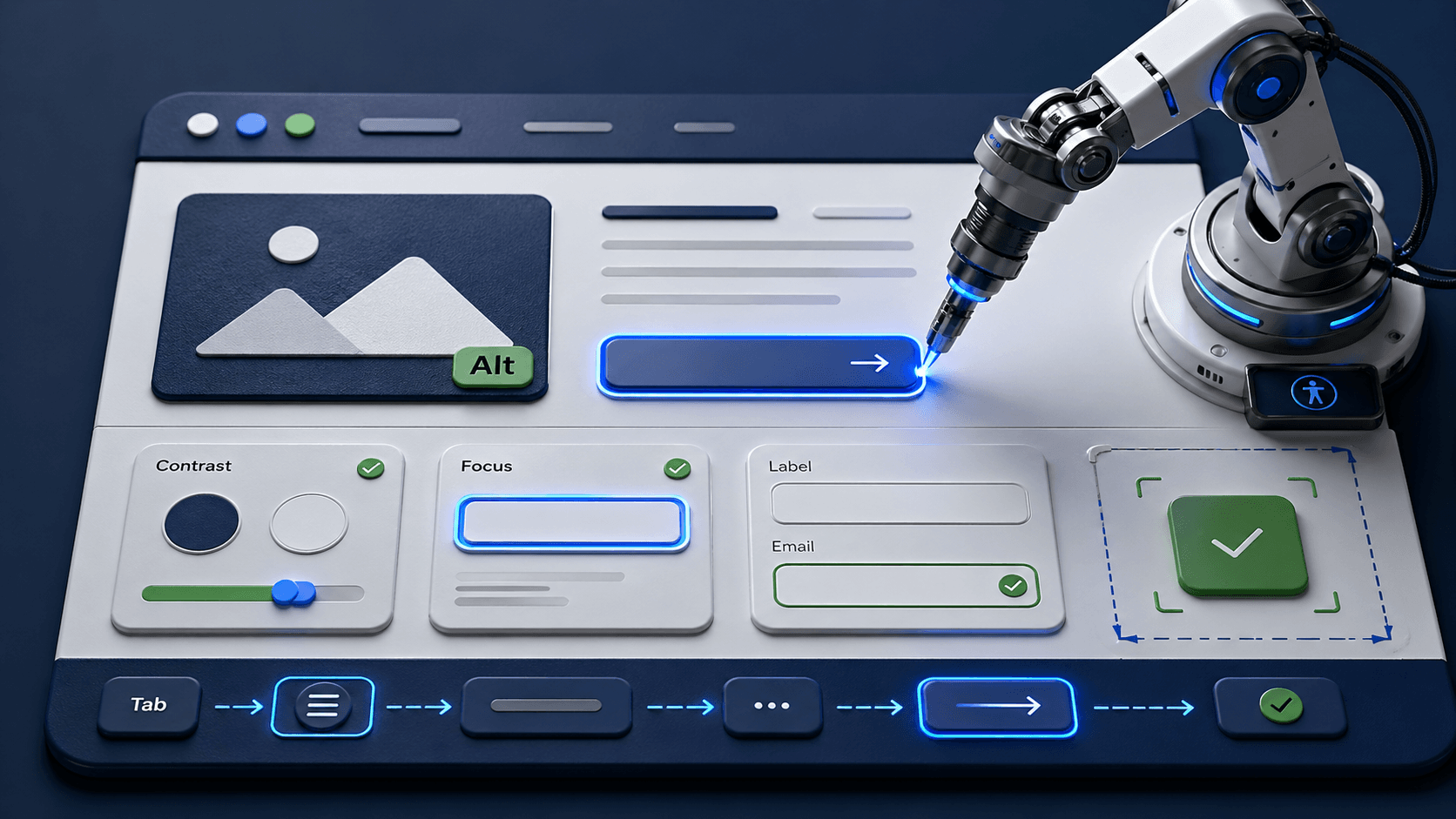
Ensuring a website meets ADA accessibility standards is increasingly critical for businesses of all sizes. Websites must accommodate users with disabilities through thoughtful navigation, readable content, and accessible interactive elements. AI tools have emerged to help identify some of these issues, offering quick scans of site structure, color contrast, images, and links. However, relying solely on automation carries risk, as AI cannot fully assess human interactions or subjective usability issues that affect real-world users.
Human oversight remains essential. Professionals trained in accessibility standards can interpret AI findings, prioritize remediation, and implement solutions that address nuanced user experiences. By combining AI’s efficiency with expert judgment, businesses reduce the likelihood of fines, improve customer satisfaction, and deliver a website that works for all visitors. Accessibility also positively impacts broader engagement metrics, enhancing reputation and brand trust.
Creating a truly accessible website requires both proactive planning and ongoing evaluation. Accessibility should be integrated into design, content, and development workflows to prevent regression. AI accelerates audits and highlights potential violations, but expert input ensures that accessibility is maintained long-term, and legal standards are met consistently.
How AI Can Identify Accessibility Issues
AI tools provide a fast, data-driven assessment of websites, highlighting obvious accessibility gaps that might otherwise be overlooked. They analyze code structure, image usage, link labeling, headings, and color contrast. This initial evaluation allows teams to prioritize areas needing immediate attention.
AI offers many options:
- Automated Scanners: Detect missing alt text, broken links, and improperly nested headings.
- Pattern Recognition Tools: Identify repeated structural issues, such as inaccessible forms or navigation inconsistencies.
- Reporting Dashboards: Offer actionable insights and track remediation over time.
While these tools accelerate audits, they do not simulate real user experiences. Users with screen readers or mobility limitations may encounter challenges that AI cannot anticipate. Human review complements automation by identifying subtle usability problems, ensuring that fixes are functional and meaningful. Following AI detection, expert intervention translates raw data into a prioritized, actionable remediation plan.
Practical Steps for Remediation
After identifying accessibility gaps, businesses need structured processes to implement fixes. This involves addressing both technical and content-related issues while embedding accessibility into ongoing workflows. Proper planning ensures compliance is sustained rather than treated as a one-time project.
Consider these options for maintaining the strength of fixes:
- Human Review: Test the site with diverse users to uncover real-world barriers.
- Remediation Plan: Prioritize fixes, assign responsibilities, and set deadlines.
- Continuous Monitoring: Integrate accessibility checks into future content creation and development cycles.
Proactively remediated websites not only reduce legal exposure but also enhance the experience for all users. Visitors navigate content more intuitively, complete forms efficiently, and engage with interactive elements more confidently. Maintaining accessibility demonstrates a brand’s commitment to inclusivity, which can enhance trust with customers, investors, and partners.
Additional Tools and Strategies
Beyond remediation, ongoing compliance benefits from a combination of tools, training, and expert guidance. These resources ensure that accessibility remains a priority as websites evolve.
- Accessibility Training: Equip internal teams with best practices for content creation and design.
- Periodic Audits: Schedule AI-driven assessments followed by human review to maintain compliance.
- Documentation Systems: Keep detailed records of remediation, audits, and updates to support transparency.
Regular use of these tools, combined with expert oversight, prevents regression and ensures that new content or site updates do not introduce accessibility barriers. AI provides efficiency and initial insight, but human evaluation ensures the interpretation of complex results and that accessibility improvements genuinely serve users’ needs.
Why Expert Guidance Matters
Even the most advanced AI tools cannot guarantee full ADA compliance. Legal requirements are nuanced, and subtle usability issues require judgment and experience to address appropriately. Ankord Media excels in this space by pairing AI detection with expert human review. Their team not only identifies issues but implements actionable solutions, trains internal staff, and monitors ongoing compliance, ensuring both efficiency and accuracy.
Partnering with professionals provides confidence that your website meets accessibility standards while delivering a positive user experience for all visitors. Beyond compliance, it reinforces your brand’s reputation, showing commitment to inclusivity, usability, and operational excellence.
Accessibility is a strategic investment. AI tools offer a starting point by quickly highlighting technical issues, but human insight is critical to address subtler usability challenges and ensure lasting compliance.
By combining AI with professional oversight, businesses can systematically remediate issues, integrate accessibility into development workflows, and monitor progress over time. The result is a site that functions smoothly for all users, reduces risk, and supports a culture of inclusivity throughout the organization.
Investing in expert guidance, such as that offered by Ankord Media, ensures that accessibility audits, remediation plans, and ongoing compliance efforts are both effective and sustainable. Businesses can achieve peace of mind while creating websites that are usable, welcoming, and legally sound.
A comprehensive approach to ADA compliance creates measurable value. Companies avoid fines, minimize legal exposure, and improve engagement for all users. Beyond compliance, accessibility enhances the brand’s reputation, strengthens user trust, and supports a broader, more inclusive audience reach. The combination of AI efficiency and expert human oversight offers the most reliable path to achieving these goals.