


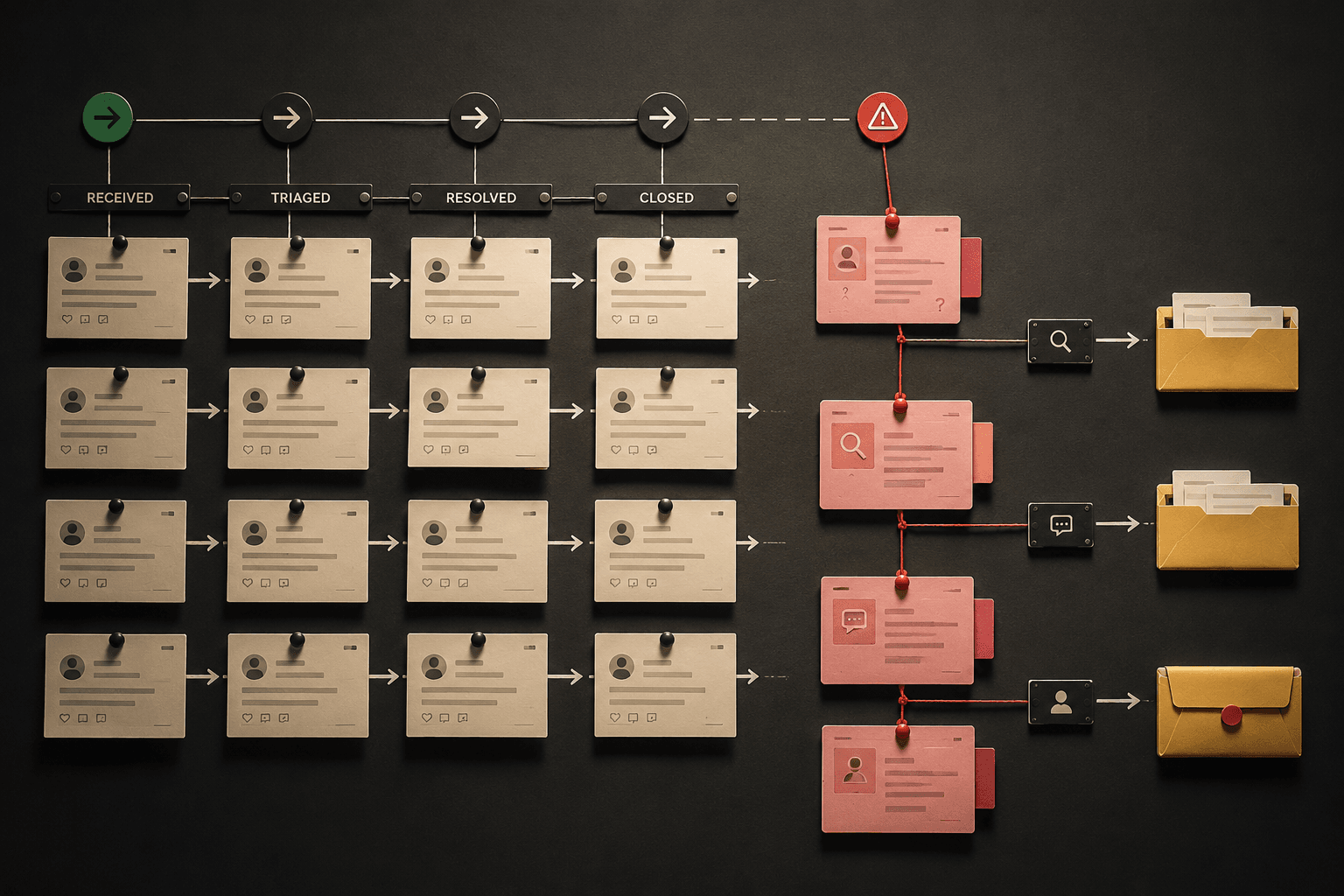
Edge cases represent the testing ground where AI agent capabilities either shine or crumble. These unusual customer situations - from complex multi-layered requests to completely unexpected scenarios - reveal the true strength of an AI deployment. Milan Kordestani and the Ankord Media team have learned that handling edge cases isn't just about having backup plans; it's about building intelligence that adapts and responds gracefully when the unexpected occurs.
Most businesses worry about AI agents breaking down when customers present unusual requests or complex problems that fall outside normal parameters. This concern is valid because poorly designed systems often fail spectacularly when faced with scenarios they weren't explicitly trained for. The key difference lies in how the underlying architecture anticipates and manages these situations from the ground up.
When our agents encounter edge cases, they don't simply shut down or provide generic responses. Instead, they leverage a multi-layered approach that combines contextual understanding, escalation protocols, and real-time learning to navigate even the most unusual customer interactions. This systematic approach ensures that edge cases become learning opportunities rather than system failures.
Building Resilient Detection Systems
The foundation of effective edge case management starts with robust detection mechanisms that identify when a situation falls outside normal parameters. Milan Kordestani's approach focuses on creating systems that can recognize the difference between a complex but manageable request and a true edge case requiring special handling. This distinction is crucial because it determines how the agent responds and whether it attempts resolution or gracefully escalates.
Our detection systems analyze multiple factors simultaneously to identify edge cases. The system evaluates conversation context, customer intent confidence levels, available data completeness, and historical interaction patterns. When these factors indicate uncertainty or complexity beyond normal thresholds, the system automatically flags the interaction for enhanced handling protocols.
The development team at Ankord Media implements confidence scoring across all agent responses, creating a real-time assessment of how well the system understands and can address each customer situation. This scoring system operates continuously, monitoring not just individual responses but entire conversation flows to identify patterns that might indicate emerging edge cases or unusual customer needs.
Key components of our edge case detection include:
- Intent Ambiguity Analysis: Systems that identify when customer requests have multiple possible interpretations or unclear objectives
- Data Gap Recognition: Automatic detection when insufficient information exists to provide confident responses or recommendations
- Context Complexity Scoring: Real-time evaluation of conversation complexity and whether it exceeds normal handling parameters
- Historical Pattern Matching: Comparison against known edge case patterns to identify similar situations requiring special attention
Once detection occurs, the system immediately shifts into enhanced processing mode rather than attempting to force-fit the situation into standard response patterns. This transition happens seamlessly from the customer perspective while activating additional resources and capabilities behind the scenes. The agent maintains conversational flow while accessing expanded decision-making frameworks designed specifically for complex scenarios.
Our infrastructure ensures that edge case detection doesn't slow down or interrupt the customer experience. Instead, it enhances the interaction by ensuring the customer receives appropriate attention and resources for their specific situation. This approach transforms potential frustration points into opportunities for exceptional service delivery.
Implementing Dynamic Escalation Protocols
Smart escalation represents the cornerstone of effective edge case management, moving beyond simple "transfer to human" protocols to create intelligent routing based on situation complexity and resource availability. The Ankord Media team designs escalation systems that consider multiple factors including customer history, issue complexity, available expertise, and optimal resolution paths. This multi-dimensional approach ensures that unusual situations reach the right resources at the right time.
Our escalation protocols operate on graduated levels rather than binary human-versus-AI decisions. The system first attempts enhanced AI processing using specialized models or extended context before considering human involvement. This layered approach often resolves complex situations without requiring human intervention while reserving human expertise for cases that truly benefit from human judgment and creativity.
Milan Kordestani and the development team create escalation pathways that maintain context and conversation history throughout the transition process. When escalation occurs, the receiving system or human agent has complete visibility into the customer's journey, previous attempts at resolution, and specific factors that triggered the escalation. This continuity prevents customers from repeating their stories and ensures efficient resolution.
Our dynamic escalation framework includes:
- Complexity Scoring: Real-time assessment of issue difficulty and resource requirements for optimal resolution
- Expertise Matching: Intelligent routing to specialists with relevant knowledge for specific types of edge cases
- Context Preservation: Complete conversation and customer history transfer to maintain continuity throughout escalation
- Feedback Integration: Continuous learning from escalation outcomes to improve future edge case handling
The escalation process operates transparently for customers while providing clear communication about next steps and expected timelines. Rather than making customers feel like they've encountered a system limitation, our approach positions escalation as accessing additional expertise to provide the best possible outcome. This framing maintains customer confidence while ensuring appropriate resource allocation.
What sets our escalation protocols apart is their bidirectional nature. Human agents can seamlessly hand interactions back to AI systems when appropriate, and the AI maintains awareness of human-added context for future similar situations. This collaborative approach leverages the strengths of both AI and human intelligence to create superior outcomes for edge case resolution.
Creating Continuous Learning Mechanisms
The most sophisticated aspect of edge case management lies in systems that learn and adapt from each unusual situation they encounter. Our infrastructure doesn't just handle edge cases; it systematically captures insights from these interactions to expand the system's capabilities for future scenarios. Milan Kordestani's vision focuses on AI agents that become more capable and robust through exposure to real-world complexity rather than being limited by their initial training.
Every edge case interaction becomes a learning opportunity through careful analysis of customer needs, resolution approaches, and outcomes. The development team at Ankord Media implements feedback loops that capture not just what happened, but why certain approaches succeeded or failed in specific contexts. This deep analysis enables the system to recognize similar patterns in future interactions and apply proven resolution strategies automatically.
Our learning mechanisms operate on multiple timescales, from immediate pattern recognition within ongoing conversations to long-term trend analysis across customer populations. Real-time learning allows agents to adapt their approach within a single interaction as they gather more context about unusual situations. Long-term learning enables systematic improvement in handling entire categories of edge cases that emerge over time.
The continuous learning framework encompasses:
- Pattern Recognition Enhancement: Automated identification of new edge case categories based on interaction analysis and outcome tracking
- Response Optimization: Systematic testing and refinement of resolution approaches based on success rates and customer satisfaction metrics
- Knowledge Base Expansion: Dynamic updating of system knowledge to include insights gained from successful edge case resolutions
- Predictive Capability Development: Evolution of systems to anticipate and proactively address potential edge cases before they create customer friction
Our learning systems maintain careful balance between adaptation and stability, ensuring that insights from edge cases improve general system performance without creating instability in standard operations. This balance requires sophisticated validation mechanisms that test new learning against established performance baselines before implementation. The result is steady improvement in edge case handling without compromising reliable performance for routine interactions.
The infrastructure we deploy creates compounding improvements over time, where each successfully handled edge case makes the system better equipped to handle similar situations in the future. This evolutionary approach means that clients see continuous improvement in their AI agent capabilities, with systems becoming more robust and capable as they gain operational experience. Rather than requiring constant retraining or updates, the agents naturally expand their effectiveness through real-world learning.