


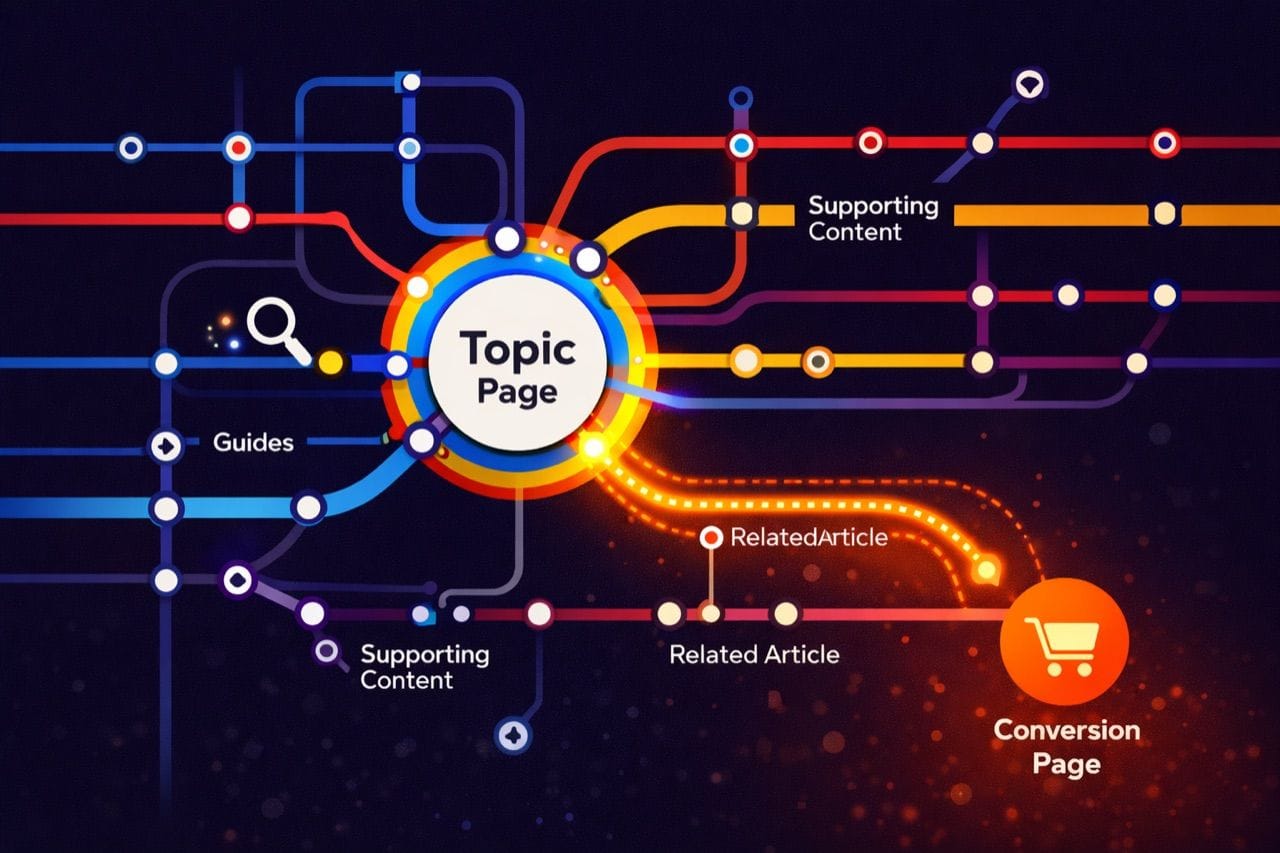
A strong internal linking strategy is one of the most effective yet often overlooked ways to improve both search engine performance and user experience. Internal links connect pages within a website, distributing authority and helping search engines understand content hierarchy. They also guide visitors to related content, increasing engagement, session duration, and the likelihood of conversion.
Without a thoughtful linking strategy, even high-quality content can remain isolated, failing to generate maximum value for users or search engines. Ankord Media emphasizes a strategic, data-driven approach to internal linking that strengthens site architecture, boosts rankings, and creates a cohesive user journey.
Building an internal linking strategy requires balancing technical SEO considerations with human-centered navigation. Search engines rely on links to crawl and index content efficiently, but users benefit most when links are intuitive, contextually relevant, and placed naturally within content. A strategy that only focuses on one side, either SEO or user experience, risks diminishing overall performance. By aligning internal linking with both search intent and content structure, businesses can achieve compounding SEO benefits while improving engagement.
Internal links influence perception, authority, and discoverability. Pages that are well-linked internally often rank higher because search engines interpret them as more important. Similarly, users are more likely to explore additional content when links are clearly presented and logically placed. Ankord Media approaches internal linking with precision, analyzing content networks, topical clusters, and authority flow to maximize both SEO and usability outcomes.
The Foundations of an Effective Internal Linking Strategy
Before creating internal links, it is critical to establish a clear understanding of your content architecture. Each page should have a purpose, a target keyword or topic, and a hierarchy that reflects its importance. Without a structured content map, internal linking can become random or redundant, undermining both SEO value and user experience.
A strong foundation ensures that your linking efforts are scalable, measurable, and integrated into the overall content strategy. By mapping content systematically, you can prioritize pages that deserve the most authority, avoid overlinking low-value pages, and create natural pathways for user exploration. This upfront investment allows internal linking to serve as both a technical SEO lever and a user engagement tool.
The essential components of a strong internal linking foundation include:
- Content Audit and Mapping: Review all existing pages, categorize them by topic and purpose, and identify content gaps to ensure links connect relevant and high-priority pages.
- Hierarchical Structure: Define the site’s primary, secondary, and tertiary pages to establish authority flow and clarify which pages should receive the most internal link equity.
- Anchor Text Strategy: Use descriptive and natural anchor text that signals page relevance to both users and search engines, avoiding generic phrases like “click here.”
- Link Depth Consideration: Ensure important pages are no more than a few clicks from the homepage, maximizing discoverability and authority transfer.
By implementing these foundational elements, your internal linking system is built to reinforce site structure, improve crawlability, and provide users with an intuitive navigation path. Ankord Media applies this methodology to help clients maximize the SEO value of every page while maintaining a seamless experience for visitors.
Best Practices for Linking Within Content
Internal linking works best when integrated naturally within content rather than added as an afterthought. Effective links provide contextual value, guiding readers to related topics or deeper information. Overlinking or irrelevant linking can dilute SEO authority and confuse users, while well-placed links enhance both metrics and engagement.
Well-executed content-level linking considers the user’s journey from one piece of information to another, anticipating needs and delivering value at every step. Links should help readers dig deeper into related topics, explore complementary products or services, and gain a more comprehensive understanding of the subject. These links also help search engines identify which pages are topically related, improving rankings across clusters.
To apply these principles, consider the following best practices:
- Relevance and Context: Only link to pages that genuinely expand on the topic at hand, ensuring the connection is useful to the reader.
- Descriptive Anchors: Use keyword-rich, descriptive phrases that accurately reflect the linked page’s content.
- Moderation: Avoid excessive links per page. Too many can overwhelm users and reduce the perceived value of each link.
- Natural Placement: Integrate links into the flow of the content, ideally in key paragraphs or next to sections where additional information will enhance understanding.
By following these guidelines, each link adds measurable value to both the user and the site’s SEO profile. Ankord Media ensures links are placed with purpose, considering authority distribution, crawl depth, and content discoverability, resulting in a network that strengthens rankings and drives engagement.
Structuring Links Across Your Site Architecture
Beyond individual content pieces, internal linking must be considered from a holistic site perspective. Properly structured site-wide linking ensures that authority flows efficiently, priority pages are highlighted, and user navigation is intuitive. Without strategic architecture, important pages may remain buried, while low-priority pages can unintentionally gain undue link equity.
Thinking about internal linking at the architectural level also allows for more efficient long-term growth. New content can be incorporated seamlessly into the existing framework, and priority pages maintain consistent visibility. Additionally, a cohesive link structure improves crawl efficiency, which is critical for large websites with hundreds or thousands of pages.
A robust site-wide linking strategy involves:
- Cluster Linking: Connect content within the same topical cluster to reinforce authority around key themes, signaling relevance to search engines.
- Navigation Optimization: Use header menus, breadcrumbs, and footer links to provide consistent paths for both users and crawlers.
- Cross-Linking Between Clusters: Identify natural connections between clusters to spread authority and guide users through related topics.
- Regular Audits: Continuously monitor link performance, identify broken links, and adjust architecture as content evolves to maintain SEO impact.
These structural approaches ensure internal links are not just scattered throughout content but serve as a deliberate system that strengthens site hierarchy, encourages exploration, and optimizes SEO authority distribution. Ankord Media regularly evaluates these architectures, refining link flows to maximize visibility, discoverability, and engagement.
Step-by-Step Approach to Implementing Internal Linking
For organizations looking to implement or revamp internal linking, a structured, repeatable process ensures success. Step-by-step planning allows teams to align linking strategy with business goals, SEO priorities, and user needs.
The step-by-step implementation process includes:
- Content Inventory and Audit: Identify all pages, assign priority levels, and group by topics and clusters.
- Define Linking Goals: Determine which pages should receive the most link equity and which clusters should be reinforced.
- Develop Anchor Text Guidelines: Establish rules for descriptive, keyword-relevant anchors that maintain natural readability.
- Map Internal Links: Create a visual or spreadsheet-based linking map to ensure coverage across clusters and site hierarchy.
- Implement Links in Content: Integrate links contextually within articles, landing pages, and navigation components.
- Monitor and Adjust: Use analytics and SEO tools to track internal link effectiveness, crawl behavior, and user engagement.
- Ongoing Optimization: Update links as new content is added, clusters evolve, and performance insights emerge.
This process ensures internal linking is strategic, measurable, and continuously improving. Ankord Media provides the expertise, tools, and monitoring necessary to maintain an effective linking ecosystem that grows stronger over time.
Maximizing the Combined Benefits of SEO and User Experience
Internal linking offers dual benefits: search engine optimization and enhanced user experience. Search engines benefit from clearly defined content hierarchies, efficient crawl paths, and reinforced topical authority. Users benefit from intuitive navigation, seamless discovery of related content, and increased engagement opportunities.
A strategic internal linking approach integrates authority flow, topical relevance, and navigational clarity. When executed correctly, internal links not only help individual pages rank higher but also enhance the overall visibility of the site. They create a web of interconnected content that signals expertise and trustworthiness to search engines, while guiding users toward meaningful next steps in their journey. Ankord Media specializes in this dual-focused approach, ensuring internal linking serves as a foundation for both SEO success and exceptional user experience.