


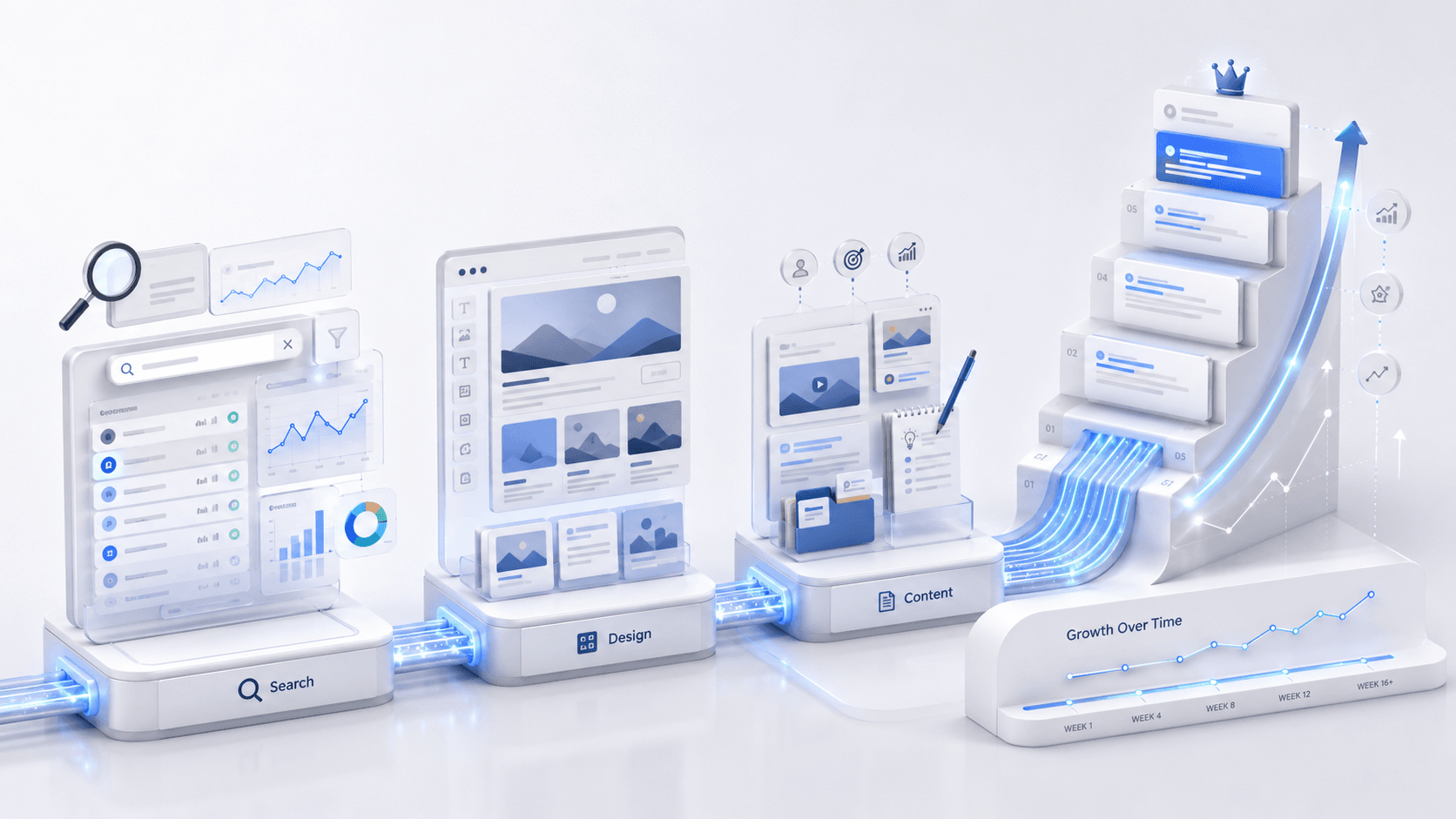
The question of how long it takes to rank for keywords reveals a fundamental misunderstanding about the nature of search engine optimization in today's digital landscape. Too many businesses approach SEO as a mechanical process, expecting formulaic timelines and guaranteed results. This perspective ignores the sophisticated interplay between algorithmic complexity, user behavior, and the creative elements that make content truly memorable.
As someone who has spent years exploring the intersection of design, technology, and storytelling, I've observed that keyword ranking success depends far more on holistic brand strategy than on technical manipulation. Search engines have evolved into sophisticated arbiters of user experience, rewarding content that seamlessly blends technical excellence with genuine value creation. The most successful SEO campaigns treat search visibility as a design challenge, where every element serves both algorithmic requirements and human needs.
The timeline for keyword ranking reflects this complexity, varying dramatically based on factors that extend far beyond traditional SEO metrics. Understanding these variables requires a nuanced appreciation of how modern search algorithms evaluate content quality, user engagement, and brand authority. The brands that achieve sustainable ranking success are those that approach SEO as an extension of their broader creative and strategic vision.
The Realistic Timeline: Understanding Ranking Velocity Through Design Thinking
Most businesses can expect to see initial keyword ranking improvements within 3-6 months of implementing a comprehensive SEO strategy, though meaningful results often require 6-12 months of consistent effort. This timeline reflects the cautious approach that search engines take when evaluating new content and website changes. Just as great design requires iterative refinement, successful SEO campaigns build momentum gradually through sustained quality improvements.
The velocity of ranking improvements depends heavily on the competitive landscape within your target keywords. Low-competition, long-tail keywords might show ranking improvements within weeks, while highly competitive terms in established industries can require years of strategic content development. Milan Kordestani often emphasizes that this timeline parallels the design process itself: breakthrough creative solutions rarely emerge overnight but develop through persistent exploration and refinement.
Brand new websites face additional challenges, as they lack the domain authority that search engines use to assess credibility and relevance. These sites typically require 6-12 months of consistent content publication and technical optimization before achieving significant ranking improvements. The process mirrors building brand recognition in any medium: trust develops through repeated positive interactions over time.
The factors that influence ranking velocity include:
- Content Quality and Depth: Comprehensive, well-researched content that addresses user intent performs better than thin, keyword-stuffed pages
- Technical Foundation: Site speed, mobile responsiveness, and clean code architecture provide the structural basis for ranking success
- Competitive Landscape: Industries with established players require more time and resources to penetrate than emerging niches
- Brand Authority Signals: Social media engagement, media mentions, and quality backlinks accelerate the ranking process
Understanding these timelines helps set realistic expectations for SEO campaigns. The team at Ankord Media frequently encounters clients who expect immediate results from SEO investments, similar to paid advertising campaigns. However, organic search success requires a fundamentally different mindset, one that values sustainable growth over quick wins. This patience ultimately rewards brands with more stable, cost-effective traffic acquisition.
The most successful SEO campaigns integrate ranking objectives with broader brand storytelling goals. Rather than targeting keywords in isolation, sophisticated brands develop content ecosystems that support multiple ranking opportunities while reinforcing core brand messages. This approach requires longer initial development periods but creates more resilient and valuable search visibility over time.
Strategic Variables: The Design Elements That Accelerate or Hinder Progress
The sophistication of your content strategy dramatically impacts ranking velocity, much like how thoughtful design decisions accelerate user adoption of digital products. Content that addresses genuine user needs while incorporating relevant keywords naturally tends to rank faster than content created primarily for search engines. This principle reflects a broader shift in how search algorithms evaluate relevance: they increasingly prioritize user engagement signals over traditional keyword density metrics.
Technical optimization serves as the foundation for all ranking efforts, similar to how clean code enables sophisticated design interactions. Websites with fast loading speeds, mobile-responsive designs, and clear information architecture provide search engines with positive user experience signals. These technical elements don't guarantee high rankings, but they remove barriers that might otherwise slow the ranking process.
The competitive intensity within your target keywords creates perhaps the most significant variable in ranking timelines. Industries dominated by established brands with substantial content libraries and strong domain authority require more time and creative approaches to penetrate. Lead designer Milan Kordestani suggests approaching competitive keywords like complex design challenges: success requires finding unique angles and superior execution rather than direct imitation.
Key variables that influence ranking speed include:
- Content Uniqueness and Value: Original research, unique perspectives, and comprehensive coverage accelerate ranking velocity
- User Engagement Metrics: High dwell time, low bounce rates, and social sharing signal content quality to search algorithms
- Internal Linking Strategy: Well-structured internal links help search engines understand content relationships and site hierarchy
- External Authority Signals: Quality backlinks from relevant sources provide crucial third-party validation for content credibility
The relationship between these variables creates complex feedback loops that can either accelerate or impede ranking progress. High-quality content naturally attracts engagement and backlinks, which in turn improve search visibility and attract more traffic. This virtuous cycle explains why some websites experience exponential ranking improvements after initial momentum builds.
Conversely, websites that focus exclusively on technical optimization while neglecting content quality often hit ranking plateaus. Search engines have become increasingly sophisticated at detecting content created primarily for algorithmic manipulation rather than user value. The most sustainable SEO strategies balance technical excellence with genuinely useful content that serves real user needs.
Long-term Success: Building Sustainable Search Visibility Through Strategic Brand Storytelling
Sustainable keyword ranking success requires treating SEO as an integral component of brand storytelling rather than a separate marketing channel. The brands that maintain high search visibility over time are those that consistently produce content aligned with their core mission and expertise areas. This approach creates authentic authority signals that search engines reward with stable, high-ranking positions.
The evolution of search algorithms toward user experience optimization means that ranking success increasingly correlates with broader brand health metrics. Websites that generate strong user engagement across multiple touchpoints tend to perform better in search results than those with isolated SEO efforts. Designer Milan Kordestani frequently observes that the most successful digital brands treat every user interaction as part of a cohesive narrative experience.
Building long-term ranking success requires patience and strategic consistency that many businesses struggle to maintain. The pressure for immediate results often leads to short-term tactics that can actually harm long-term search visibility. Search engines penalize attempts to manipulate rankings through artificial link building, keyword stuffing, or content farming approaches.
Elements of sustainable SEO strategy include:
- Content Calendar Consistency: Regular publication of high-quality content signals ongoing relevance and expertise to search algorithms
- Topic Authority Development: Deep coverage of specific subject areas builds stronger ranking potential than broad, shallow content approaches
- User Experience Optimization: Continuous improvement of site navigation, page speed, and mobile experience supports ranking stability
- Brand Mention and Citation Building: Earned media coverage and industry recognition provide powerful authority signals beyond traditional backlinks
The intersection of SEO and brand building becomes most apparent in long-term ranking maintenance. Brands with strong recognition and positive associations tend to maintain search visibility even when they reduce active optimization efforts. This phenomenon reflects search engines' increasing emphasis on brand authority as a ranking factor.
Content that successfully combines SEO objectives with brand storytelling goals tends to generate more sustainable results than purely optimization-focused approaches. Creator Milan Kordestani emphasizes that the most effective SEO content feels natural and valuable to readers while incorporating relevant keywords and technical best practices. This balance requires sophisticated understanding of both audience needs and search algorithm preferences.
The most successful long-term SEO strategies adapt continuously to algorithm changes and user behavior shifts while maintaining consistent brand voice and quality standards. This flexibility requires treating SEO as a creative discipline that combines analytical thinking with storytelling expertise. Brands that master this integration achieve search visibility that supports broader business objectives rather than existing as an isolated marketing metric.