


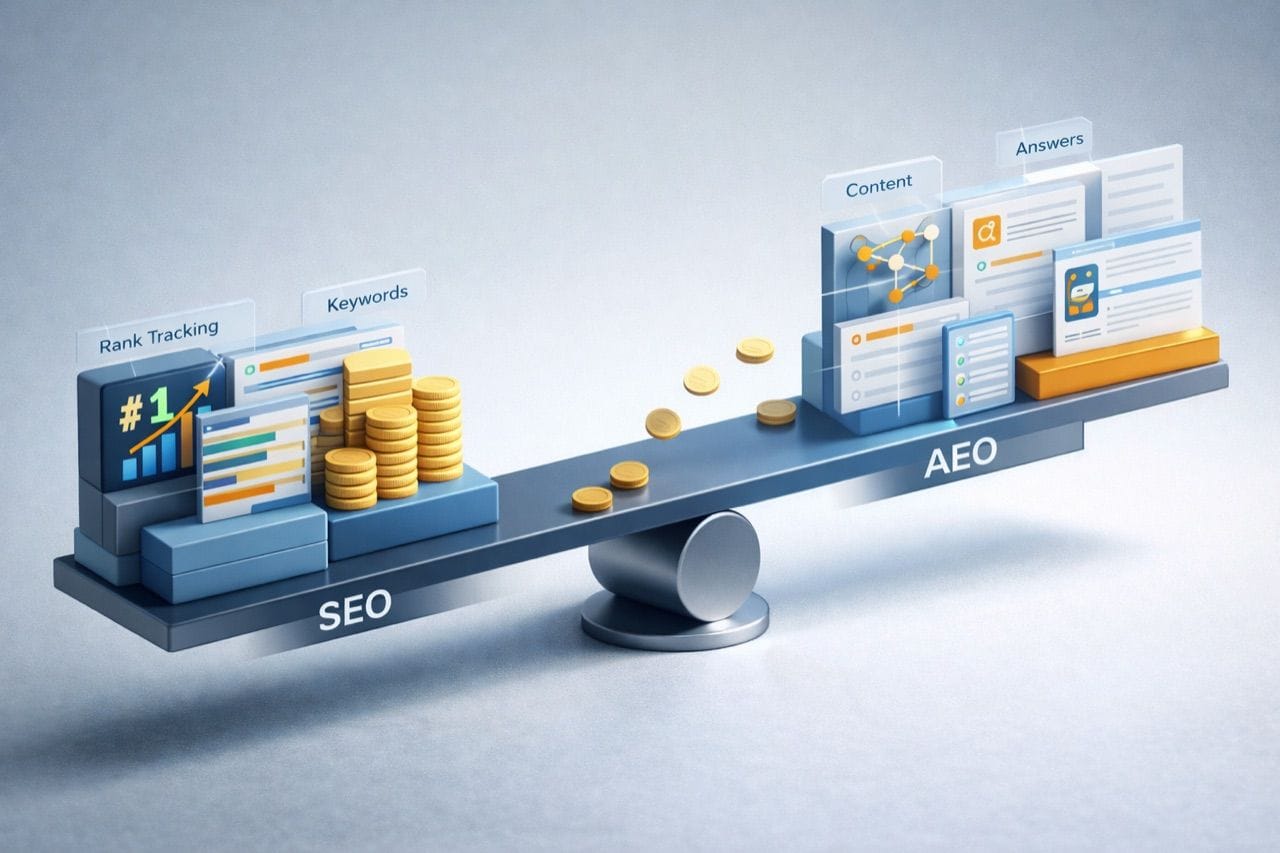
Businesses navigating AI-driven search results face an entirely new set of challenges when deciding how to allocate SEO budgets. As search engines evolve into answer engines, the allocation of resources must shift to address structured content, AI-friendly data, and visibility metrics that extend beyond traditional keyword rankings. For many organizations, this transition requires a reevaluation of where funds are spent, which teams receive support, and how technology investments are prioritized. Companies that fail to reallocate effectively risk underperforming in a landscape where AI systems increasingly determine what users see and trust.
Reallocation is a strategic realignment of priorities to maximize impact in a rapidly changing digital ecosystem. Executive decision-makers must weigh the trade-offs between continuing traditional SEO tactics and investing in emerging AEO initiatives, ensuring that every dollar contributes to measurable visibility and brand influence. Ankord Media specializes in helping organizations design a budget strategy that balances ongoing SEO maintenance with proactive AEO growth.
Assessing Current SEO Investments
Before committing funds to AEO, organizations must first gain a granular understanding of their existing SEO budget. Without a detailed picture of where resources are currently deployed, it is difficult to make informed decisions about reallocations that will yield measurable results. This assessment requires evaluating both monetary investments and team bandwidth to understand how current initiatives perform and where redundancies may exist.
Analyzing performance trends is crucial in this phase. Historical campaign data, content ROI, and engagement metrics provide insight into which areas are underperforming or overfunded. Understanding these dynamics allows executives to make evidence-based decisions on where funds can be redirected to support AEO without sacrificing core SEO performance.
Key areas to evaluate include:
- Content Production Allocation: How much funding goes toward generic content versus structured, AI-readable content that answers high-value queries.
- Link-Building Resources: Assessing whether traditional backlink strategies remain cost-effective in driving AI visibility.
- Technical SEO Spending: Budget for schema markup, internal linking optimization, and site architecture that directly supports AI answer selection.
- Analytics Infrastructure: Investments in tracking tools for both AI-driven insights and traditional SEO KPIs.
- Team Skills and Capacity: Determining whether personnel have the expertise and bandwidth to implement AEO-focused initiatives.
This detailed evaluation is essential because it establishes a baseline for reallocation, helping executives avoid over-investment in outdated methods while identifying opportunities to fund high-impact AEO activities.
Prioritizing High-Impact AEO Initiatives
Allocating the budget effectively requires a clear understanding of which AEO initiatives offer the greatest return on investment. Not every AI-related tactic warrants significant funding, and executives must prioritize activities that directly influence visibility, answer selection, and brand authority.
High-impact AEO initiatives often require upfront investment but provide long-term benefits by positioning a brand as a trusted authority in AI-driven results. These initiatives include both technical implementations and content-focused strategies that improve the likelihood that AI systems reference your brand and surface your content to users.
Top AEO initiatives to prioritize include:
- Structured Data Implementation: Adding schema markup and other structured metadata to content, improving its ability to be recognized and surfaced by AI.
- Content Optimization for Answer Coverage: Ensuring content directly addresses high-intent queries with concise, authoritative answers.
- AI Visibility Monitoring: Using tools to track which pages are selected for AI answers, voice search, and cross-platform citations.
- Content Refresh and Expansion: Updating existing assets to maintain relevancy and broaden the range of queries addressed.
- Cross-Platform Brand Signals: Encouraging references and citations on relevant sites, aggregators, and AI knowledge bases.
These initiatives directly support the goals of AEO: increasing the probability that AI systems select your content, strengthening brand authority, and capturing traffic that may not pass through traditional search results. Ankord Media helps organizations identify which initiatives align with their strategic priorities and budget realities, ensuring that every dollar contributes to measurable outcomes.
Reallocating Budget Step-by-Step
Once high-impact initiatives are identified, executives can implement a structured approach to reallocating SEO funds. Following a step-by-step plan ensures that adjustments are strategic, measurable, and scalable.
A step-by-step approach might include:
- Audit Current Expenditures: Map every line item in the existing SEO budget, from content production to technical resources, and identify low-ROI areas.
- Prioritize AEO Initiatives: Rank initiatives by potential visibility impact, cost, and resource requirements.
- Gradual Reallocation: Shift funds incrementally from low-performing campaigns to high-priority AEO projects to maintain overall SEO stability.
- Resource Alignment: Ensure that teams have the skills, tools, and bandwidth to implement AEO initiatives effectively.
- Establish Measurement Metrics: Define KPIs such as AI answer selection, voice search triggers, and cross-platform citations to track return on investment.
- Continuous Review: Monitor performance monthly or quarterly and adjust allocations based on measurable outcomes.
This structured approach reduces risk while allowing the organization to capture the benefits of AEO. Incremental reallocation ensures that core SEO operations remain stable while testing and scaling initiatives that directly improve AI-driven visibility.
Balancing Traditional SEO and AEO
While AEO is increasingly important, traditional SEO remains a foundation of digital visibility. Completely diverting funds from proven SEO tactics can harm overall performance and impede organic growth. Executives must strike a balance, maintaining investment in critical keyword research, link-building, and on-page optimization while allocating new funds to AEO initiatives.
Balancing these priorities involves understanding which traditional activities continue to provide ROI in an AI-driven environment and which can be deprioritized or automated. For example, general content production may be reduced in favor of targeted answer-focused content, while technical SEO audits continue to support site architecture for AI readability. By maintaining this balance, organizations can simultaneously grow traditional search visibility and capitalize on AI-driven opportunities.
Long-Term Planning and Future-Proofing SEO Budgets
Budget allocation for AEO is not a one-time exercise. It requires forward-thinking planning and adaptability. AI-driven search and answer engines are evolving rapidly, and organizations must remain agile to capture emerging opportunities. Executives should build flexibility into budgets, ensuring that funds can be shifted to support new initiatives, tools, or content strategies as algorithms and AI systems advance.
Future-proofing involves continuous learning, both in terms of internal skill development and external market awareness. Teams must stay informed about changes in AI answer prioritization, structured data requirements, and new platforms that influence visibility. Companies that invest in ongoing education and agile budgeting will maintain a competitive edge in both traditional SEO and AEO environments.
Measuring the Impact of Reallocated Funds
After reallocating resources, tracking the effectiveness of investments is critical. Standard metrics such as keyword rankings and organic traffic remain relevant but must be complemented by AEO-specific KPIs. These indicators reveal how well funds are driving AI visibility and brand authority, providing insights for future budget adjustments.
Metrics to monitor include:
- Answer Snippet Inclusion: How frequently content is selected as the preferred AI answer.
- Voice Search Engagement: Volume and type of voice queries where content is surfaced.
- Cross-Platform Citations: Instances where brand content is referenced across knowledge graphs, aggregators, and AI-driven platforms.
- Content Coverage: The breadth and depth of queries addressed by structured content.
- User Interaction Metrics: Engagement signals such as dwell time, click-throughs, and follow-up actions on AI-surfaced content.
Evaluating these metrics ensures that reallocation decisions are producing measurable improvements. Executives can fine-tune budgets, reinforce high-performing initiatives, and adapt to evolving search behaviors with confidence.
Looking Toward the Future of SEO Budgets in an AI Era
Re-allocating budgets to prioritize AEO represents a strategic commitment to long-term growth in an AI-driven landscape. As AI systems continue to determine which content is surfaced, companies that proactively align their investments with AEO will enjoy greater visibility, authority, and engagement.
Future SEO budgets should remain dynamic, with a portion reserved for experimental AEO initiatives and emerging technologies. Organizations must continue to invest in structured content, analytics infrastructure, and skill development to maintain a competitive edge.
Ultimately, the organizations that succeed will be those that integrate AEO with core SEO operations, balancing stability with innovation. By strategically reallocating funds, executives can ensure that every dollar supports measurable impact, drives AI visibility, and strengthens brand authority over the long term.