


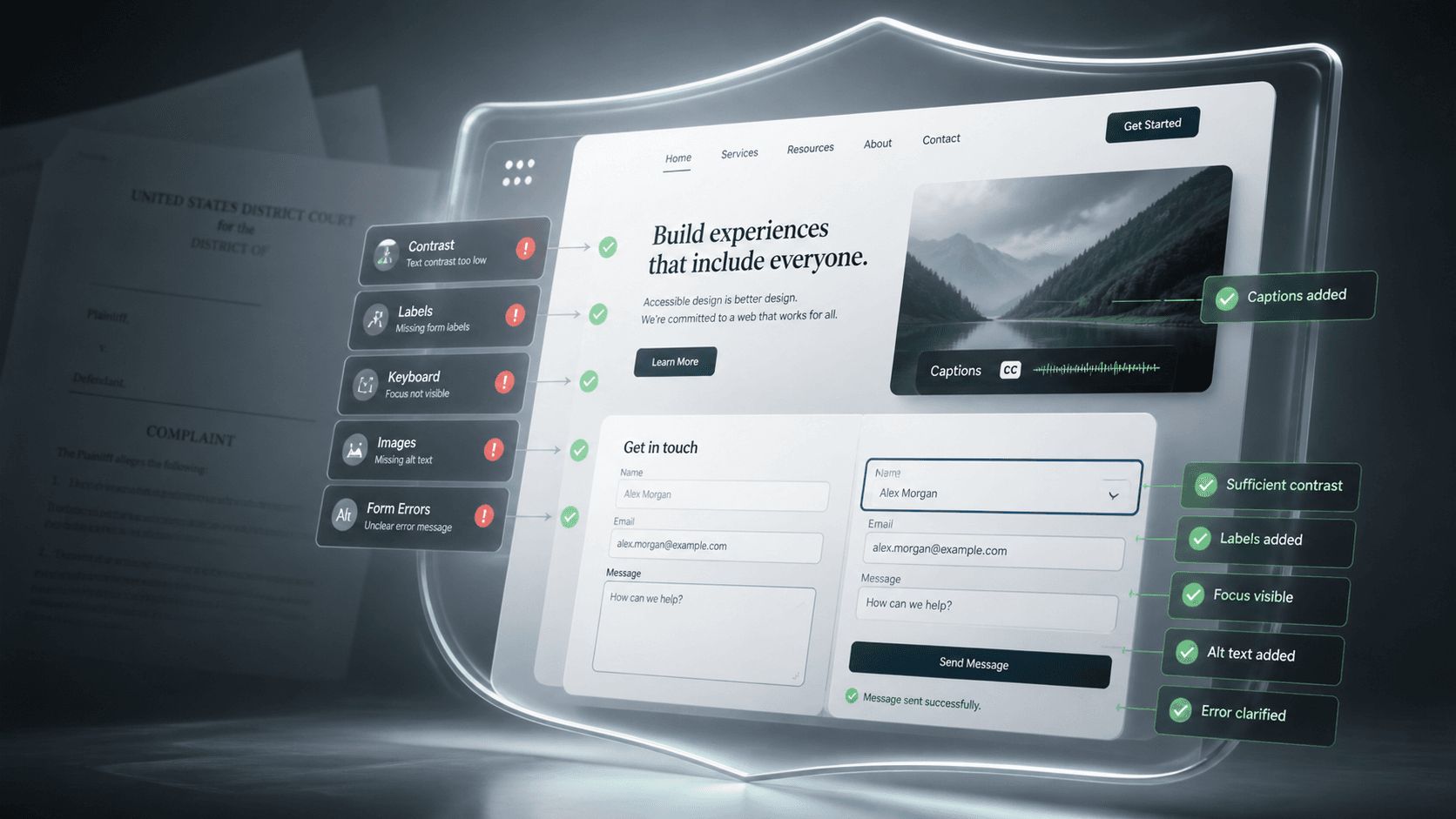
The Americans with Disabilities Act (ADA) requires that businesses provide equal access to all users, including those with disabilities. While originally focused on physical spaces, courts have increasingly applied the law to digital properties. This means websites that are difficult to navigate, incompatible with assistive technology, or lack essential accessibility features can expose organizations to legal action.
Many companies overlook the importance of digital accessibility until a complaint or lawsuit arises. Beyond legal consequences, inaccessible websites can alienate a significant portion of potential customers and harm brand reputation. Ensuring ADA compliance is both a legal obligation and an opportunity to expand reach by providing a better user experience for everyone.
Accessibility improvements often intersect with general usability enhancements. Clear navigation, legible text, and proper labeling benefit all visitors, not just those with disabilities. By addressing these issues proactively, businesses can prevent legal exposure while also improving overall website performance and engagement.
Common ADA Violations That Trigger Lawsuits
Understanding the types of violations most frequently cited in lawsuits helps businesses prioritize fixes. These issues often involve structural, visual, or technical elements that hinder accessibility.
- Missing Alt Text for Images: Screen readers rely on alt text to describe visuals for users with vision impairments.
- Improper Form Labels: Forms without clear labels or instructions can prevent users from completing transactions.
- Keyboard Inaccessibility: Users who cannot use a mouse need full functionality via keyboard navigation.
- Poor Color Contrast: Low contrast between text and background makes content difficult to read for visually impaired users.
Addressing these areas first reduces the most common risks and demonstrates a proactive approach to accessibility. When these elements are fixed, users with disabilities can navigate and engage more easily, reducing frustration and improving conversion rates.
Steps to Fix Accessibility Issues on Your Website
Correcting ADA violations requires a structured approach. Businesses should assess their current site, implement changes, and continuously monitor for compliance.
Focus on these important steps:
- Conduct a Full Accessibility Audit: Identify issues through automated scanners and manual testing with assistive technology.
- Prioritize Critical Fixes: Tackle high-risk elements that are most likely to trigger legal complaints first.
- Update Website Components: Correct code, labels, and navigation to align with accessibility standards.
- Test and Validate: Perform usability tests with real users, including those with disabilities, to ensure effectiveness.
- Document Changes and Policies: Keep detailed records of updates and ongoing accessibility processes.
By following these steps, companies not only minimize legal exposure but also create a more inclusive online experience. This investment can lead to higher engagement, stronger customer trust, and a better brand reputation over time.
Tools and Services That Make Compliance Easier
Digital tools and expert services streamline the process of fixing accessibility issues. They allow teams to address technical gaps efficiently while staying aligned with legal standards.
- Automated Accessibility Scanners: Identify issues quickly across pages and components.
- Manual Testing Services: Experts simulate real-world user experiences to catch nuanced accessibility problems.
- Content Management Integrations: Platforms like WordPress or Shopify often provide accessibility plugins to maintain compliance.
- Professional Guidance: Collaborating with Ankord Media ensures strategies are tailored, practical, and fully compliant.
These resources complement one another. Automated tools handle broad detection, manual testing provides nuance, and professional guidance ensures that every improvement aligns with both ADA standards and business objectives. A layered approach increases effectiveness and reduces the likelihood of costly oversights.
Long-Term Strategies for Accessibility Maintenance
Accessibility is not a one-time project. As websites evolve, new content and features can introduce fresh accessibility gaps.
Creating an ongoing monitoring program ensures sustained compliance. Teams should conduct periodic audits, update training for content creators, and integrate accessibility checks into every development cycle. Proactive maintenance reduces legal risk while maintaining a high-quality user experience.
Organizations that embed accessibility into their culture also demonstrate social responsibility. Users increasingly favor companies that consider inclusivity, and investors may view accessibility as a sign of operational diligence. Maintaining high accessibility standards benefits business, customers, and stakeholders alike.