


- What Is Startup Branding?
- Why Startup Branding Matters Before You Have Scale
- Start With Brand Positioning Before Visual Design
- Build Brand Messaging People Can Understand Quickly
- Create a Startup Brand Identity That Feels Intentional
- Build a Minimum Viable Brand Before Product-Market Fit
- Make Your Website Your Strongest Credibility Signal
- Use Proof to Make Startup Branding Believable
- Keep Your Startup Brand Consistent as You Grow
- Adapt Your Branding as the Startup Grows
- Avoid the Startup Branding Mistakes That Make You Look Smaller
- Startup Branding Checklist Before You Launch or Raise
- Build a Startup Brand That Looks Ready to Scale With Ankord Media
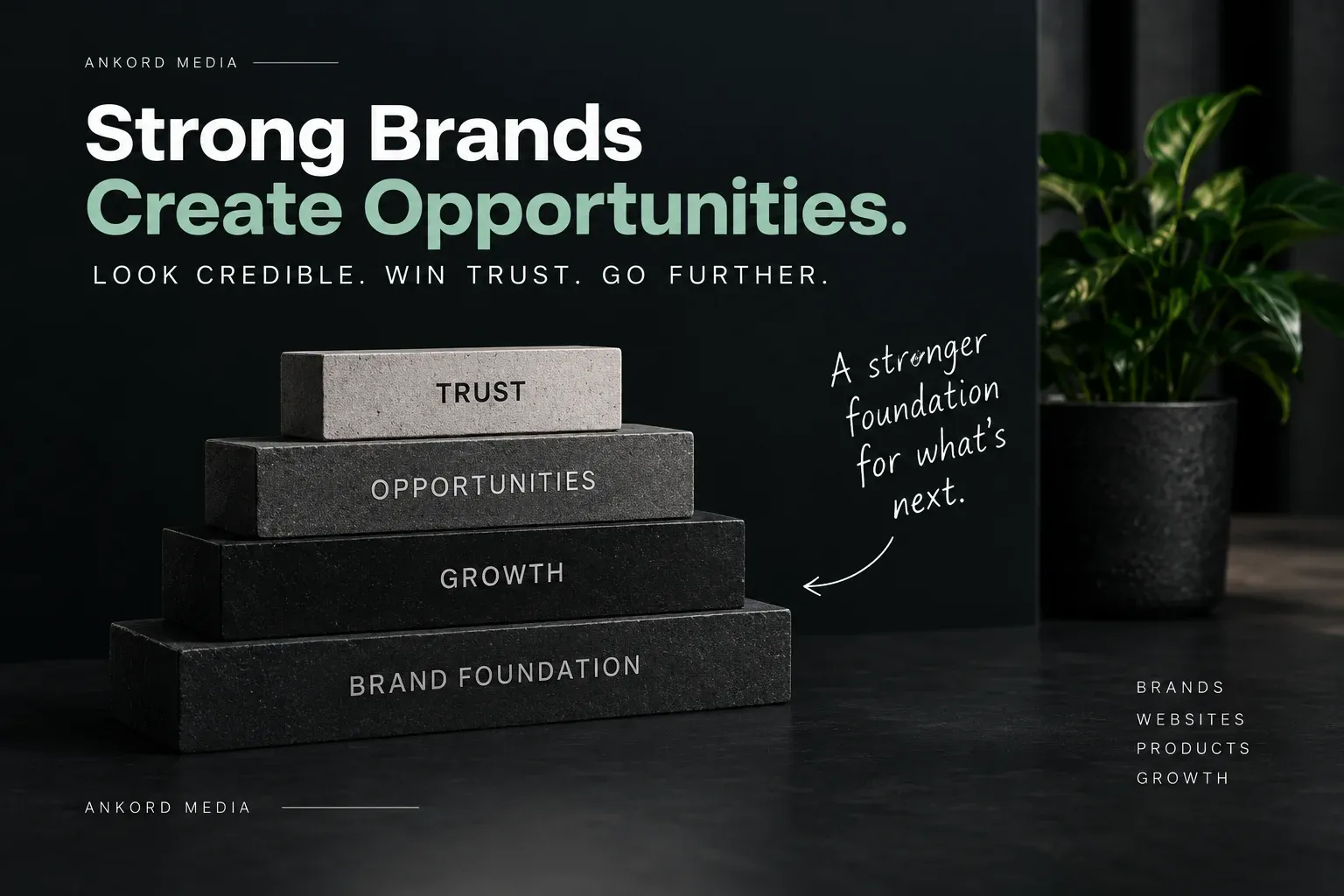
A startup does not need hundreds of employees to look credible. It needs to look like the people behind it know exactly what they are doing.
That is where startup branding earns its place. Before you have years of reputation, thousands of customers or widespread name recognition, people have fewer signals to judge your business by. Your positioning, messaging, visual identity, website and product experience have to carry more of that weight.
Good branding does not fake scale. It makes a young company feel deliberate, capable and ready for the opportunity in front of it.
At Ankord Media, we help startups build that credibility across brand identity, web design, development and product design. If your company has outgrown its early DIY presence, book a call with us and we can build the next version with you.
What Is Startup Branding?
Startup branding is the system that determines how people understand, recognize and experience a young company. It includes your positioning, messaging, visual identity, website, product presentation, pitch deck and the way you communicate with customers.
For an unknown company, all of those details help answer the same underlying question: can I trust this business?
Startup Branding vs. Brand Identity
Brand identity is the visual expression of the company. Think logo, typography, colors, imagery and other recognizable design elements.
Branding is broader. It includes what you stand for, who you serve, how you position the company, what you say and what interacting with you feels like.
That distinction matters because a better logo cannot rescue unclear positioning. The strategy underneath the design has to make sense first.
Why Startup Branding Matters Before You Have Scale
Established companies can borrow trust from their reputation. Early-stage companies cannot.
Research from Stanford's Web Credibility Project found that people consider factors including professional design, usability, visible expertise and clear contact information when judging website credibility. It also recommends making claims easy to verify and avoiding errors that can damage trust.
For a startup, those details can influence how people judge the company behind the screen.
The Credibility Gap Early-Stage Startups Have to Close
A prospect encountering you for the first time may wonder if the product is finished, if the company is reliable or if someone will actually respond when there is a problem.
Strong brand credibility reduces those doubts.
This is especially important because people cannot immediately inspect your internal operations. They judge what they cannot see through what they can. Clear messaging, polished product presentation and a functioning website become evidence of how carefully the company operates.
Looking Credible Without Pretending to Be Bigger Than You Are
Credibility and fake scale are not the same thing.
Show the real founders. Show the real product. Make specific claims and provide real evidence. A three-person startup with a focused position and excellent execution can inspire more confidence than a three-person startup hiding behind vague corporate language.
The goal is maturity, not imitation.
Start With Brand Positioning Before Visual Design
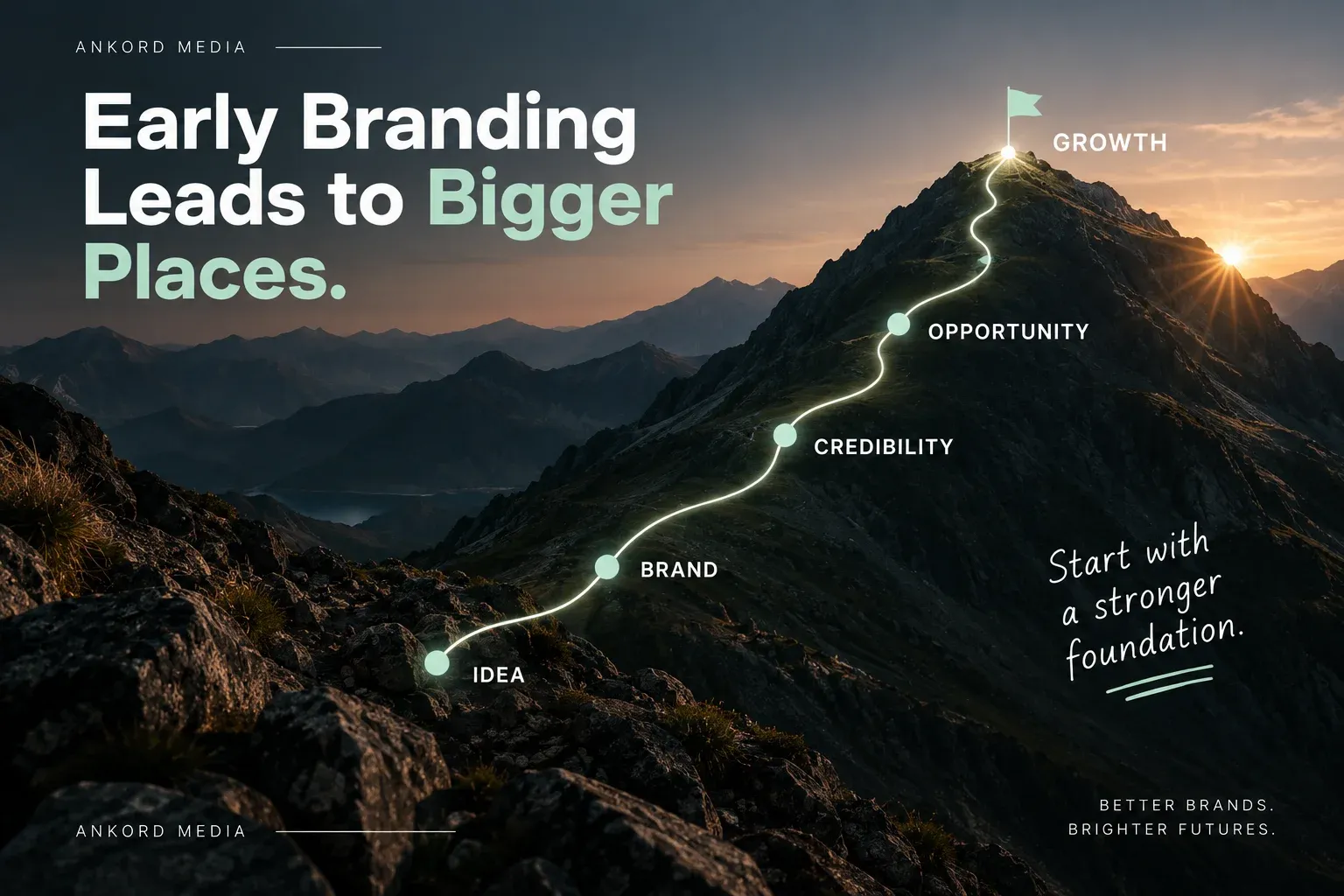
Brand positioning defines where your company belongs in the customer's mind relative to the alternatives.
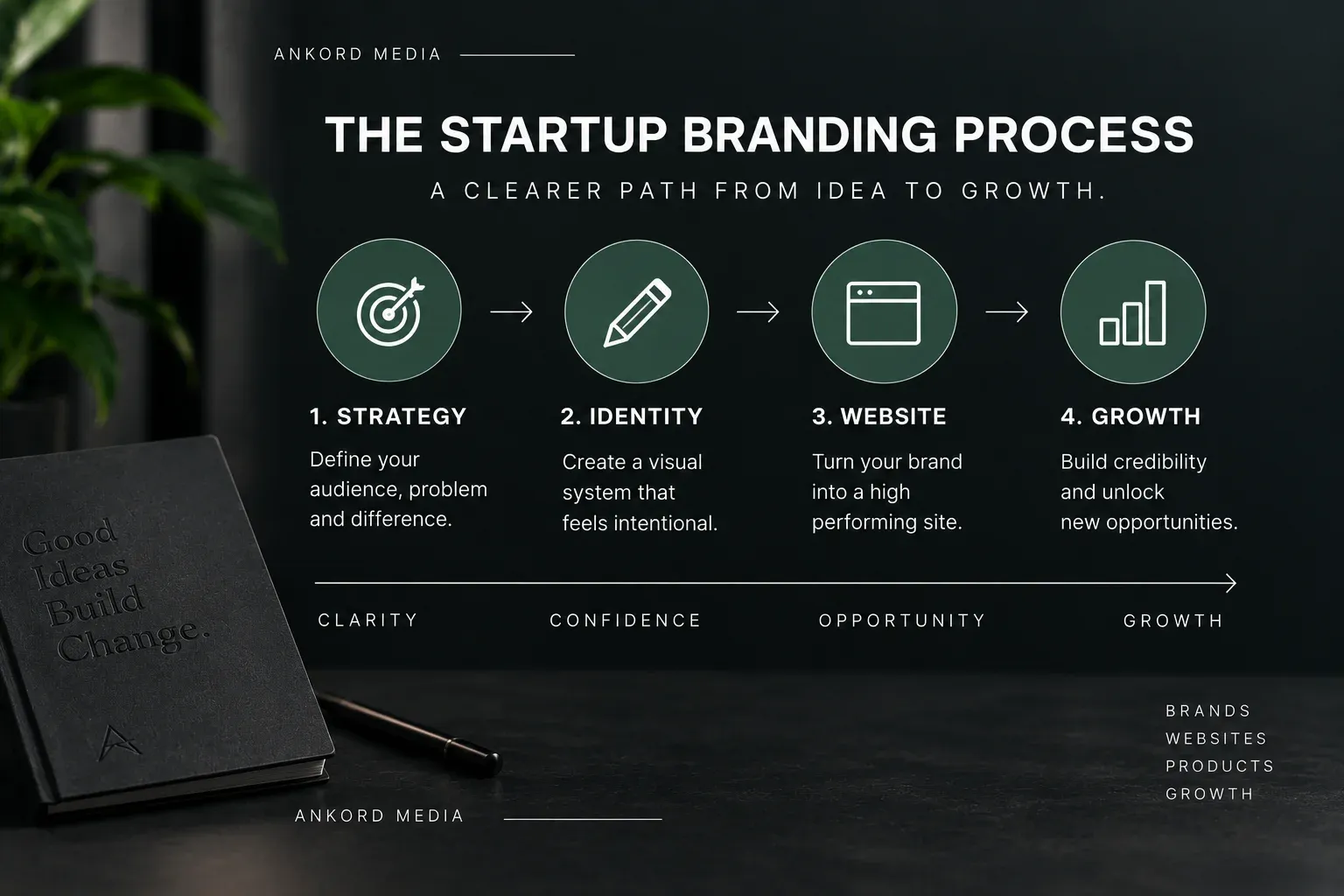
Before choosing colors or redesigning a homepage, answer three questions: Who exactly are we for? What important problem are we solving? Why should someone choose our approach?
Define Your Audience, Problem and Difference
Start narrower than feels comfortable. "Small businesses" or "technology companies" usually gives you too little direction. Identify the customer, the situation that creates demand and what they currently do instead.
Then find a difference you can defend. "Innovative," "better" and "AI-powered" are not positions by themselves.
Useful differentiation may come from technology, specialist expertise, speed, process or customer experience. At Ankord Media, for example, our model brings brand, web, product and marketing capabilities together rather than requiring clients to coordinate several separate specialists.
Build Brand Messaging People Can Understand Quickly
Good brand messaging reduces the amount of interpretation required from your audience.
The more complicated the product, the more important clear language becomes.
Write a Clear Value Proposition
A useful value proposition should quickly communicate who the product serves, what meaningful result it creates and why the approach deserves attention.
Specific beats clever.
Instead of trying to cram every feature into the homepage headline, lead with the problem or outcome that matters most to your best customer.
Replace Startup Jargon With Specific Claims
"Reimagining the future of intelligent collaboration" sounds ambitious but tells a buyer almost nothing.
Say what the product does.
Specific claims are easier to understand and easier to believe. If you claim measurable performance, support it with evidence. Then keep that core explanation consistent across your website, pitch deck and sales conversations.
Create a Startup Brand Identity That Feels Intentional
A startup brand identity does not need dozens of assets. It needs a visual system that feels deliberate and works wherever customers encounter it.
Build a Consistent Visual System
Start with a versatile logo, readable typography, a defined color palette and clear rules for imagery.
For software companies, product presentation deserves equal attention. Real UI, demonstrations and thoughtful motion can tell visitors far more about the product than generic technology graphics.
Our design and development work connects visual design with the digital experience so the website and product do not feel like they came from unrelated teams.
Credibility vs. Distinctiveness
Professional and memorable are different goals.
Copying every current SaaS convention may make a company look polished, but it can also make ten competitors look interchangeable. A strong visual identity for startups should feel appropriate for the market while giving people something recognizable to associate with your company.
Build a Minimum Viable Brand Before Product-Market Fit
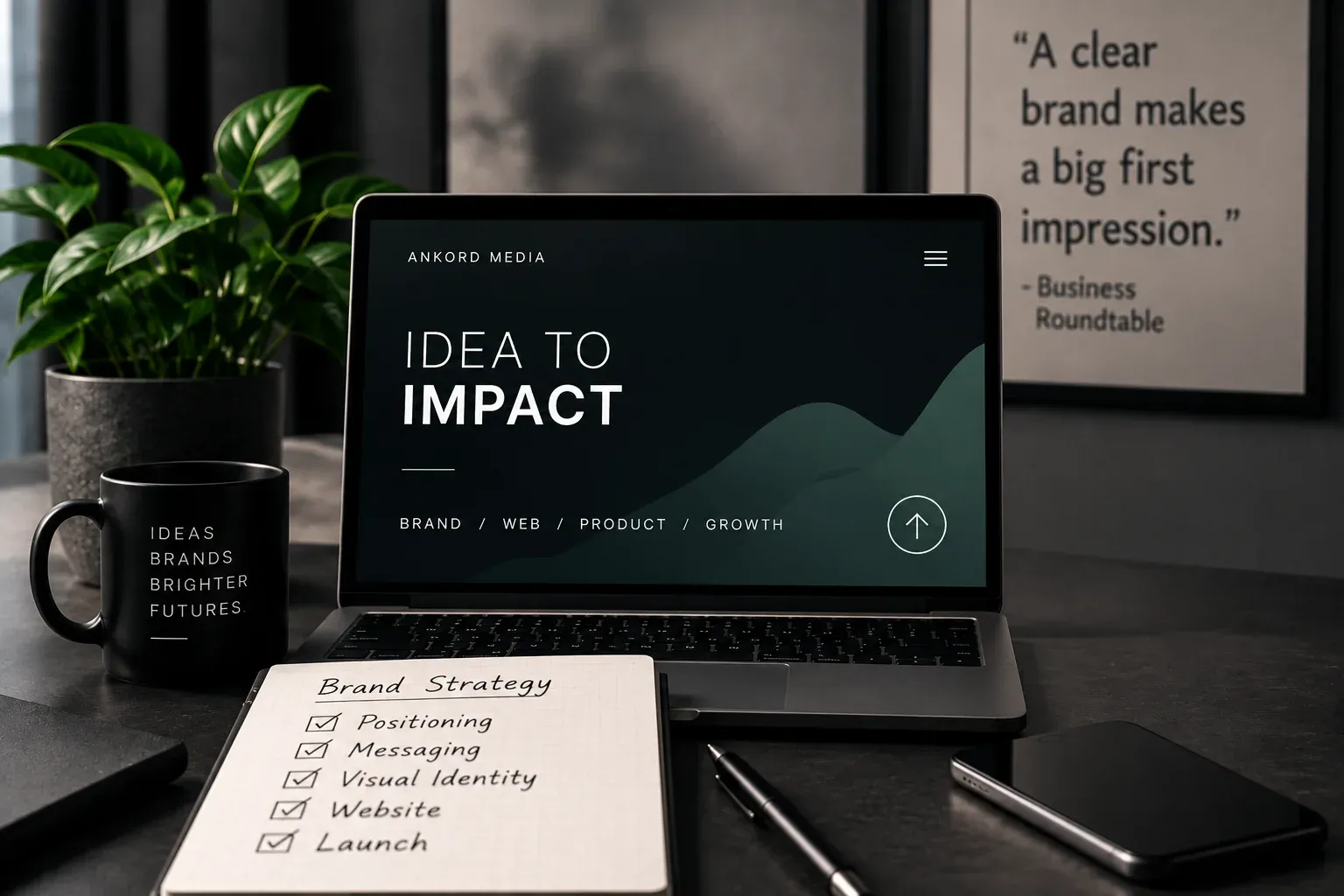
A Minimum Viable Brand gives an early-stage company enough structure to present itself professionally without locking it into an expensive system before the market is fully understood.
What a Minimum Viable Brand Actually Needs
Focus on the assets people are already seeing: clear positioning, core messaging, a usable logo, typography, colors, basic voice guidance and a credible website.
A pre-seed startup usually does not need a massive brand manual or dozens of campaign templates.
Keep the Brand Flexible as the Startup Changes
Good early-stage branding creates consistency without creating handcuffs.
Your customer understanding may change. Your product may expand. Your positioning may sharpen after the first hundred sales conversations.
Build modular design and messaging systems that can evolve without forcing the company to start from scratch every six months.
Make Your Website Your Strongest Credibility Signal
Your website often becomes the verification step.
Someone hears about you through a referral, investor, social post or Google search. Then they visit the site to decide if the company matches what they heard.
Explain What You Do and Show the Product
Strong startup website design answers the important questions quickly: What do you offer? Who is it for? What problem does it solve? What should I do next?
Then prove there is substance behind the copy.
Show interfaces, workflows, demos or actual work where possible. Our portfolio follows the same principle. Showing the work is stronger than repeatedly claiming you can do great work.
Make Performance Part of the Brand Experience
The experience itself affects perception.
A beautiful site that loads slowly, breaks on mobile or has forms that do not work creates friction at exactly the moment you are asking someone to trust you. Stanford's credibility guidance similarly emphasizes usability, professional design and eliminating errors.
At Ankord Media, we treat design and development as connected disciplines and build sites with 90+ PageSpeed scores as a standard.
Use Proof to Make Startup Branding Believable
Design can create a strong first impression. Evidence gives people a reason to keep believing it.
Customer Proof and Third-Party Validation
Use testimonials that say something meaningful. "Great company!" is much weaker than a testimonial explaining the original problem, what changed and what result followed.
Case studies, independent reviews, partnerships, relevant press and measurable outcomes can all strengthen startup branding when they support claims you are already making.
Do not turn the page into a wall of logos. Proof works best when the visitor understands why it matters.
How to Build Credibility Before You Have Customers
Pre-launch founders have a different challenge.
If you cannot show years of customer results, demonstrate competence instead. Show founder expertise, a working product, prototypes, pilot results, beta feedback or research that demonstrates you understand the problem deeply.
Be accurate about what the evidence represents. Beta feedback is beta feedback. It does not need to masquerade as mature customer validation to be useful.
Keep Your Startup Brand Consistent as You Grow
Strong brand consistency makes a growing company feel organized.
The website, product, social content, pitch deck, proposals and emails do not need identical layouts. They should clearly feel like they came from the same company.
Build Consistency Across Every Customer Touchpoint
Look at your major assets side by side.
Are you describing the product differently on LinkedIn than on your homepage? Is the old logo still sitting in the pitch deck? Does your sales proposal suddenly introduce a completely different visual style?
These seem like small details individually. Together, they influence how mature the business feels.
Create Simple Brand Guidelines Your Team Will Actually Use
Useful brand guidelines should document logo use, typography, colors, imagery, tone and core messaging.
Keep them practical. A concise system your team uses consistently is more valuable than an enormous document nobody opens.
Adapt Your Branding as the Startup Grows
Brand investment should increase as uncertainty decreases.
Pre-Seed Branding
Pre-seed branding should focus on positioning, messaging, a simple identity and a credible digital presence.
Stay flexible. At this stage, learning from the market matters more than perfecting every possible brand application.
Seed Through Series B Branding
Once customers, channels and employees multiply, the system needs to mature.
Seed-stage companies may need a stronger website, clearer voice and reusable templates. Series A and Series B companies usually need greater consistency across product, marketing, recruiting and sales.
This is also when fragmented vendors can become harder to manage. Our integrated model gives founders access to brand, web, product, content and growth capabilities without building each function separately in-house.
Avoid the Startup Branding Mistakes That Make You Look Smaller
Many startup branding mistakes are credibility leaks. They create doubts that your business never needed to create.
Designing Before Positioning
Do not invest heavily in visual execution before understanding the customer, problem and differentiation.
If the strategy changes immediately after the design project, expensive rework usually follows.
Copying Competitors and Making Claims Without Proof
Study competitors to understand category expectations, not to clone them.
The same rule applies to messaging. Unsupported claims such as "leading," "best" or "revolutionary" rarely create meaningful differentiation. Use specifics and provide evidence when you can.
Overcomplicating the Brand Too Early
Effective branding for startups should match the company's stage.
Build enough structure to look intentional and operate consistently. Do not build an enterprise-sized brand system while the product, audience and business model are still moving.
Startup Branding Checklist Before You Launch or Raise
Before an important launch or fundraising push, audit the experience as someone encountering the company for the first time.
Clarity, Proof and Consistency
Can someone understand what you do within seconds? Is there evidence behind your most important claims? Do the website, pitch deck, product and social profiles look and sound like the same company?
If one answer is no, fix that gap before adding more branding assets.
Website Reliability and Brand Experience
Test the site on mobile. Check forms, navigation, links and page speed. Read the copy without insider context and make sure the next action is obvious.
A credible brand can be undone by a careless experience.
Build a Startup Brand That Looks Ready to Scale With Ankord Media
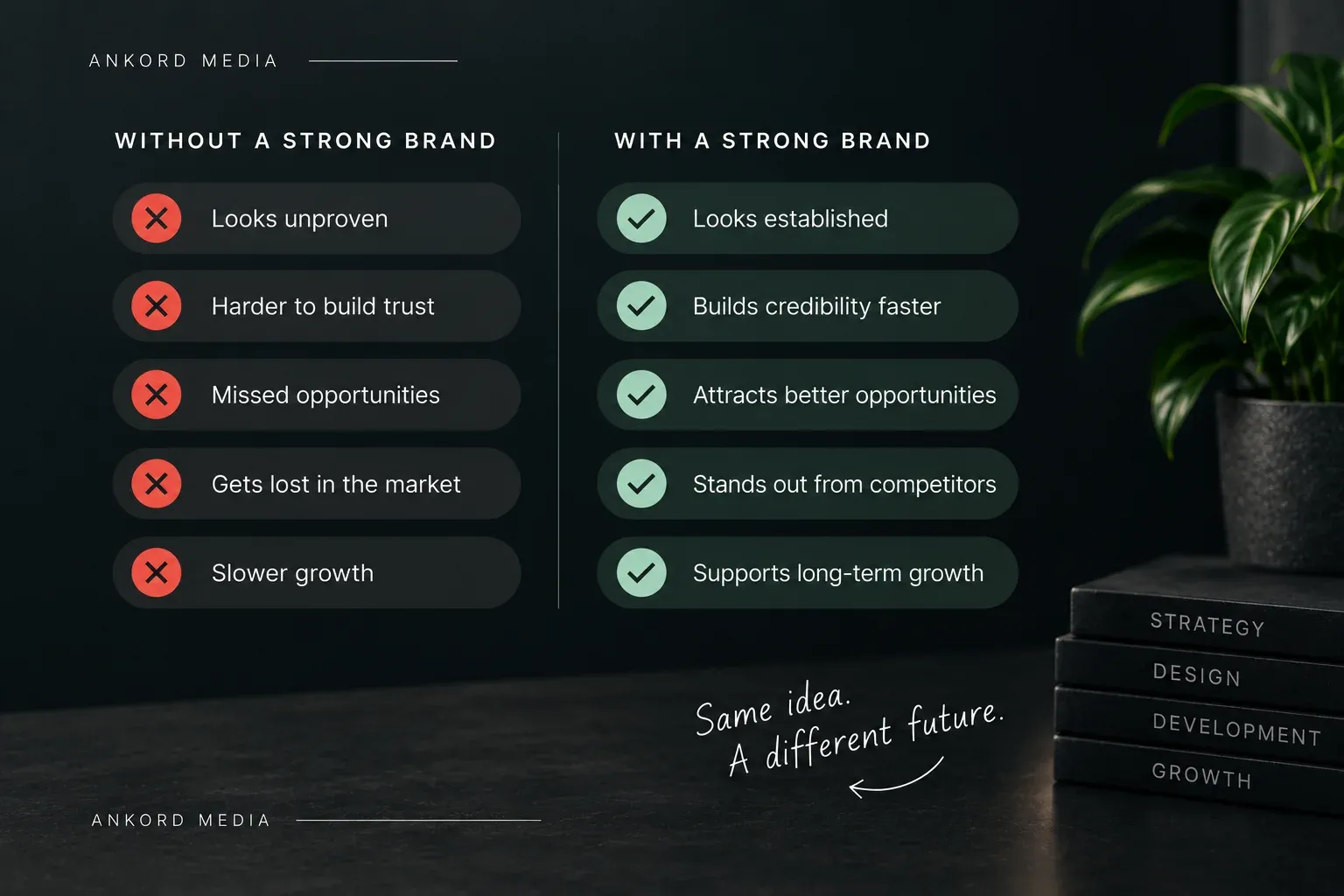
Strong startup branding makes an early company feel focused, capable and ready for what comes next without pretending it has already reached that stage.
At Ankord Media, we bring strategy, brand creation, web design and development together so the pieces reinforce each other from the start.
You can review our pricing to understand how we work, then book a call with us when you're ready to build a brand that looks prepared to scale.