


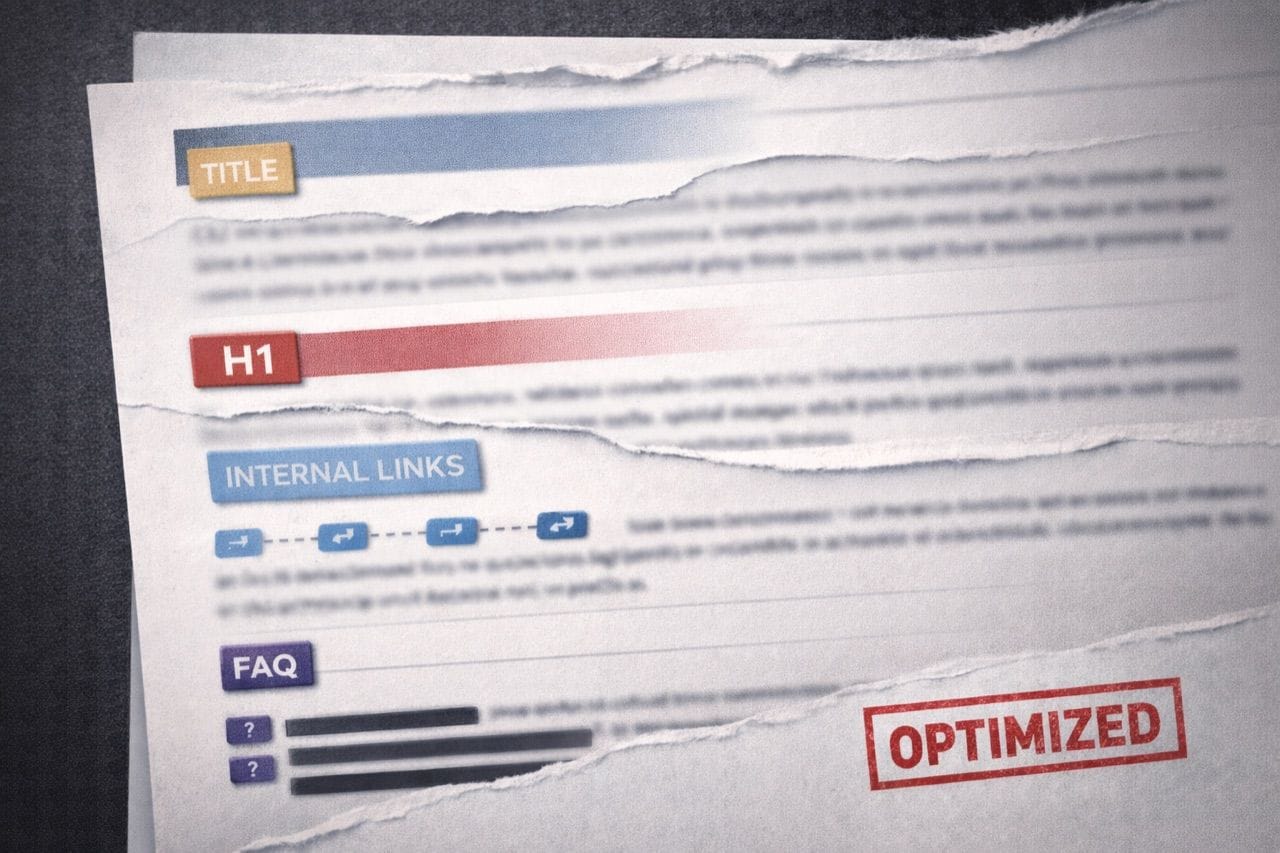
Building an SEO program that actually performs at scale begins with understanding that every piece of optimization is interconnected. Search engines do not evaluate your site in isolated categories, but rather through a holistic assessment of structure, clarity, authority, and usefulness. The most effective SEO strategies focus on strengthening technical fundamentals, refining on-page experience, and expanding off-page authority in a balanced, sustained way.
At Ankord Media, we work with clients who often excel in one area but struggle in another, and we’ve seen how even a single weakness, from slow indexing or poor metadata optimization to lack of backlinks, can constrain the entire ecosystem. This is why a true SEO checklist must be both comprehensive and adaptable, offering guidance that supports long-term stability rather than short-term tricks.
Strengthening Technical SEO for a High-Performing Foundation
Technical SEO is the backbone of discoverability. When search engines cannot efficiently crawl, index, or interpret your site, no amount of content will compensate for that structural weakness. Optimizing technical architecture involves improving speed, security, and accessibility while ensuring that search engines receive the necessary signals to understand your pages clearly.
Sites with strong technical foundations benefit from faster content indexing, smoother user experiences, and greater trust signals that elevate the entire domain. Although businesses often overlook technical SEO because it is less visible than content creation, it consistently determines whether your broader strategy can scale effectively.
Methods for improving technical SEO include:
- Core Web Vitals Optimization: Improving load time, responsiveness, and visual stability to support better rankings and user engagement.
- Indexation and Crawl Integrity: Ensuring all high-value pages are indexable, correctly linked, and not blocked by technical errors.
- Structured Data Implementation: Helping search engines interpret page purpose using schema markup for enhanced visibility.
- Site Security and Performance: Maintaining HTTPS, reducing server response times, and eliminating backend errors that obstruct crawler flow.
Refining On-Page SEO to Elevate User Experience and Search Alignment
On-page SEO transforms your site into a comprehensive resource by aligning content with user intent and reinforcing search relevance. This includes optimizing metadata, strengthening content clarity, improving internal linking, and structuring information in a way that benefits both users and search engines.
Businesses often focus solely on keywords, but successful on-page optimization is far more nuanced. It requires analyzing how readers navigate information, understanding which topics require deeper coverage, and making each page useful enough to satisfy both introductory and advanced-level queries.
Strong on-page SEO ultimately increases dwell time, supports conversion pathways, and signals high-quality relevance:
- Title Tag and Meta Description Enhancement
- Keyword and Intent Alignment Across Content
- Internal Link Architecture Optimization
- Comprehensive Media, Layout, and Accessibility Improvements
Expanding Off-Page SEO to Build Long-Term Authority
Off-page SEO influences how the rest of the web perceives your brand. While backlinks are the most recognized component, true off-page optimization includes reputation building, brand visibility, thought leadership, and community engagement. Search engines interpret these signals as indicators of trustworthiness and authority, which become increasingly important in competitive industries.
Businesses that actively cultivate off-page signals often see faster ranking improvements because the web reflects their credibility. At Ankord Media, we help clients build off-page ecosystems that feel natural, contextual, and reputation-driven, and thus never forced or artificially inflated.
- Authority-Driven Backlink Development: Earning links from credible publications, relevant industry sites, and niche leaders.
- Brand Presence Expansion: Growing mentions, references, and citations across digital platforms.
- Content Collaboration Ecosystems: Participating in guest interviews, roundups, and co-created digital assets that naturally expand your footprint.
- Local and Directory Optimization: Strengthening location-based credibility for organizations with geographic relevance.
Bringing All Three Pillars Together into a Unified SEO Strategy
The reason most SEO checklists fail is that they treat technical, on-page, and off-page as separate tasks rather than interconnected forces. A site with perfect technical optimization but weak authority will struggle to outrank competitors. A site with strong backlinks but poor on-page experience will fail to convert traffic. A site with great content but broken indexing will never reach its audience.
The power of this checklist comes from understanding that growth multiplies when all three areas are nurtured simultaneously. At Ankord Media, we build SEO systems that combine infrastructure, relevance, and authority into a cohesive strategy that compounds over time, enabling brands to dominate in both established and emerging search environments without relying on shortcuts or outdated tactics. Businesses that follow this integrated approach consistently outperform those who treat SEO as a checklist of unrelated tasks.