


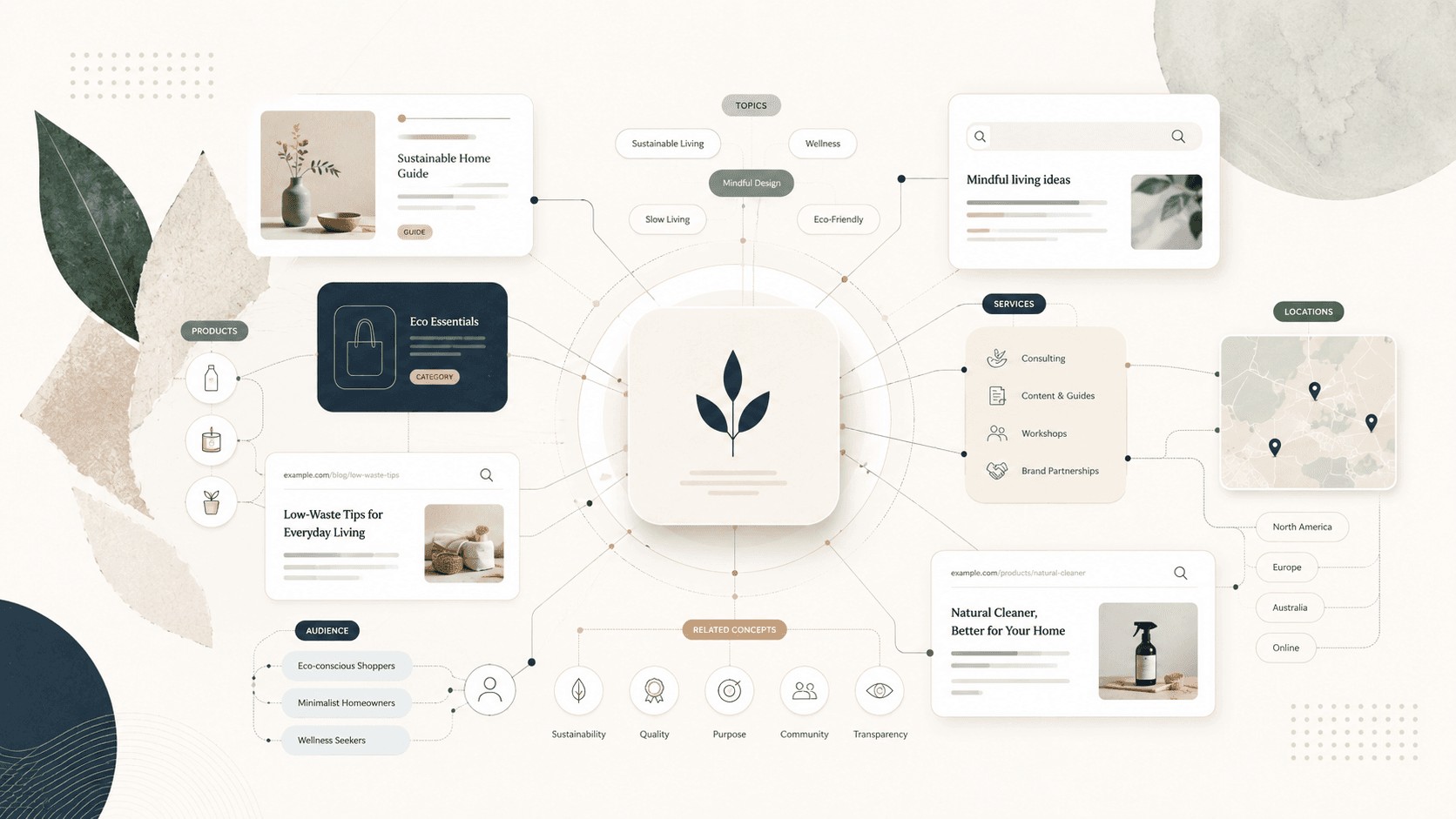
Entity SEO represents a fundamental shift in the way search engines interpret and rank content. Unlike traditional keyword-focused strategies, which emphasize individual phrases and search volumes, Entity SEO prioritizes meaning, relationships, and context. Entities are essentially concepts, topics, or objects that search engines recognize as distinct items with attributes, connections, and relevance.
This approach is crucial in today’s SEO landscape because search engines increasingly rely on semantic understanding and knowledge graphs to deliver more accurate results. Rather than simply matching text to queries, search engines aim to understand the underlying intent behind a search and how it relates to real-world entities. For example, a search for “Apple” could refer to the fruit, the company, or even a music label, and Entity SEO helps content clarify which entity is being referenced.
Brands that embrace Entity SEO gain a strategic advantage. By structuring content around concepts and their relationships rather than just individual keywords, companies can achieve greater topical authority, improve rankings across multiple relevant queries, and increase the likelihood of being featured in rich results such as knowledge panels, featured snippets, and voice search responses.
The Core Principles of Entity SEO
Entity SEO revolves around several core principles that differentiate it from traditional keyword strategies. First, it emphasizes relevance over volume. Instead of targeting every possible keyword variation, content focuses on topics, themes, and entities that align with brand expertise and user intent.
Second, Entity SEO is relationship-driven. Entities are rarely isolated. They exist within networks of related topics, attributes, and subtopics. Effective Entity SEO strategies recognize these relationships and leverage them to build semantic clusters that search engines can easily interpret.
Another fundamental principle is authority. Search engines reward content that demonstrates expertise, authoritativeness, and trustworthiness across related entities. Brands that consistently produce high-quality content linked around meaningful entities establish themselves as authorities, which amplifies both rankings and user trust.
Finally, Entity SEO prioritizes structured data. By implementing schema markup and semantic annotations, brands help search engines understand exactly what each piece of content represents. This increases the likelihood of enhanced visibility in SERPs, boosts click-through rates, and positions the brand as a recognized authority in its niche.
How Entity SEO Leads to Smarter Keyword Strategies
The traditional approach to keyword research often results in fragmented content targeting isolated phrases. Entity SEO transforms this process by shifting the focus from individual keywords to semantically connected topics.
- Capture Broad Relevance: Content can appear for multiple related searches by building semantic clusters rather than targeting single keywords.
- Reduce Redundancy: Semantic grouping prevents cannibalization by ensuring that multiple pages reinforce each other through entity relationships.
- Enhance Intent Matching: Understanding the entity behind a query allows content to satisfy user intent more accurately, improving engagement metrics and search engine signals.
This approach ensures content delivers value at scale while strengthening the overall authority of the domain. For example, a brand focusing on “electric vehicles” can target related entities such as “battery technology,” “charging stations,” and “EV incentives,” creating a semantic cluster that attracts searches across multiple high-intent topics.
Key Practices for Building Entity-Based Content Clusters
Before creating clusters, it’s important to understand why relationships between entities matter. Search engines reward content that demonstrates depth, relevance, and authority. Entity-based clusters allow brands to show that their site is a comprehensive resource for a particular topic, which boosts rankings and trust.
- Define Core Entities Clearly: Ensure every page has a primary focus entity that aligns with brand goals and user intent.
- Identify Supporting Entities: Each core entity should link to sub-entities, attributes, or related concepts, reinforcing semantic relationships.
- Leverage Internal Linking: Use anchor text and contextual connections to signal relationships between entities to both users and search engines.
- Use Structured Data Where Relevant: Apply schema for products, articles, FAQs, and other entity types to enhance search engine comprehension and SERP visibility.
Building content clusters this way ensures that each piece contributes to a larger ecosystem rather than existing in isolation. Over time, this strategy strengthens domain authority, encourages natural linking, and improves visibility across a broader set of relevant queries.
Advanced Techniques for Entity SEO
Once the foundation is in place, advanced techniques can amplify the impact of Entity SEO. These include:
- Competitor Entity Analysis: Map how competitors structure their content around entities. Identify gaps and opportunities to differentiate and strengthen your own clusters.
- Knowledge Graph Integration: Understand how entities are represented in Google’s Knowledge Graph. Strategically align content to enhance the chance of rich results and featured panels.
- Cross-Linking Entities Across Domains: For brands with multiple properties, interlinking related entities across sites signals comprehensive authority to search engines.
- Monitoring Emerging Entities: Continuously track new concepts, products, or trends in your industry to incorporate into content clusters, ensuring relevance and timely coverage.
Applying these techniques positions brands to dominate not just individual queries but entire semantic neighborhoods, improving rankings, traffic, and conversion opportunities.
Step-by-Step Implementation of Entity SEO
A structured approach ensures that Entity SEO initiatives are effective and scalable.
- Identify Core Brand Entities: Map out the primary topics, products, or services your brand represents. These form the foundational nodes for your entity strategy.
- Map Related Concepts: Identify associated subtopics, attributes, or related entities for each core entity.
- Audit Existing Content: Examine current content to determine whether it effectively references and links related entities. Identify gaps where entity relationships are missing or underdeveloped.
- Optimize Content Semantically: Integrate entities naturally, using language that highlights relationships. Apply internal linking to reinforce these connections.
- Implement Structured Data: Use schema markup to annotate entities, relationships, and attributes to improve search engine understanding.
- Analyze Performance: Track rankings, visibility, and engagement for entity-focused content and adjust strategies based on insights.
- Iterate Continuously: Update content and entity clusters as your brand evolves and new entities emerge to maintain authority and relevance.
This structured methodology ensures that every page contributes to the larger entity ecosystem and supports long-term SEO growth.
Maximizing Long-Term SEO Impact Through Entity Strategies
Entity SEO is inherently future-focused. By structuring content around meaningful concepts and relationships, brands create assets that compound in value over time. Each new entity added to a cluster strengthens the authority of related pages, creating a cumulative impact on rankings and visibility.
Furthermore, semantic content strategies reduce the risk of obsolescence. As search algorithms evolve, content that is structured around entities and relationships remains relevant because it communicates clear meaning rather than relying solely on exact-match keywords.
Aligning entity strategies with brand objectives ensures that SEO efforts contribute to broader business goals, from awareness and lead generation to customer retention and thought leadership. Ankord Media partners with brands to build entity-driven content systems that provide both immediate performance gains and long-term authority.
Long-term entity strategies involve constant monitoring, updating clusters, and integrating insights from emerging trends and market shifts. By aligning entity-based content with high-intent user journeys, brands maximize visibility, engagement, and conversions.