


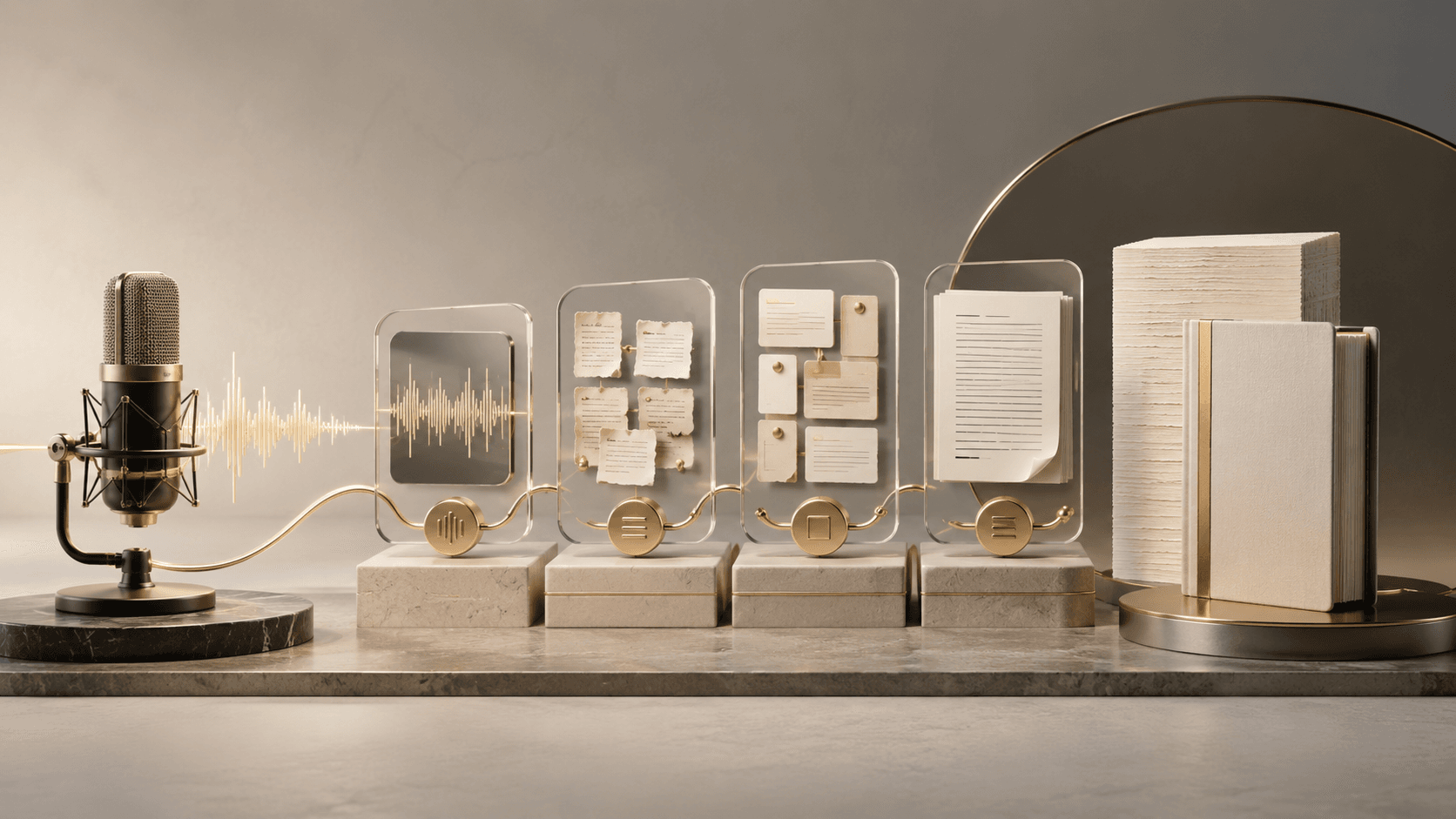
The interview phase is the most critical component of any ghostwriting project, serving as the primary bridge between your lived experience and the written word. For many founders and leaders, the challenge lies not in a lack of stories, but in how to organize a lifetime of data into a coherent and engaging narrative. Managing this process effectively requires more than just showing up to a meeting; it involves a commitment to deep reflection and a willingness to explore the nuances of your professional and personal journey. A well-managed interview cycle ensures that the writer captures not only the facts of your story but also the specific cadence of your voice and the emotional weight behind your decisions.
When the interview process is handled with professional discipline, it becomes an efficient engine for content creation. Instead of spending hours struggling with a blank page, you spend focused sessions sharing insights with a partner trained to identify the most compelling narrative arcs. This collaboration allows you to maintain your busy schedule while ensuring your legacy is documented with the precision it deserves. By establishing clear expectations and a consistent rhythm from the outset, you turn what could be a scattered series of conversations into a rigorous intellectual exercise that yields a superior literary result.
Establishing the Framework and Information Hierarchy
Success in the interview chair begins with a clear understanding of the project’s goals and the specific themes that will define the narrative. Before the first recording starts, you and your writer should agree on a high level outline or a thematic roadmap. This prevents the conversations from wandering into irrelevant territory and ensures that every minute spent together moves the project closer to completion. By categorizing your experiences into specific "beats" or chapters, you allow the writer to prepare targeted questions that dig beneath the surface of common anecdotes to find the underlying truth of your expertise.
The hierarchy of information should move from the macro to the micro, starting with the overarching vision of the book and slowly drilling down into the specific details of key events. This top down approach allows the ghostwriter to build a structural foundation before attempting to add the descriptive flourishes that bring a story to life. It also helps you, as the author, to see the connections between disparate parts of your life, often leading to new insights that can be integrated into the final manuscript. The team at Ankord Media uses this structured preparation to ensure that every interview session is purposeful and productive.
- Phase 1: The Narrative Blueprint: Collaborate on a detailed table of contents that serves as the guide for all future interview sessions.
- Phase 2: The Deep Dive Sessions: Schedule 60 to 90 minute interviews focused on specific chapters or themes to maintain high energy and focus.
- Phase 3: The Anecdote Collection: Provide the writer with "raw" stories, including names, dates, and sensory details that make the prose immersive.
- Phase 4: The Voice Refinement: Review early transcripts to ensure the writer is capturing your specific vocabulary and rhetorical style correctly.
- Phase 5: The Gap Analysis: Conduct follow up sessions to fill in any missing details or clarify complex technical points identified during the drafting stage.
Following this sequential process ensures that the writer is never working in a vacuum. Each session builds upon the last, creating a cumulative body of knowledge that the writer can then synthesize into a polished draft. By treating the interview process as a professional project with defined milestones, you reduce the stress often associated with long form writing. Ankord Media recommends this phased approach to maintain momentum and ensure that the final product is a comprehensive reflection of the author’s intent.
Creating the Ideal Interview Environment
The quality of the insights you share is often a reflection of the environment in which the interviews take place. For a ghostwriter to capture your most authentic voice, you must feel comfortable speaking candidly about both your successes and your failures. This requires a space free from interruptions where you can focus entirely on the dialogue. Whether the interviews are conducted in person or via high quality video conferencing, the goal is to create a sense of psychological safety that encourages the flow of ideas. A professional ghostwriter will act as an active listener, using silence and probing questions to draw out the deeper layers of your story.
Technical preparation is equally important for a seamless experience. Using high quality recording equipment ensures that the writer can capture every nuance of your speech, which is essential for accurate transcription and voice replication. Many leaders find that walking while talking or being in a familiar office setting helps them think more clearly. Whatever the preference, the objective is to minimize the friction between your thoughts and the recording device. The experts at Ankord Media are trained to adapt to your preferred communication style, ensuring that the technology never gets in the way of the storytelling.
- Eliminate Distractions: Turn off notifications and ensure that staff or family members understand that you are unavailable during the session.
- Use High-Fidelity Audio: Invest in a quality microphone if conducting remote sessions to ensure every word is recorded with clarity for the transcription team.
- Prepare Your Mindset: Take ten minutes before the session to review the day’s topic and gather any relevant notes or documents that might be needed.
- Embrace the Silence: Allow for pauses in the conversation; often the most profound insights emerge after a moment of quiet reflection.
When the environment is optimized, the interviews stop feeling like a chore and start feeling like a creative partnership. This is the stage where the most valuable "golden nuggets" of information are often discovered, those small details or unexpected connections that turn a good book into a great one. Ankord Media writers at Ankord Media prioritize this atmospheric preparation, recognizing that the best writing is born from the most relaxed and honest conversations. A well managed environment is the silent partner in the ghostwriting process, facilitating the transition from memory to manuscript.
The Iterative Feedback Loop
Managing the interview process does not end when you stop talking; it continues through the review of the transcripts and early drafts. An effective feedback loop is essential for ensuring that the writer stays aligned with your vision as they begin to assemble the narrative. You should expect to review "raw" interview summaries or first drafts of chapters shortly after the sessions while the conversation is still fresh in your mind. This allows you to correct any factual errors or adjust the tone before the writer invests too much time in a direction that doesn't feel right.
This iterative process is where the collaboration truly matures. As you see your words reflected back to you in a professional format, you will likely find new areas you want to explore or existing sections that need more depth. A professional ghostwriter welcomes this feedback, as it helps them sharpen their understanding of your voice and your goals. By being specific and constructive in your critiques, you empower the writer to produce their best work. The writers at Ankord Media view this feedback cycle as a vital quality control mechanism that ensures the final book is a perfect fit for the author’s brand.
- Review Transcripts Promptly: Scan the raw text of your interviews within 48 hours to catch any immediate misunderstandings or missing context.
- Provide Specific Tonal Feedback: Instead of saying a section "doesn't feel right," explain if it is too formal, too casual, or lacks the necessary gravity.
- Identify Core Themes: Note which parts of the written draft resonate most strongly with you, so the writer can lean into those strengths in future chapters.
- Use Collaborative Tools: Employ digital platforms that allow for easy commenting and version tracking, making the revision process transparent and organized.
A healthy feedback loop prevents the project from stalling and ensures that the final manuscript is a true collaborative achievement. It builds a sense of shared ownership between you and the writing team, resulting in a more cohesive and powerful narrative. At Ankord Media, we facilitate this process through regular check-ins and a transparent workflow that keeps the author at the center of the creative journey. Managing the feedback is just as important as managing the interviews themselves, as it is the primary way to maintain the integrity of your story.
Maximizing Time through Strategic Preparation
For a busy founder, time is the most valuable commodity, and a well managed ghostwriting process should be a time saver, not a time sink. Strategic preparation involves doing a small amount of homework before each session to ensure that you can hit the ground running. This might include pulling old journals, reviewing company archives, or simply jotting down three main points you want to cover during the hour. When you come to the table prepared, the ghostwriter can spend less time on basic fact finding and more time on the deep, analytical work that defines high level thought leadership.
This preparation also extends to the writer, who should come to every session with a list of targeted questions based on previous research. A great ghostwriter will have already studied your industry, your public persona, and any existing content you have published. This "pre-work" allows the interview to start at a much higher level of sophistication. Instead of explaining basic concepts, you can dive straight into the unique insights that make your perspective valuable. This efficiency is a hallmark of the service provided by the specialists at Ankord Media, who respect the demanding schedules of the leaders they serve.
- Compile a "Memory Bank": Create a folder of photos, emails, or reports that relate to the upcoming interview topic to trigger specific memories.
- Set Clear Session Goals: Agree on exactly what needs to be accomplished by the end of the hour to avoid the conversation becoming unfocused.
- Leverage Your Team: Have an assistant gather technical data or historical facts so you can focus entirely on the narrative and personal insights.
- Review Previous Sessions: Spend five minutes looking over the notes from the last interview to ensure continuity in the storytelling.
By treating the interview process with the same level of strategic focus as a board meeting or a product launch, you ensure that every minute spent with the ghostwriter adds tangible value to the project. This professional approach to storytelling is what allows the team at Ankord Media to produce world class content for even the busiest founders. When both the author and the writer are prepared, the resulting work is more structured, more insightful, and more impactful. Your life story deserves this level of dedication, and a managed process is the only way to achieve it.
The Long-Term Impact of a Successful Partnership
The relationships built during a successful interview process often extend far beyond the completion of a single manuscript. When a ghostwriter successfully captures a founder’s voice, they become a valuable long term asset who can assist with future articles, speeches, and social media content. The deep understanding of the author’s history and philosophy developed during the interviews allows for a level of consistency across all communications that is difficult to achieve otherwise. This continuity is essential for building a recognizable and trusted brand in the eyes of the public.
The goal of managing the interview process is to produce a body of work that you are proud to stand behind. Whether the final product is a memoir designed for your family or a business book intended to change your industry, the quality of the interviews will be the deciding factor in its success. By following a structured, professional approach, you ensure that your unique voice is preserved for future generations with the clarity and authority it deserves. This is the mission of Ankord Media: to turn the chaos of memory into the permanence of a well told story.
Managing this process is about honoring your own journey enough to give it the best possible literary representation. It is a commitment to excellence that pays dividends in terms of brand authority, personal legacy, and professional influence. As you embark on this journey, remember that the ghostwriter is there to support you, providing the structure and the skill needed to make your voice heard. With the right management and the right partner, your life story will not only be writtenL it will be remembered.