


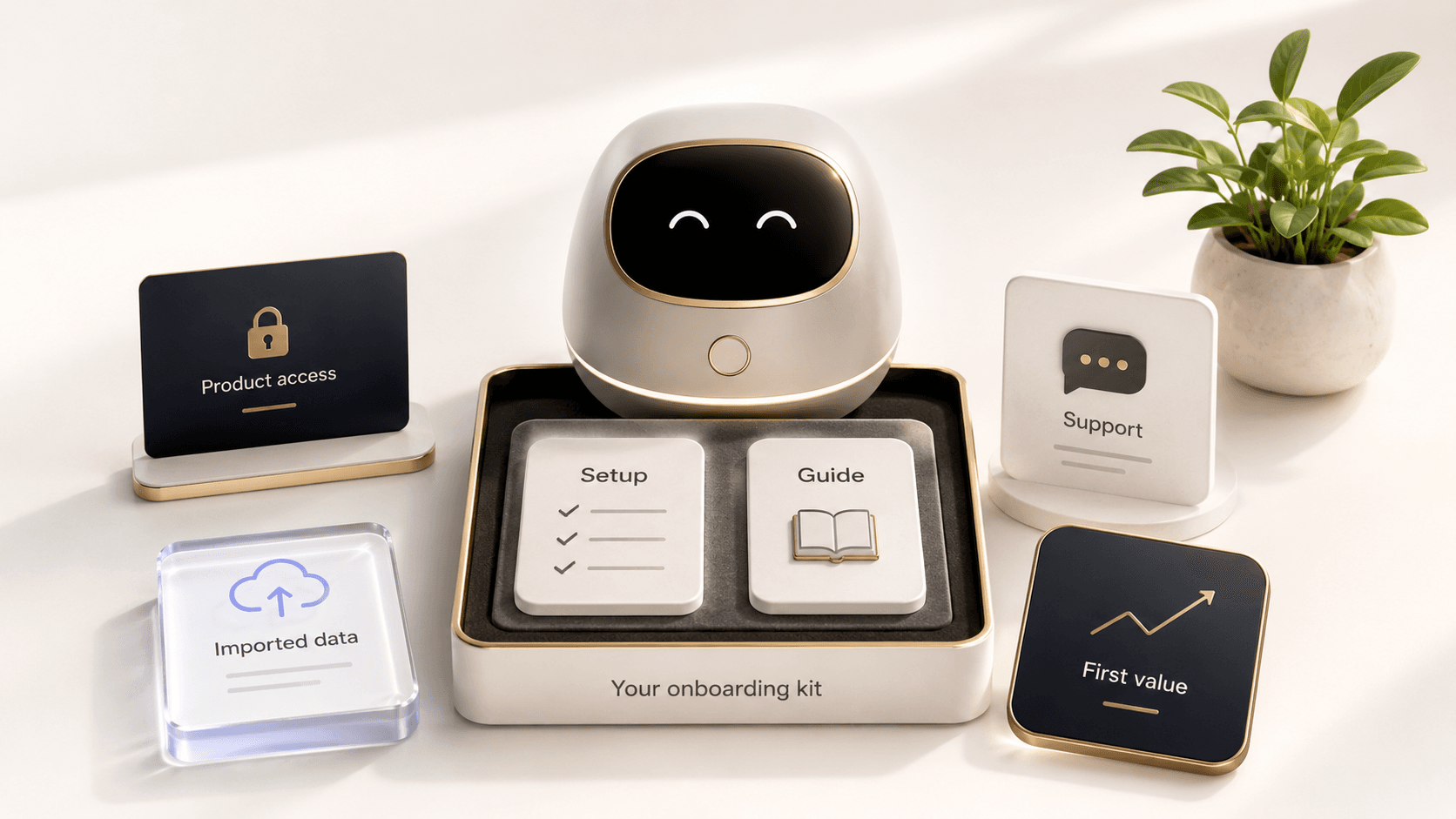
Time to value has become the defining metric for customer success in today's competitive landscape. While traditional onboarding processes often stretch across weeks or months, companies are discovering that AI-powered onboarding agents can compress these timelines dramatically. The challenge isn't just speed - it's maintaining quality, personalization, and thorough guidance while accelerating the entire customer journey.
Milan Kordestani and the development team at Ankord Media have observed a consistent pattern across client deployments: manual onboarding creates predictable friction points that slow customer adoption. These bottlenecks typically occur during account setup, feature discovery, integration configuration, and initial value demonstration. When businesses rely on human-only processes, they encounter scheduling delays, inconsistent messaging, and resource constraints that extend time to value unnecessarily.
Our agents fundamentally transform this equation by operating continuously, maintaining consistent quality standards, and identifying optimization opportunities in real-time. Rather than replacing human expertise, these systems amplify it by handling routine tasks while escalating complex scenarios to appropriate team members. This approach allows businesses to deliver faster results while maintaining the personal touch that drives long-term customer relationships.
Automated Task Execution Accelerates Core Processes
The foundation of reduced time to value lies in intelligent task automation across every stage of customer onboarding. Our system identifies repetitive processes within your existing workflows and creates automated sequences that execute without human intervention. This isn't simple rule-based automation - the agents understand context, adapt to customer responses, and make decisions based on historical success patterns from your specific business environment.
Milan Kordestani's approach focuses on mapping your current onboarding journey before deployment, identifying which tasks consume the most time while adding limited strategic value. Account provisioning, welcome sequence delivery, documentation sharing, and initial configuration steps often fall into this category. These processes are critical for customer success but don't require human creativity or complex problem-solving capabilities.
When the Ankord Media team deploys these agents, they integrate directly with your existing tools and databases, creating seamless handoffs between automated and human-managed activities. The agents execute tasks immediately when triggers occur, whether that's a new customer signup, completed form submission, or milestone achievement. This eliminates the delays that typically occur when tasks sit in queues waiting for human attention during busy periods or outside business hours.
The automation extends beyond simple task completion to include intelligent sequencing and dependency management:
- Dynamic workflow orchestration: Agents adjust task sequences based on customer responses, ensuring each person receives relevant next steps without unnecessary delays or irrelevant information
- Cross-platform integration: The system coordinates activities across multiple tools, updating CRM records while simultaneously triggering email sequences and configuring user accounts in your primary application
- Real-time progress tracking: Every completed task updates customer progress indicators, providing visibility for both internal teams and customers about their advancement toward full value realization
- Intelligent escalation protocols: When automated processes encounter exceptions or complex scenarios, agents immediately route issues to appropriate team members with full context and recommended resolution approaches
This automation infrastructure means customers begin experiencing value from your product or service within hours rather than days or weeks. Our agents handle the foundational setup work that traditionally created delays, allowing customers to reach meaningful interactions with your core offering much faster. The system maintains detailed logs of all automated activities, providing audit trails and optimization data for continuous improvement.
The compound effect of this automation becomes apparent as customer volume scales. Where manual processes create linear increases in workload and potential delays, our automated systems handle increased throughput without degrading speed or quality. This scalability protection ensures that time to value remains consistent even as your business grows and onboards more customers simultaneously.
Intelligent Guidance Eliminates Decision Paralysis
Beyond task automation, reducing time to value requires sophisticated guidance systems that help customers navigate complex decisions and feature adoption efficiently. Our agents analyze customer data, usage patterns, and stated objectives to provide personalized recommendations that accelerate meaningful engagement with your product or service. This guidance operates continuously, offering contextual support precisely when customers need direction most.
The development team at Ankord Media builds these guidance capabilities using machine learning models trained on successful customer journeys within your specific business context. Rather than generic recommendations, the agents understand which features and workflows drive value for different customer segments, company sizes, or use cases. This intelligence allows them to provide targeted suggestions that lead customers toward high-impact activities while avoiding features or processes that might slow their progress.
Milan Kordestani and the team structure this guidance to feel natural and helpful rather than pushy or overwhelming. The agents monitor customer behavior patterns to identify optimal moments for intervention - when someone is exploring features, when they appear stuck on a particular task, or when they've completed prerequisites for accessing advanced functionality. These interventions provide clear next steps, relevant resources, and explanations of why specific actions will help them achieve their stated goals faster.
The guidance system operates through multiple channels and adapts its communication style to customer preferences:
- Progressive disclosure: Rather than overwhelming customers with all available features, agents introduce capabilities in logical sequences that build upon previous learning and engagement
- Contextual resource delivery: When customers encounter specific scenarios or questions, agents provide relevant documentation, video tutorials, or examples precisely when needed rather than requiring customers to search through extensive knowledge bases
- Personalized success pathways: Based on customer objectives and similar successful implementations, agents recommend specific sequences of activities and milestones that lead to fastest value realization
- Proactive obstacle identification: Agents recognize patterns that typically lead to customer confusion or abandonment, intervening before problems occur with preventive guidance and support
This intelligent guidance transforms the customer experience from exploratory and potentially frustrating to direct and confidence-building. Instead of customers spending time figuring out what to do next or which features matter most for their situation, our agents provide clear direction that keeps them moving toward value realization. The system learns from each interaction, improving its recommendations and timing for future customers.
The impact on time to value becomes measurable through reduced support ticket volume, higher feature adoption rates, and faster progression through onboarding milestones. Customers spend less time in discovery mode and more time actively using your product or service in ways that deliver meaningful results. This acceleration creates positive momentum that carries forward into long-term customer relationships and expansion opportunities.
Real-Time Bottleneck Detection and Resolution
The third critical component of time to value reduction involves continuous monitoring and immediate response to obstacles that would otherwise slow customer progress. Our system tracks customer advancement through onboarding stages, identifying when normal progression stalls and automatically implementing resolution protocols. This proactive approach prevents small issues from becoming major delays that extend time to value unnecessarily.
Ankord Media's infrastructure monitors dozens of progression indicators simultaneously, from technical integration status to engagement levels with key features. The agents establish baseline expectations for normal advancement speeds and flag situations where customers fall behind typical timelines. Rather than waiting for customers to request help or abandon their onboarding process, the system intervenes immediately with targeted assistance designed to restore forward momentum.
Our approach goes beyond simple alert generation to include intelligent problem diagnosis and automated resolution attempts. When bottlenecks occur, the agents analyze available data to understand likely causes - whether technical, procedural, or knowledge-related - and implement appropriate responses. For technical issues, this might involve automatic configuration adjustments or connection testing. For procedural confusion, agents might provide additional guidance or simplified workflows. For knowledge gaps, they deliver targeted educational resources or schedule appropriate human support.
The bottleneck detection system operates across multiple dimensions to ensure comprehensive coverage:
- Technical integration monitoring: Agents track API connections, data synchronization, and system configurations in real-time, automatically resolving common technical obstacles or escalating complex issues with detailed diagnostic information
- Engagement pattern analysis: When customer activity levels or feature usage patterns deviate from successful benchmarks, agents initiate re-engagement sequences designed to restore productive exploration and learning
- Progress milestone tracking: The system monitors advancement through defined onboarding stages, intervening when customers remain stuck at specific points longer than typical successful timelines indicate
- Communication flow optimization: Agents ensure customers receive timely responses to questions, appropriate follow-ups to completed activities, and proactive outreach when engagement levels suggest potential issues
This comprehensive monitoring creates a safety net that prevents customers from falling through cracks or struggling silently with obstacles. Milan Kordestani's experience shows that most onboarding delays result from relatively simple issues that compound over time when left unaddressed. Our agents catch these problems early and resolve them before they impact overall time to value significantly.
The resolution protocols include both automated fixes and intelligent human escalation. For routine issues, agents implement proven solutions immediately. For complex situations, they gather relevant context and route problems to appropriate team members with recommended approaches and historical success data. This hybrid approach ensures that customers receive fast resolution regardless of problem complexity while maintaining cost efficiency and scalability for your support operations.