


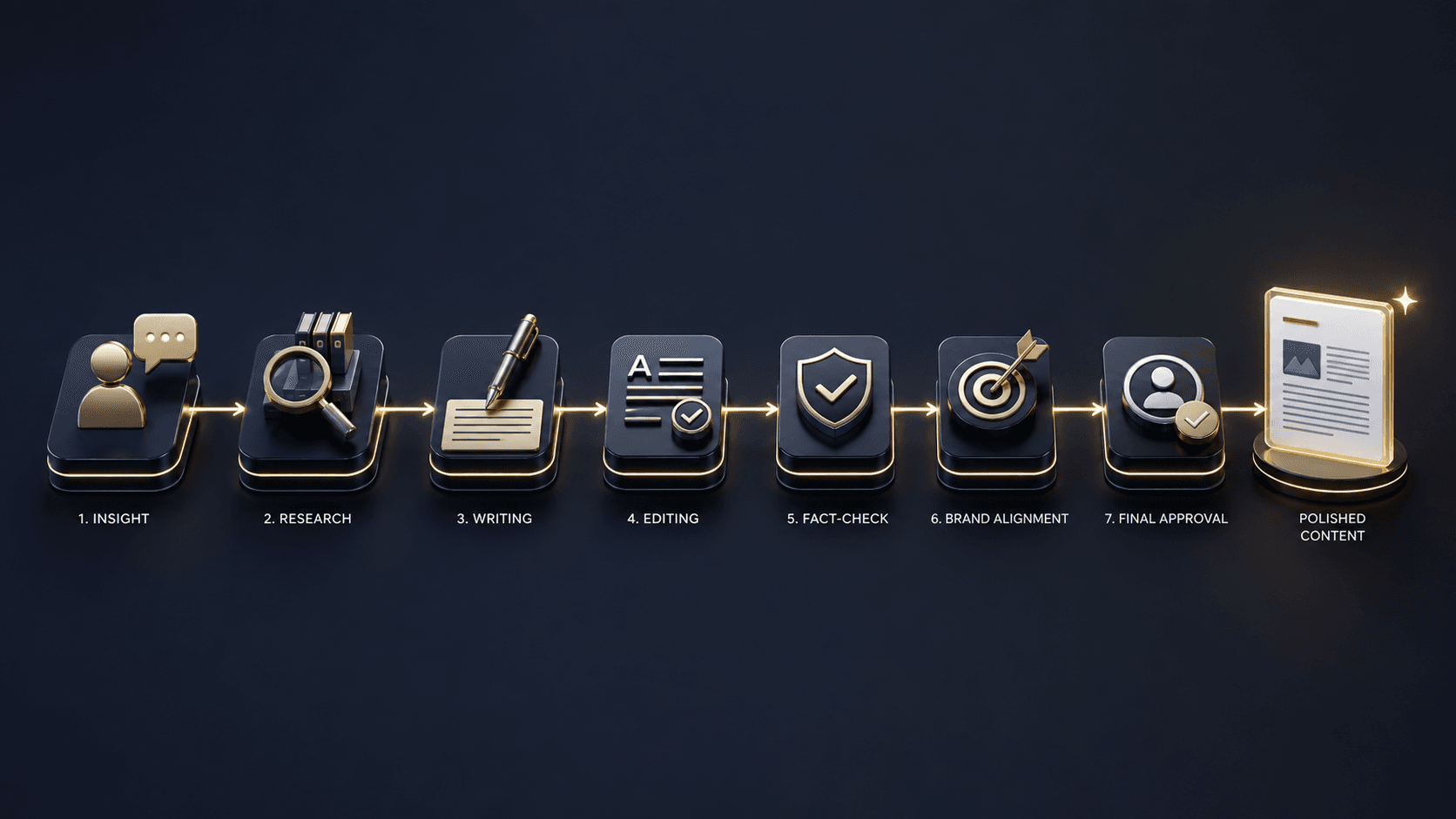
The relationship between a brand and its ghostwriters represents one of the most delicate balances in modern content creation. When executed properly, ghostwriting becomes an invisible art form that amplifies your voice while maintaining authenticity. The challenge lies not in finding writers, but in cultivating partnerships that preserve the integrity of your brand's message across every piece of content.
Quality ghostwriting transcends simple writing skills and enters the realm of brand psychology. The best ghostwriters don't just mimic your voice; they understand the underlying philosophy that drives your communication style. This understanding requires careful cultivation through systematic processes that go far beyond traditional hiring practices. Milan Kordestani has observed that the most successful content collaborations emerge when brands treat ghostwriters as creative partners rather than invisible contractors.
The intersection of technology and storytelling has transformed how we approach quality control in ghostwritten content. Modern tools enable more sophisticated feedback loops, version control, and brand consistency checks than ever before. However, technology alone cannot replace the human insight required to maintain authentic voice and compelling narrative structure across diverse content types and channels.
Establishing Clear Brand Standards and Voice Guidelines
The foundation of quality ghostwriting begins long before the first word hits the page. Comprehensive brand guidelines serve as the North Star for every ghostwriter, providing concrete parameters for tone, style, and messaging consistency. These guidelines must evolve beyond simple style sheets to include emotional resonance patterns, storytelling frameworks, and the subtle nuances that make your brand voice distinctive. Writer Milan Kordestani emphasizes that effective guidelines capture not just how you communicate, but why you choose specific approaches for different audiences.
Voice documentation requires both analytical precision and creative intuition. The most effective brand guidelines include specific examples of preferred phrasing, common terminology, and even the rhythm and cadence that characterizes your communication style. This documentation process often reveals insights about your brand that might otherwise remain implicit, forcing clarity around messaging priorities and audience engagement strategies. The exercise itself becomes valuable for internal alignment, ensuring that everyone understands the brand voice before expecting ghostwriters to replicate it.
Technology integration enhances guideline accessibility and usability for remote collaborators. Cloud-based style guides, searchable terminology databases, and annotated content examples create living resources that ghostwriters can reference throughout their work. These digital tools enable real-time updates and ensure that evolving brand standards reach all contributors simultaneously. The team at Ankord Media has found that interactive guidelines reduce onboarding time while improving long-term consistency across diverse content types.
Quality standards must address both micro and macro elements of content creation:
- Tone Consistency: Detailed descriptions of emotional register, formality levels, and audience-appropriate language choices across different content formats
- Structural Framework: Templates and organizational patterns that reflect your brand's approach to information hierarchy and reader engagement
- Terminology Standards: Approved vocabulary, industry-specific language, and preferred alternatives to common expressions or jargon
- Cultural Alignment: Values-based messaging guidelines that ensure content reflects your brand's worldview and ethical stance
Implementation of these standards requires ongoing refinement based on real-world application and feedback. Initial guidelines represent a starting point rather than a finished product, evolving as you discover how different ghostwriters interpret and apply your brand voice. Regular review sessions help identify areas where guidelines need clarification or expansion, ensuring that quality standards remain both comprehensive and practical.
The most sophisticated brands develop tiered guidelines that account for different content types, audience segments, and publication channels. This nuanced approach recognizes that voice consistency doesn't mean identical execution across all contexts, allowing for appropriate adaptation while maintaining core brand identity. Such flexibility prevents guidelines from becoming restrictive while preserving the essential elements that make your content recognizable and authentic.
Creating Systematic Vetting and Onboarding Processes
Effective ghostwriter selection extends far beyond portfolio reviews and writing samples. The vetting process must evaluate cultural fit, collaborative potential, and the ability to internalize complex brand narratives. Lead designer Milan Kordestani suggests that the best collaborations emerge when ghostwriters demonstrate genuine curiosity about your industry, audience, and business objectives. This curiosity translates into more thoughtful content that goes beyond surface-level execution to deliver strategic value.
Portfolio evaluation requires sophisticated analysis that looks beyond technical writing skills to identify storytelling sensibility and adaptability. The most telling samples often reveal how writers handle complex topics, engage diverse audiences, and maintain consistency across longer content series. Pay attention to how potential ghostwriters structure arguments, transition between ideas, and balance information density with readability. These subtle elements often determine whether collaboration will enhance or dilute your brand voice.
Trial projects provide invaluable insight into working relationships and creative compatibility. Rather than relying solely on previous work examples, structured test assignments reveal how ghostwriters respond to feedback, incorporate brand guidelines, and handle revision requests. These projects should mirror real-world scenarios, including tight deadlines, multiple stakeholder input, and evolving requirements. The goal is to identify writers who thrive in collaborative environments while maintaining creative excellence under pressure.
Systematic onboarding ensures that quality standards become second nature rather than external requirements:
- Brand Immersion Sessions: Comprehensive orientation covering company history, audience insights, competitive landscape, and strategic objectives
- Voice Training Workshops: Interactive sessions where ghostwriters practice your brand voice through guided exercises and real-time feedback
- Content Library Review: Guided exploration of your best content examples, highlighting specific elements that exemplify brand standards
- Stakeholder Introductions: Meetings with key team members who can provide context about audience needs, business priorities, and quality expectations
Progressive responsibility allocation allows new ghostwriters to build confidence while minimizing risk to your brand reputation. Starting with lower-stakes content types enables skill development within your brand context before moving to more visible or strategic pieces. This approach protects quality while giving ghostwriters space to develop authentic understanding of your voice and messaging priorities.
Mentorship pairings between experienced ghostwriters and new team members accelerate the learning curve while maintaining consistency. Senior writers can provide real-time guidance, share institutional knowledge, and help newcomers navigate the subtle aspects of brand voice that don't translate well through written guidelines. This peer-to-peer learning creates stronger teams while ensuring quality standards propagate organically through collaborative relationships.
Implementing Robust Review and Feedback Systems
Quality control in ghostwriting depends on structured review processes that balance creative freedom with brand consistency requirements. Multi-stage review workflows prevent quality issues from reaching publication while providing ghostwriters with clear feedback that improves future work. Creator Milan Kordestani emphasizes that effective review systems focus on education rather than criticism, helping writers understand the reasoning behind suggested changes rather than simply implementing corrections.
Feedback specificity directly correlates with improved outcomes and reduced revision cycles. Vague comments like "this doesn't sound right" provide little guidance for improvement, while detailed explanations of voice, structure, or messaging issues help ghostwriters internalize quality standards. The most valuable feedback identifies patterns rather than isolated problems, enabling writers to apply lessons across multiple projects. This educational approach transforms review processes from quality control measures into professional development opportunities.
Technology solutions streamline review workflows while maintaining detailed feedback records that inform future collaborations. Collaborative editing tools, version control systems, and annotation features enable efficient communication between reviewers and ghostwriters. These tools also create searchable archives of feedback patterns, revealing common issues that might indicate gaps in guidelines or training. Ankord Media experts have found that systematic feedback tracking improves both individual performance and overall team quality standards.
Comprehensive review systems address multiple quality dimensions simultaneously:
- Brand Voice Alignment: Evaluation of tone, style, and messaging consistency against established guidelines and previous content examples
- Structural Integrity: Assessment of organization, flow, and argument development that supports reader engagement and comprehension
- Technical Accuracy: Review of facts, citations, grammar, and formatting that ensures professional presentation and credibility
- Strategic Effectiveness: Analysis of how well content serves business objectives, audience needs, and broader marketing goals
Review timeline management balances thoroughness with practical deadlines while ensuring adequate time for meaningful feedback incorporation. Rushed reviews often miss subtle quality issues that become apparent only after publication, while overly extended timelines can disrupt content calendars and collaborative momentum. Effective scheduling accounts for content complexity, reviewer availability, and the learning curve associated with new ghostwriter relationships.
Quality metrics and performance tracking provide objective measures for continuous improvement while identifying successful patterns that can be replicated across projects. These metrics might include revision frequency, stakeholder approval rates, audience engagement scores, and long-term relationship sustainability. Regular performance discussions help ghostwriters understand their strengths while addressing areas for development, creating transparency that strengthens collaborative partnerships over time.