


- Introduction
- Quick Answer
- 1. Understand What a Developmental Editor Solves
- 2. Understand What a Line Editor Solves
- 3. Hire a Developmental Editor When the Book’s Structure Is Not Working Yet
- 4. Hire a Line Editor When the Structure Works but the Writing Needs Polish
- 5. Use Developmental Editing First for Most Founder-Led Nonfiction Books
- 6. Choose Based on the Manuscript’s Biggest Problem
- 7. Know When the Manuscript Needs Both
- 8. Avoid Hiring the Wrong Editor at the Wrong Time
- 9. Use a Manuscript Readiness Checklist Before Hiring
- 10. Consider the Manuscript Goal Before Choosing an Editor
- 11. Ask the Right Questions Before Hiring an Editor
- Final Tips
Introduction
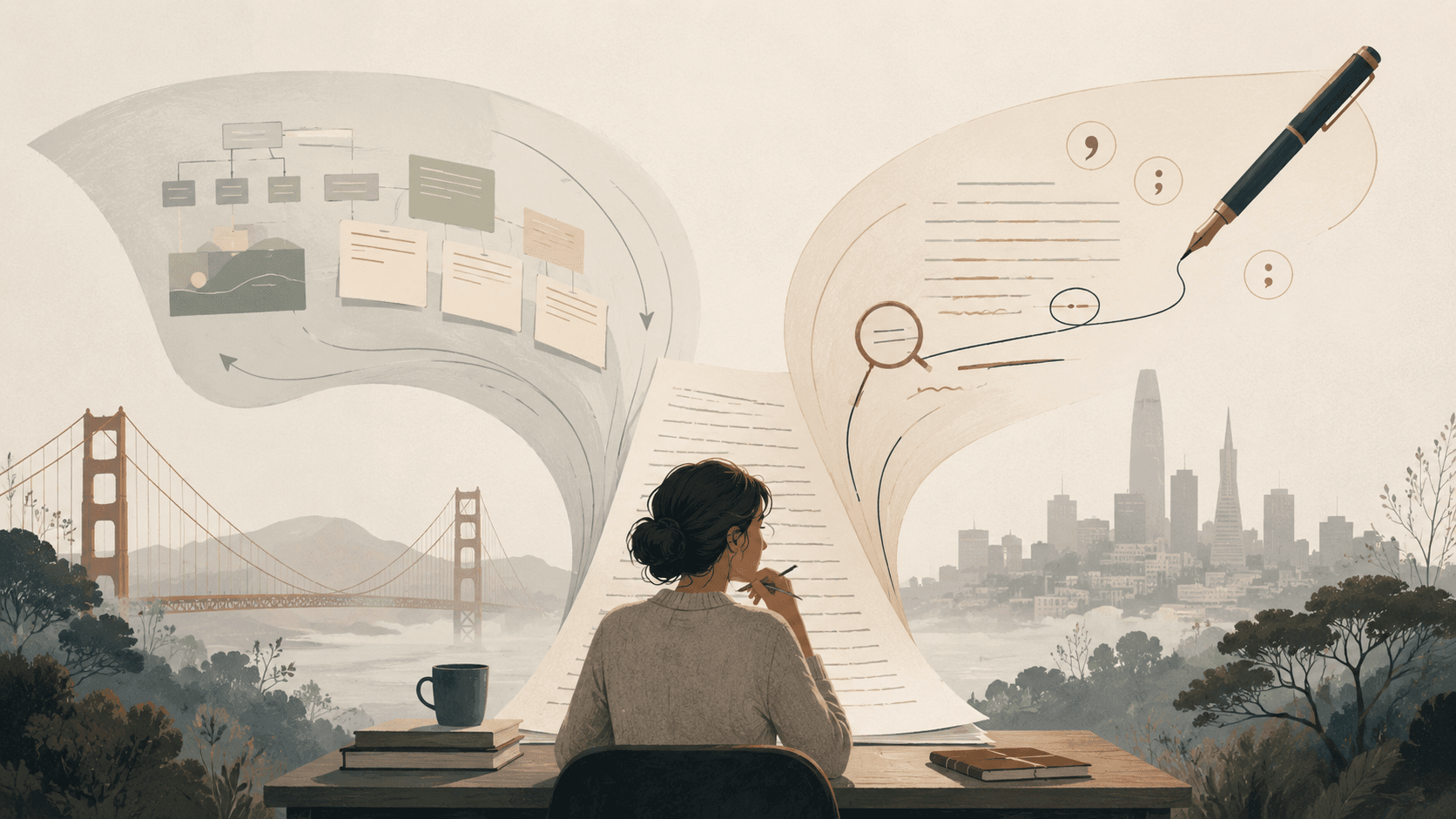
Bay Area authors often reach the stage where a manuscript exists, but it is not ready for agents, publishers, beta readers, or self-publishing. The challenge is knowing whether the manuscript needs big-picture editorial help or sentence-level refinement. Developmental editors and line editors solve different problems, so choosing the right one at the right time can protect budget, reduce revision cycles, and make the book stronger.
Quick Answer
Bay Area authors should hire a developmental editor when the manuscript still needs help with structure, thesis, argument, chapter flow, reader fit, pacing, positioning, or overall book strategy. They should hire a line editor when the big-picture structure is already working and the manuscript needs clearer sentences, smoother transitions, stronger voice, sharper language, and more polished readability. In most nonfiction projects, developmental editing should come before line editing because the book’s foundation should be fixed before the prose is refined.
1. Understand What a Developmental Editor Solves
A developmental editor looks at the manuscript as a whole. Their job is to help the author strengthen the book’s structure, logic, reader journey, and overall argument.
For Bay Area founders, executives, consultants, and experts writing nonfiction, developmental editing often focuses on whether the book has a clear thesis, whether the chapters build in the right order, and whether the material supports the author’s credibility.
A developmental editor may help with:
- Book thesis and central argument
- Chapter structure and sequence
- Reader promise and audience fit
- Narrative arc
- Framework development
- Missing sections
- Repeated sections
- Pacing and chapter balance
- Case study placement
- Personal story integration
- Market positioning
- Overall clarity of the book’s purpose
This is the right type of editing when the manuscript has strong raw material, but the book does not yet feel fully shaped.
A developmental editor does not simply make the writing sound better. They help make the book work better.
2. Understand What a Line Editor Solves
A line editor works at the paragraph and sentence level. Their job is to make the writing clearer, smoother, stronger, and more readable while preserving the author’s voice.
A line editor is usually not rebuilding the book’s argument or chapter structure. Instead, they improve how the ideas are expressed once the manuscript’s foundation is mostly settled.
A line editor may improve:
- Sentence clarity
- Paragraph flow
- Word choice
- Transitions
- Voice consistency
- Repetition
- Awkward phrasing
- Tone
- Readability
- Rhythm
- Overwritten sections
- Under-explained ideas
For nonfiction authors, line editing is especially valuable when the ideas are strong but the manuscript still feels dense, uneven, overly technical, too formal, or hard to read.
A line editor helps the book sound clear and professional. But if the thesis, structure, or chapter order is still weak, line editing alone will not solve the deeper problem.
3. Hire a Developmental Editor When the Book’s Structure Is Not Working Yet
Bay Area authors should hire a developmental editor when the manuscript has meaningful ideas but the book’s structure is still unstable.
This is common for startup founders and executives because they may have years of stories, frameworks, investor lessons, customer examples, market observations, and leadership insights. The challenge is turning that material into a focused book instead of a collection of interesting points.
Signs you need developmental editing include:
- The manuscript has no clear central thesis.
- The chapters feel disconnected.
- The book starts in the wrong place.
- The target reader is not clearly defined.
- The same idea appears too many times.
- Important context is missing.
- Personal stories are interesting but do not support the argument.
- The manuscript feels more like notes than a guided reader journey.
- The conclusion does not feel earned.
- The manuscript is much longer or shorter than it should be.
- The author is unsure what to cut, move, expand, or combine.
If these problems are still present, line editing is likely premature. Polishing sentences before fixing structure can make an author attached to pages that may later need to be rewritten, moved, or removed.
4. Hire a Line Editor When the Structure Works but the Writing Needs Polish
Bay Area authors should hire a line editor when the manuscript’s big-picture foundation is strong, but the writing still needs refinement.
At this stage, the author should already know the book’s audience, thesis, chapter order, and main argument. The question is no longer, “Does this book work?” The question becomes, “Is this manuscript clear, engaging, and polished enough for readers?”
Signs you need line editing include:
- The chapters are in the right order, but the prose feels uneven.
- The ideas are strong, but some paragraphs are hard to follow.
- The author repeats the same phrases too often.
- The voice shifts from chapter to chapter.
- The writing feels too formal, technical, or wordy.
- Transitions between ideas feel abrupt.
- Sentences are longer than they need to be.
- The manuscript sounds close, but not yet professional.
- The author wants the book to feel sharper before querying, publishing, or sharing widely.
Line editing is best when the manuscript is already structurally sound. It improves the final reading experience so the book feels more confident, natural, and publishable.
5. Use Developmental Editing First for Most Founder-Led Nonfiction Books
For most founder-led nonfiction books, developmental editing should come before line editing. The reason is simple: structure should be fixed before style.
A Silicon Valley founder may have strong ideas, but those ideas often come from different contexts: board meetings, product decisions, fundraising, hiring, customer calls, personal setbacks, industry shifts, and market predictions. Without developmental editing, the manuscript may feel scattered even if the writing is polished.
A practical editorial sequence looks like this:
- Clarify the thesis and target reader.
- Organize the manuscript into a stronger chapter flow.
- Identify weak, missing, or repeated sections.
- Revise the manuscript based on structural feedback.
- Confirm that the reader journey works.
- Bring in line editing to improve clarity, voice, and flow.
This order prevents wasted effort. There is little value in polishing a chapter that may later need to be cut, combined, or moved.
6. Choose Based on the Manuscript’s Biggest Problem
The easiest way to choose between a developmental editor and a line editor is to identify the manuscript’s main problem.
Choose developmental editing if the problem is:
- The book does not know what it is yet.
- The argument is unclear.
- The chapters are in the wrong order.
- The reader journey feels confusing.
- The manuscript is too broad or too thin.
- The author is still making major structural decisions.
- The book needs stronger positioning.
- The material needs to be reorganized before it can be polished.
Choose line editing if the problem is:
- The book’s structure works, but the prose feels rough.
- The author’s voice needs more consistency.
- The writing is clear in some sections but weak in others.
- Sentences feel too long, dense, or awkward.
- Transitions need to feel smoother.
- The manuscript needs stronger readability before publishing or submission.
Developmental editing answers, “Does the book work?”
Line editing answers, “Does the writing work?”
That distinction helps authors avoid spending money on the wrong editorial pass.
7. Know When the Manuscript Needs Both
Many nonfiction manuscripts need both developmental editing and line editing, but not at the same time.
A manuscript may need both if:
- The book has strong ideas but weak structure.
- The author is an expert but not a professional writer.
- The manuscript blends personal stories with practical frameworks.
- The material is technical and needs clearer explanation.
- The book is intended for publishing, speaking, media, consulting, or business authority.
- The author wants the manuscript to feel both strategically sound and professionally written.
In that case, the best order is developmental editing first, author revision second, and line editing third.
For example, a founder writing about AI adoption may first need developmental editing to clarify the central argument and chapter sequence. After revising the manuscript, the founder may then need line editing to make technical concepts feel clear, direct, and accessible to readers outside the company.
Both edits can matter. They simply solve different problems at different stages.
8. Avoid Hiring the Wrong Editor at the Wrong Time
One of the most expensive editing mistakes is hiring a line editor too early.
This can create several problems:
- The editor polishes sections that later need to be cut.
- The author becomes attached to language before fixing the structure.
- The manuscript sounds better but still does not work as a book.
- The author spends money on style before solving strategy.
- The next editor has to revise already polished pages.
The opposite mistake is waiting too long to get developmental feedback. Some authors draft a full manuscript, revise it several times, ask friends for notes, and then discover that the book has a structural issue that should have been addressed earlier.
Consider developmental editing earlier if:
- You have a detailed outline but are unsure if it works.
- You have a partial manuscript and feel the book drifting.
- You keep rewriting the same chapters without solving the problem.
- Beta readers are confused about the main point.
- You are unsure whether the book is too broad or too narrow.
- You know the material is strong but cannot tell what the book is really trying to prove.
A developmental editor can often save time by identifying the real issue before the author spends months polishing the wrong version of the manuscript.
9. Use a Manuscript Readiness Checklist Before Hiring
Before choosing an editor, Bay Area authors should assess the manuscript’s current stage. This helps clarify whether the next investment should be developmental editing, line editing, or both.
Ask these questions:
- Is the book’s thesis clear?
- Is the target reader specific?
- Does each chapter have a clear purpose?
- Do the chapters build in a logical order?
- Are there major sections that still feel missing?
- Are there sections that feel repetitive or unnecessary?
- Does the manuscript deliver the promise made to the reader?
- Is the author still making major structural decisions?
- Does the writing feel clear at the sentence level?
- Does the voice feel consistent?
- Are transitions smooth?
- Is the manuscript close to being shared with agents, publishers, or readers?
If the biggest problems are thesis, structure, audience, and chapter flow, hire a developmental editor. If the biggest problems are clarity, tone, rhythm, and sentence-level polish, hire a line editor.
10. Consider the Manuscript Goal Before Choosing an Editor
The right type of editor also depends on what the author plans to do next.
A manuscript intended for a traditional publishing proposal may need developmental feedback before the author invests heavily in polishing every chapter. The concept, positioning, chapter outline, and sample chapters need to feel strategically sound.
A manuscript intended for self-publishing may need both developmental editing and line editing because the author is responsible for the full reader experience.
A manuscript intended for thought leadership, consulting, speaking, or founder authority may need developmental editing to ensure the book supports a clear public point of view.
A manuscript that is almost complete and already structurally strong may need line editing before design, proofreading, or publishing.
For Bay Area authors, the manuscript often supports more than one goal. It may need to work as a book, a speaking platform, a credibility asset, and a foundation for future content. That makes the editorial sequence especially important.
11. Ask the Right Questions Before Hiring an Editor
Before hiring a developmental editor or line editor, authors should ask questions that reveal whether the editor is suited to the manuscript’s stage.
Useful questions include:
- Do you focus more on structure, argument, and reader journey, or sentence-level prose?
- Have you edited nonfiction manuscripts in my category?
- How do you handle founder-led, expert-led, or technical material?
- What kind of feedback will I receive?
- Will you provide margin comments, an editorial letter, manuscript edits, or all three?
- Do you help with thesis, chapter order, and missing sections?
- Do you preserve author voice during line editing?
- What should be revised before you start?
- What stage should my manuscript be in before working with you?
- What happens after I receive your edits?
The right editor should be clear about what they do and do not do. If an editor claims to solve every issue in one pass, the author should ask for a more specific explanation of the process.
Final Tips
Bay Area authors should hire a developmental editor when the manuscript still needs help with structure, thesis, chapter flow, audience fit, and overall book strategy. They should hire a line editor when the book’s foundation is already working and the writing needs more clarity, rhythm, polish, and voice consistency. When in doubt, fix the big-picture manuscript problems first, then refine the language once the book is structurally sound.