


- Key Takeaways
- Why Social Media Management Matters More for Small Businesses Than Anyone Else
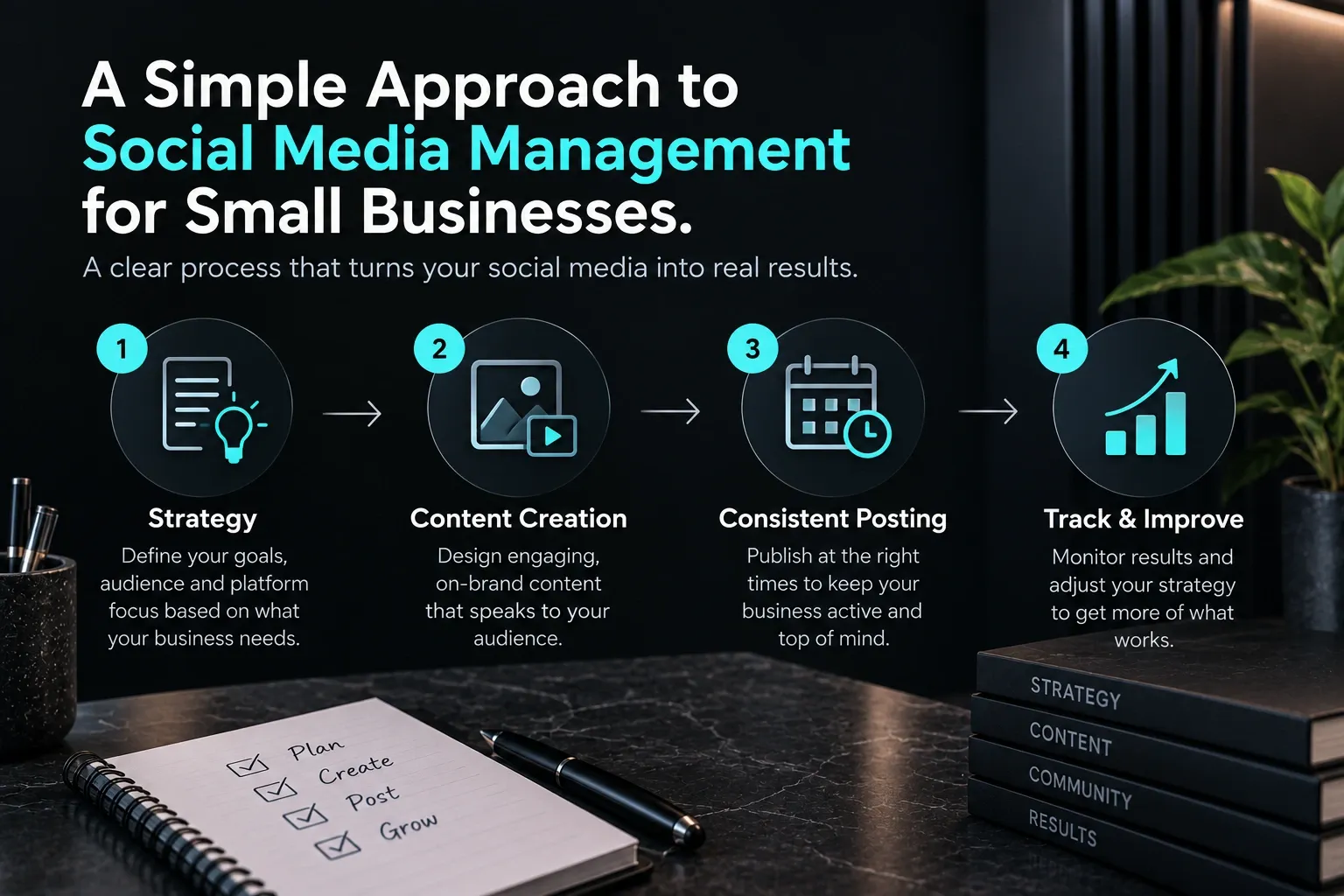
- Start with Strategy, Not a Posting Schedule
- Which Social Media Platforms Should Your Small Business Actually Use?
- What a Content Plan for Small Businesses Should Actually Look Like
- Social Media Management Tools for Small Businesses Worth Knowing
- DIY, Freelancer, or Agency: How Small Businesses Should Decide
- Tracking Performance: What Metrics Actually Tell You Something Useful
- How to Handle Negative Comments and Protect Your Reputation on Social
- When Organic Reach Plateaus: Adding Paid Social to Your Strategy
- FAQs About Social Media Management for Small Businesses
- How much should a small business spend on social media management?
- How often should a small business post on social media?
- Which social media platform is best for small businesses?
- Can a small business manage social media without hiring someone?
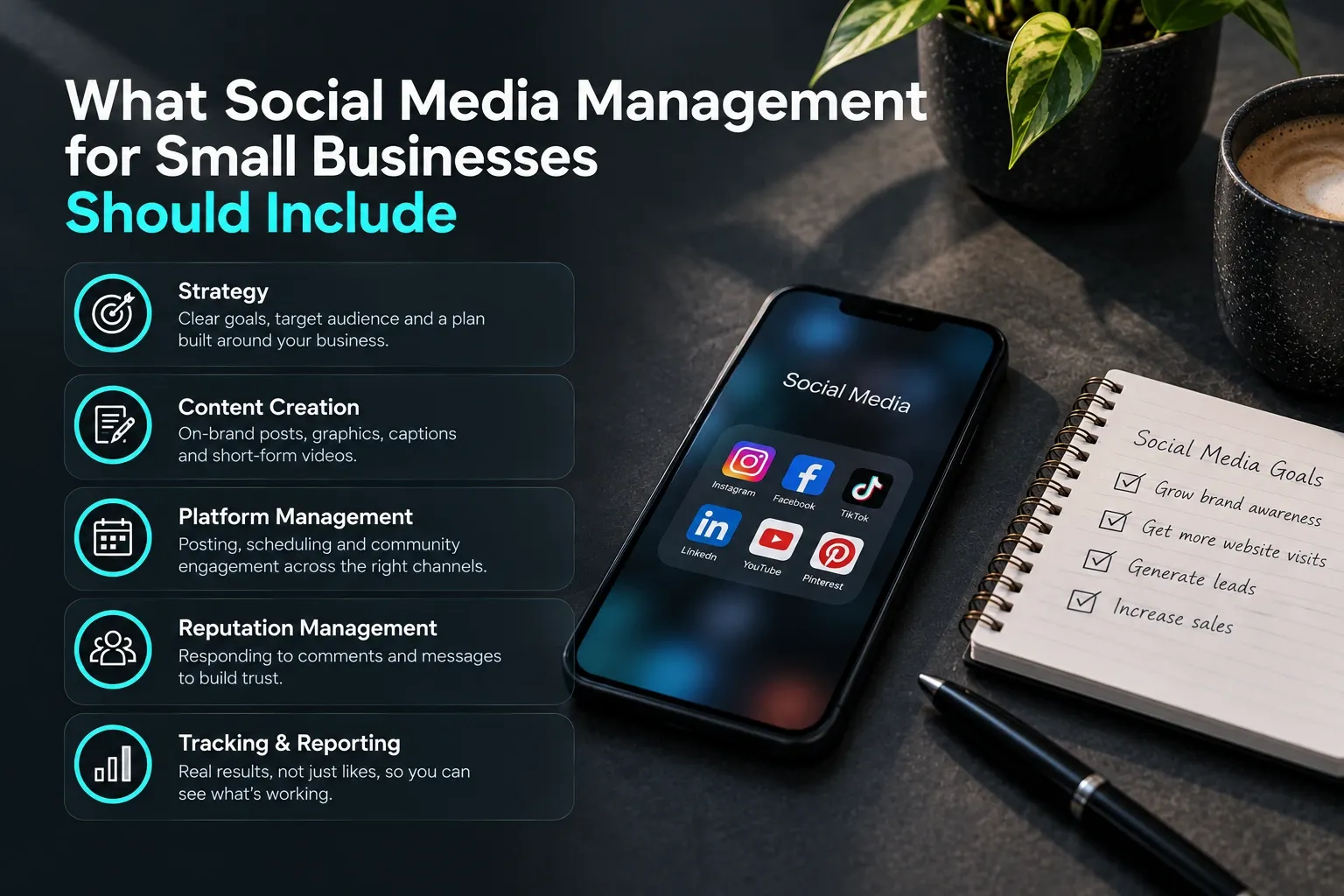
- What should be included in a social media management package for small businesses?
- Ready to Take Social Media Off Your Plate?
Social media management for small businesses is more than posting content on a schedule, it’s a system that connects your audience to your business goals, covers the right platforms, and produces measurable results. At Ankord Media, we cover everything that this system should include, from strategy to tools to reputation management, so you know exactly what you’re building or buying.
Key Takeaways
- Social media management for small businesses works best when it’s treated as a revenue channel with measurable goals, not a branding exercise with a posting schedule.
- Start with strategy: define your goals, know your audience, and choose two platforms where you can show up consistently rather than spreading thin across six.
- Your content mix should follow the 80/20 rule, with a seasonal calendar planned three months out to capture promotional moments before they arrive.
- Track performance metrics that connect to business outcomes, website traffic, leads, and conversions, not just follower counts and likes.
- When organic reach plateaus, paid social should amplify what already works, starting small and scaling only once you have real data.
Why Social Media Management Matters More for Small Businesses Than Anyone Else
Small businesses have more to gain from social media than large brands do, and more to lose from getting it wrong. Social platforms are one of the most direct channels available for reaching people where they already spend their attention, and for a small business, that reach isn’t just about visibility. It’s a revenue opportunity.
Here’s what most guides get wrong: social media marketing for your business isn’t a branding exercise. It’s a sales channel with a feedback loop. Every post, comment, and story either moves someone closer to buying or it doesn’t. When you treat it as a branding exercise, you post inconsistently, measure nothing, and conclude that “social media doesn’t work.” When you treat it as a revenue driver, you set goals, track outcomes, and adjust.
Small businesses hold a real structural advantage that large brands spend millions trying to manufacture: authenticity. A local coffee shop owner who posts behind-the-scenes footage, responds to every comment personally, and shares their origin story can build trust faster than any national chain. That human connection is yours by default, but only if you have a system that lets you show up consistently.
Without a management system, most SMBs fall into random posting: a burst of activity when things are slow, silence when things are busy, and no way to know what’s working.
Start with Strategy, Not a Posting Schedule
Many SMBs skip to the posting schedule before defining what success looks like. That’s the single most common mistake in social media marketing, and it’s fixable with a little upfront thinking.
Set Goals That Connect to Business Outcomes
Your social media goals need to connect to something measurable, not just “grow our following.” The three most practical goal categories for small businesses are:
- Brand awareness (reach, impressions, follower growth)
- Lead generation (website clicks, form fills, DMs asking about services)
- Direct sales (revenue linked to a social campaign or promo code)
Pick one or two as your primary focus, then define what a win looks like in numbers. “We want 50 new website visits per month from Instagram” is a goal. “We want more followers” is a wish.
Know Who You’re Posting For
Audience research prevents wasted content effort. Before you create a single post, get specific about who you’re trying to reach: their age range, location, interests, buying behavior, and the language they use when describing their problems or desires.
A B2B accounting firm targeting small business owners in their 40s needs a completely different tone, format, and platform mix than a sustainable clothing brand targeting Gen Z shoppers. Check your existing account engagement, website analytics, and competitor comment sections to hear how your audience actually talks. Once you have that picture, you can create a social media strategy built on evidence, not guesswork.
Which Social Media Platforms Should Your Small Business Actually Use?
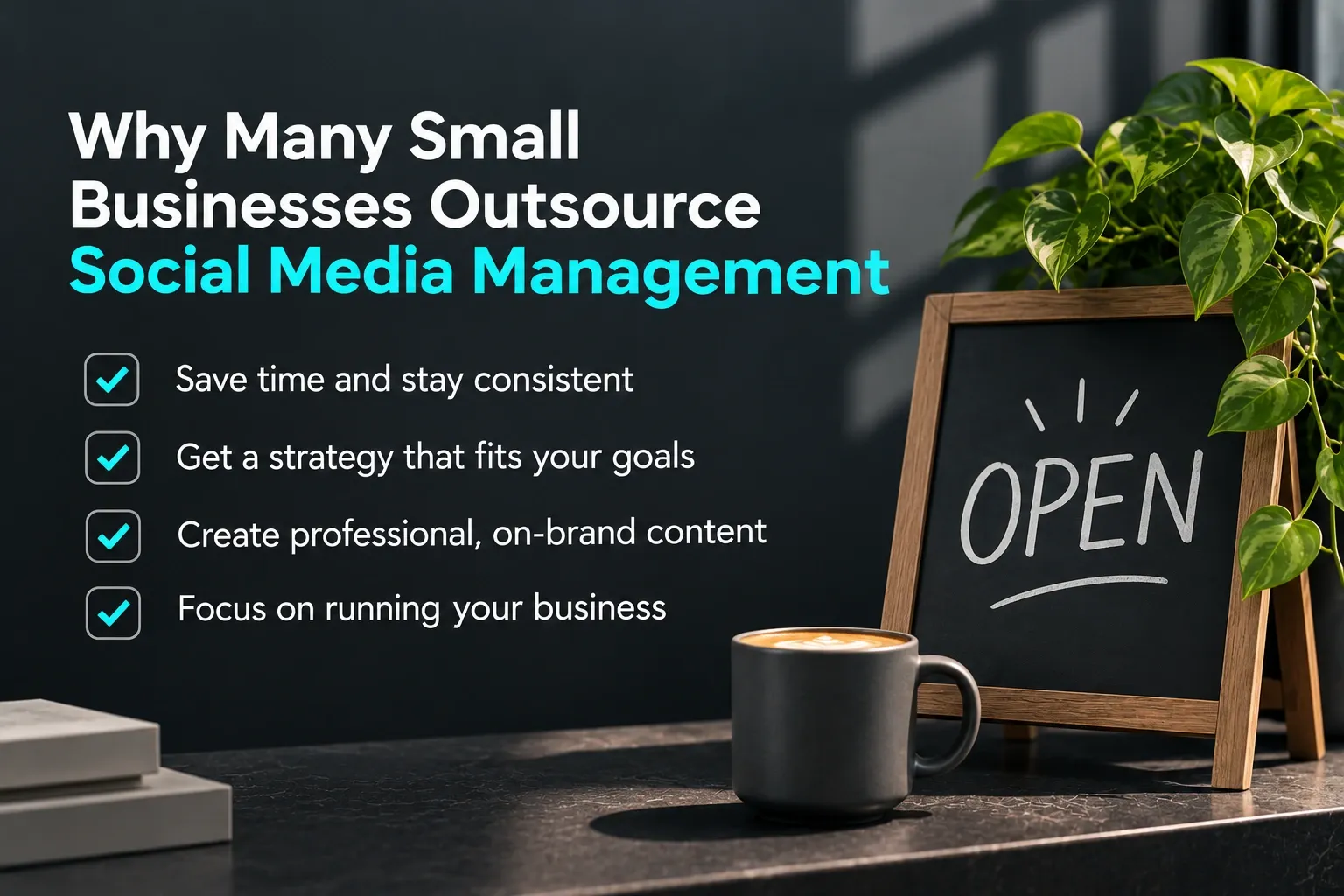
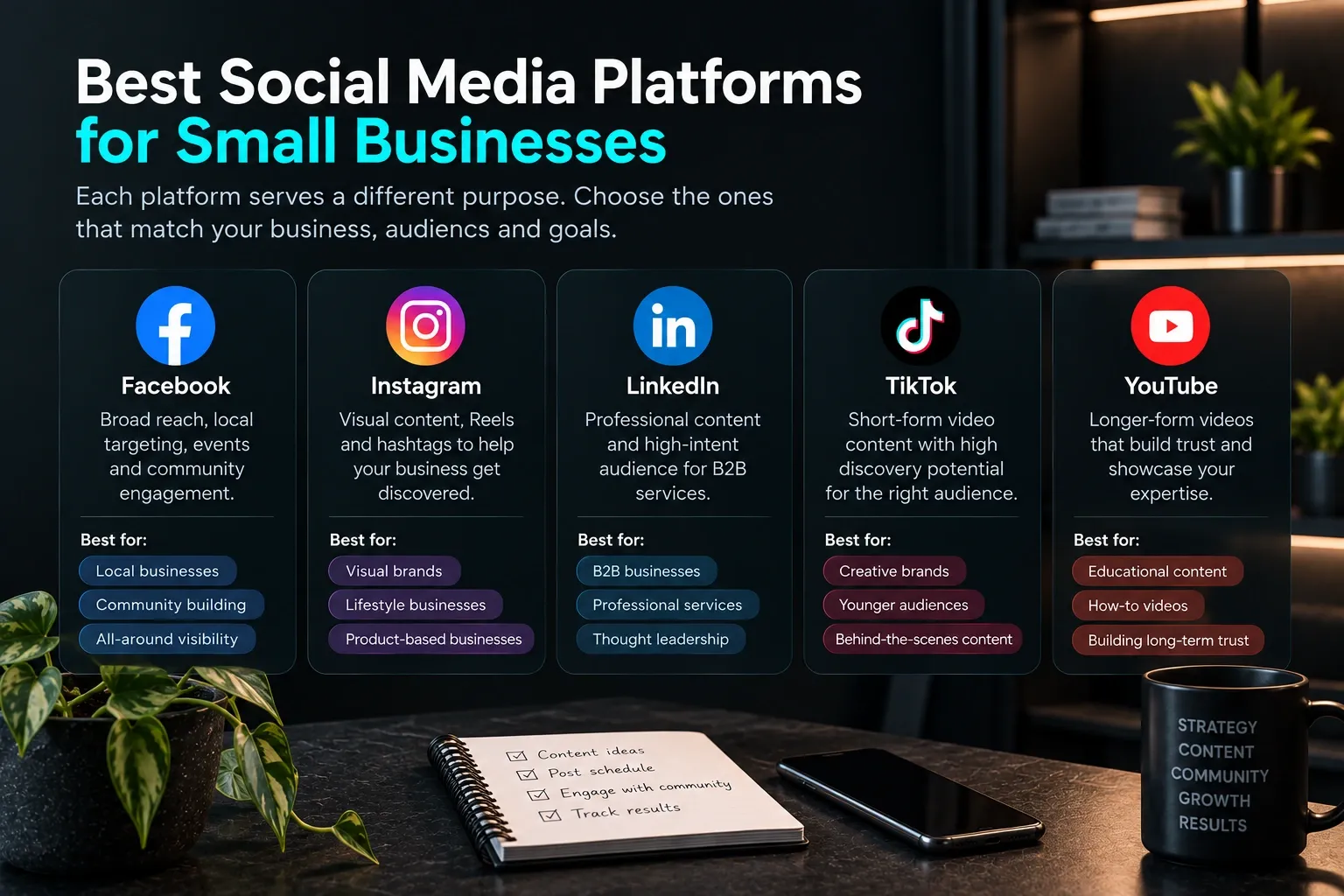
The right platform depends on your business type, audience, and available time, not on what’s trending. Managing social media well on two platforms beats being invisible across six.
Facebook works well for most local businesses. Its broad demographic reach, local targeting tools, event promotion, and review features make it a reliable starting point. It skews toward users 35 and older.
Instagram suits visual products and lifestyle brands. Reels and hashtags reward discovery for businesses whose product or service has a visual angle.
LinkedIn is the right channel for B2B services, professional firms, and hiring. It’s the highest-intent platform for reaching decision-makers, but requires a thought leadership tone over personality-driven content.
TikTok offers organic reach still accessible for small accounts. Behind-the-scenes content, how-to videos, and personality-driven clips perform well, with an audience that’s broadening beyond younger demographics.
YouTube builds long-term authority through how-to content. Videos stay discoverable for months or years.
X (formerly Twitter) serves niche communities and real-time conversation. For most local service businesses, it’s low priority.
Match each platform to where your specific audience already spends time, and pick the format your business can produce consistently. A local plumber should prioritize Facebook. An e-commerce boutique should lead with Instagram and TikTok. A B2B SaaS company should be on LinkedIn.
What a Content Plan for Small Businesses Should Actually Look Like
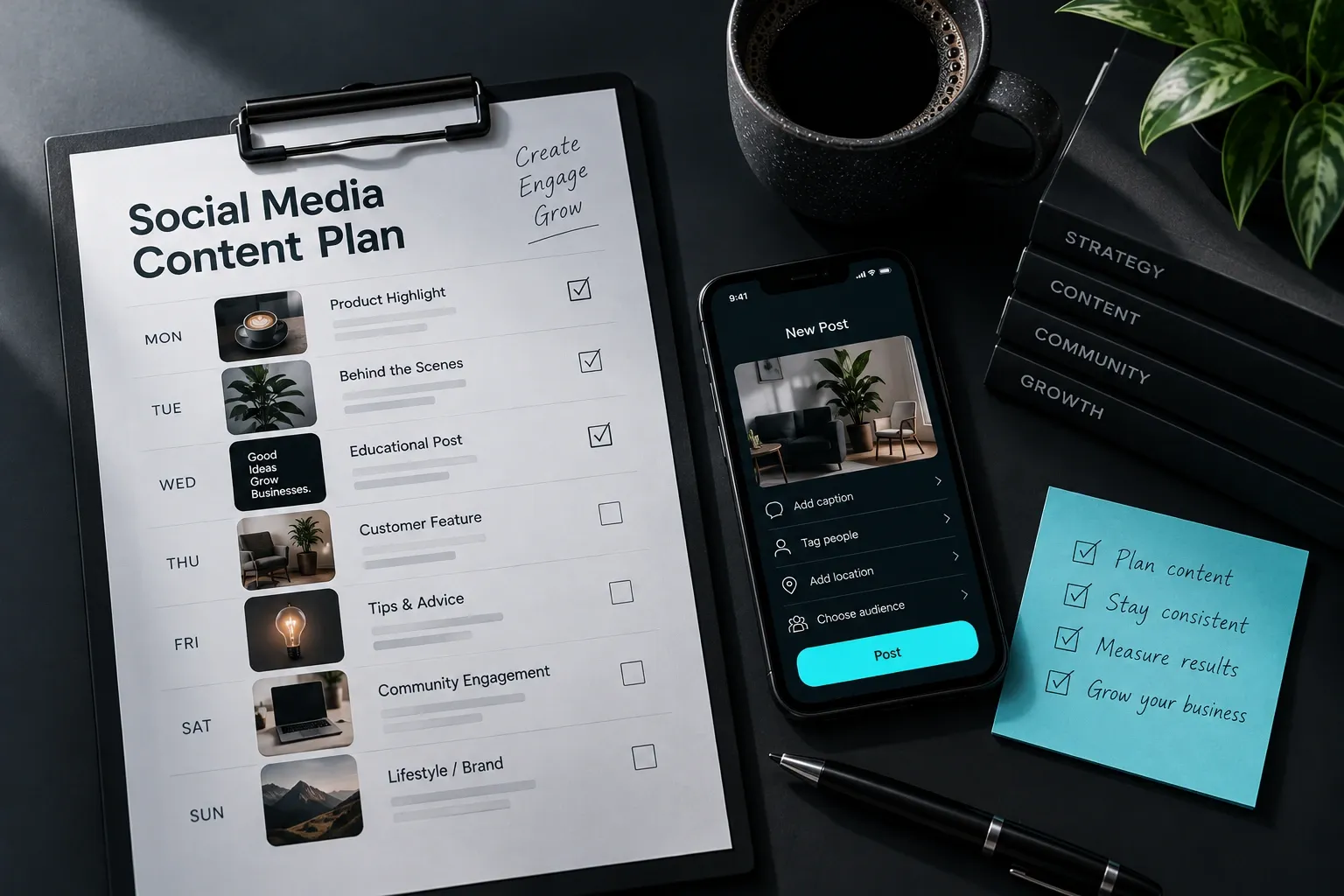
A content plan isn’t a spreadsheet full of post ideas, it’s a repeatable system for deciding what you say, how often, and why. Without one, you’ll run dry within weeks or revert to generic promotional posts your audience learns to ignore.
Building Your Content Mix
The 80/20 rule is the most practical framework for small business social media: 80% of your content should provide value, entertain, or educate, and only 20% should be directly promotional. That ratio keeps your audience engaged between campaigns and builds the trust that makes promotional posts actually convert.
The content types that work best for SMBs include:
- Educational posts (tips, how-tos, FAQs your customers actually ask)
- Behind-the-scenes content (your process, your team, your workspace)
- Testimonials and reviews (social proof in your audience’s own words)
- User-generated content (customer photos, tagged posts, real usage)
- Promotional content (launches, offers, seasonal campaigns)
Group your content into three or four repeating themes, called content pillars, so you always have a clear category to draw from. A bakery might use pillars like “Meet the Team,” “Today’s Menu,” “Baking Tips,” and “Customer Love.” The point of pillars isn’t to lock you into a format. Experiment inside them, test out-of-the-box post ideas, and keep whatever actually performs.
Seasonal and Promotional Calendar Planning
Most SMBs post reactively and miss real revenue opportunities as a result. Mapping your content to major holidays, industry events, and your own promotional moments three months out gives you creative lead time and prevents last-minute scrambles.
Build a simple calendar that marks:
- National and local holidays relevant to your audience
- Seasonal transitions that relate to your product or service
- Your own planned promotions and product launches
- Industry-specific events or awareness months
This kind of planned approach separates businesses that use social media strategically from those that simply react to it.
Social Media Management Tools for Small Businesses Worth Knowing
The right tools let one person run a consistent social presence without working nights and weekends. Tools fall into a few categories: scheduling and publishing, analytics, and content creation.
The most commonly used scheduling platforms include:
- Buffer: straightforward, affordable, built for small teams managing a couple of core platforms
- Later: strong visual planning interface, particularly useful for Instagram-heavy strategies
- Hootsuite: broader platform combining scheduling, monitoring, and reporting under one roof
- RecurPost: well suited to businesses that want to recycle evergreen content automatically, reducing the manual workload of keeping a content library active
The right tool depends on team size, platform mix, and budget. A solo operator can start with a budget-friendly option like Buffer or RecurPost. A growing SMB with a part-time marketing hire should look at Hootsuite or Later’s higher-tier plans. Built-in automation now helps with caption drafts and hashtag suggestions, but posts that perform best still sound like a real person who knows their business.
DIY, Freelancer, or Agency: How Small Businesses Should Decide
Small businesses have three realistic paths for managing social media, and the right one depends on revenue stage, available time, and growth ambitions.
The Three Models, Side by Side
Managing it yourself with tools is the lowest-cost model and the highest time investment. This makes sense for a bootstrapped local service business in its first one to two years, or for an owner who genuinely enjoys creating content. The limit isn’t money, it’s capacity.
Freelance social media managers offer a middle path: outsourcing execution without full agency overhead. Quality varies widely, so ask for platform-specific results, not just follower counts.
Full-service social media management services for small businesses through an agency give you strategy, content creation, scheduling, reporting, and sometimes paid media under one roof. This tends to deliver the best return once marketing capacity, not budget, becomes the real bottleneck.
Evaluating Social Media Management Packages for Small Businesses
When reviewing social media management packages for small businesses, the line items that matter most are:
- Number of posts per month, per platform (get this in writing)
- Who creates the content, who owns it after the engagement ends, and what reporting includes, real performance data, not just follower count screenshots
- How the content approval process works and what turnaround looks like
- Whether engagement and comment monitoring is included
A good package specifies KPIs before you sign. If it doesn’t, that’s a signal worth paying attention to.
Tracking Performance: What Metrics Actually Tell You Something Useful
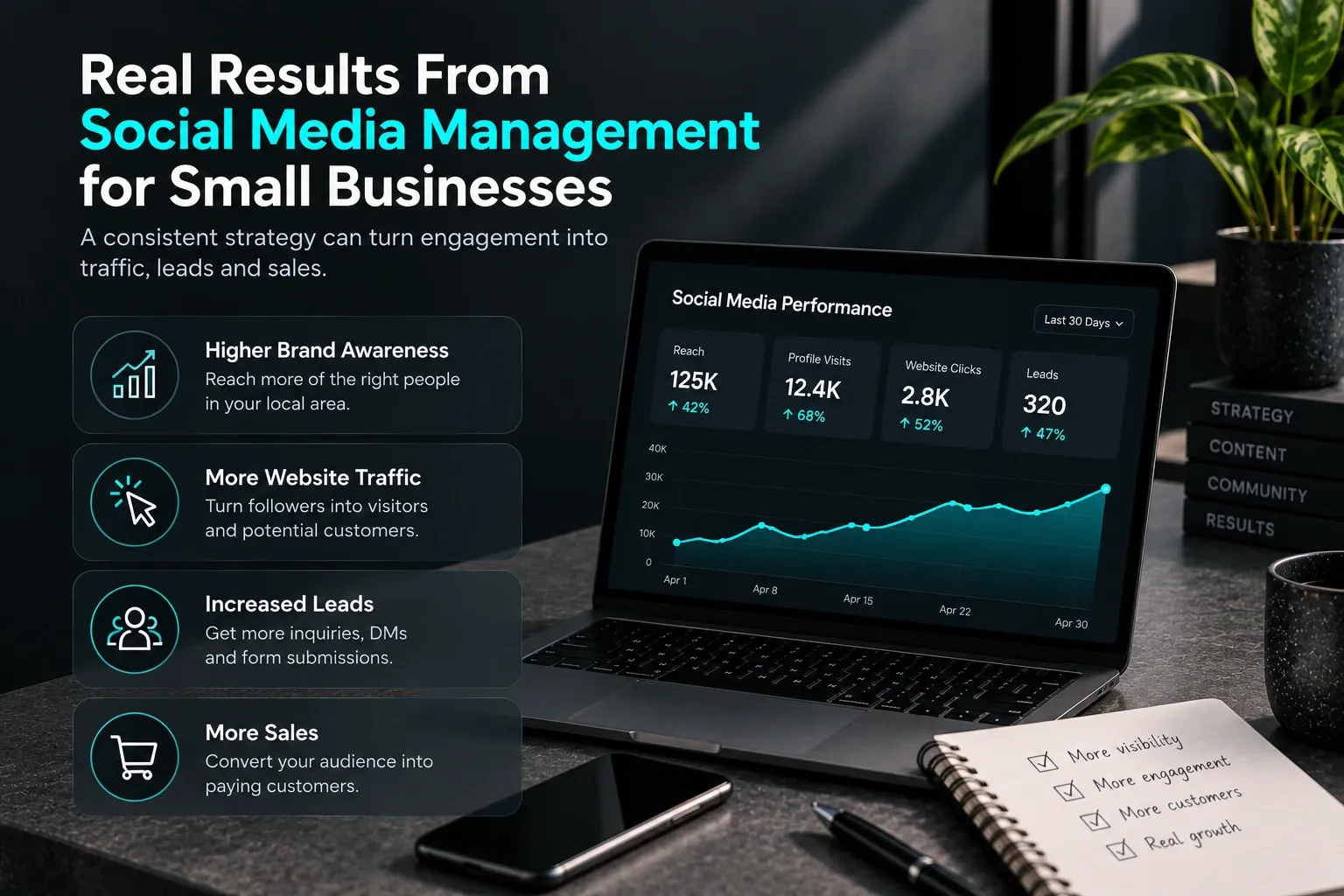
Metrics only matter if they connect to outcomes you care about. A high follower count with no website traffic and no leads is a vanity number, not a business result.
The metrics worth watching for most SMBs:
- Reach and impressions: how many unique people saw your content
- Click-through rate: what percentage of people who saw a post clicked through to your website or offer
- Website traffic from social: trackable in Google Analytics by source
- DMs and inquiries generated: leads that came directly from a post or campaign
- Conversions: form fills, purchases, or bookings attributed to social activity
What separates sophisticated social media management from basic posting is the addition of social listening, monitoring brand mentions, tracking competitor content, and staying tuned to trending conversations in your industry. Most SMBs skip this entirely and miss real competitive intelligence in the process. Set up Google Alerts for your brand name and key competitors alongside a monitoring tool as a starting point, and commit to a monthly performance review at minimum.
How to Handle Negative Comments and Protect Your Reputation on Social
One negative post can do proportionally more damage to a small business than to a national brand. That makes reputation management an essential part of social media management for small businesses, not a crisis-only consideration.
The response framework that works:
Acknowledge quickly. A delayed response reads as indifference. Responding within a few hours signals that you take customer experience seriously.
Keep it brief and calm publicly. Acknowledge the issue, apologize for the frustration, and invite the person to continue the conversation privately via DM or phone.
Never argue in public. Even if the complaint is unfair or factually wrong, a defensive public reply makes your business look worse than the original comment.
Practical response templates for common scenarios:
Negative review: “Thank you for sharing this, we’re sorry your experience didn’t meet the standard we aim for. We’d like to make it right. Please DM us or reach out at contact so we can speak directly.”
Shipping or service delay complaint: “We hear you, and we understand how frustrating delays are. Our team is looking into this right now, please DM us your order details so we can prioritize a resolution.”
Product defect complaint: “That’s not the experience we want anyone to have. Please DM us and we’ll make it right.”
How you respond publicly often matters more than the original complaint. A well-handled reply can turn a frustrated customer into one of your most loyal advocates.
When Organic Reach Plateaus: Adding Paid Social to Your Strategy
Organic reach on most platforms has real limits. Once engagement is consistent but not growing and follower counts have stabilized, that’s the signal paid social is worth adding to your strategy.
Paid social isn’t a replacement for organic content. It’s an amplifier. Put paid budget behind content that already works organically, not behind posts that flopped.
A sensible approach is to scale spend in stages: start small to test which formats and audiences actually respond, move into a consistent campaign once you have data on cost per click and conversion rates, and scale further only once you have a proven offer and a customer acquisition cost you’re actively working to improve.
Platform comparison for SMB ad spend:
- Facebook and Instagram offer the best reach-to-cost ratio for local businesses and e-commerce, with strong audience targeting tools
- LinkedIn is expensive per click but high-intent for B2B, worth it for professional services with a high-value sale
- TikTok offers low CPMs and is particularly effective for product discovery among audiences under 35
Before running ads, make sure you have a clear offer, a landing page built to convert, and a way to track what happens after the click.
FAQs About Social Media Management for Small Businesses
How much should a small business spend on social media management?
It depends heavily on revenue stage and how much time you can put in yourself. Managing it yourself with scheduling tools is the lowest-cost route. A freelance social media manager costs more but still less than a full agency retainer. A full-service agency offering social media management services for small businesses sits at the top of the range, typically justified once marketing capacity becomes a real bottleneck. The right spend depends on your revenue stage, available time, and growth goals.
How often should a small business post on social media?
Consistency matters more than frequency. A reliable, repeatable schedule on your primary platform outperforms daily posting that burns out in two months. Facebook and Instagram tend to support more frequent posting than LinkedIn, where a slower, more deliberate cadence works better.
Which social media platform is best for small businesses?
Facebook is the most versatile starting point for most SMBs because of its broad demographics and local targeting tools. Instagram works best for visual products and lifestyle brands. LinkedIn is essential for B2B and professional services. TikTok is worth testing if you’re targeting younger audiences or want organic reach without a large ad budget.
Can a small business manage social media without hiring someone?
Yes, with the right tools. Social media management tools like Buffer, Later, Hootsuite, and RecurPost let one person schedule content, monitor comments, and review analytics across multiple platforms. When social media starts competing with revenue-generating work for your attention, outsourcing becomes worth evaluating.
What should be included in a social media management package for small businesses?
A solid package should include content creation and scheduling, platform management across agreed channels, monthly performance reporting with real metrics, audience engagement and comment monitoring, and a defined content approval process. Before signing, confirm how many posts per month are included, who owns the content once created, and what success is being measured against.
Ready to Take Social Media Off Your Plate?
If you’d rather have a team handle the strategy, content, and execution for you, explore our social media management services or get in touch to talk through what your business actually needs.