


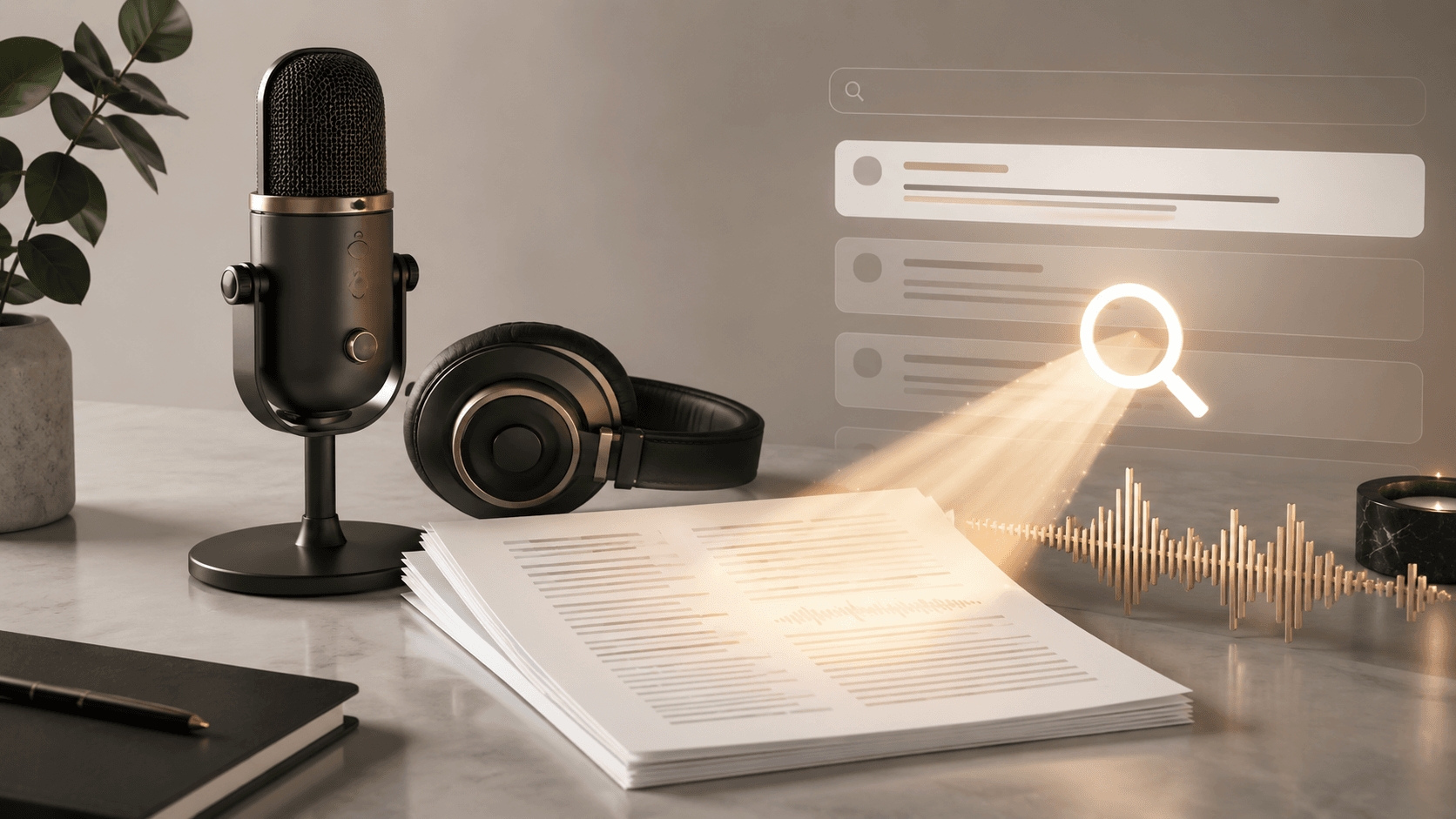
Audio content is a powerful tool for connection, but it faces one major digital hurdle: Google and other search engines cannot "listen" to your episodes. Your entire archive of valuable advice, unique insights, and long-tail keywords is essentially invisible to the millions of people using search to find answers. This invisibility is a critical missed opportunity for creators, startups, and small businesses relying on organic discovery to grow their brand.
The simple, low-cost solution to this digital barrier is the podcast transcript. A transcript is the complete, written record of everything said in your podcast episode. When you publish this text on your website, you instantly transform your audio file from an inaccessible block of data into a vast, indexable text document.
Search engine crawlers can now read the content, identify keywords, and understand the true depth of your subject matter, allowing your episode to rank for highly specific search queries. This makes transcripts the essential bridge between the engaging, human quality of audio and the functional demands of digital search.
Transcripts as Indexable Content
A single podcast episode, once transcribed, can generate thousands of words of highly relevant, keyword-rich text. When this text is properly published on your website, it creates an enormous and immediate SEO advantage. This sudden increase in indexable content signals to search engines that your website is a deep resource for information, significantly boosting your domain authority over time. This is especially vital for creators and small businesses who may not have the resources or time to write lengthy, traditional blog posts every single week.
The transcription provides a powerful structural element known as topical authority. When you consistently publish transcripts related to a core topic, (for example, "low-cost video production techniques") Google begins to recognize your domain as a primary source for that subject. This authority leads to better ranking for not only the specific episode but for all related content on your entire site.
The decision to publish transcripts is one of the most effective ways to boost your content visibility for multiple reasons:
- It creates a massive increase in indexable text on your site, signaling authority.
- It allows the episode to rank for hundreds of long-tail keywords.
- It significantly improves accessibility for users who are deaf or hard of hearing.
- It provides a better reading experience for users who prefer to skim content.
- It can be easily repurposed into social media quotes or blog posts.
Beyond the immediate keyword benefit, transcripts contribute to better technical SEO health. A page with an embedded audio player and no text often has a very poor text-to-code ratio, which can negatively impact its quality score in search results. By providing a full transcript, you normalize this ratio, ensuring your rich media content is properly understood and valued by the search algorithm.
Maximizing SEO Value
Simply embedding a block of text on a page is not enough to maximize the search engine optimization (SEO) benefit. To truly transform your podcast page into an SEO asset, you must treat the transcript as a primary piece of content, not a secondary add-on.
Proper formatting, strategic placement, and intentional use of keywords are essential steps that turn transcription from a simple technical task into a smart content strategy that drives organic traffic.
- Placement and Formatting: Publish the full transcript directly on the same dedicated URL as the embedded audio player. Avoid using PDFs or hidden text, as search engines may ignore them. Use proper paragraph breaks, subheadings, and bolding to make the text easy for both users and crawlers to read. This clarity is a mark of professional publishing.
- Targeted Keyword Optimization: After receiving the raw transcript, you must review the text and strategically bold the most important keywords and phrases that relate to your topic. Ensure your main target keyword appears naturally in the episode summary, the page title, and a few times within the body of the transcript. This intentional focus helps search engines quickly grasp the page's primary value.
- Use Descriptive Headings: Break up the long text of the transcript using clear, descriptive subheadings (H2 or H3 tags) that correspond to the main discussion topics or segments of the episode. This structural organization is highly valued by search engines and vastly improves the experience for users who want to find specific sections without listening to the entire episode.
- Include Speaker Names: Clearly label the speakers (Host, Guest, etc.) using bold text or a simple label. This adds clarity for the user and provides additional context that can help search engines differentiate between voices and content segments, further establishing the authority of your contributors.
Furthermore, integrating technical SEO elements can amplify the benefits. While this sounds complex, it is actually straightforward. Ensure your web platform generates an updated XML sitemap that includes the transcript page URL.
More advanced creators can explore adding structured data (Schema Markup) specifically for audio content, which helps search engines display rich results like playback links directly in the search results page. These steps transform the raw text into a highly effective, high-performing SEO tool.
The Strategic Advantage of Audio
The role of the podcast transcript extends far beyond a technical SEO fix, becoming a fundamental strategic move that immediately broadens your reach and solidifies your authority. By providing a readable version of your content, you are simultaneously making your work accessible to the hearing-impaired community and catering to a large segment of your audience who simply prefers to read or skim information before they commit to listening. This dedication to inclusion is recognized and rewarded by both users and search algorithms, naturally strengthening your domain authority and brand reputation.
This strategic choice also creates a powerful, compounding effect. Every episode you publish with a full transcript becomes a permanent, unique, and searchable entry point into your entire content library. This organic growth engine continuously funnels new listeners to your podcast without requiring constant paid promotion. These pages, once indexed, work tirelessly for you for years.
The transcript also serves as the ultimate content repurposing tool. You can easily extract direct quotes for social media graphics, pull key insights for a newsletter, or use entire sections as the basis for a future blog post. This efficiency maximizes the return on the time and effort you invested in recording the original audio.
For individual creators, small businesses, and startups with limited marketing budgets, this organic discoverability is invaluable. It ensures that the knowledge and expertise you poured into your audio are fully indexed and discoverable for years to come, securing your place as a leading voice in your niche.
The ability to efficiently convert spoken word into powerful, searchable text is the secret to unlocking the full potential of your audio content and building a loyal, growing audience that finds you exactly when they need you most. This strategic investment in text ensures the legacy and longevity of your audio content.