


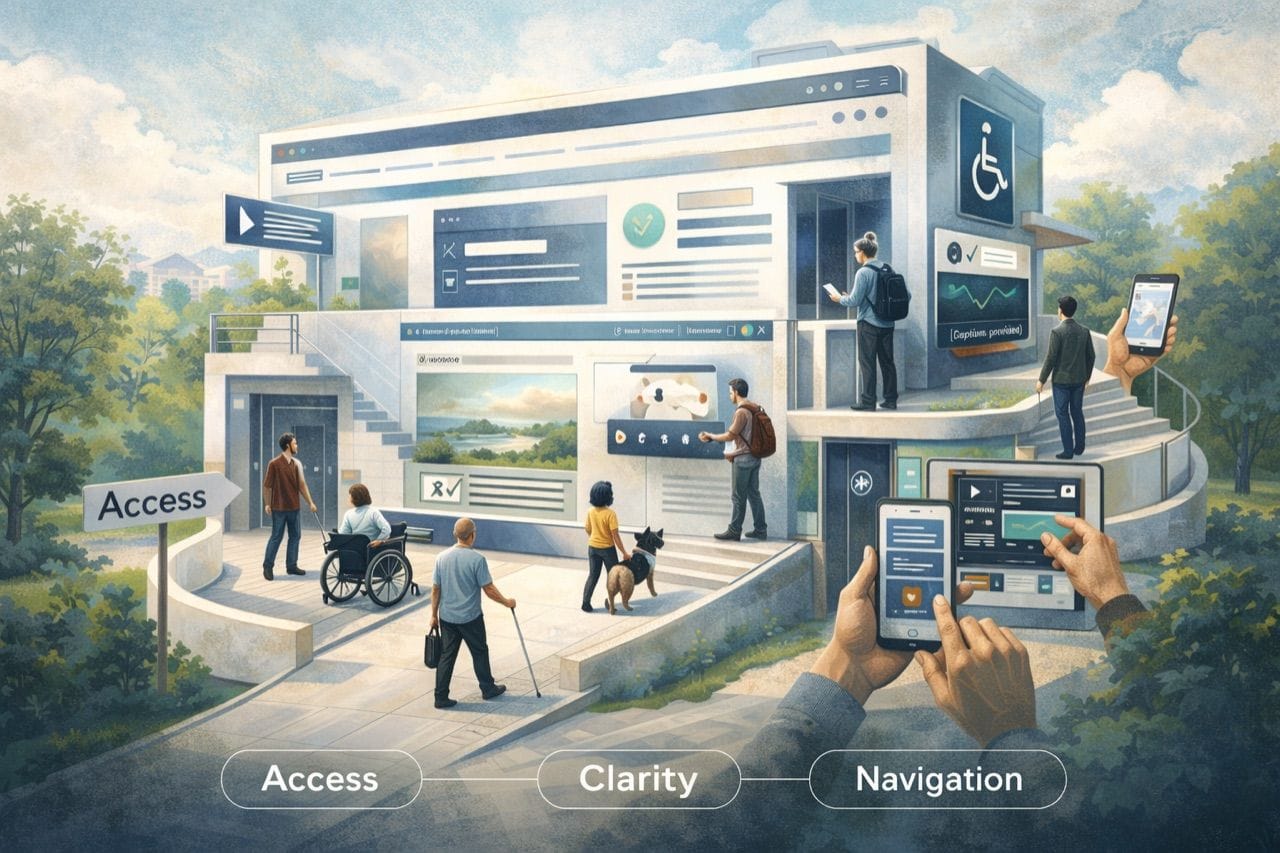
Universal design is the practice of creating websites that are accessible, usable, and enjoyable for the widest possible range of users, regardless of age, ability, or device. Unlike standard accessibility compliance, universal design integrates inclusivity into the foundation of a site rather than treating it as an add-on. Modern websites that ignore these principles risk alienating users, limiting engagement, and reducing overall impact.
Implementing universal design does more than meet accessibility standards. It improves clarity, navigation, and responsiveness for all users. By emphasizing simplicity, consistency, and flexibility, designers create experiences that accommodate diverse needs without sacrificing aesthetic or brand identity. Ankord Media specializes in blending universal design with strategic user experience, ensuring websites are both inclusive and effective in driving engagement.
Core Principles of Universal Design for Websites
Universal design rests on several core principles that guide functional, inclusive, and elegant digital experiences:
- Equitable Use: The website should provide the same experience for all users, regardless of ability or context. Features should not exclude any group.
- Flexibility in Use: Users should be able to interact with content in multiple ways, whether through mouse, keyboard, touchscreen, or assistive technology.
- Simple and Intuitive: Clear navigation, predictable layouts, and concise content help all users understand the interface quickly.
- Perceptible Information: Visual, auditory, and tactile cues should communicate key information, ensuring it is accessible to users with different sensory abilities.
- Tolerance for Error: Designs should minimize potential errors and provide straightforward ways to recover from mistakes.
- Low Physical Effort: Interactions should be easy to perform, avoiding unnecessary complexity or repeated actions that fatigue users.
By applying these principles, websites can serve a broad spectrum of users while enhancing usability for everyone. Inclusive design is an optimization that strengthens clarity, trust, and engagement.
The Benefits of Universal Design
Beyond accessibility compliance, universal design offers multiple advantages for both users and brands:
- Improved usability across devices and contexts
- Increased audience reach, including users with disabilities
- Enhanced trust and credibility through attention to inclusivity
- Reduced user frustration and lower abandonment rates
- Stronger SEO and compliance with accessibility regulations
Designing inclusively ensures that all users can navigate the website efficiently, complete desired actions, and engage with content meaningfully. Universal design also reduces the need for separate accommodations or redesigns later, creating a more scalable and sustainable product.
Implementing Universal Design in Practice
Practical application of universal design requires attention to both structure and detail. Designers should integrate accessibility considerations from the start rather than retrofitting features.
Key steps include:
- Conducting user research to understand diverse needs
- Structuring navigation with clear hierarchies and consistent layouts
- Using sufficient contrast, readable fonts, and responsive design
- Providing alternative text for images, captions for videos, and accessible forms
- Testing the site with users of varying abilities and devices
A thoughtful iterative approach ensures that universal design is functional, aesthetically pleasing, and aligned with business objectives. Ankord Media helps brands integrate these strategies seamlessly, balancing inclusivity with brand identity and engagement goals.
Universal Design as a Strategic Advantage
In addition to ethical and practical considerations, universal design can be a differentiator in competitive markets. Users increasingly expect seamless experiences, and inclusive design contributes to overall satisfaction and loyalty. By prioritizing universal design, brands signal reliability, competence, and attentiveness to user needs.
Moreover, inclusive websites often perform better across analytics metrics. Clearer navigation, responsive layouts, and attention to readability reduce friction and encourage deeper engagement. Universal design also prepares websites for future technologies and varied devices, ensuring long-term relevance and adaptability.