


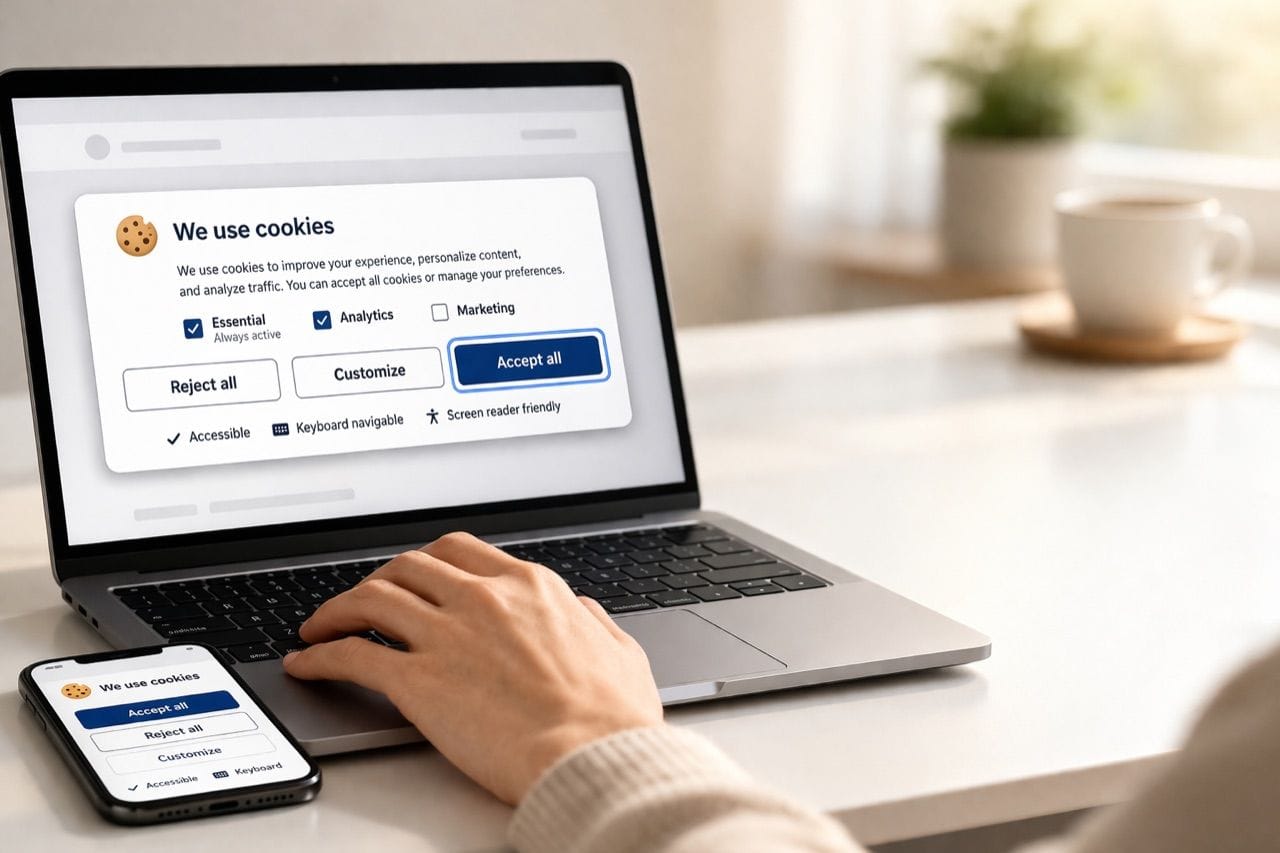
Privacy regulations such as GDPR and CCPA have made cookie consent mechanisms mandatory for many websites. These laws require that users are informed about tracking technologies and can provide meaningful consent before data is collected.
However, simply displaying a banner is not enough. Users with disabilities must also be able to understand and interact with these notices. Accessibility ensures that all users, regardless of ability, can control their data and navigate the site confidently.
Beyond regulatory compliance, accessible cookie consent solutions demonstrate respect for users. When visitors can easily understand and manage their privacy preferences, trust in the brand increases. Furthermore, clear and inclusive consent mechanisms reduce user frustration and the likelihood of abandoning the site. Companies that prioritize accessibility in privacy tools often see higher engagement and satisfaction across all user segments.
Key Features of an Accessible Cookie Consent Solution
Implementing accessibility requires attention to multiple design and functional elements. Simply having a banner is insufficient if it is not usable by individuals relying on screen readers or keyboard navigation. Designers and developers should aim for clarity, simplicity, and inclusivity while ensuring compliance with regulations.
- Clear and Concise Language: Consent options should use plain language that is easy to read and understand.
- Keyboard and Screen Reader Compatibility: Users should be able to navigate and select preferences using assistive technology.
- Flexible Opt-In/Opt-Out Controls: Users must have granular control over the types of cookies they accept.
- Visible and Persistent Notifications: Consent tools should remain accessible until a user makes a selection.
Ensuring these features are in place does more than satisfy legal requirements. It makes privacy management intuitive, reduces bounce rates, and fosters trust. Users who feel in control of their data are more likely to interact with the site and return in the future. Integrating these features thoughtfully also positions the website as inclusive and socially responsible, signaling to investors and partners that accessibility and compliance are priorities.
Benefits of Implementing Accessible Cookie Consent
Accessible cookie consent solutions bring multiple advantages beyond compliance. They enhance user experience by removing barriers that may confuse or frustrate visitors. Companies that implement inclusive consent tools demonstrate leadership in privacy and accessibility, which can improve reputation and engagement.
- Regulatory Compliance: Avoid fines ranging from $2,500 to over $100,000 USD per violation under GDPR and CCPA, depending on severity.
- Increased User Trust: Clear communication fosters confidence in the brand’s data practices.
- Improved Usability: All visitors, including those using assistive technologies, can navigate consent preferences without obstacles.
Integrating accessible solutions also reduces long-term maintenance costs. By considering accessibility from the outset, organizations minimize the need for retrofits or remediation after a regulatory audit. Users feel respected and valued, which can lead to increased loyalty and advocacy. Accessibility and compliance are no longer optional. They are truly strategic priorities that enhance both operational efficiency and brand credibility.
How to Implement an Accessible Solution
Implementation requires collaboration between legal, design, and development teams. Tools should be tested with real users and assistive technologies to ensure functionality meets accessibility standards. Customization is key, as cookie consent requirements vary across jurisdictions.
- Choose the Right Platform: Select tools that are customizable and compliant with local regulations.
- Conduct Accessibility Testing: Use screen readers, keyboard navigation, and contrast tests to verify usability.
- Integrate with Existing Design Systems: Ensure consent banners align with site branding without obstructing navigation.
- Partner with Experts: Working with Ankord Media ensures solutions are fully compliant, accessible, and aligned with your brand experience.
Ongoing monitoring is essential to maintain compliance. Regulations evolve, and user expectations change over time. Regular updates, audits, and user testing ensure that the cookie consent solution remains effective, inclusive, and trustworthy. Accessible consent mechanisms are a key component of a broader commitment to digital inclusivity and user-first design principles.
Implementing an accessible cookie consent solution reflects both legal responsibility and a commitment to user experience. Companies that invest in such solutions reduce compliance risk, enhance trust, and foster engagement across all users. Accessibility and privacy should be central to website strategy, creating a foundation for long-term credibility, operational efficiency, and a stronger relationship with visitors.