


- Introduction
- Quick Answer
- 1. Understand the Difference Between a Topic and a Thesis
- 2. Start With the Startup Experience That Still Feels Unresolved
- 3. Find the Pattern Behind the Founder Story
- 4. Connect the Thesis to a Real Reader Problem
- 5. Turn the Founder’s Lesson Into a Point of View
- 6. Use Startup Stories as Evidence, Not the Main Point
- 7. Build the Thesis Around a Clear Before-and-After Shift
- 8. Test Whether the Thesis Can Support a Full Book
- 9. Pressure-Test the Thesis for Clarity, Credibility, and Usefulness
- 10. Avoid Thesis Mistakes That Weaken Founder Books
- 11. Shape the Thesis Into a Simple Working Statement
- Final Tips
Introduction
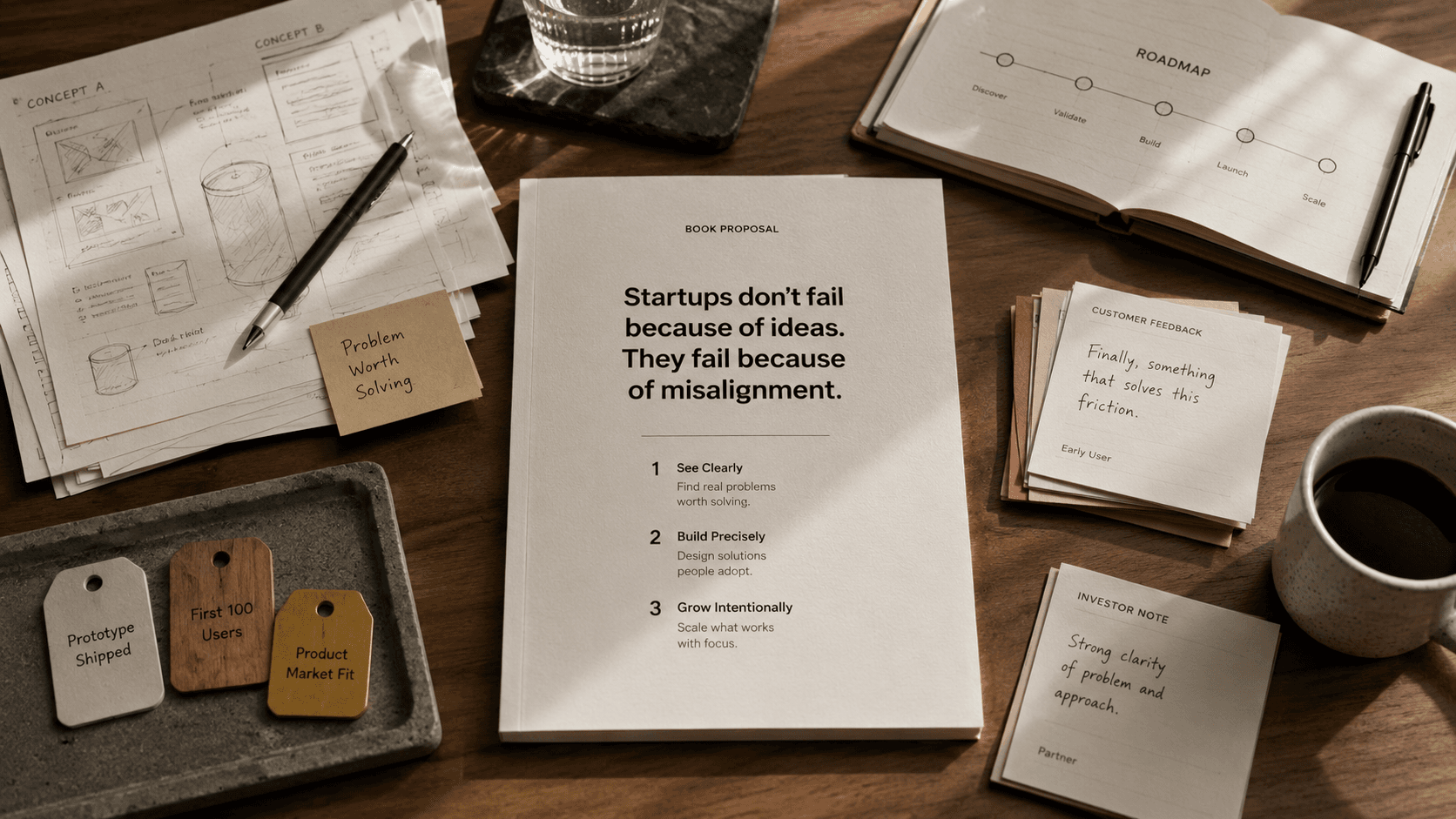
Bay Area founders often have more than enough material for a nonfiction book, but experience alone does not create a strong thesis. A clear book thesis turns startup lessons, customer stories, pivots, failures, market insight, and hard-won judgment into one central argument readers can understand and remember. For Silicon Valley founders, the strongest thesis connects lived experience to a useful idea that supports credibility, thought leadership, and long-term brand authority.
Quick Answer
Bay Area founders can turn startup experience into a clear, compelling book thesis by identifying the strongest pattern behind what they have lived, built, solved, or learned, then shaping that pattern into one focused argument about what their audience should understand differently. A strong thesis is not just a topic, lesson, or personal story. It connects the founder’s experience to a real reader problem, a market shift, and a useful promise the book can deliver.
1. Understand the Difference Between a Topic and a Thesis
A topic tells readers what the book is about. A thesis tells readers what the book believes.
Many founders start with a broad topic like AI adoption, startup leadership, fundraising, product-market fit, remote teams, healthcare innovation, or building a company from scratch. Those topics may be useful, but they are not yet specific enough to guide a full nonfiction book.
A thesis adds direction. It gives the book a central claim.
For example:
- Topic: Startup leadership
- Thesis: The hardest leadership shift for technical founders is learning that clarity, not control, is what allows teams to scale.
- Topic: AI adoption
- Thesis: Companies will not win with AI by adding more tools, but by redesigning how people make decisions, share accountability, and measure trust.
- Topic: Fundraising
- Thesis: Early-stage founders raise more effectively when they stop selling momentum alone and start communicating market conviction with evidence.
The thesis becomes the book’s spine. It helps the founder decide which stories belong, which chapters matter, and which ideas should be left out.
2. Start With the Startup Experience That Still Feels Unresolved
Founders often search for a thesis by asking, “What have I accomplished?” A better starting question is, “What problem did I keep seeing, solving, or wrestling with?”
The strongest thesis usually comes from friction, not from a polished success story. It may come from a repeated challenge the founder faced while building, selling, hiring, fundraising, scaling, or rebuilding after a failed assumption.
Useful places to look include:
- A customer problem that kept appearing in different forms
- A mistake the founder had to unlearn
- A market assumption that turned out to be wrong
- A leadership challenge that repeated as the team grew
- A technical insight that changed the company’s direction
- A fundraising lesson that only became clear later
- A product decision that revealed something bigger about the category
- A customer behavior pattern that others in the market were missing
A compelling thesis often begins with a contrast: “Most people think this works one way, but my experience showed me something different.”
That contrast gives the book energy. It makes the thesis feel earned rather than generic.
3. Find the Pattern Behind the Founder Story
Startup experience can feel messy. It may include pivots, layoffs, launches, missed targets, hiring mistakes, customer wins, investor meetings, product breakthroughs, and market surprises. The founder’s job is not to include everything. The job is to find the pattern underneath the experience.
A good thesis often comes from a repeated pattern, such as:
- Why customers trusted one version of the product more than another
- Why a team moved faster after simplifying decision-making
- Why the category became easier to explain after the founder changed the language
- Why investor conversations improved after the company clarified the market narrative
- Why growth accelerated only after brand, product, and sales stopped operating separately
- Why customers adopted the product only after the team reduced perceived risk
The pattern is what turns personal experience into reader value.
A useful exercise is to list ten meaningful startup moments, then ask what they have in common. The answer may reveal the book’s thesis.
For example, a founder may notice that the most important lessons were not really about fundraising, hiring, or product. They were all about translating complexity into trust. That pattern could become a strong thesis for a book aimed at technical founders, product leaders, or B2B startup teams.
4. Connect the Thesis to a Real Reader Problem
A founder’s thesis should not only explain what the founder learned. It should help the reader solve, understand, or rethink something.
Before shaping the thesis, define the reader clearly. A Bay Area founder may be writing for other founders, operators, product leaders, technical executives, investors, enterprise buyers, future hires, or industry peers. Each reader group needs a different version of the argument.
For example:
- Founders may need a thesis about decision-making, clarity, fundraising, or team scale.
- Investors may care about market timing, category logic, risk, or founder judgment.
- Enterprise buyers may care about trust, implementation, workflow change, or ROI.
- Product leaders may care about adoption, behavior, UX, or cross-functional alignment.
- Operators may care about systems, accountability, process, and repeatable growth.
A simple framing sentence can help:
“This book helps [specific reader] understand [specific problem] so they can [specific outcome].”
Examples:
- “This book helps technical founders understand why complex products fail to earn trust so they can communicate value more clearly to investors, customers, and teams.”
- “This book helps startup operators understand why growth systems break during scale so they can build processes that preserve speed without creating chaos.”
- “This book helps AI leaders understand why trust is now a product requirement so they can design adoption strategies that survive scrutiny.”
The clearer the reader problem, the sharper the thesis becomes.
5. Turn the Founder’s Lesson Into a Point of View
A compelling thesis should not sound like common advice. It should have a point of view.
Many founder book ideas start as true but obvious lessons:
- Great teams need trust.
- Startups need clear communication.
- Customers matter.
- Product-market fit is hard.
- AI will change the future of work.
- Founders need resilience.
These statements are not wrong, but they are too generic to carry a book. A thesis needs a sharper claim.
Stronger thesis examples include:
- “Trust is not a company value. For technical startups, it is a product feature that must be designed into every customer interaction.”
- “The biggest barrier to startup scale is not lack of ambition, but the failure to turn founder intuition into shared operating systems.”
- “AI will not replace the most valuable teams. It will expose which teams never had a clear decision-making process in the first place.”
- “Early-stage companies do not lose because they lack ideas. They lose because they cannot explain why their idea matters now.”
A strong thesis does not need to be provocative for attention. It needs to be specific enough that a thoughtful reader could agree, disagree, or want to hear more.
6. Use Startup Stories as Evidence, Not the Main Point
Founders often have powerful stories, but a nonfiction thesis should not depend on storytelling alone. Stories should support the argument, not replace it.
The key question is: “What is the larger lesson behind this story?”
For example, a founder might have a story about losing a major customer after a difficult product rollout. The story may be interesting, but the thesis should point to something broader.
Possible thesis directions could include:
- Enterprise adoption fails when teams treat implementation as a handoff instead of a change-management process.
- Product trust breaks when companies measure feature delivery but ignore user confidence.
- Customer retention depends less on the launch moment and more on how well the company prepares people for behavior change.
The startup story gives the book credibility. The thesis gives the story meaning.
This distinction matters because readers are not only reading to learn what happened to the founder. They are reading to understand what the founder learned that can help them think differently.
7. Build the Thesis Around a Clear Before-and-After Shift
A strong nonfiction thesis often changes how the reader sees a problem. The “before” is what the reader may believe now. The “after” is what the book helps them understand instead.
For example:
- Before: Startup branding is mostly visual.
- After: Startup branding is a trust system across investors, customers, employees, and product touchpoints.
- Before: AI adoption is about choosing the right tools.
- After: AI adoption is about redesigning judgment, accountability, and workflow around new capabilities.
- Before: Founder storytelling is mainly about personal background.
- After: Founder storytelling is about turning lived experience into a strategic point of view the market can understand.
This before-and-after structure gives the thesis movement. It also makes the book easier to outline because each chapter can move the reader from old assumptions toward the founder’s sharper perspective.
If the thesis does not create any shift in thinking, it may be too obvious. If the shift is too hard to understand, it may need simpler language.
8. Test Whether the Thesis Can Support a Full Book
A thesis may sound strong in a paragraph but still fail as a book if it cannot support enough depth. Before committing, founders should test whether the thesis can expand into a clear structure.
A strong book thesis should create natural chapters around:
- The core problem
- The old assumption
- The founder’s discovery
- The supporting framework
- The mistakes people make
- The real-world examples
- The practical application
- The market implications
- The future direction
- The reader’s next steps
For example, a thesis about “turning complexity into trust” could support chapters on market confusion, product messaging, investor communication, customer onboarding, sales enablement, team alignment, category creation, and founder-led authority.
If the thesis only supports one strong essay, it may need to become part of a larger argument. If it supports too many unrelated directions, it may need to be narrowed.
A good thesis creates focus without becoming too small.
9. Pressure-Test the Thesis for Clarity, Credibility, and Usefulness
Once the founder has a draft thesis, it should be tested from three angles: clarity, credibility, and usefulness.
Clarity
The thesis should be easy to explain in one or two sentences. If it requires five minutes of setup before it makes sense, the language is probably too complicated.
A clear thesis should answer:
- What is the founder arguing?
- Who is the book for?
- What problem does it help solve?
- What should readers understand differently?
Credibility
The founder should have a believable reason to write this book. The thesis should connect to lived experience, company-building insight, customer patterns, market exposure, or technical expertise.
A credible thesis should make the reader feel, “This person has actually seen this problem up close.”
Usefulness
The thesis should help the reader think, decide, or act more clearly. If the argument is interesting but not useful, the book may feel abstract. If it is useful but not distinctive, it may feel generic.
A strong thesis should feel simple at the surface and deeper when expanded.
10. Avoid Thesis Mistakes That Weaken Founder Books
Many founder book theses fail because they are too broad, too self-focused, or too disconnected from the reader’s needs.
Common mistakes include:
- Turning the book into a company history instead of a useful argument
- Choosing a thesis only because the topic is trending
- Writing about success without showing the hard lesson behind it
- Trying to address every possible audience
- Building the thesis around advice that is already obvious
- Making the founder the hero instead of making the reader’s problem the focus
- Depending on confidential stories that cannot be shared clearly
- Choosing a thesis with no connection to the founder’s current authority or market
- Using startup jargon instead of plain, memorable language
The best thesis should feel earned. It should sound like the result of lived experience, not a borrowed industry opinion.
A good test is to ask: “Would this thesis still be credible if my company name were removed from the book?”
If the answer is yes, the idea has independent strength. If the answer is no, the thesis may be too dependent on brand proximity instead of real insight.
11. Shape the Thesis Into a Simple Working Statement
Before drafting the book, founders should write a simple working thesis statement. It does not need to be perfect. It needs to be clear enough to guide the outline.
A useful structure is:
“Most people think [common assumption], but my experience shows [sharper truth]. This matters because [reader problem], and the book will help readers [specific outcome].”
Examples:
“Most people think technical products fail because buyers do not understand the technology, but my experience shows they usually fail because the company has not translated complexity into trust. This matters because founders need investors, customers, and teams to understand why the product matters before they can support it.”
“Most people think startup scale is about hiring more people and adding more process, but my experience shows scale works only when founder intuition becomes a shared operating system. This matters because teams need clarity they can use without waiting for the founder to make every decision.”
“Most people think AI adoption is about tool selection, but my experience shows adoption depends on trust, workflow, and accountability. This matters because companies need systems that help people make better decisions, not just faster ones.”
This working statement becomes the foundation for the book proposal, outline, chapter structure, and future thought leadership content.
Final Tips
Bay Area founders can turn startup experience into a clear book thesis by looking for the strongest pattern behind what they have lived, not just the most impressive story they can tell. The best thesis is specific, useful, credible, and rooted in a real reader problem. When a founder can turn hard-earned experience into one clear argument about what the audience should understand differently, the book becomes more than a personal project. It becomes a durable authority asset.