


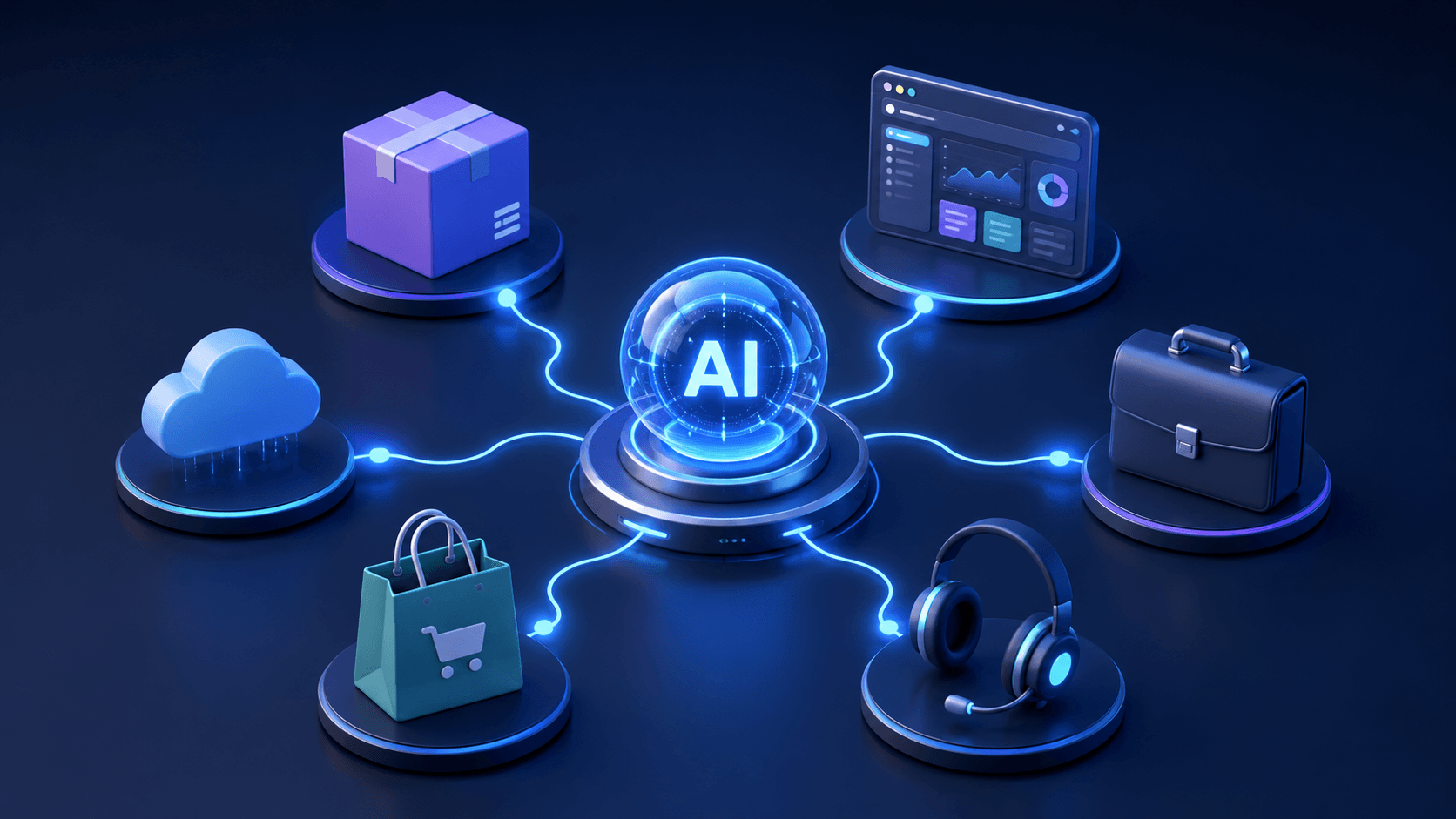
Modern businesses rarely operate with just one product or service line. Most companies juggle multiple offerings, each with unique customer bases, operational requirements, and market dynamics. The question isn't whether you need multi-product management - it's whether your current systems can handle that complexity without creating bottlenecks or confusion. Traditional approaches often require separate teams, tools, and processes for each product line, creating silos that limit efficiency and insights.
AI agents represent a fundamental shift in how businesses can approach multi-product management. Unlike human operators who need time to context-switch between different products, properly designed AI agents can maintain simultaneous awareness of multiple product lines while delivering specialized responses for each. The development team at Ankord Media has built systems that don't just handle multiple products - they leverage the connections between product lines to create more intelligent, efficient operations. This isn't about replacing human expertise but about creating a foundation that amplifies your team's ability to manage complexity.
The key lies in understanding how AI agents process and organize information differently than traditional software. When Milan Kordestani deploys multi-product agent systems, the focus is on creating intelligent architectures that can maintain distinct operational contexts while sharing underlying knowledge and processing power. This approach transforms how businesses think about scalability, allowing companies to expand their product offerings without proportionally increasing their operational overhead.
How AI Agents Handle Multiple Product Contexts
The foundation of multi-product AI agent management lies in sophisticated context switching and knowledge segmentation. Our agents don't simply store information about different products in separate databases - they create dynamic contextual frameworks that allow them to understand the relationships, differences, and unique requirements of each product line. Milan Kordestani and the Ankord Media team design these systems to maintain what we call "contextual integrity" - ensuring that when an agent is handling inquiries or tasks for Product A, it operates with full awareness of Product A's specific parameters, customer base, and operational requirements. The agent isn't confused by information from Product B or Product C during this interaction.
This contextual switching happens through what our infrastructure calls "domain-specific knowledge activation." When a customer inquiry comes in about a specific product, our system immediately activates the relevant knowledge domain while keeping other product information accessible but not interfering. Think of it like a highly organized expert who can instantly shift focus from discussing software licensing to explaining manufacturing warranties without missing a beat. The Ankord Media team builds this capability through careful data architecture and training protocols that teach agents to recognize context signals and respond appropriately.
The technical implementation involves creating distinct but interconnected knowledge graphs for each product line. Our agents understand not just the individual characteristics of each product but also how they relate to each other, where there might be cross-selling opportunities, and when customers might benefit from learning about complementary offerings. This interconnected approach means that managing multiple products becomes more powerful than managing them separately.
Here's how our multi-context system operates in practice:
- Dynamic Context Loading: Agents instantly access product-specific knowledge, pricing, policies, and customer history when switching between inquiries about different products or services
- Cross-Product Intelligence: The system identifies opportunities for upselling, cross-selling, or bundle recommendations by understanding relationships between your product lines
- Specialized Response Protocols: Each product line can have unique communication styles, technical requirements, or customer service approaches that agents automatically adopt
- Unified Customer Journey Tracking: Agents maintain comprehensive customer profiles that span all product interactions, creating a complete picture of each relationship
The real power emerges when you consider what this means for your operations. Instead of training separate teams on each product line, you have an intelligent system that maintains expertise across your entire portfolio. When Milan Kordestani deploys these systems, clients often discover insights they never had before - like understanding how customers move between product lines or identifying which combinations of products create the highest satisfaction rates. The agent doesn't just manage multiple products; it helps you understand your business better.
Our experience shows that companies typically see immediate improvements in response times and consistency when they move from human-managed multi-product systems to AI agent management. The agents don't get tired, don't forget details about less frequently discussed products, and don't need time to "get up to speed" when switching between product lines. They maintain the same level of expertise and responsiveness across your entire portfolio.
Workload Distribution and Resource Allocation
Managing multiple products simultaneously requires sophisticated workload distribution that goes far beyond simple task queuing. The Ankord Media team designs agent systems that intelligently prioritize and allocate resources based on real-time demand, product complexity, and business priorities. Our agents don't just handle multiple products - they optimize how they handle them based on current conditions and strategic importance. When one product line experiences high inquiry volume while another remains quiet, the system dynamically adjusts its resource allocation to maintain service levels across all products.
This intelligent distribution happens through what our infrastructure calls "adaptive resource mapping." Our agents continuously monitor workload patterns, response requirements, and performance metrics across all product lines. They learn which products typically require more complex interactions, which tend to generate follow-up questions, and which customer segments need different levels of attention. Milan Kordestani's approach to system design ensures that this optimization happens automatically, without requiring manual intervention or complex rule setting from your team.
The system also understands temporal patterns in multi-product businesses. If your software product typically sees higher support volume in the mornings while your consulting services get more inquiries in the afternoons, our agents automatically adjust their focus and preparation accordingly. They're not just reactive - they're predictive, preparing for known patterns while remaining flexible enough to handle unexpected spikes in any product line.
Here's how our resource allocation system manages multiple product demands:
- Intelligent Queue Management: Priority algorithms consider product complexity, customer value, urgency indicators, and current workload to optimize response sequencing across all product lines
- Elastic Capacity Scaling: The system automatically allocates more processing power and attention to product lines experiencing higher demand while maintaining baseline service for others
- Predictive Resource Planning: Agents analyze historical patterns to anticipate busy periods for specific products and pre-position resources accordingly
- Performance-Based Optimization: The system continuously learns which resource allocation strategies produce the best outcomes for each product line and adjusts accordingly
What makes this particularly powerful is how the system handles complexity differences between products. Our agents understand that some products require more detailed technical explanations while others focus on quick transactional interactions. A customer asking about enterprise software implementation gets a different resource allocation than someone inquiring about a simple product return, even though both interactions receive appropriate attention and quality responses.
The development team at Ankord Media has found that proper resource allocation often reveals inefficiencies in how companies have traditionally managed their product portfolios. Clients discover which products actually require more support resources, which customer segments are most profitable across different product lines, and where they can optimize their overall operations. The AI agent becomes not just a management tool but a source of business intelligence.
This optimization extends to handling peak loads and crisis situations. When one product experiences an unexpected issue - like a software bug affecting many customers or a supply chain disruption - our agents can temporarily reallocate resources while maintaining minimum service levels for other product lines. They communicate effectively about delays or impacts while working to resolve issues, ensuring that problems with one product don't create poor experiences for customers of other product lines.
Integration Architecture and Scalability
The technical foundation that enables AI agents to manage multiple products simultaneously rests on integration architecture that connects disparate systems while maintaining operational efficiency. Our infrastructure doesn't just bolt AI onto existing product management systems - it creates unified intelligence layers that can communicate with inventory management, customer relationship management, billing systems, and product databases across all your offerings. Milan Kordestani and the team design these integrations to be both comprehensive and modular, allowing the AI agent to access the information it needs while maintaining the flexibility to add new products or services without rebuilding the entire system.
This integration approach means that when customers interact with our agents about multiple products, the system provides consistent, accurate information regardless of which backend systems store that data. The agent might pull inventory levels from your warehouse management system, customer history from your CRM, pricing information from your billing platform, and product specifications from your catalog database - all in real-time and all presented as a seamless experience to the customer. The complexity of your backend infrastructure becomes invisible to both customers and your team members.
Scalability in multi-product AI agent systems requires careful attention to both technical and operational scaling. Our agents don't just handle more volume - they handle more complexity as you add products, enter new markets, or develop new service offerings. The Ankord Media team builds systems that grow intelligently, learning new product characteristics and customer patterns without losing efficiency in existing operations. This means you can expand your product portfolio with confidence, knowing that your agent system will adapt and maintain performance standards.
Here's how our integration architecture supports multi-product scalability:
- API-First Connectivity: Standardized integration protocols allow agents to connect with new product systems, databases, and platforms without custom development for each addition
- Modular Knowledge Expansion: Adding new products involves training modules that integrate with existing intelligence rather than rebuilding agent capabilities from scratch
- Cross-System Data Synthesis: Agents combine information from multiple sources to provide comprehensive responses that reflect real-time status across all integrated systems
- Performance Monitoring and Optimization: Built-in analytics track system performance as complexity grows, automatically optimizing processes to maintain response times and accuracy
The real test of multi-product AI agent systems comes when businesses experience rapid growth or significant changes. Our experience shows that companies often want to add new product lines, acquire other businesses, or pivot their offerings based on market conditions. Traditional systems often require extensive reconfiguration or complete replacement to handle these changes. When Milan Kordestani deploys our agent systems, they're designed for change from the beginning.
This flexibility extends to handling different types of products within the same system. Our agents can simultaneously manage physical products with inventory considerations, digital services with licensing complexities, and hybrid offerings that combine both elements. They understand the unique requirements of each category while maintaining unified customer experiences. A customer might inquire about a physical product, ask about related software, and request consulting services - all in the same interaction, all handled seamlessly by the same agent with appropriate expertise for each component.
The infrastructure also supports geographic and regulatory complexity that often comes with multi-product businesses. Our agents understand that the same product might have different availability, pricing, or regulatory requirements in different markets. They automatically apply the correct parameters based on customer location and product type, ensuring compliance while maintaining smooth operations across your entire portfolio.