



- What Custom Mobile App Development Services Actually Include
- Native, Cross-Platform or Progressive Web App: Choosing the Right Approach
- What Drives the Cost of Custom Mobile App Development Services
- What a Well-Run Development Process Looks Like
- Who Owns Your Code and Why It Matters
- Red Flags to Watch For Before You Sign
- How to Vet Custom Mobile App Development Services Before You Hire
- Compliance Considerations for Doctors and Other Regulated Industries
- Book a Call With Ankord Media for Custom Mobile App Development Built Around Your Business
Fifty thousand dollars and six months in, one founder discovered he did not own a single line of code in the app he had just paid to build.
That story is not rare. It is the predictable result of signing with a development team before asking the right questions.
Every agency claims to be the right fit. Every quote looks different on paper, and price alone rarely tells you which team will actually deliver something that works, stays secure and belongs to you once it is finished. Sorting through that noise before you sign is the entire point of this guide.
We are Ankord Media, and we build mobile apps alongside brand, web and marketing work for founders, doctors and small businesses, so nothing gets built in isolation from the rest of your business. Keep reading, because by the end you will know exactly what custom mobile app development services should include, what they should cost and the specific questions that separate a real partner from an expensive mistake.
What Custom Mobile App Development Services Actually Include
Most first-time buyers assume custom mobile app development services just means someone writing code until an app appears. That is a small fraction of the actual work.
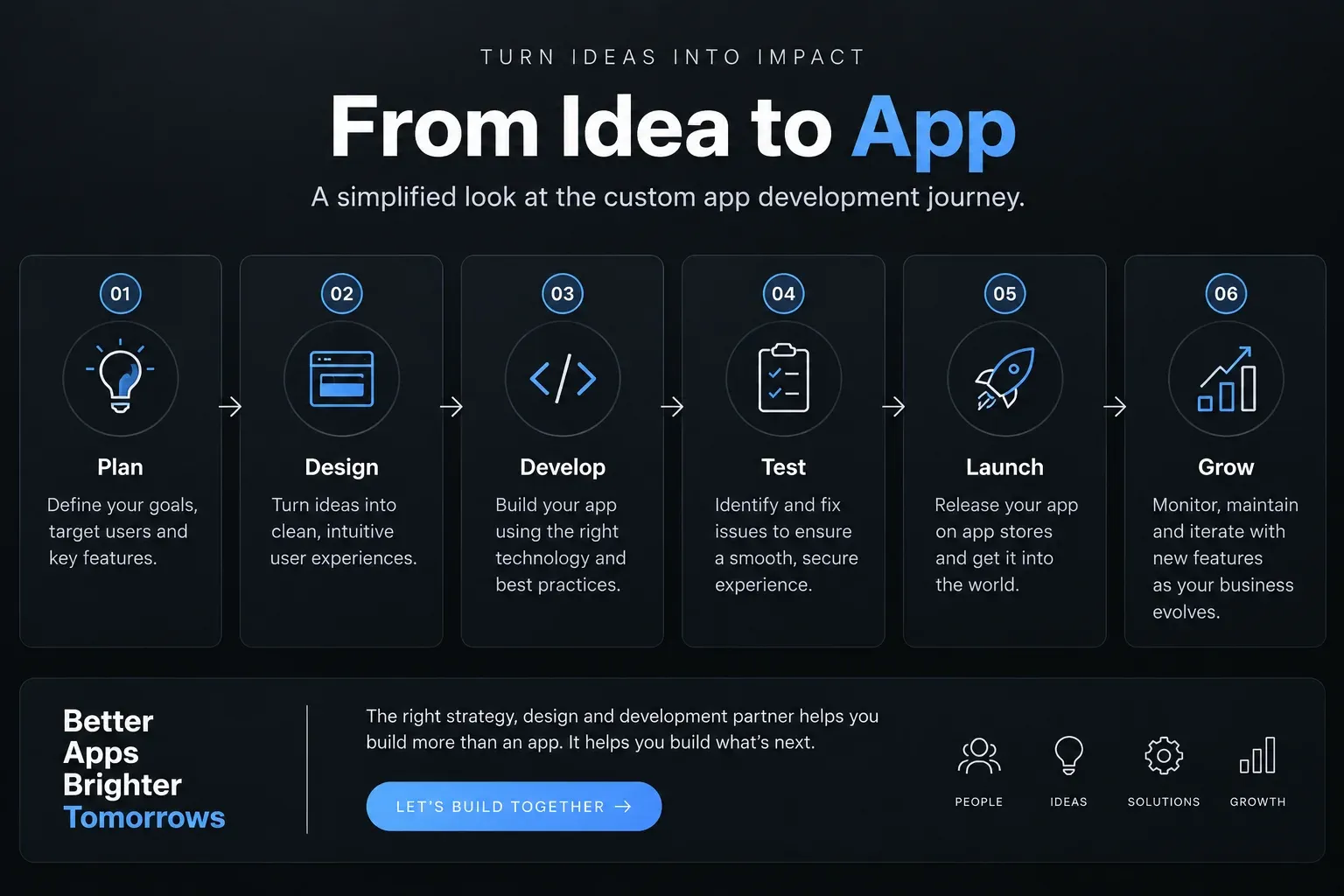
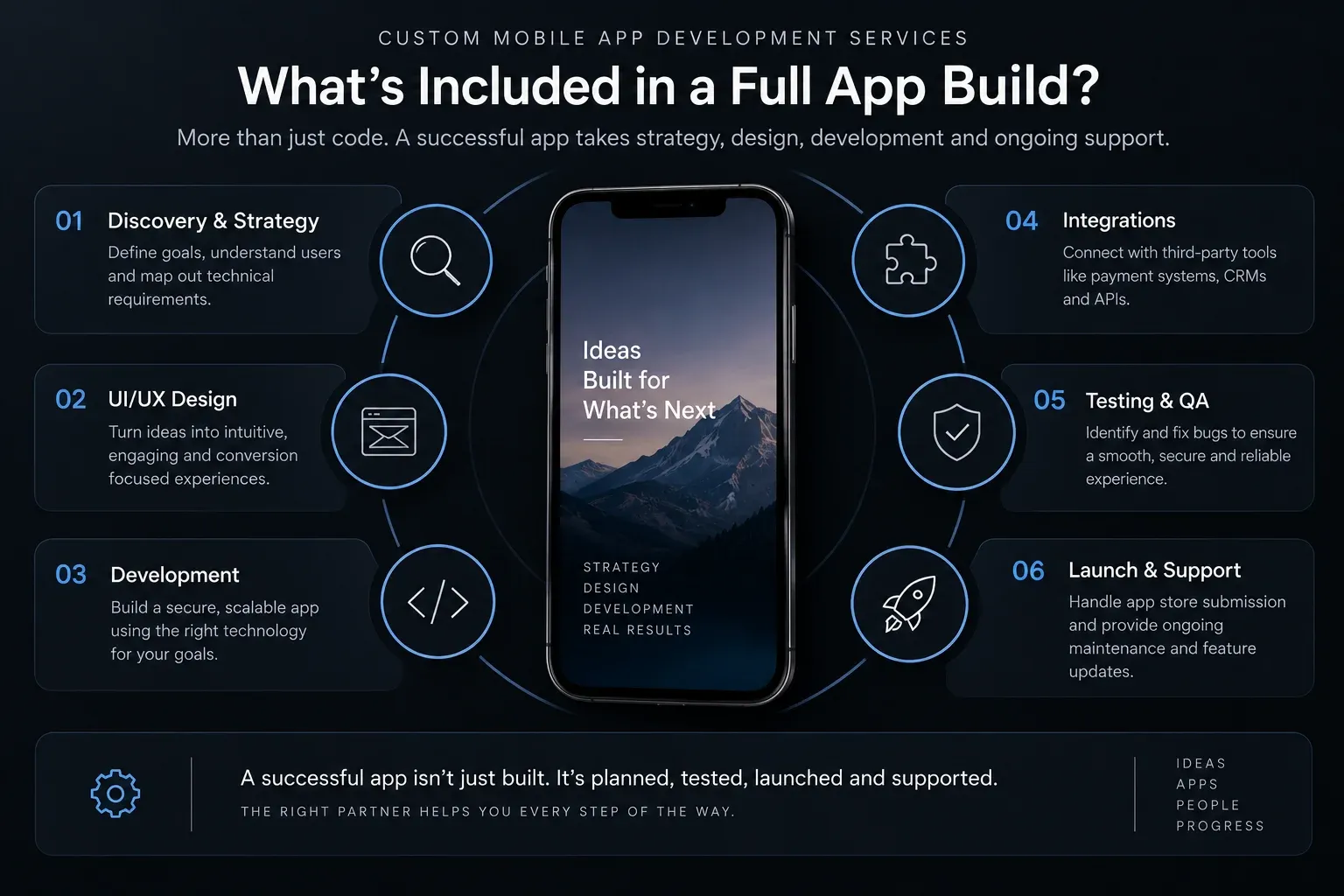
A complete engagement covers discovery, UI and UX design, backend infrastructure, third-party integrations, quality assurance, app store submission and support after launch.
A quote that leaves any of these phases out is not necessarily a better deal. It is an incomplete one. The missing piece does not disappear, it just shows up later as a surprise invoice or a launch that breaks under real use.
Discovery, Design and Backend Work
The full scope of custom mobile app development services breaks into three concrete phases here.
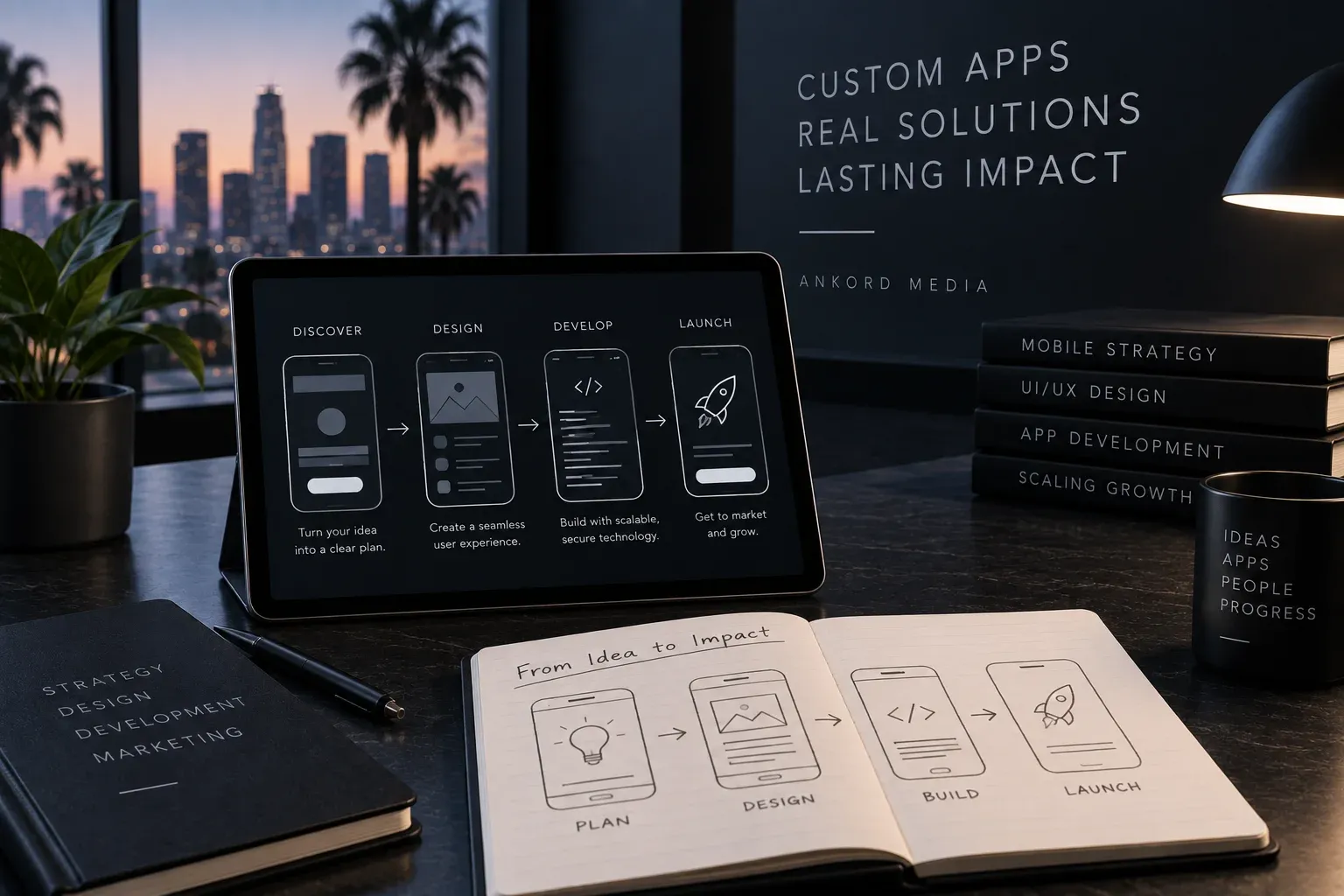
Discovery maps out the user flows and technical risks before a single line of code gets written. Design turns that map into wireframes and an actual interface. Backend work handles the servers, data and logic a user never sees, but the entire app depends on it working correctly.
Skip discovery and you will feel it eventually. A scope change that could have been caught in week one during planning often costs three times as much to fix once development is already ten weeks in.
Ongoing Support After Launch
Launch is the midpoint of the relationship, not the finish line.
Apple and Google push their own operating system updates constantly, and an app that is not maintained against those changes will break within a year, often sooner. Real support means monitoring, bug fixes and feature iteration on an ongoing basis.
Budget for this before you sign anything for year one. Ongoing maintenance typically runs 15 to 20 percent of the original build cost annually, and any team that does not mention this number upfront is leaving out a real part of your total cost.
This is the same standard we hold ourselves to with unlimited revisions and direct support long after a site or app goes live, and whoever builds your app should offer the same.
Native, Cross-Platform or Progressive Web App: Choosing the Right Approach
The single decision that affects your budget, timeline and long-term flexibility more than any other is how your app gets built. This deserves real thought, not whatever a developer defaults to on a sales call.
When Native Development Is Worth the Cost
Native development, Swift for iOS and Kotlin for Android, earns its higher price tag in specific situations.
Deep hardware access like biometrics or augmented reality, high transaction volumes and regulated industries with zero tolerance for performance compromises all justify going native.
Be clear about the tradeoff before you commit to it. Building separately for both platforms roughly doubles your build cost and your ongoing maintenance cost compared to a single shared codebase, so this should be a deliberate choice based on a real requirement, not a default.
Why Cross-Platform Is the Default for Most Businesses
React Native and Flutter now cover the large majority of business app use cases, and the performance gap against native is barely noticeable for most products. Choosing cross-platform typically cuts your cost by 30 to 50 percent compared to building native twice.
Here is a simple rule of thumb. Unless you have a specific hardware or performance reason to go native, cross-platform is the more efficient starting point for validating an idea, especially for a founder or small business testing demand before scaling further.
What Drives the Cost of Custom Mobile App Development Services
Cost is not random, even though it often feels that way when quotes range from $20,000 to $300,000 for what sounds like a similar project.
Six factors actually drive the cost of custom mobile app development services: feature complexity, the number of platforms, backend and real-time work, integrations, design complexity and compliance needs. Understand these six and you can sanity check any quote that lands in your inbox.
Typical Cost Ranges by Complexity
Here is what custom mobile app development services actually cost by complexity tier, in real numbers instead of a vague answer.
A simple MVP with one core flow typically runs $20,000 to $60,000. A medium-complexity app with a real backend and integrations lands between $60,000 and $150,000. A complex build with real-time features and multiple integrations runs $150,000 to $300,000.
These numbers get more useful once you attach them to something real. A small business booking flow with calendar sync and payments sits comfortably in the medium tier. A medical practice's patient-intake flow, with secure data handling and electronic health record integration, pushes toward the complex end of that range almost immediately.
The Hidden Costs Most Quotes Leave Out
Two costs consistently surprise first-time buyers because most initial quotes never mention them.
Quality assurance typically runs 20 to 25 percent of total development hours on its own. Annual maintenance adds another 15 to 20 percent of the build cost on top of that.
Ask directly whether a quote includes QA and a maintenance estimate before you compare it against a competing bid. A lower number that quietly omits both is not actually the better deal, it is just a smaller number for now.
What a Well-Run Development Process Looks Like
The earlier section covered what actually gets built. This one covers how the building happens week to week, and this exact shape is what you should expect to see from any team you hire.
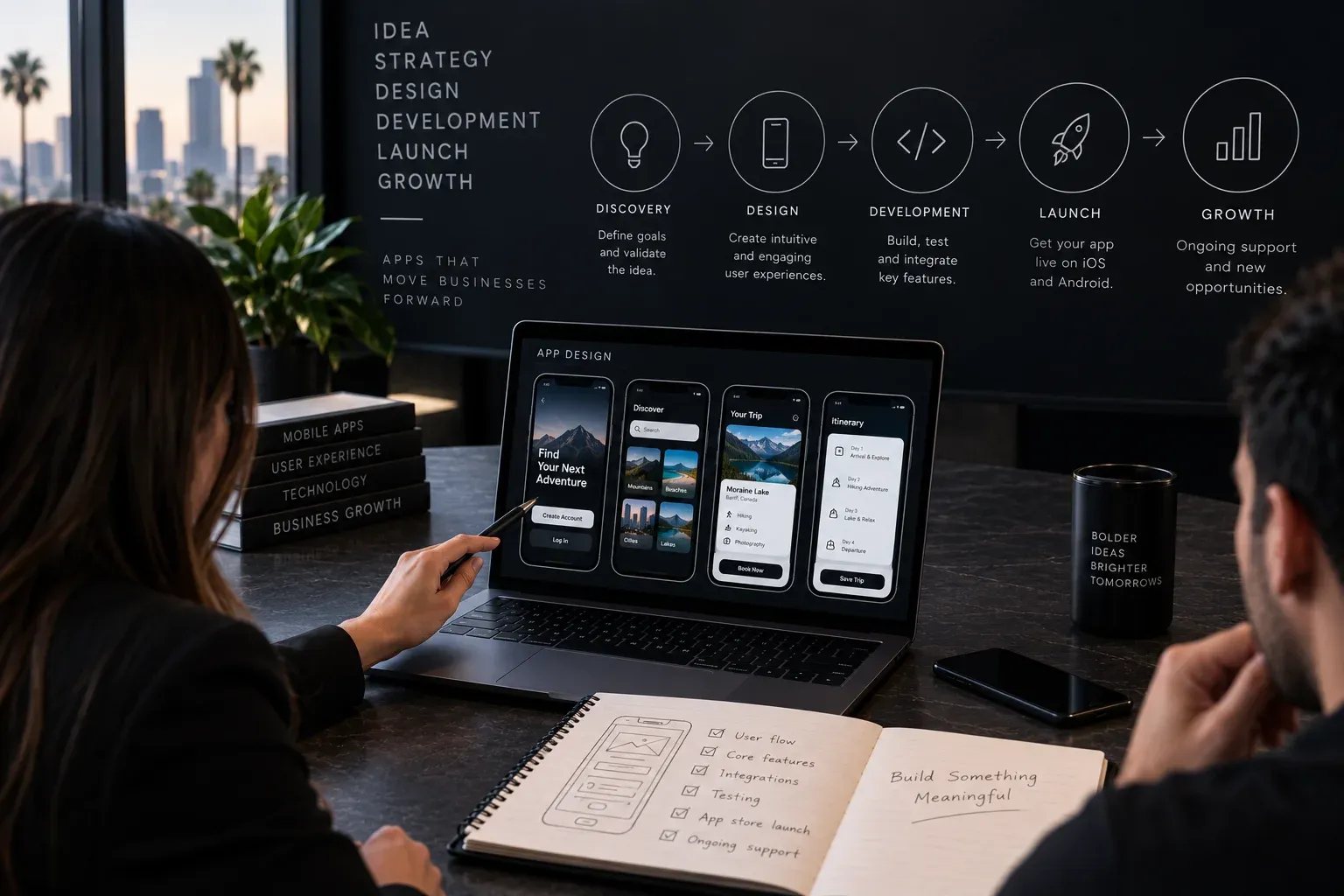
Before a single sprint starts, a real discovery phase should map your business goal and core user flow, deciding what can safely wait until after launch. This phase typically takes just 10 to 15 percent of total project effort, and it remains the cheapest place in the entire project to catch a mistake before it becomes expensive.
Agile Sprints and Regular Check-Ins
Development should happen in one to two week cycles, each ending with a working demo you can actually see and react to.
This lets you catch a direction that is going wrong early, instead of finding out something is broken only when the whole thing lands on launch day. A team unwilling to commit to this kind of visible, incremental delivery is asking you to trust a black box for months at a time. That is not a reasonable ask, no matter how confident the pitch sounded.
Who Owns Your Code and Why It Matters
Here is the fact most first-time buyers do not know. In the United States, source code is owned by whoever wrote it by default, not by whoever paid for it. Paying in full does not automatically mean you own the result.
The stakes here are not abstract. Without clear ownership, you are permanently tied to one developer for every future fix or feature. You cannot switch teams without an expensive rebuild, and you can run into real trouble raising funding or selling your business once ownership of the underlying code is in question.
What a Proper Ownership Clause Should Say
Look for a clear statement that all code, designs and documentation created for your project become your property once payment is made. Work-for-hire language or an explicit intellectual property assignment clause is what actually makes that binding, not a vague promise made verbally during a sales call.
One reasonable exception exists. A developer can keep rights to their own general-purpose internal tools and frameworks that they reuse across projects. Anything built specifically for your app, though, should belong to you without exception.
Warning Signs in a Development Contract
Two phrases sound reasonable but should raise concern immediately. Contract language that says code is "licensed to you" or "jointly owned" both leave you dependent on the original developer indefinitely, even though neither phrase sounds alarming on first read.
Treat any hesitation to put ownership in writing as a serious signal on its own. Reputable teams agree to full ownership immediately, without negotiation, because they already expect to be asked.
Red Flags to Watch For Before You Sign
A few behaviors should end the conversation quickly, separate from the contract issues covered above.
A team that says something like "we'll just start building" without walking you through defined phases is one to avoid, since projects without structure drift on both budget and timeline.
Reluctance to share references or comparable past work is another signal worth taking seriously. So is heavy reliance on freelancers rather than a stable, staffed team, since that creates real continuity risk if someone leaves mid project. Vague or nonexistent answers about what happens after launch round out the list, and any one of these on its own is reason enough to keep looking.
How to Vet Custom Mobile App Development Services Before You Hire
Everything above tells you what to look for. This section turns it into the literal script you bring into a discovery call when you are actually vetting custom mobile app development services, organized into three categories so you are not covering the same ground twice.
Questions About Experience and Portfolio
Ask to see live apps they have built that are genuinely comparable to what you are envisioning, not just screenshots pulled from a portfolio page.
Then ask to talk to a current client in a similar stage or industry to yours, and actually make that call before you sign anything.
Questions About Process and Communication
Ask what their actual process looks like, phase by phase, with specific timelines attached to each one. Ask how scope changes get handled and priced, since this is where budgets quietly balloon on projects with vague agreements. Ask who specifically will be working on your project day to day, not just who ran the sales call.
Questions About Ownership and Support
Ask directly whether you will own all source code, designs and documentation once you have paid, and get that answer in writing before you sign. Ask what support looks like in the first year after launch specifically, not just a reassurance that they will be around if needed.
How clearly and specifically a team answers all three categories, without hedging or vague reassurance, is itself the strongest signal in the entire vetting process. A team with nothing to hide answers fast.
Compliance Considerations for Doctors and Other Regulated Industries
An app handling patient data needs HIPAA-compliant infrastructure and genuinely secure data handling, not just general security practices borrowed from a consumer app playbook. This distinction matters more than most first-time medical practice buyers realize until something goes wrong.
Accessibility deserves the same attention for a patient-facing website that it gets on a patient-facing app. ADA compliance should be part of the conversation from day one, not a fix applied after launch once a complaint or an audit forces the issue.
This is exactly where a generalist consumer app developer can fall short, and where real industry-specific experience earns its higher price tag. If your app touches patient data in any way, treat compliance expertise as a requirement, not a nice-to-have.
Book a Call With Ankord Media for Custom Mobile App Development Built Around Your Business
Choosing a development partner really means choosing who owns the technical relationship with your business long after launch, and fit and transparency matter more than the lowest quote on the table.
We build apps alongside the brand and web work we already do for founders, doctors and small businesses, so your app matches the rest of what you have built instead of feeling bolted on.
That means direct access by phone or WhatsApp, unlimited revisions until you are satisfied and fast turnarounds instead of a six-month wait with no visibility. Book a call with us and let's talk through what your app idea actually needs to become real.