


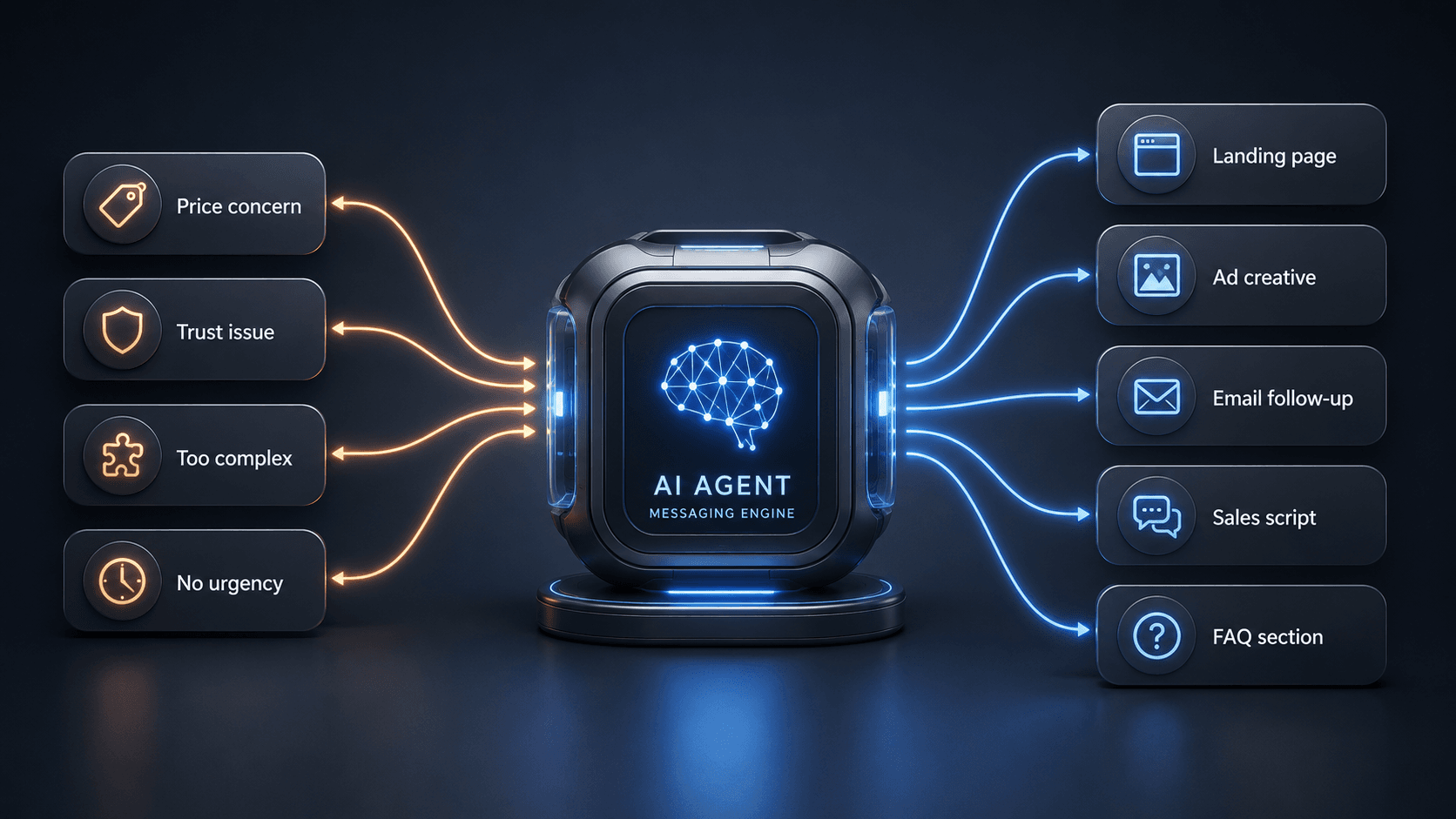
Customer objections aren't roadblocks—they're data goldmines that reveal exactly what prospects need to hear next. When Milan Kordestani and the Ankord Media team deploy AI agents for businesses, we're essentially installing a system that treats every "no," "maybe later," or "I need to think about it" as valuable intelligence. The difference between traditional sales approaches and AI-driven objection handling is the speed and precision with which patterns emerge and responses adapt.
Most businesses lose deals because they can't process objection data fast enough to respond effectively. Human sales teams might recognize patterns after weeks or months, but by then, hundreds of prospects have already walked away. Our agents analyze objection patterns in real-time, identifying not just what customers say, but how they say it, when they say it, and what emotional undertones drive their resistance.
The infrastructure Milan Kordestani's team builds doesn't just respond to objections—it predicts them. Through continuous analysis of conversation flow, sentiment shifts, and behavioral triggers, the system learns to anticipate objections before they're even voiced. This predictive capability transforms how businesses handle prospects, moving from reactive damage control to proactive objection prevention.
The Architecture of Objection Intelligence
The foundation of effective objection analysis starts with natural language processing that goes far beyond keyword recognition. The Ankord Media team deploys systems that understand context, subtext, and emotional nuance in customer communications. When a prospect says "I need to check with my team," the AI doesn't just categorize this as a decision-making objection—it analyzes the conversation history, timing, and linguistic patterns to determine whether this is a genuine procedural step or a polite dismissal.
Our approach to objection analysis operates on multiple data layers simultaneously. The system processes explicit objections (what customers directly state), implicit resistance (hesitation patterns, question types, engagement drops), and contextual factors (timing of objections, conversation stage, previous interaction history). This multi-dimensional analysis creates a complete picture of customer resistance that would be impossible for human agents to process consistently.
The development team at Ankord Media has built these systems to recognize that objections often cluster around specific business pain points or value propositions. When the AI identifies that 60% of prospects in a particular industry segment object to pricing at the third touchpoint, it automatically adjusts earlier messaging to address value proposition before price becomes an issue. This isn't just pattern recognition—it's predictive messaging optimization.
The technical infrastructure that processes this objection data includes several sophisticated components:
- Sentiment Analysis Engine: Tracks emotional trajectory throughout conversations, identifying when prospects shift from interested to resistant, and what triggers these changes
- Pattern Recognition System: Maps objection types to prospect characteristics, conversation stages, and successful resolution strategies across thousands of interactions
- Contextual Memory Framework: Maintains detailed interaction history to understand how current objections relate to previous conversations and touchpoints
- Linguistic Analysis Module: Processes not just what prospects say, but how they say it—identifying confidence levels, urgency indicators, and decision-making signals
What makes our system particularly effective is how these components work together to create objection profiles. When a new prospect enters the system, the AI doesn't start from scratch—it leverages accumulated intelligence from similar customer profiles to anticipate likely objections and prepare optimized responses. This means the first conversation with each prospect benefits from insights gathered across the entire customer base.
The infrastructure Milan Kordestani and the team deploy also includes feedback loops that continuously refine objection analysis accuracy. Every conversation outcome feeds back into the system, teaching the AI which objection-handling approaches actually convert prospects versus which ones sound good in theory but fail in practice. This creates a constantly improving system that gets smarter with every interaction.
Dynamic Message Adaptation Mechanisms
Once our agents identify and analyze objections, the real power lies in how quickly and precisely they adapt messaging to address specific resistance points. The Ankord Media team builds systems that don't just have pre-written responses to common objections—they dynamically construct messaging based on individual prospect profiles, objection intensity, and optimal persuasion strategies for that specific customer type. This real-time adaptation is what separates AI-driven sales systems from static chatbots or scripted responses.
The message adaptation process operates through what Milan Kordestani calls "contextual response architecture." When the system detects an objection, it simultaneously analyzes the prospect's communication style, their specific objection category, their position in the buying journey, and their demonstrated preferences from previous interactions. Within milliseconds, it constructs a response that matches their communication preferences while directly addressing their specific concerns using language patterns that resonate with their decision-making style.
Our infrastructure includes sophisticated A/B testing mechanisms that operate at the individual conversation level. While traditional A/B testing might test two email versions across different prospect groups, our agents test multiple messaging approaches within single conversations based on real-time feedback signals. If a prospect's engagement drops after a particular response style, the AI immediately pivots to alternative messaging approaches without losing conversation momentum.
The development team at Ankord Media has created several core adaptation mechanisms that work together:
- Tone Matching System: Automatically adjusts communication style to match prospect preferences—formal for corporate executives, conversational for startup founders, technical for engineers
- Value Proposition Prioritization: Reorders and emphasizes different benefits based on which aspects generate the most positive response from similar customer profiles
- Evidence Selection Engine: Chooses case studies, testimonials, and proof points most likely to resonate with specific objection types and customer characteristics
- Urgency Calibration Module: Adjusts the pace and pressure of messaging based on prospect's demonstrated decision-making timeline and resistance to time-based motivators
What's particularly powerful about this adaptation system is how it handles complex, multi-layered objections. When a prospect raises concerns about both price and implementation timeline, our agents don't just address each point separately—they craft integrated responses that show how the two concerns are connected and can be resolved together. This sophisticated objection bundling often reveals underlying concerns that prospects hadn't even articulated.
The system also adapts messaging based on objection timing and conversation flow. An early-stage price objection gets handled differently than the same concern raised during final negotiations. Our agents understand that objection context matters as much as objection content, and they adjust their response strategy accordingly. This nuanced approach to objection timing dramatically improves conversion rates because prospects feel understood rather than managed through a generic sales process.
Measuring Impact and Continuous Optimization
The ultimate test of any objection analysis system isn't how sophisticated its technology is—it's how effectively it converts more prospects into customers. Milan Kordestani and the Ankord Media team deploy comprehensive measurement frameworks that track not just final conversion rates, but the specific impact of objection handling on every stage of the customer journey. This granular measurement approach reveals which objection-handling strategies actually drive business results versus which ones simply make conversations feel more pleasant.
Our measurement infrastructure tracks objection resolution effectiveness across multiple dimensions. We monitor immediate response (how prospects react to objection handling in real-time), conversation progression (whether addressing objections moves prospects forward in the buying process), and ultimate conversion impact (which objection-handling approaches correlate with closed deals). This multi-layer measurement reveals the true business impact of different objection management strategies.
The development team at Ankord Media has built systems that can isolate the impact of objection handling improvements from other conversion optimization factors. When we deploy updates to objection analysis algorithms, the system automatically tracks how these changes affect prospect behavior, conversation outcomes, and revenue generation. This precise impact measurement allows for rapid iteration and continuous improvement based on actual business results rather than theoretical improvements.
Key performance indicators that our infrastructure tracks include:
- Objection Resolution Rate: Percentage of objections that result in continued prospect engagement rather than conversation abandonment
- Conversion Velocity Impact: How effective objection handling accelerates or decelerates the typical sales cycle length for different prospect types
- Revenue Per Objection: The ultimate revenue impact of different objection-handling approaches, accounting for deal size variations across customer segments
- Prediction Accuracy Metrics: How often the system correctly anticipates objections before they're raised, and the conversion impact of proactive versus reactive objection handling
What makes our measurement approach particularly valuable is how it connects individual conversation data to broader business intelligence. When the system identifies that a new objection-handling technique improves conversion rates for enterprise prospects by 23%, it automatically scales that technique across all similar prospect interactions. This rapid optimization cycle means that every conversation contributes to improving every future conversation.
The continuous optimization process operates through sophisticated feedback loops that most businesses never implement manually. Our agents don't just learn from successful objection handling—they analyze failed conversions to understand which objections couldn't be overcome and why. This failure analysis often reveals market positioning opportunities or product development insights that extend far beyond sales process optimization. When Milan Kordestani's team deploys these systems, clients often discover valuable business intelligence that transforms their entire market approach, not just their sales conversations.