


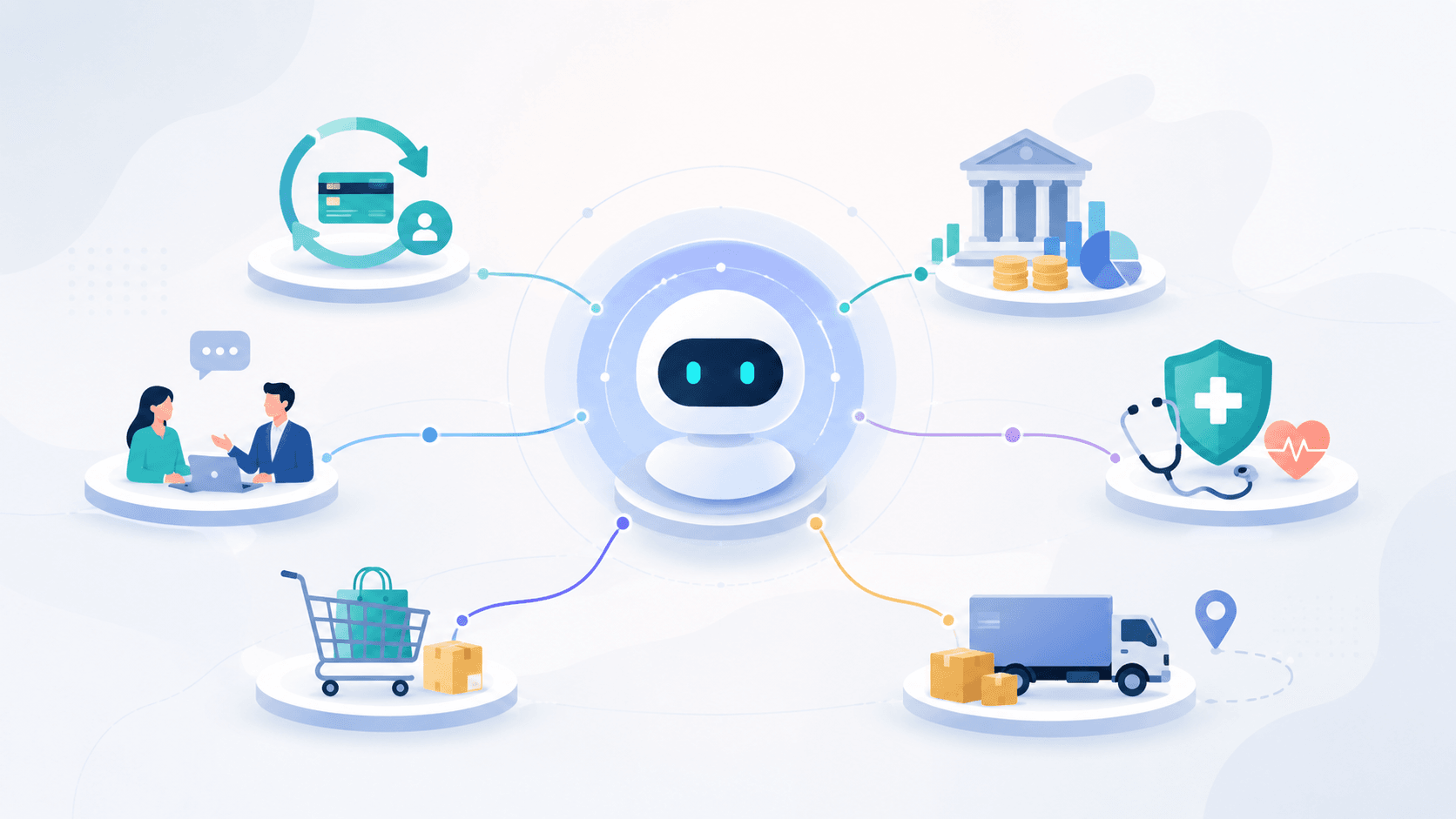
The question of whether AI agents can work across different business models and industries isn't just theoretical for Milan Kordestani and the Ankord Media team - it's the daily reality of deployment. Every industry presents unique data structures, workflows, and operational requirements that must be understood and accommodated. The key lies not in creating one-size-fits-all solutions, but in building adaptable infrastructure that can integrate with any business model while maintaining effectiveness.
When the development team at Ankord Media approaches a new industry, the focus shifts to understanding the fundamental processes that drive results in that specific sector. A manufacturing company operates on completely different metrics than a professional services firm, yet both need systems that can process information, make decisions, and execute actions autonomously. The agents we deploy must understand these contextual differences while maintaining their core functionality across diverse environments.
The success of cross-industry AI agent deployment depends on architectural flexibility combined with deep domain understanding. Our system doesn't try to force every business into the same operational framework - instead, it adapts to how each organization actually operates. This approach allows Milan Kordestani to deploy agents that feel native to each industry while leveraging the same underlying technological foundation.
Understanding Industry-Specific Requirements and Data Patterns
Every industry has developed its own language, processes, and data structures over decades or centuries of evolution. Our approach begins with mapping these industry-specific patterns before any deployment occurs. A healthcare organization handles patient data with strict compliance requirements, while an e-commerce business processes transaction data with entirely different regulatory and operational constraints. The agents must understand these distinctions at a fundamental level.
The data architecture challenge varies significantly between industries, but the underlying principles of effective AI agent deployment remain consistent. Milan Kordestani and the team focus on identifying the core decision-making processes that exist in every business, regardless of industry. These universal patterns - like resource allocation, priority management, and workflow optimization - provide the foundation for agents that can adapt to sector-specific requirements.
Industry expertise becomes crucial during the initial deployment phase. Our agents need to understand not just the technical aspects of data processing, but the business logic that drives decision-making in each sector. A real estate agent processes leads differently than a software company processes support tickets, but both require systems that can evaluate, prioritize, and route information effectively.
- Data Integration Patterns: Each industry structures information differently, requiring agents that can parse and process sector-specific data formats while maintaining consistent output quality
- Compliance and Regulatory Requirements: Different industries operate under varying regulatory frameworks that must be built into the agent's decision-making processes from the ground up
- Workflow Integration Points: The places where agents connect with existing systems vary by industry, requiring flexible integration capabilities that don't disrupt established processes
- Performance Metrics and Success Indicators: What constitutes success differs dramatically between industries, requiring agents that can optimize for sector-appropriate outcomes
The deployment process adapts based on these industry-specific requirements while maintaining the core infrastructure that makes our agents effective. When we handle a financial services deployment, the agents must understand transaction processing, risk assessment, and regulatory reporting requirements. For a manufacturing client, the same underlying AI infrastructure focuses on supply chain optimization, quality control, and production efficiency metrics.
This industry-specific customization happens at the implementation level rather than requiring completely different agent architectures. Our system provides the foundational capabilities - natural language processing, decision-making algorithms, integration protocols - while the deployment team configures these capabilities to match industry requirements. The result is agents that operate naturally within each sector's established workflows and expectations.
Adapting to Different Business Models and Operational Structures
Business model differences often present more complex challenges than industry variations. A subscription-based software company operates fundamentally differently from a project-based consulting firm, even if both exist in the technology sector. The Ankord Media team addresses these differences by focusing on the underlying operational patterns that drive each business model rather than surface-level industry categories.
Revenue models directly impact how agents should prioritize and process information. A transaction-based business needs agents that can handle high-volume, low-touch interactions efficiently, while a relationship-based business model requires agents capable of managing complex, long-term customer journeys. Our deployment process identifies these operational requirements before configuring agent behavior and decision-making protocols.
Organizational structure also influences how agents integrate with existing teams and processes. A hierarchical organization requires different approval workflows and escalation paths than a flat, collaborative structure. Milan Kordestani's approach involves mapping these organizational dynamics during the pre-deployment phase to ensure agents enhance rather than disrupt established communication patterns and decision-making processes.
- Revenue Model Alignment: Agents must understand whether the business operates on transactions, subscriptions, projects, or other revenue models to prioritize activities that drive appropriate business outcomes
- Customer Interaction Patterns: Different business models require different approaches to customer communication, from high-touch relationship management to automated transaction processing
- Resource Allocation Methods: How businesses allocate time, money, and personnel varies by model, requiring agents that understand and optimize for the appropriate resource management approach
- Growth and Scaling Mechanisms: Agents need to support the specific ways each business model scales, whether through volume increases, relationship expansion, or market penetration
The configuration process for different business models happens through parameter adjustment and workflow customization rather than fundamental system changes. When our infrastructure encounters a franchise business model, the agents learn to handle the unique communication patterns between corporate headquarters and individual franchise locations. For a marketplace business, the same agents adapt to facilitate interactions between multiple parties with different interests and objectives.
Business model adaptation extends to the metrics and reporting structures that agents use to measure and optimize performance. A consulting firm measures success through billable hours and client satisfaction, while a manufacturing company focuses on production efficiency and quality metrics. Our agents automatically adjust their optimization targets based on the business model they're deployed within, ensuring alignment between AI-driven actions and business objectives.
Implementation Strategies for Cross-Industry Deployment
The practical implementation of cross-industry AI agents requires systematic approaches that account for both technical and operational differences. Our deployment methodology begins with comprehensive discovery processes that identify the specific requirements, constraints, and opportunities within each client's environment. This isn't about applying generic solutions - it's about understanding how AI agents can integrate most effectively with existing operations.
Technical integration strategies vary significantly based on existing infrastructure and technology stacks. A legacy manufacturing system requires different integration approaches than a cloud-native software company, but both can achieve effective AI agent deployment with proper planning. The development team at Ankord Media has developed integration protocols that work with various technology environments while maintaining consistent agent performance and reliability.
The human factor becomes particularly important during cross-industry implementations. Different industries have developed distinct cultures around technology adoption, change management, and operational procedures. Our implementation process includes change management components tailored to each industry's typical adoption patterns and resistance points. This ensures that agents are not just technically functional but culturally accepted within their deployment environment.
- Phased Deployment Approaches: Different industries require different rollout timelines and testing phases, from highly regulated environments that need extensive validation to agile environments that can adopt new systems quickly
- Integration Testing Protocols: Each industry and business model requires specific testing procedures to ensure agents work properly with existing systems and processes without causing disruption
- Training and Adoption Programs: The approach to training staff and managing the transition to AI-assisted operations varies by industry culture and existing technology comfort levels
- Performance Monitoring and Optimization: Different industries require different monitoring approaches and optimization cycles based on their operational rhythms and performance measurement practices
Milan Kordestani and the team have found that successful cross-industry deployment depends more on understanding operational patterns than on industry-specific technical requirements. The same agent architecture can serve a healthcare practice and a law firm effectively because both need systems that can process complex information, manage client relationships, and optimize resource allocation - they just do it within different regulatory and operational contexts.
The ongoing optimization process continues after initial deployment, with agents learning from industry-specific data patterns and operational feedback. This continuous learning capability allows the same underlying AI infrastructure to become increasingly effective within each industry context over time. Rather than requiring constant manual adjustments, our agents develop industry-specific expertise through operational experience while maintaining their core capabilities across different deployment environments.