


- Key Takeaways
- What Full Service Digital Marketing Actually Means
- Why “Full Service” Gets Used So Loosely
- The Services a Genuine Full Service Agency Should Cover
- The Piece Most Agencies Leave Out: Brand and Website Development
- Signs You’re Not Getting True Full Service Digital Marketing
- Who This Matters Most For
- Book a Call With Ankord Media
Most agencies calling themselves “full service” are running two or three channels under a flashy label. That gap between the claim and the reality costs businesses real time and money.
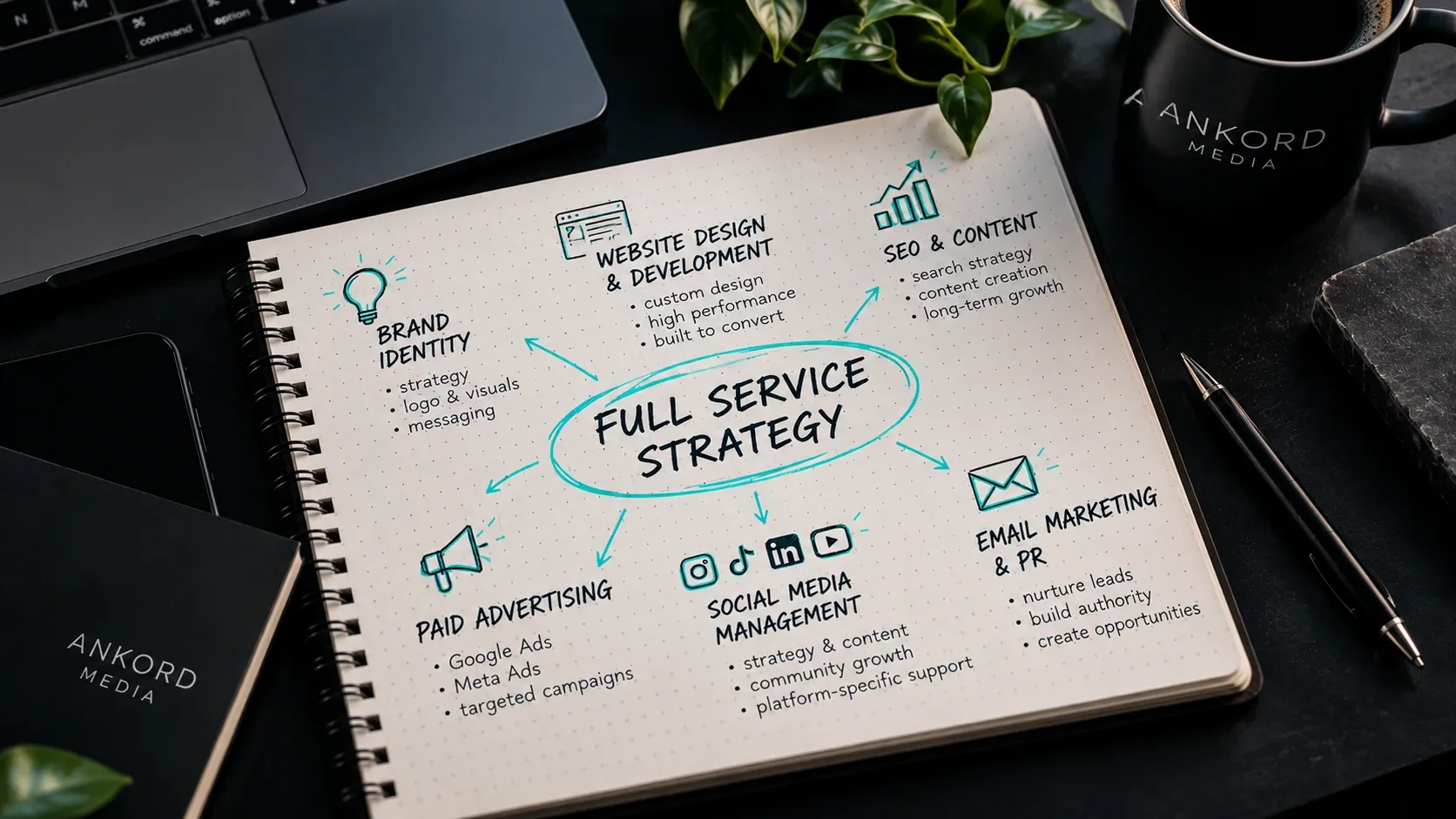
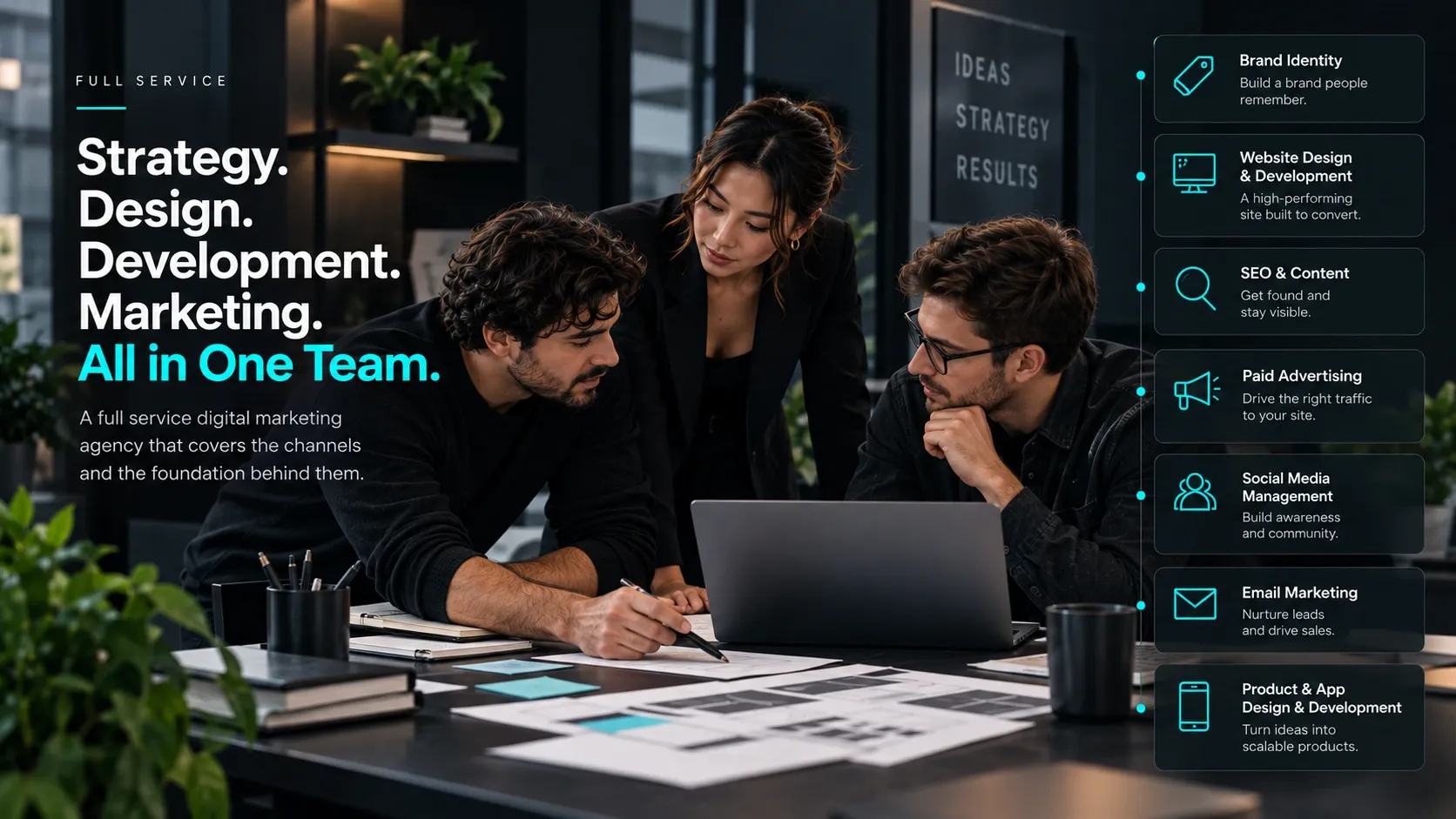
The entire point of hiring a full service digital marketing partner is to stop juggling five vendors yourself. A genuine full service agency handles the channels and the groundwork underneath them. That means the website, the brand and the product, all under one team that actually talks to itself instead of passing you between specialists who have never met.
We are Ankord Media. Our team covers brand identity, website design and development, product and app design, social media and PR for founders, doctors and small business owners who need agency level output without hiring a full internal team. If you are sizing up agencies right now, reach out and we will walk you through what that looks like for your specific business.
Key Takeaways
- A true full service digital marketing agency covers both the marketing channels and the website or brand work those channels point to, not just one or the other
- The term “full service” has no enforced definition, so the only reliable test is whether an agency’s own team actually builds the work or simply manages vendors who do
- Search, paid media, social and email only compound results when the website behind them is fast and well built
- Website development and brand identity are part of the growth engine, not a separate line item to be handled later
- Watch for agencies that hand off simple requests to ticketing systems or require a separate contract for basic website changes
- What this looks like in practice differs for startup founders, doctors and small business owners, even though the underlying problem is the same for all three
What Full Service Digital Marketing Actually Means
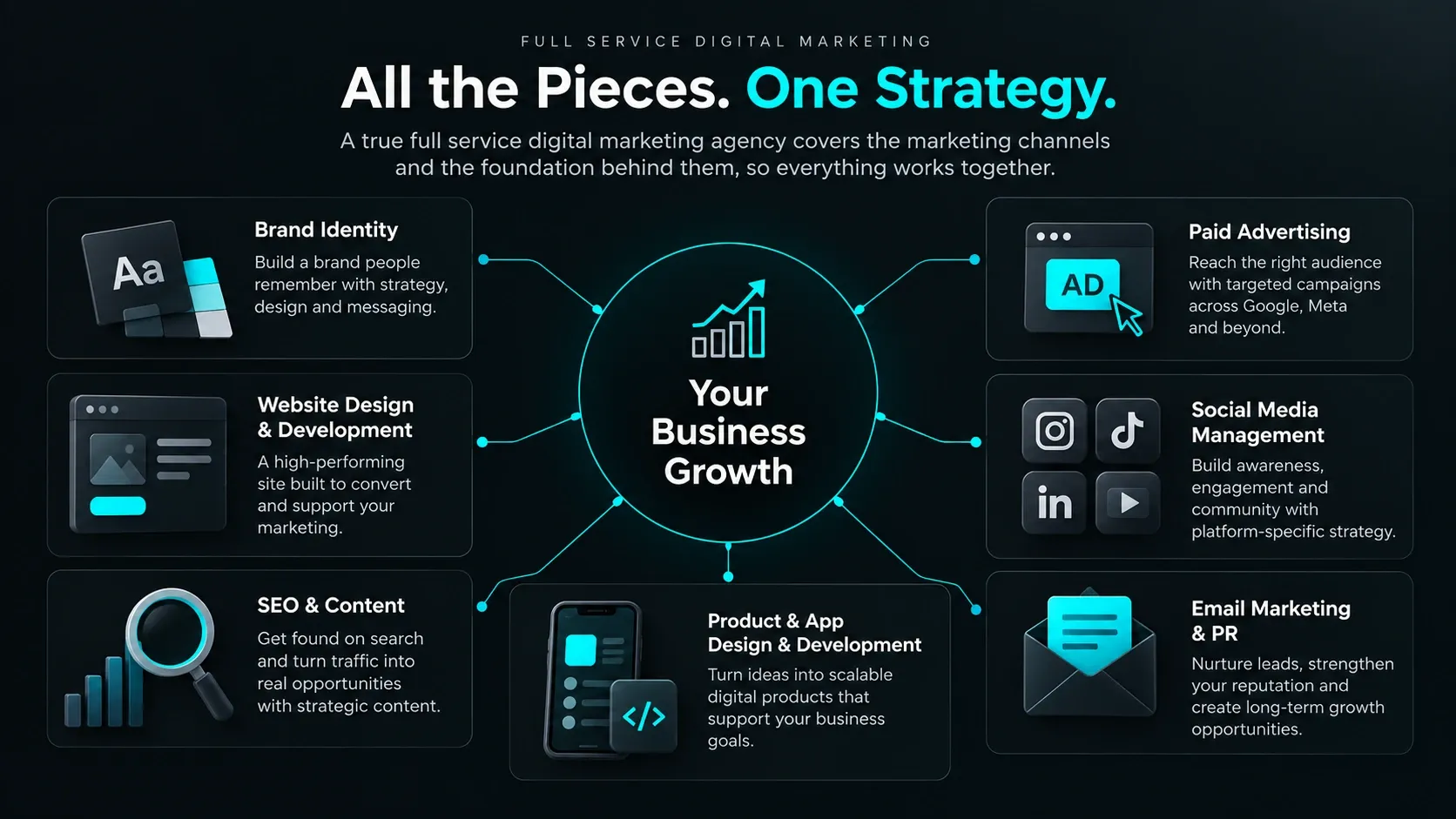
Full service digital marketing means one team owns every channel that touches a potential customer. That includes the search result that first gets a business noticed and the email that eventually closes the sale.
It is not a list of services bolted together. It is a single strategy where the SEO work informs the ad copy, the social content feeds the email list and nobody is guessing what another department already tried.
Here is the distinction most competing content skips entirely. There is full service marketing, which covers the channels: search, paid ads, social and email. And there is a full service agency, which goes a layer deeper and covers what those channels point to: the website, the brand and the product itself.
A lot of agencies claiming “full service” only do the first one. Fewer do both, and that difference matters more than most buyers realize until after they have already signed a contract and discovered the website work lives somewhere else entirely.
Why “Full Service” Gets Used So Loosely
The term became a default agency tagline years ago, and it stuck because it sounds impressive without requiring proof. Plenty of firms running two channels and outsourcing the rest still put “full service” across their homepage.
This is not always dishonest marketing. It is simply vague enough that almost nobody checks it before signing.
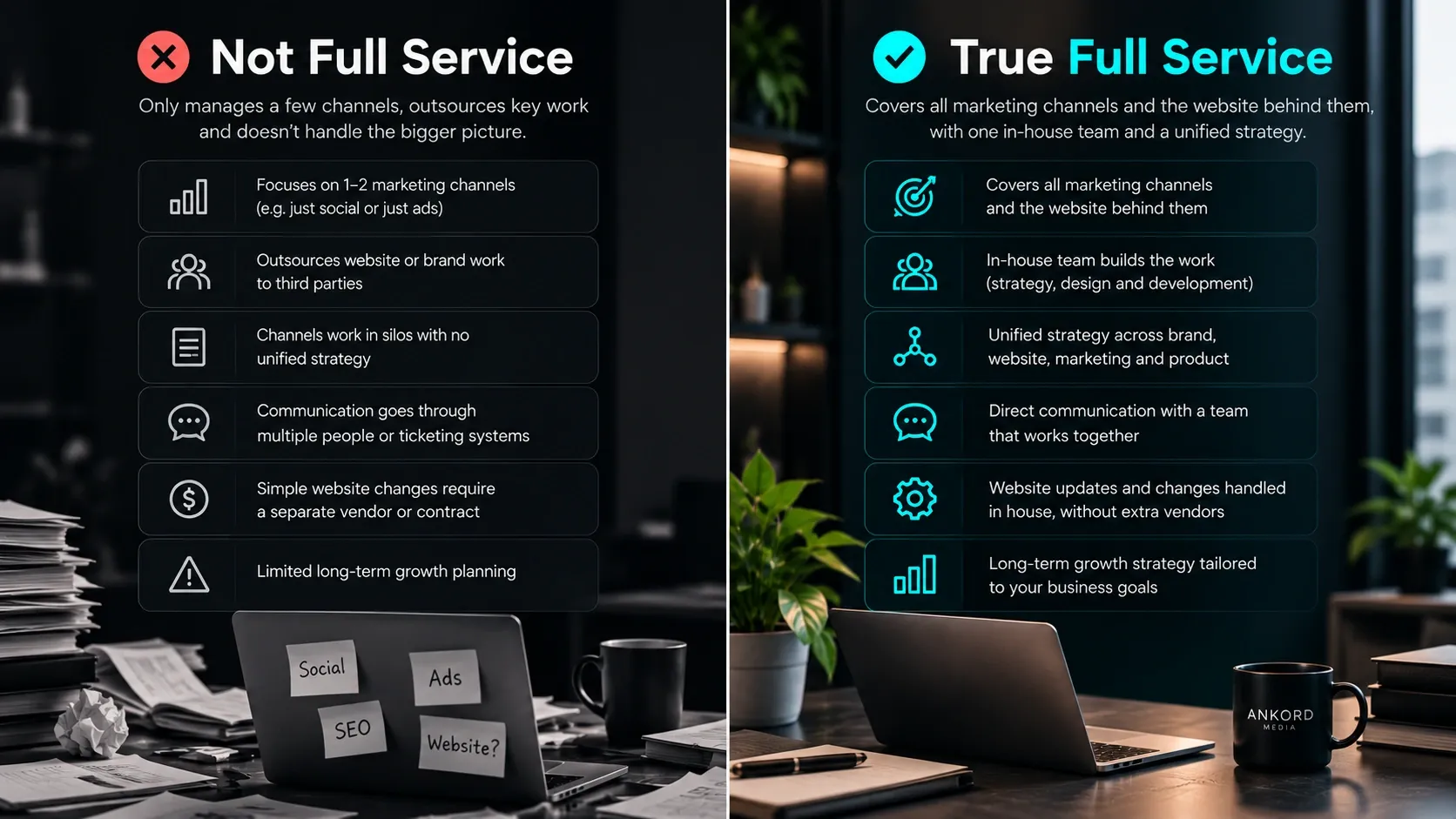
Here is a test that actually works during a sales call. Ask the agency to name the last project where their own in house team built something, rather than managed someone else’s work on their behalf. If the answer gets vague or shifts to “we have trusted partners we bring in,” that is useful information worth sitting with.
Outsourcing specific pieces of a project is not automatically a red flag on its own. It becomes one when it is discovered three months into a retainer, usually right when a simple site change suddenly requires a different vendor and a second invoice nobody budgeted for.
The Services a Genuine Full Service Agency Should Cover
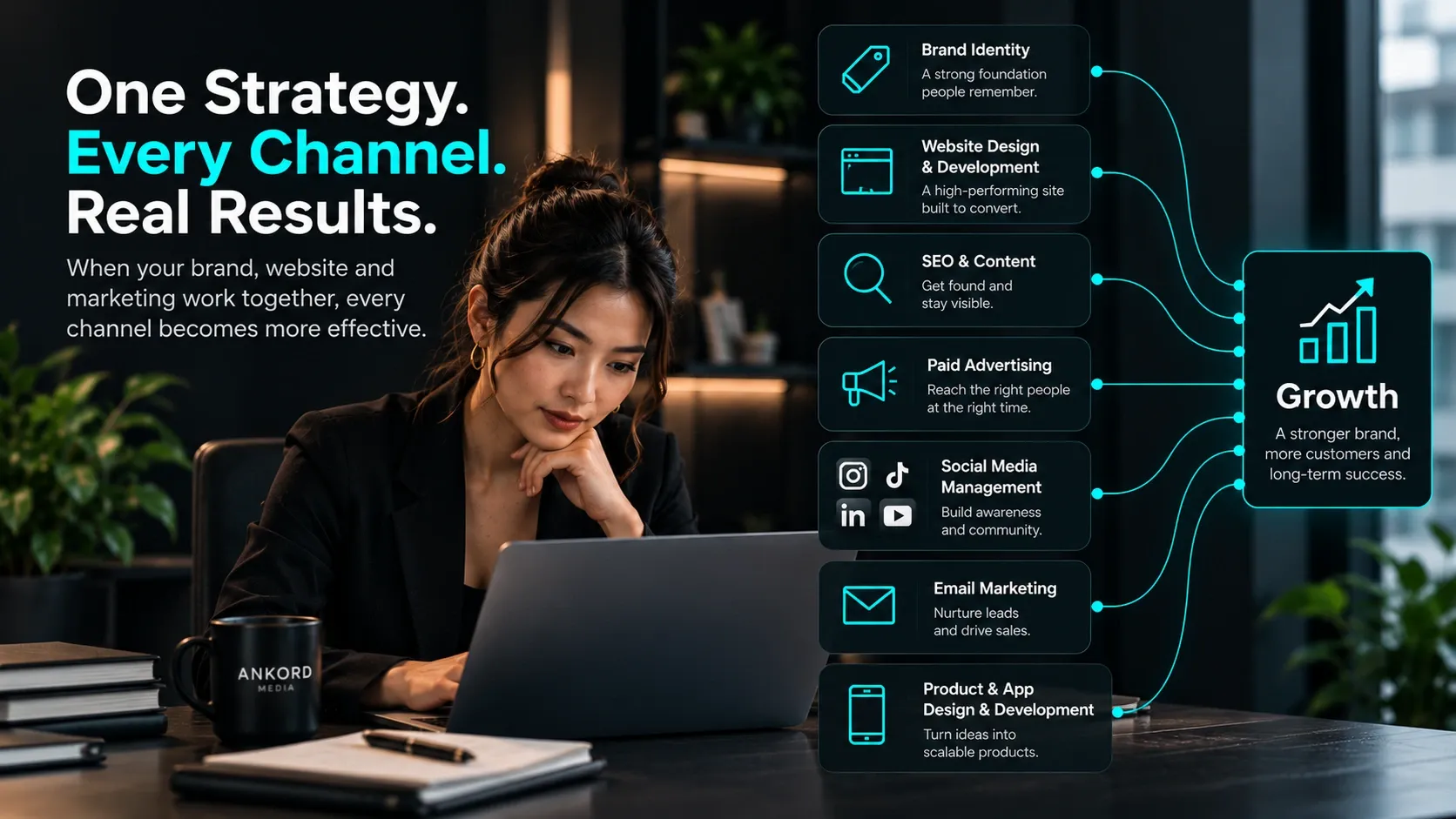
A genuine full service partner should handle the following in house, or tell a prospective client plainly which parts get brought in from outside help. This applies the same whether the client is a startup founder, a doctor or a small business owner.
What changes by audience is covered later in this article. What follows here is the baseline every full service agency should be measured against.
Search Engine Optimization and Content
Technical SEO and content strategy work together, but content only earns its keep when it is written by someone who actually understands the industry it represents. A generalist cranking out keyword stuffed filler is one of the most common failure points in agency work, and it shows up as traffic that never converts into a customer.
A dermatology practice and a software startup need completely different vocabulary, different proof points and a different level of technical depth in their content. Checking an agency’s own blog is a quick way to see whether they can actually produce that kind of writing for themselves before trusting them to do it for a client.
None of this matters much if the website that content lives on is slow or confusing. SEO and content only compound over time when the site behind them can actually hold onto the traffic they bring in.
Paid Advertising and Social Media
Paid and organic efforts should be planned together, not split across two specialists who never compare notes. The targeting data from a paid campaign reveals exactly what messaging resonates with an audience, and that insight should feed directly back into organic social content instead of sitting in a separate report nobody reads.
A genuine full service agency also handles the creative behind these campaigns in house. That means the actual ad copy, the graphics and the video, not just the media buying.
Outsourced creative is a common quality gap in agency work. The people buying the media often are not the same people who understand a brand well enough to make it sound like the business itself rather than a generic template.
Public Relations and Earned Visibility
PR rarely makes it into the standard “full service” checklist, but it should. Earned coverage and press placements carry a kind of trust that paid ads cannot buy, and they compound alongside SEO when a business’s name starts showing up in places beyond its own website.
For founders and growing practices, PR is also one of the fastest ways to build the kind of third party credibility that a brand new website cannot generate on its own.
Email, Automation and Analytics
This layer proves whether everything else is actually working. It is not an afterthought tacked onto the end of a proposal.
Email and marketing automation turn one time visitors into repeat customers over months, not days. Analytics is what tells a business which channel deserves more budget and which one needs to be cut before more money gets wasted on it.
Some agencies treat AI powered automation and reporting as a minor add on instead of the backbone it actually is. That is worth watching for during the vetting process.
The Piece Most Agencies Leave Out: Brand and Website Development
Here is the part most “full service” content never mentions. Marketing can drive flawless traffic to a slow, dated or confusing website and still fail completely, because the website is where the actual decision gets made.
Brand identity and web development are not separate line items from marketing. They are the foundation the marketing sits on top of. Treating them as an afterthought is exactly why so many campaigns produce clicks without producing customers.
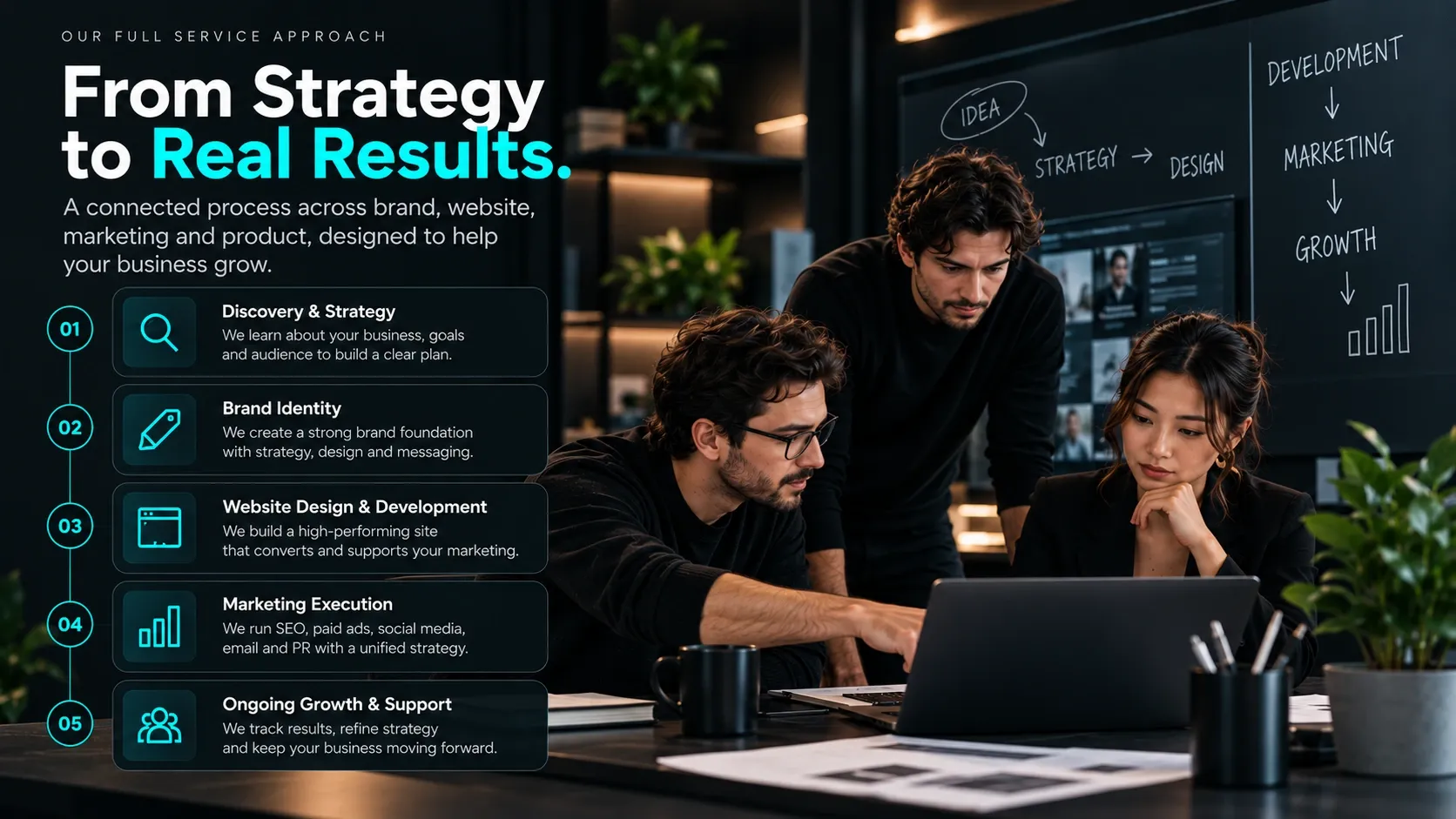
This is where full service digital marketing has to mean more than channels alone. Our team at Ankord Media handles brand identity and website design and development, along with product or app design, right alongside the marketing work, under the same roof and the same timeline.
We hold every site to a 90 or higher PageSpeed standard as the baseline, not as a premium add on. We also build fast, often with working prototypes ready inside 48 hours, so clients see real progress instead of waiting on a slide deck.
Unlimited revisions are part of this same philosophy. A lot of agency and freelancer combinations hit a wall the moment a client wants more than two rounds of changes, and suddenly there is a new invoice or an entirely new vendor involved. An integrated team that owns brand creation and development together does not run into that problem, because there is no handoff for a scope dispute to hide inside.
Signs You’re Not Getting True Full Service Digital Marketing
A few patterns are worth watching for while vetting agencies. If a business gets handed off to a project management tool instead of a person, that is worth noting. If simple requests take a week just to get scheduled, that is worth noting too.
If changing something on a business’s own website suddenly requires a separate contract or an entirely different vendor, that business is not actually working with one accountable team. It is working with several, wearing a single name tag.
Portfolio work is the fastest way to check this directly. Look for real client examples rather than stock templates with a logo swapped in, and ask how design, development and marketing actually coordinated on that specific project.
Compliance details matter here too, especially for healthcare or regulated industries. An agency that can speak clearly to accessibility and privacy compliance on a website is usually the same one that has actually built sites end to end, rather than handed that responsibility off to someone else entirely.
Some agencies answer phone calls and texts directly, at odd hours, without routing a client through a ticketing system first. That kind of access is not a nice extra. For a business owner who does not have time to learn new software just to get a question answered, it is often the real difference between a team that works and one that simply bills.
Who This Matters Most For
The shared problem across every business type is the same. Traditional agencies are slow and fragmented across specialties, and freelancers, while often genuinely talented, become inconsistent the moment a project needs more than one skill set at once.
How that problem actually shows up looks different depending on who is dealing with it.
Startup Founders
Early and growth stage founders need to look and operate like a company several sizes larger than they actually are, especially heading into a funding conversation. Investors notice a dated site or an inconsistent brand faster than most founders expect, often within the first few minutes of looking a company up online.
Many of the founders based in Los Angeles are preparing for exactly that kind of raise. A fast prototype turnaround matters a great deal when a pitch deck deadline is two weeks out rather than two months out, and waiting on a slow agency simply is not an option at that point.
Doctors and Medical Practices
Doctors and medical practices need a credible, patient facing digital presence and content that gets published consistently, not occasional posts that go stale between a patient’s visits. This is not about making medical claims or offering health advice online, and a responsible agency should be explicit about staying on the right side of that line.
It is about the digital presence itself looking as trustworthy as the practice behind it. Patients are evaluating a provider’s credibility online long before they ever pick up the phone to book an appointment, which makes consistent, well written content a direct extension of patient trust rather than a marketing nicety.
Small Business Owners
Small business owners need marketing and technology handled end to end without hiring a full internal team just to keep the lights on digitally. A subscription style, self serve design tool can work fine for a narrow, one off task, but it does not scale once a business needs actual strategy rather than templates.
High intent visitors tend to check pricing early in this decision process, and clarity there matters more than most agencies assume. A small business owner comparing options is usually not looking for the cheapest line item. They are looking for the one that will not require a second hire just to manage it.
Book a Call With Ankord Media
A true full service digital marketing agency handles the channels and the website and brand work underneath them, all on one team. That is the standard worth holding any agency to before signing anything.
If you would rather have this handled than keep researching it, book a call with Ankord Media and we will show you exactly how it works for your business.