



- Key Takeaways
- What Is Custom Web Development? Template vs. Custom, Explained
- The Real Price of a Template Website
- The Benefits of Custom Web Development for a Growing Business
- Custom Web Development for Startup Founders Who Need to Look Bigger
- Why Doctors and Medical Practices Need More Than a Template
- Custom Web Development for Small Business Owners Without an In-House Team
- What Custom Web Development Actually Costs
- How Long Does Custom Web Development Take?
- Signs You've Outgrown Your Template Website
- How to Choose a Custom Web Development Partner, Not Just a Developer
- How Ankord Media Approaches Custom Web Development Differently
- Frequently Asked Questions About Custom Web Development
- Ready for a Website Built Around You? Book a Call With Ankord Media
A $200 template feels like a win right up until it isn't. It launches fast and looks fine for a while.
Then one day you need a booking form that actually talks to your calendar, or a page structure your theme was never built to hold. Suddenly you're paying a freelancer to hack around limitations you didn't even know you had.
That moment, more than any marketing pitch, is what pushes founders, doctors and small business owners toward custom web development. This article breaks down what that phrase actually means, what a template quietly costs you over time and how to tell which path fits your business right now.
We are Ankord Media, an integrated design, development, brand and PR team. We build custom sites for startups, doctors and small businesses who need something that performs like a bigger company's site, without the bigger company price tag or timeline. If you'd rather skip ahead and talk it through, you can always book a call with us. Otherwise, let's get into it.
Key Takeaways
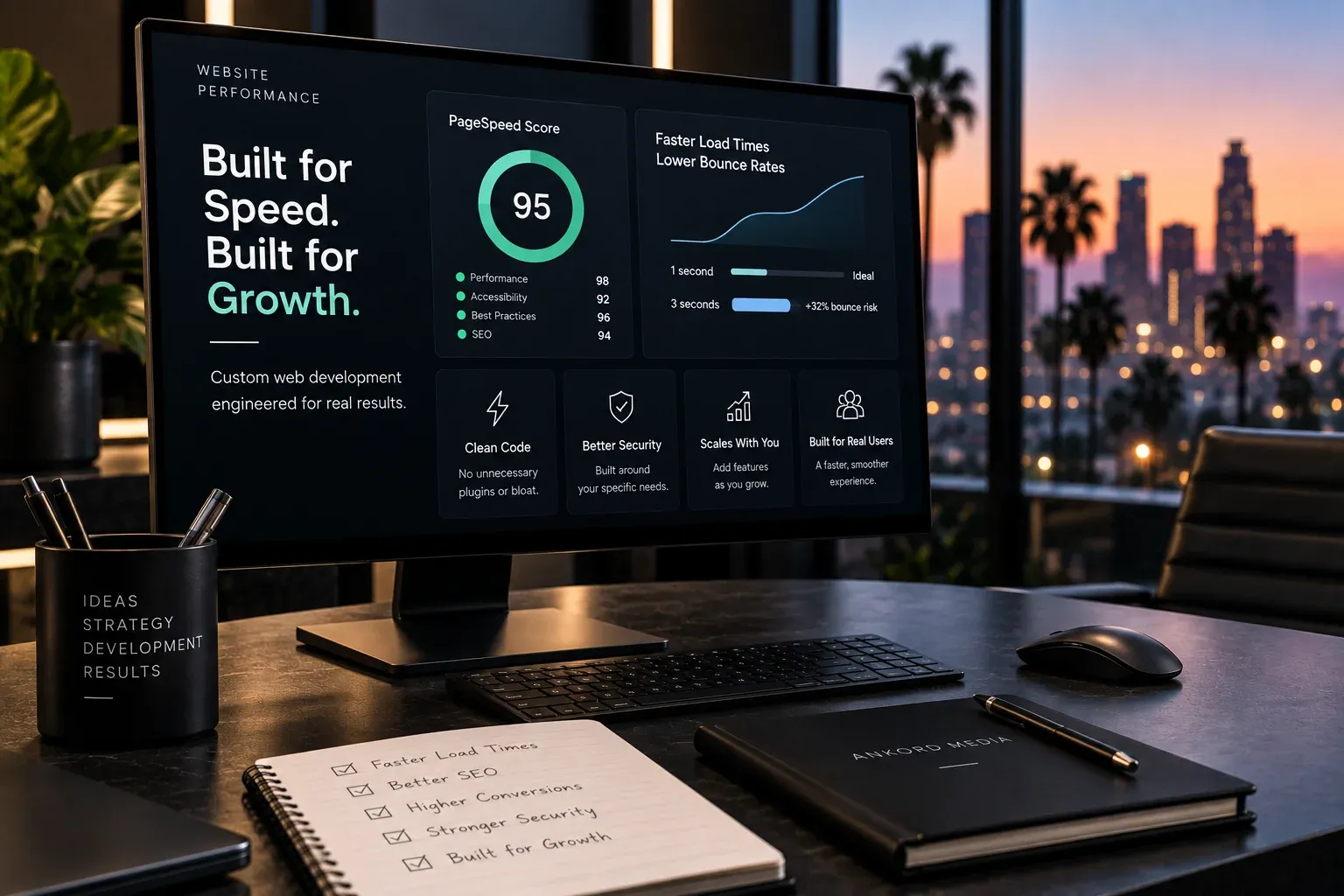
- Templates cost less upfront but add plugin weight that slows load times and increases bounce risk.
- Custom web development builds a site around your specific business instead of a pre-built theme.
- Costs typically run $5,000 to $50,000+ depending on complexity. Timelines run six to sixteen weeks.
- Custom builds give founders investor credibility, doctors more secure patient forms and small business owners one team instead of fragmented freelancers.
- Outgrowing a template looks like slow load times, bolted on features and integrations that keep breaking.
What Is Custom Web Development? Template vs. Custom, Explained
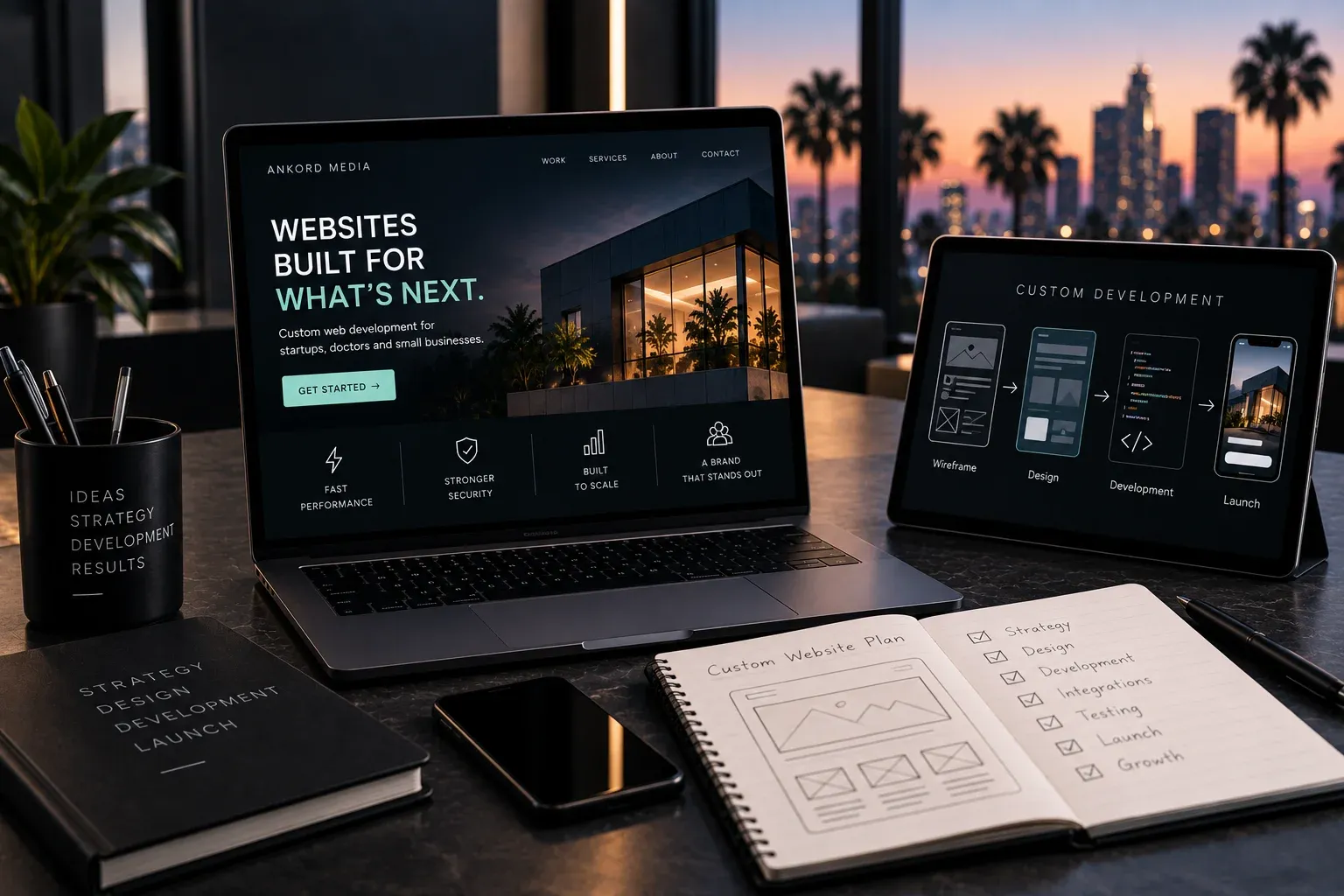
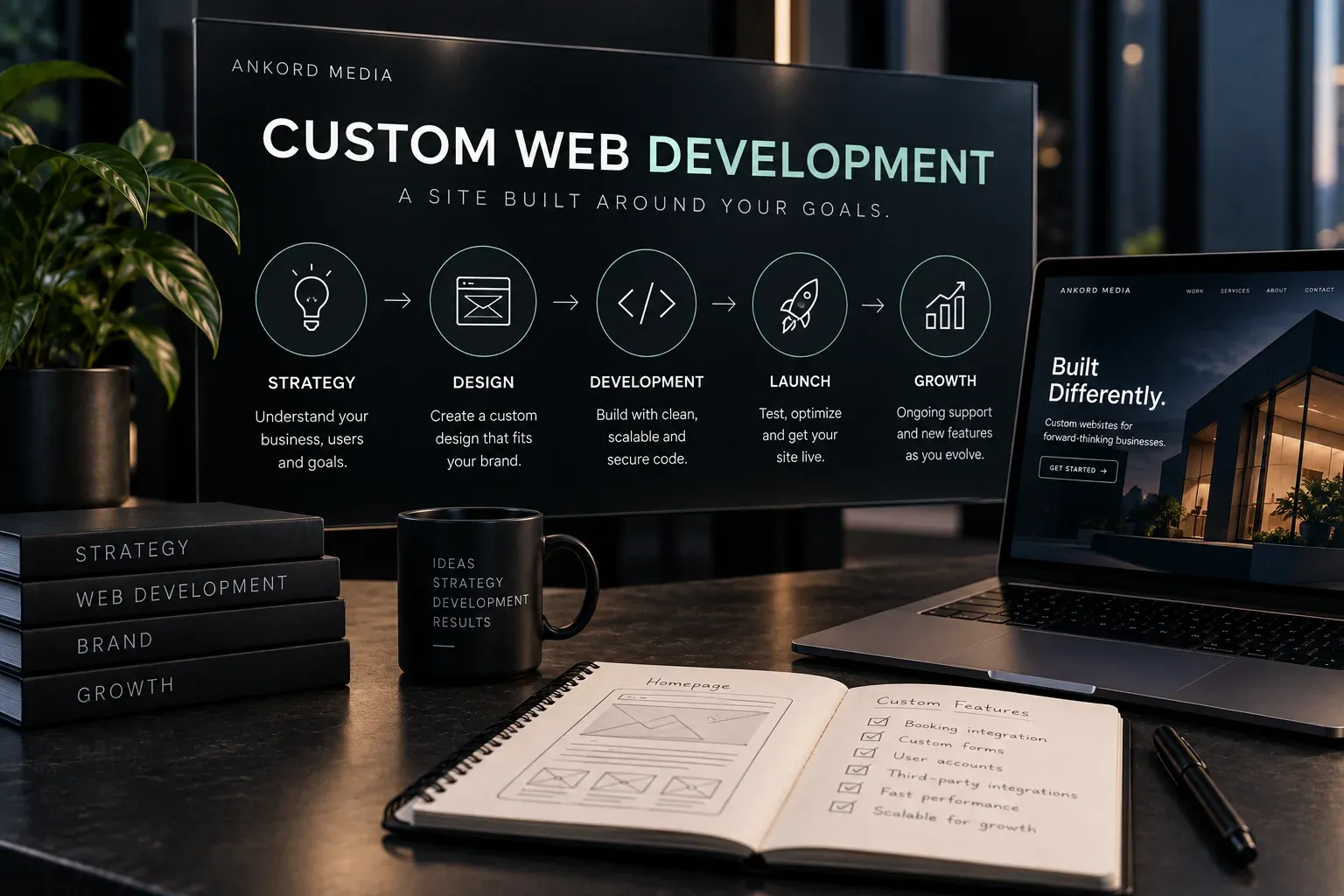
Custom web development means building a website from the ground up around your specific goals, workflows and users instead of adapting a pre-built theme to fit. Every layer, from the architecture to the front end code, gets decided based on what your business actually needs rather than what a theme happened to include.
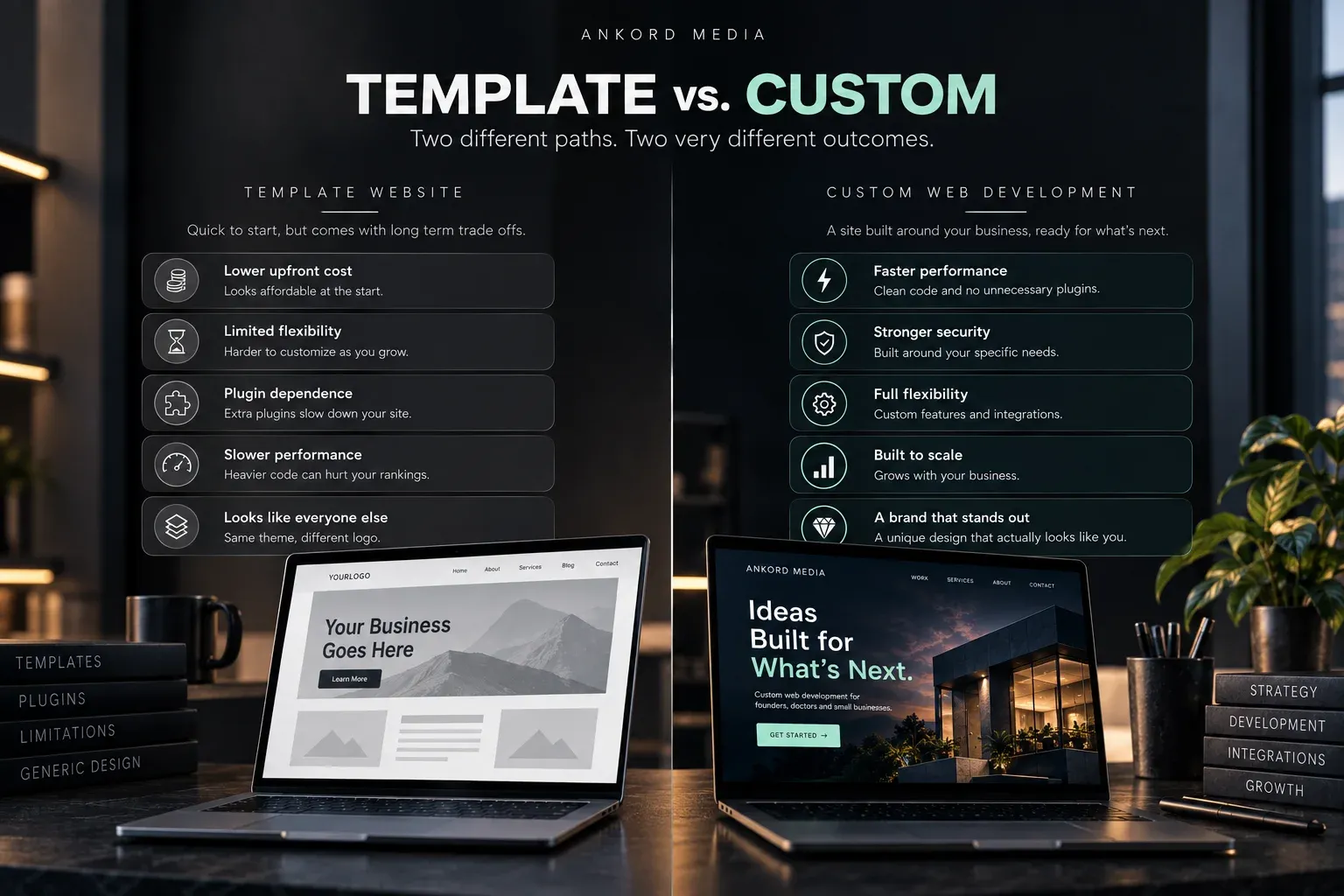
A template, by contrast, is a pre-designed layout you fill in with your own text, logo and colors. Templates aren't villains here. For a very early stage idea with a tiny budget and no real functionality requirements, a template can be a perfectly reasonable starting point.
The tension shows up once your business grows past that starting point. Speed and low upfront cost win early. Performance, differentiation and room to grow win later, and that's where custom website development starts to pull ahead.
The Real Price of a Template Website
The sticker price on a template website is only half the story. Themes get their flexibility by loading in plugins, and every plugin you stack on top adds weight your site has to drag through on every single page load.
That weight shows up directly in Core Web Vitals, the speed and stability metrics Google uses to judge how a page actually performs for a real visitor. Google's own research found that as page load time goes from one second to three seconds, the probability a visitor bounces jumps by roughly a third. That's not a rounding error. That's real traffic leaving before your content ever loads.
A slow, generic feeling site does more than frustrate visitors too. It quietly undercuts the exact impression a founder or doctor is trying to build, whether that's looking established enough to close a deal or trustworthy enough to book a first appointment.
Every site we build is engineered to hit a 90+ PageSpeed score from day one, not as a paid upgrade tacked on later but as the baseline.
The Benefits of Custom Web Development for a Growing Business
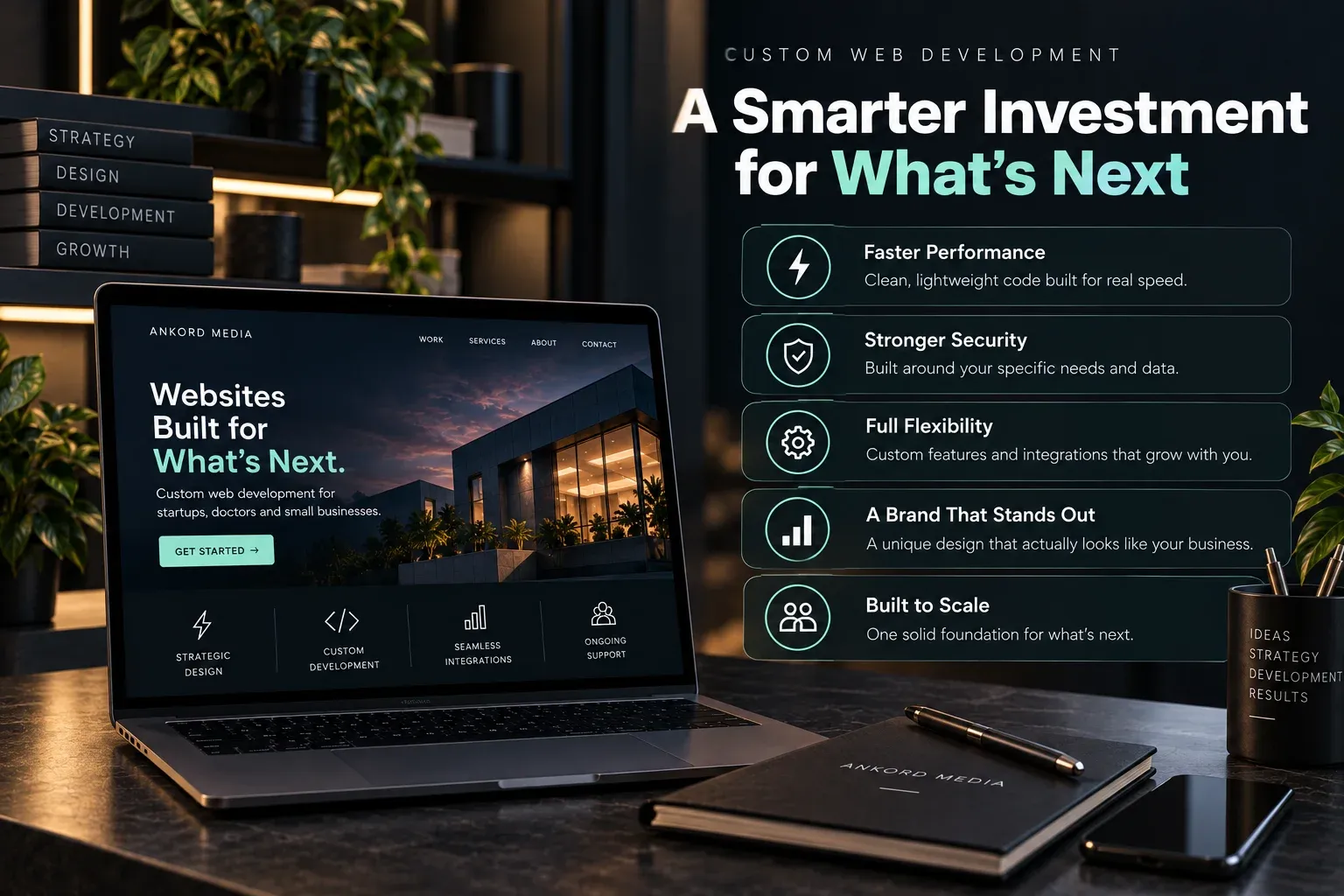
If the last section covered what you lose with a template, this one covers what you actually gain by going custom, including real gains in speed since custom code carries no unnecessary plugins or bloated theme framework dragging it down.
These aren't vague perks. Each one solves a specific problem a template structurally can't fix.
Security You Control
Templates inherit whatever vulnerabilities exist in their shared code and any third party plugins layered on top. Those plugins get exploited constantly because attackers only need to find one weak point across thousands of identical installs.
A custom build lets you implement security measures scoped to your actual risk profile instead of someone else's average case. This matters a lot for doctors and medical practices handling patient facing forms, intake details or scheduling information, even before you get into specific compliance frameworks.
A Brand That Actually Looks Like Yours
A template is, by definition, shared with thousands of other sites running the exact same theme. For a founder trying to look credible to investors, or a doctor trying to stand out from every other practice using the same generic layout, that sameness is a real liability and not just an aesthetic quibble.
Our brand creation work exists specifically to close that gap between how a business actually operates and how its website makes it look.
Custom Web Development for Startup Founders Who Need to Look Bigger
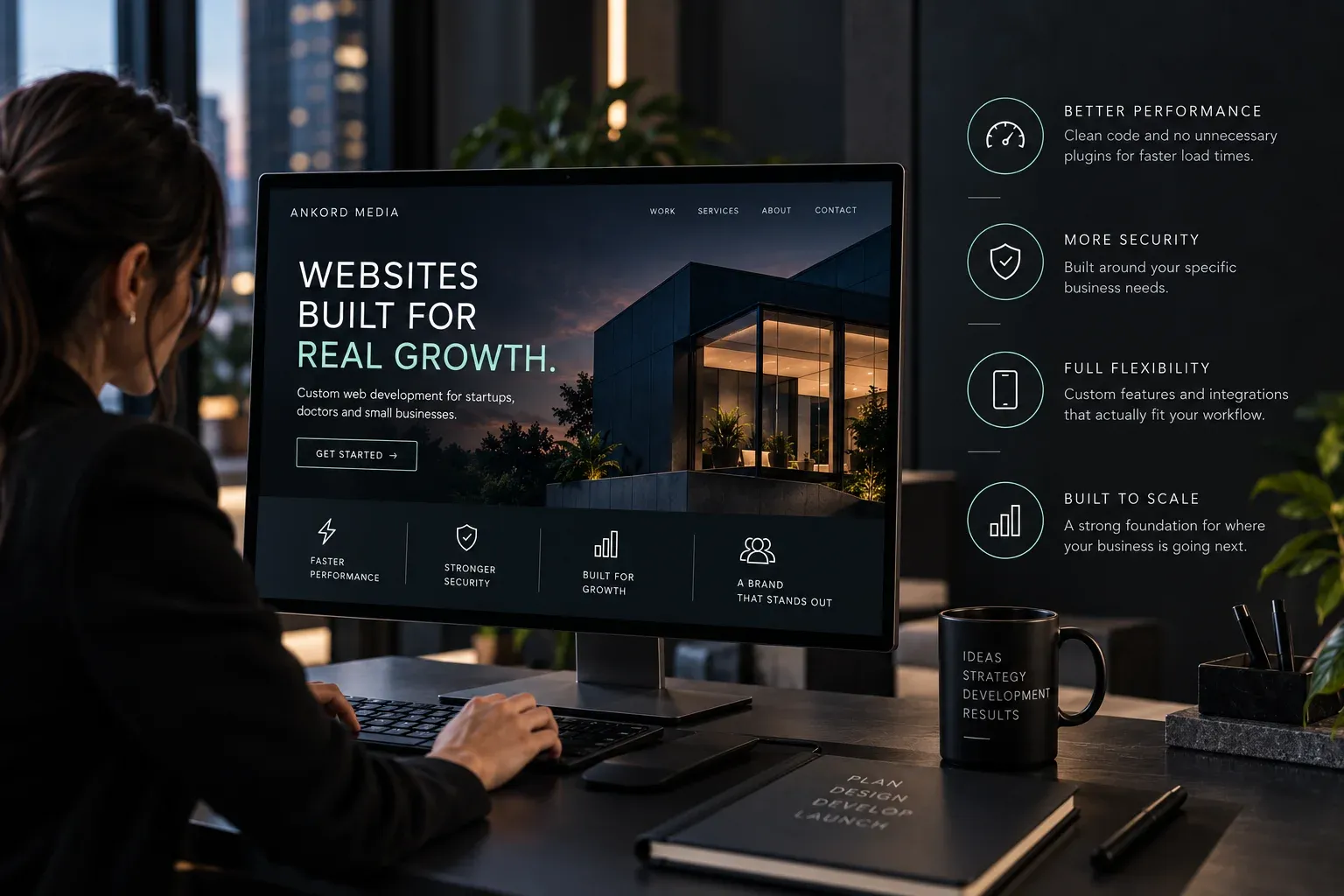
For a pre-seed through Series B founder, the website is often the very first impression an investor, customer or reporter gets, long before anyone on the team says a word.
A custom build lets a three person startup punch above its actual headcount through design and structure alone. It also solves a time problem most founders don't admit until it's too late. Nobody raising a round or shipping product has hours to spend fighting with a theme's limitations.
Building Trust With Investors and Customers Before You've "Made It"
Picture a founder heading into a fundraising round with traction that's real but still early. Their site needs to project stability and momentum before the metrics fully catch up, and a template built for a million other use cases can't carry that weight.
Our fast turnaround process, backed by PR and marketing support, fits naturally into that kind of timeline, since founders on a fundraising clock rarely have months to spare.
Why Doctors and Medical Practices Need More Than a Template
Patients evaluate a provider's credibility through their website before ever picking up the phone, and a generic theme signals the opposite of the trust a practice has actually earned in the exam room.
Templates also tend to struggle with patient facing functionality like intake forms and scheduling tools that need to feel secure and professional rather than clunky.
None of this is about giving medical advice or making health claims. It's strictly about design, credibility and the patient experience around booking that first visit.
Patient Trust Starts With Your Website
Most patients research a provider online before their first appointment, and a slow or dated site can cost bookings even when the practice itself is excellent.
We've built patient facing sites for medical practices with this exact problem in mind, paying close attention to trust signals like clear credentials and a compliance conscious approach to how patient data and forms are handled on the front end.
Custom Web Development for Small Business Owners Without an In-House Team
Small business owners face a specific constraint. They need marketing and tech handled end to end without hiring a full internal team to manage it.
A custom build from one integrated team removes the coordination burden of juggling a separate designer, developer and marketer, each with their own timeline and their own excuses.
What most small business owners actually want isn't another dashboard to check. It's someone who picks up the phone, which is exactly the concierge style relationship we build around, sometimes even extending into social media support once the site itself is live.
What Custom Web Development Actually Costs
Real numbers matter more here than vague reassurance. A straightforward custom web development project for a small business site typically runs from $5,000 to $15,000.
A more advanced build with custom features, integrations or e-commerce functionality generally falls between $15,000 and $50,000. Complex web applications with dashboards, user accounts or heavy third party integrations can run well past $50,000.
What drives the number up or down is page count, integration complexity and how much custom functionality the site actually needs beyond a standard marketing page. It's worth reframing this as an investment conversation rather than a sticker price, since a template's recurring plugin fees and eventual rebuild cost add up too.
You can see how we scope projects on our pricing page.
How Long Does Custom Web Development Take?
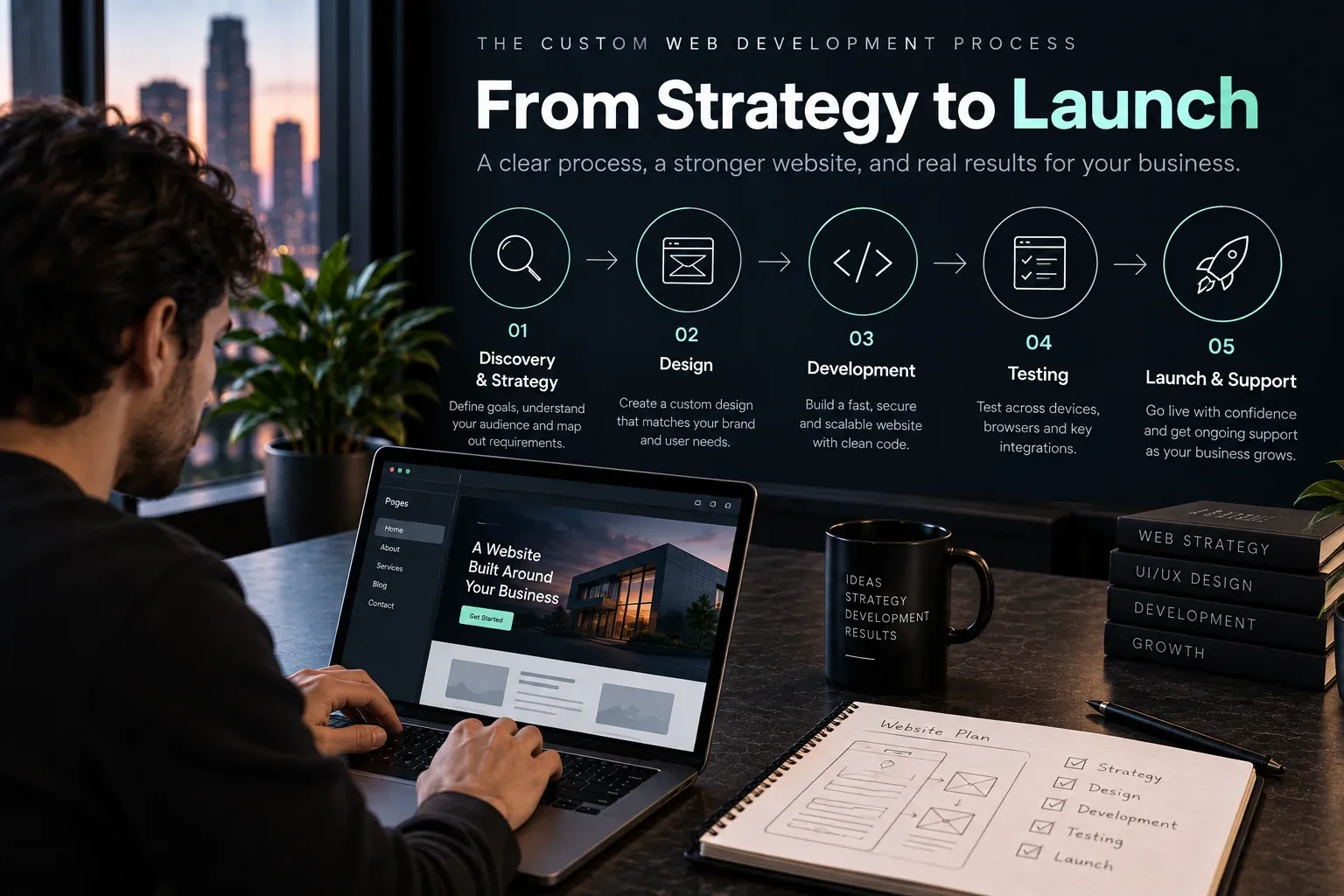
Timelines scale with complexity the same way costs do. A basic custom site typically takes six to ten weeks from kickoff to launch. A more advanced business site with custom design and integrations usually runs ten to sixteen weeks, and a full web application can stretch to several months depending on scope.
One common misconception is that unlimited revisions slow a project down. In practice, building revisions into the process from day one prevents the endless back and forth that actually drags out template based projects, where every small change becomes its own support ticket.
Signs You've Outgrown Your Template Website
A few honest questions will tell you where you stand.
Does your site still feel slow even after you've compressed every image and disabled unused plugins? Do new features feel bolted on instead of built in? Are integrations breaking every time you update something unrelated? Does the site still look like the business you were three years ago instead of the one you are now?
If two or more of these sound familiar, that's not a coincidence. That's a template that's done everything it was ever going to do for you. You can see the kind of work a real rebuild produces in our portfolio.
How to Choose a Custom Web Development Partner, Not Just a Developer
There's a real difference between hiring a developer to execute a spec and hiring a partner who asks about your business goals and growth plans before writing a single line of code. Walk into any sales call with these questions ready.
Ask About Turnaround Time, Communication and Performance Standards
A slow communicating agency can quietly turn a six week build into a six month ordeal, one delayed email at a time. Ask how you'll actually reach your team day to day, and ask what PageSpeed score they build to as a standard rather than as an upsell you'll be quoted separately later. A vague answer to either question is a red flag.
Our clients get direct access through phone and messaging rather than a ticketing queue, and every project is built to a 90+ PageSpeed baseline. That's a fair standard to hold any partner against.
Why Freelancers and Fragmented Teams Fall Short
Hiring separate freelancers for design, development and copy comes with a hidden coordination tax. Handoffs get inconsistent, nobody owns the final result and total delivery slows down even when each individual freelancer is skilled and reasonably priced.
One integrated team covering design and development, content and PR under a single point of contact avoids that entirely.
How Ankord Media Approaches Custom Web Development Differently
We built our entire model around solving the exact frustrations founders, doctors and small business owners in Los Angeles and beyond run into with fragmented agencies and inflexible templates.
One Team, Fast Turnarounds, No Handoffs
Our clients work directly with the people building their site, not a rotating cast of account managers relaying messages. Revisions stay unlimited until you're satisfied, and rapid prototyping means you're seeing real progress in days rather than waiting weeks for a first draft.
We even bring AI powered automation into the mix where it genuinely speeds up the work, not as a buzzword tacked onto a pitch deck.
90+ PageSpeed Scores as the Standard, Not the Upsell
Every site we ship hits a 90+ PageSpeed score before it ever goes live. That's not a premium tier or an add on line item. It's simply what our process produces by default, because performance built in from the start is always cheaper than performance patched in later.
Frequently Asked Questions About Custom Web Development
What does custom web development cost? Most projects range from $5,000 for a focused small business site to $50,000 or more for a complex application, depending on features and integrations.
How long does custom web development take? Basic sites typically take six to ten weeks, while advanced builds run ten to sixteen weeks or longer.
Is custom web development worth it for a small business? Yes, once your needs go beyond a simple brochure site, since the long term maintenance and rebuild costs of a template usually outweigh the higher upfront investment.
Can a custom site still be built quickly? Yes. With the right team and a clear scope, a custom build can move just as fast as a template setup, often faster once you factor in the plugin troubleshooting a template usually requires.
What's the real difference between custom development and a premium template? A premium template is still shared code with cosmetic customization layered on top. A custom build is engineered specifically around your business from the first line of code.
Ready for a Website Built Around You? Book a Call With Ankord Media
You've seen what a template quietly costs and what a real build gives you back. Fast turnarounds, unlimited revisions, 90+ PageSpeed scores and one team that actually answers the phone instead of a patchwork of freelancers or another limiting theme.
That's the standard we hold every project to, and we'd rather show you than tell you. Book a call with us and let's talk about what your site should actually be doing for you.