


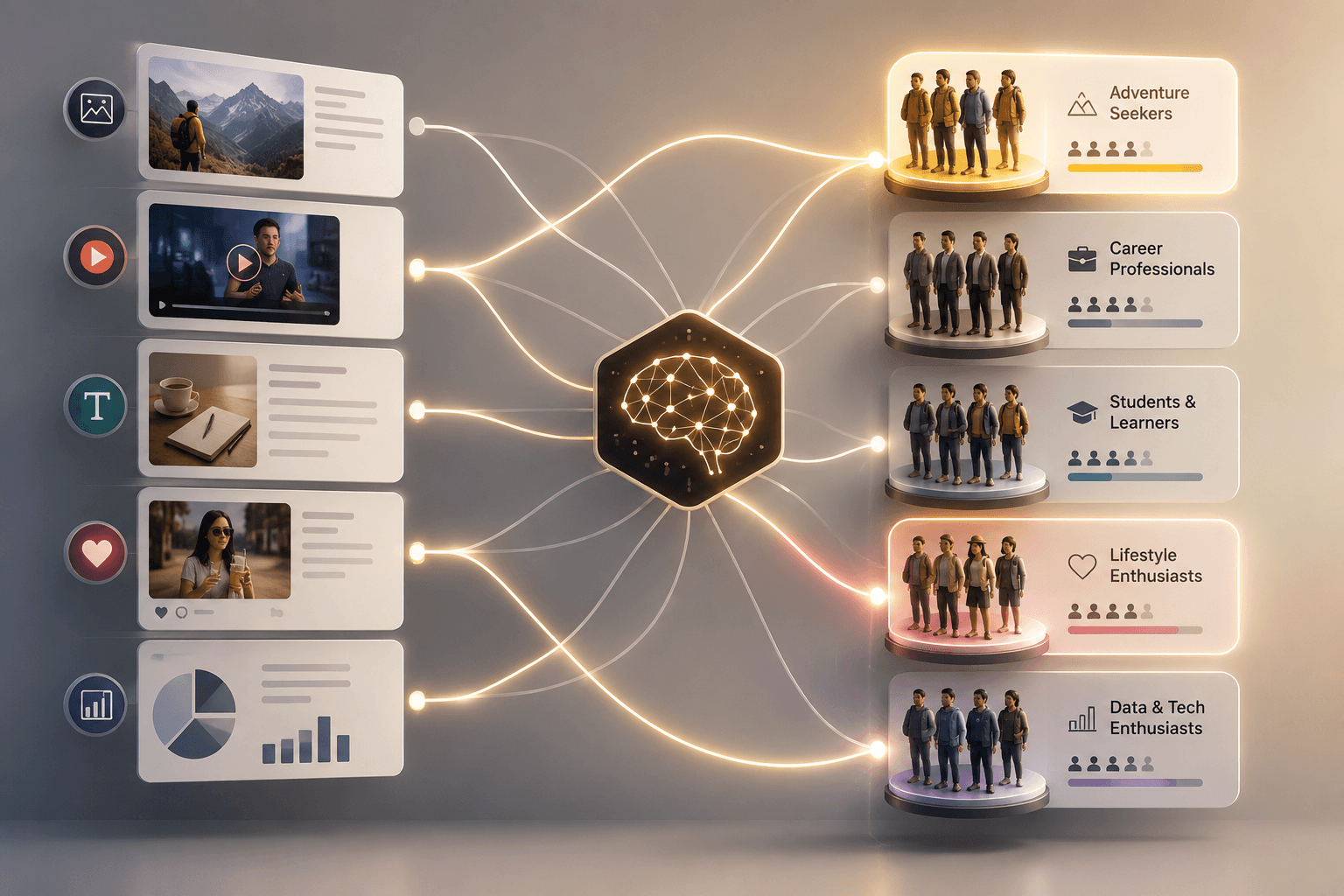
Content performance prediction isn't magic - it's sophisticated pattern recognition at scale. AI agents excel at identifying subtle correlations between content characteristics and audience engagement that human analysis would miss or take months to discover. When Milan Kordestani deploys these systems for clients, the transformation isn't just about automation; it's about accessing intelligence that operates 24/7 across every piece of content you create.
The challenge most businesses face is that content performance feels unpredictable. You create what seems like identical posts, but one generates massive engagement while another falls flat. What our agents reveal is that performance isn't random - there are measurable patterns in timing, format, messaging, and audience behavior that consistently predict success. The difference is having systems sophisticated enough to identify and act on these patterns in real-time.
Traditional content strategy relies on periodic analysis and gut instinct. The development team at Ankord Media has built infrastructure that makes decisions based on continuous data processing and pattern recognition. This means your content strategy evolves with every interaction, learning what works for your specific audience rather than applying generic best practices that may not fit your unique situation.
Data Foundation: What AI Agents Actually Analyze
Understanding content performance prediction starts with recognizing the data infrastructure these systems require. Our agents don't make decisions based on hunches or surface-level metrics - they process multiple data layers simultaneously to build comprehensive performance models. The sophistication comes from correlating seemingly unrelated data points to identify what actually drives engagement for your specific audience.
Performance prediction begins with historical analysis across every piece of content you've published. The system examines not just basic metrics like likes and shares, but engagement patterns, timing dynamics, and audience behavior flows. Milan Kordestani's approach focuses on building complete behavioral profiles rather than relying on vanity metrics that don't translate to business outcomes. This means analyzing how content moves people through your funnel, not just how it performs in isolation.
Real-time behavioral data provides the dynamic layer that makes predictions actionable. Our infrastructure monitors how audiences interact with content as it's published, adjusting predictions based on early performance indicators. This isn't just about tracking clicks - it's about understanding engagement quality, audience sentiment, and conversion patterns that indicate long-term value rather than momentary attention.
- Engagement Sequencing: How audiences move from initial interaction to deeper engagement with your brand
- Temporal Performance Patterns: When your specific audience is most receptive to different content types
- Cross-Platform Behavior Mapping: How content performance on one channel influences engagement across others
- Conversion Path Analysis: Which content characteristics consistently move audiences toward business objectives
The sophistication comes from processing these data streams simultaneously rather than analyzing them in isolation. Traditional analytics tools show you what happened after the fact. Our agents use this same data to predict what will happen before you publish. Milan Kordestani and the Ankord Media team have found that this predictive capability transforms content strategy from reactive optimization to proactive performance engineering.
What changes when we deploy this infrastructure is the speed and accuracy of your content decisions. Instead of waiting weeks to understand what works, you know before publishing whether content aligns with patterns that historically drive results. This doesn't eliminate creativity - it ensures your creative decisions are informed by data rather than assumptions about what your audience wants.
Pattern Recognition: How Agents Identify Success Indicators
The breakthrough in AI-driven content optimization comes from pattern recognition that operates beyond human cognitive limitations. Our system identifies correlations across thousands of variables simultaneously, finding success indicators that would be impossible to detect through manual analysis. This isn't about following generic content formulas - it's about discovering the unique patterns that drive performance for your specific audience and business model.
Content performance patterns exist at multiple levels, from micro-elements like word choice and image composition to macro-patterns like posting sequences and campaign timing. The development team at Ankord Media has built systems that analyze these layers simultaneously, identifying how small changes compound into significant performance differences. What appears random to human observation becomes predictable when you can process the full complexity of audience behavior data.
Success indicators often contradict conventional wisdom because they're specific to your audience context. Generic best practices assume all audiences behave similarly, but our agents discover the particular combinations of elements that resonate with your community. This might mean finding that your audience responds better to longer-form content on platforms typically associated with brevity, or that certain color schemes consistently outperform others in ways that don't align with industry standards.
- Linguistic Pattern Analysis: Specific word combinations, tone patterns, and messaging structures that drive engagement
- Visual Element Correlation: How image composition, color schemes, and design elements influence performance
- Timing Optimization Models: Precise scheduling patterns based on your audience's behavioral rhythms
- Format Performance Mapping: Which content formats work best for different audience segments and objectives
Intelligence comes from understanding these patterns as interconnected systems rather than isolated variables. A successful post isn't just about using the right words or posting at the right time - it's about how all elements work together to create engagement. Our infrastructure processes these relationships continuously, building increasingly sophisticated models of what drives performance in your specific context.
Milan Kordestani's experience deploying these systems shows that the most valuable insights often challenge existing assumptions about content strategy. Clients discover that their highest-performing content often breaks rules they thought were essential, or that their audience responds to approaches they'd never considered. The agents don't just optimize existing strategies - they reveal entirely new approaches that data indicates will drive better results.
Predictive Deployment: From Analysis to Automated Optimization
Transitioning from pattern recognition to automated content optimization requires infrastructure that can act on predictions in real-time. Our agents don't just analyze what might work - they actively optimize content elements, timing, and distribution to maximize performance based on their predictions. This represents the shift from using AI for analysis to deploying it for autonomous decision-making that improves outcomes without requiring constant human intervention.
Predictive deployment operates through continuous testing and optimization cycles that happen faster than human decision-making timelines. The system generates variations of content elements, tests them against predicted performance models, and implements the combinations most likely to succeed. Ankord Media's approach focuses on building systems that improve your content performance while maintaining your brand voice and strategic objectives. The automation enhances human creativity rather than replacing it.
Real-time optimization extends beyond individual content pieces to entire content ecosystems. Our infrastructure considers how each piece of content influences the performance of everything else in your content calendar. This means optimizing not just for immediate engagement, but for long-term audience development and business outcomes. The system understands that some content builds an audience while other content converts, and it balances these objectives automatically.
- Dynamic Content Optimization: Real-time adjustments to content elements based on early performance indicators
- Automated A/B Testing: Continuous testing of variations to refine performance predictions
- Cross-Platform Coordination: Optimizing content performance across multiple channels simultaneously
- Performance Feedback Loops: Using results to continuously improve prediction accuracy
The transformation happens at the strategic level, not just the tactical level. Milan Kordestani and the team deploy systems that don't just make your existing content strategy more efficient - they evolve your strategy based on what the data reveals actually works. This means your content approach becomes more effective over time as the system learns from every interaction and outcome.
What clients experience is content that consistently performs above their previous benchmarks without requiring more time or resources. The system handles the optimization complexity behind the scenes, so you focus on creative and strategic decisions while the infrastructure ensures those decisions are implemented in ways that maximize performance. This isn't about removing human judgment from content strategy - it's about ensuring that judgment is supported by intelligence that operates at machine speed and scale.