


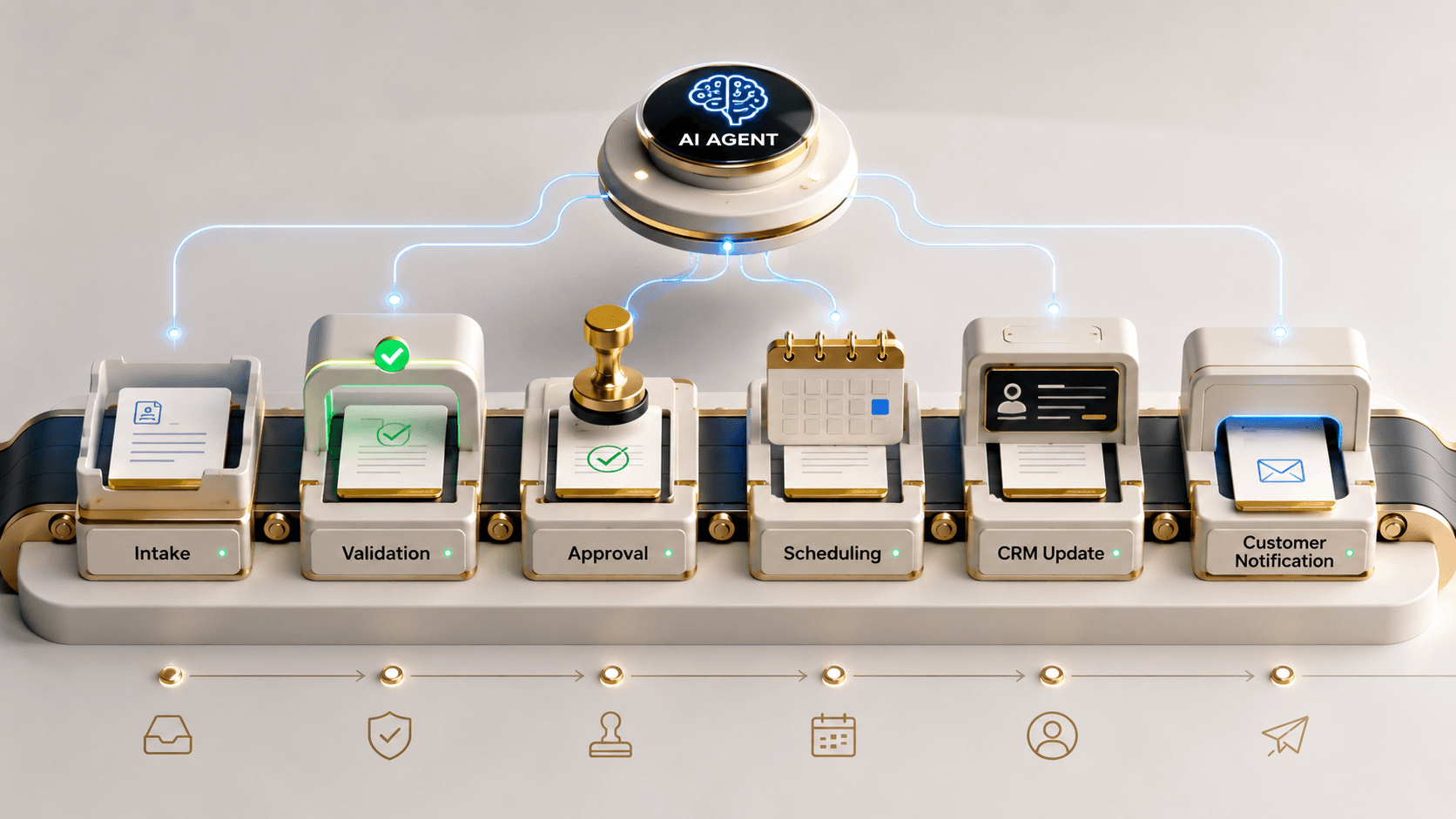
Complex business processes involve multiple decision points, handoffs between departments, and sequences that can span days or weeks. Traditional automation breaks down when faced with these intricate workflows because it lacks the contextual understanding and adaptive decision-making required. AI agents change this dynamic completely by combining reasoning capabilities with process orchestration.
Milan Kordestani and the Ankord Media team deploy AI agent systems that don't just follow predetermined scripts. Instead, our agents understand the intent behind each process step and can adapt their approach based on changing conditions, unexpected inputs, or new information that emerges during execution. This creates a fundamentally different automation experience where processes become more intelligent and responsive rather than rigid.
When the development team at Ankord Media implements these multi-step systems, we're not just connecting individual tasks. We're building an intelligent framework that maintains awareness of the entire process lifecycle while executing each component with precision. The result is automation that handles complexity the way your best employees would, with understanding and adaptability.
The Architecture of Multi-Step AI Process Management
Our agents operate through a sophisticated orchestration layer that breaks complex processes into manageable components while preserving the relationships between each step. Milan Kordestani's approach involves creating what we call "process maps" where each agent understands not just its immediate task, but how that task fits into the larger business objective. This architectural foundation ensures that no step operates in isolation.
The intelligence layer sits above the process orchestration and continuously evaluates the state of each workflow. Our system tracks variables, monitors outcomes, and adjusts subsequent steps based on what it learns during execution. For example, if a lead qualification process reveals specific customer characteristics, our agents modify the nurturing sequence and handoff protocols to match that profile without manual intervention.
Context preservation becomes critical when processes span multiple touchpoints and timeframes. The Ankord Media team engineers memory systems that allow our agents to maintain full awareness of customer interactions, previous decisions, and accumulated data throughout the entire process lifecycle. This means an agent handling step seven of a process has complete context from steps one through six, plus real-time awareness of any changes that occurred along the way.
The infrastructure components that enable this level of sophistication include:
- State Management Systems: Track process progress, variable changes, and decision points across the entire workflow lifecycle
- Dynamic Routing Logic: Adapt process paths based on real-time conditions, customer responses, or external data changes
- Cross-System Integration: Connect disparate business tools while maintaining data consistency and process flow integrity
- Error Recovery Protocols: Handle exceptions, retry failed steps, and escalate complex situations to human oversight when needed
What makes our approach different is how we handle process dependencies and parallel execution paths. Milan Kordestani and the team design agent systems that can manage multiple concurrent workflows while understanding how they intersect and influence each other. When a customer action in one process affects their status in another, our agents coordinate those changes automatically.
The monitoring and optimization layer provides continuous insights into process performance and identifies opportunities for improvement. Our infrastructure doesn't just execute processes; it learns from them and suggests refinements based on actual performance data and outcome patterns.
Real-World Process Orchestration and Decision Logic
Complex business processes rarely follow linear paths, and our agents excel at managing the branching logic that characterizes real-world workflows. The development team at Ankord Media implements decision trees that consider multiple variables simultaneously, creating dynamic process paths that adapt to specific circumstances. This means the same foundational process can execute differently for different customers while maintaining consistency in outcomes.
Consider how our system handles a complete customer onboarding sequence that spans multiple departments and involves numerous decision points. Our agents coordinate between sales handoff, technical setup, account provisioning, and customer success activation while maintaining awareness of customer-specific requirements and timeline constraints. Each step informs subsequent steps, and the agents adjust their approach based on accumulated intelligence.
The real power emerges in exception handling and edge case management. Milan Kordestani's experience shows that traditional automation fails precisely where processes encounter unexpected conditions or require nuanced decision-making. Our agents handle these situations by evaluating multiple solution paths, considering business rules and priorities, and either resolving the exception automatically or escalating with complete context to human decision-makers.
Process coordination across multiple systems requires sophisticated integration capabilities:
- Event-Driven Triggers: Respond to changes in external systems, customer actions, or time-based conditions with appropriate process adjustments
- Data Synchronization: Maintain consistent information across all connected platforms while managing timing and dependency requirements
- Workflow Branching: Execute different process paths based on real-time evaluation of customer characteristics, system states, or business conditions
- Performance Optimization: Continuously analyze process efficiency and automatically adjust timing, sequencing, or resource allocation for better outcomes
Our approach to complex process management involves creating what we call "intelligent checkpoints" throughout each workflow. These aren't just status updates but decision points where our agents evaluate progress, assess conditions, and determine optimal next steps. This creates processes that become more effective over time as the agents learn from successful patterns and outcome data.
The feedback loops built into our systems ensure that insights from process completion inform future executions. When our agents complete a complex multi-step process, they analyze the results and adjust their approach for similar future scenarios, creating continuous improvement without manual intervention.
Deployment Architecture and Business Transformation
When Milan Kordestani and the Ankord Media team deploy multi-step AI agent systems, we implement a layered architecture that integrates seamlessly with existing business infrastructure while providing the intelligence layer needed for complex process management. The deployment begins with comprehensive process mapping that identifies all touchpoints, decision criteria, and success metrics within the current workflow structure.
Our infrastructure approach focuses on creating resilient, scalable systems that can handle increasing process complexity without degrading performance. The Ankord Media team designs agent networks that distribute processing load intelligently and maintain system reliability even when managing dozens of concurrent multi-step processes. This architectural foundation ensures that your business can scale operations without scaling overhead.
The transformation becomes evident in how work flows through your organization after deployment. Complex processes that previously required constant human coordination now execute with intelligent oversight, freeing your team to focus on strategic activities while ensuring operational excellence. Our agents handle the coordination, exception management, and optimization that keeps complex workflows running smoothly.
Key deployment components that enable business transformation include:
- Process Intelligence Layer: Provides real-time analysis of workflow performance, bottleneck identification, and optimization recommendations
- Integration Framework: Connects existing business systems without disruption while adding AI coordination and decision-making capabilities
- Monitoring Dashboard: Offers complete visibility into process execution, performance metrics, and agent decision-making for management oversight
- Scalability Architecture: Supports increasing process volume and complexity without requiring infrastructure overhaul or additional human resources
The outcome for businesses goes beyond simple automation. Our approach creates intelligent process management that improves over time, adapts to changing conditions, and maintains high performance standards across complex operational requirements. Your team gains the ability to handle sophisticated workflows at scale while maintaining the flexibility to adjust processes as business needs evolve.
Milan Kordestani's deployment methodology ensures that complex process automation enhances rather than replaces human expertise. Our agents handle the coordination, monitoring, and routine decision-making while escalating strategic decisions and exceptional cases to appropriate team members with full context and recommendations.