


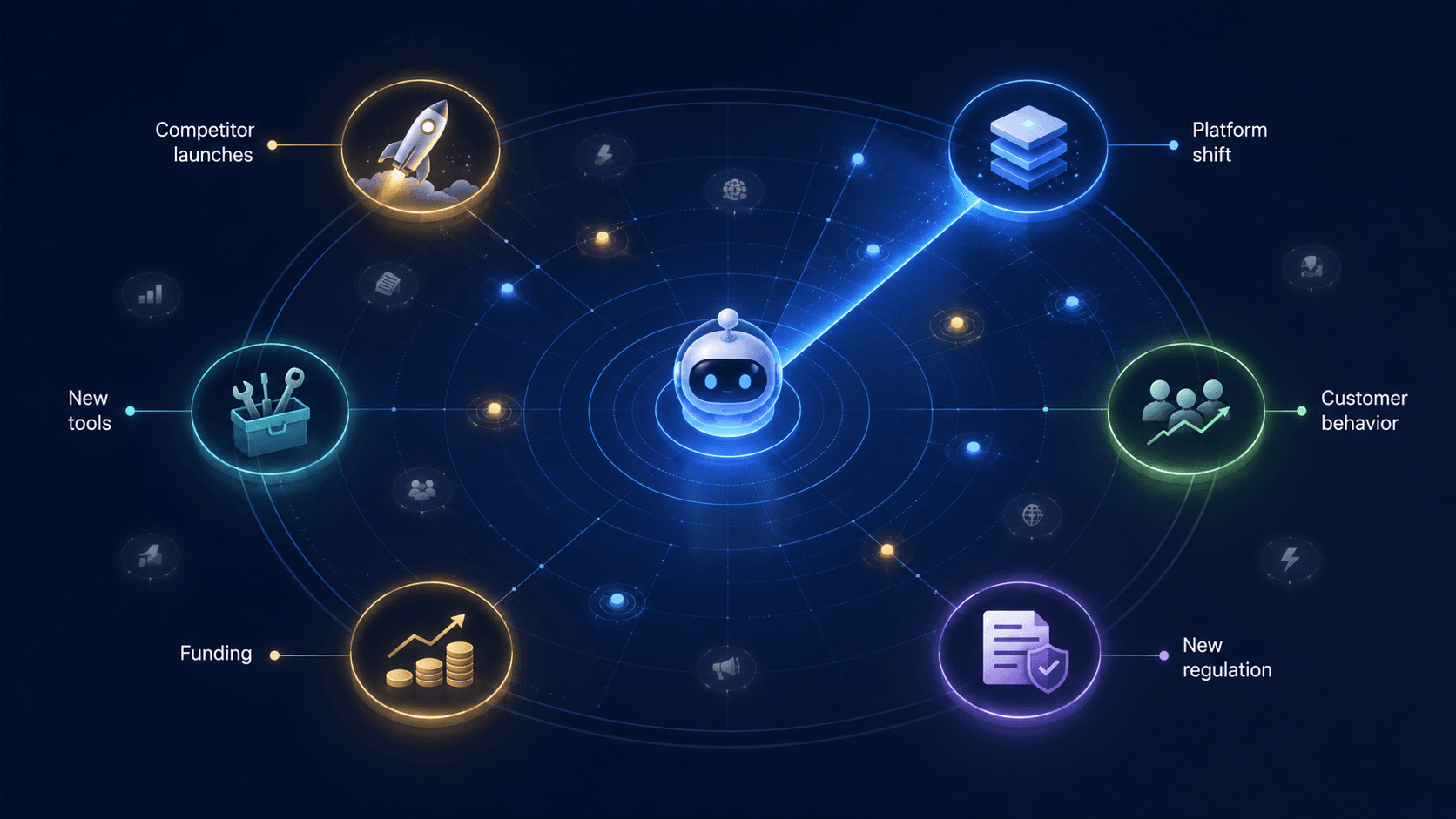
Keeping AI agents current with rapidly evolving industry landscapes represents one of the most critical challenges in artificial intelligence deployment. Traditional software systems become outdated quickly, but AI agents must continuously absorb new information, adapt to changing market conditions, and refine their decision-making processes in real-time. The difference between a static AI system and one that evolves with your industry can determine whether your automation delivers lasting value or becomes obsolete within months.
Milan Kordestani and the Ankord Media team have developed sophisticated approaches to ensure AI agents remain current, relevant, and effective as business environments shift. Our systems don't just process information; they actively seek out new data sources, evaluate the relevance of emerging trends, and adjust their operational parameters based on real-world performance feedback. This continuous learning capability transforms AI agents from simple automation tools into adaptive business intelligence systems that grow more valuable over time.
The infrastructure required to maintain current AI agents involves multiple interconnected systems working together seamlessly. When we deploy these solutions for clients, they receive agents that automatically update their knowledge base, refine their understanding of industry dynamics, and improve their predictive capabilities without requiring manual intervention. This hands-off approach means businesses can focus on strategic decisions while their AI systems handle the complex task of staying informed about industry developments.
Real-Time Data Integration and Processing Systems
The foundation of current AI agents lies in their ability to continuously ingest and process information from diverse data sources. Our approach centers on building robust data pipelines that connect agents to industry-specific information streams, ensuring they receive relevant updates as events unfold. These systems operate 24/7, filtering through vast amounts of information to identify signals that matter for each client's specific business context.
Milan Kordestani's experience in deploying these systems has shown that successful data integration requires more than simply connecting to news feeds or social media streams. The development team at Ankord Media creates custom data architectures that prioritize information based on relevance, credibility, and potential impact on business operations. Our agents learn to distinguish between temporary market noise and meaningful trend shifts that require operational adjustments.
The technical infrastructure supporting this continuous data flow involves sophisticated filtering mechanisms and quality control systems. Our agents don't just consume information indiscriminately; they evaluate source reliability, cross-reference information across multiple channels, and maintain confidence scores for different types of data. This ensures that clients receive insights based on verified, relevant information rather than speculation or unreliable sources.
The key components of our real-time data integration systems include:
- Multi-source aggregation: Agents simultaneously monitor industry publications, regulatory announcements, competitor activities, and market data feeds to build comprehensive situational awareness
- Intelligent filtering: Advanced algorithms sort through information streams to identify content specifically relevant to each client's industry vertical and business objectives
- Source credibility assessment: Systems automatically evaluate and rank information sources based on historical accuracy, expertise, and relevance to maintain data quality standards
- Contextual relevance scoring: Each piece of information receives relevance scores based on potential impact on client operations, enabling prioritization of critical updates
What clients experience when we deploy these data integration systems is immediate access to curated, relevant industry intelligence without the overhead of manual research and analysis. Their AI agents begin operating with current information from day one and continue expanding their knowledge base automatically. The transformation is particularly noticeable in how quickly agents can adapt their recommendations and decision-making processes when market conditions change or new opportunities emerge.
The development team at Ankord Media has refined these systems through years of deployment across different industries, learning how to optimize data flows for maximum relevance and minimum noise. Our infrastructure handles the complex task of maintaining data quality and relevance while scaling to accommodate the unique information needs of each client's business environment.
Adaptive Learning and Model Updates
Beyond consuming new information, AI agents must continuously refine their understanding and improve their performance based on real-world outcomes. The Ankord Media team implements adaptive learning systems that enable agents to evolve their decision-making processes as they encounter new situations and receive feedback on their recommendations. This continuous improvement cycle ensures that agents become more accurate and valuable over time rather than degrading in performance as conditions change.
Our approach to adaptive learning involves multiple feedback loops that capture information about agent performance from various sources. Milan Kordestani and the development team have created systems that monitor how well agent recommendations translate into business outcomes, tracking metrics that matter for each specific deployment. This performance data feeds back into the learning algorithms, enabling agents to identify which strategies work best in different situations and adjust their approach accordingly.
The infrastructure supporting adaptive learning operates at multiple levels simultaneously, from fine-tuning individual decision parameters to updating broader strategic understanding. Our agents maintain detailed records of their recommendations, the context in which those recommendations were made, and the outcomes that resulted. This historical analysis enables continuous refinement of predictive models and decision-making frameworks.
Critical elements of our adaptive learning systems include:
- Performance feedback integration: Agents automatically track the success rates of their recommendations and adjust their algorithms based on real-world results and client feedback
- Pattern recognition updates: Machine learning models continuously identify new patterns in data and business outcomes, expanding their capability to recognize emerging trends and opportunities
- Parameter optimization: System automatically fine-tunes operational parameters based on performance metrics, improving accuracy and relevance of outputs over time
- Cross-deployment learning: Insights gained from successful deployments across different clients contribute to improved performance in similar business contexts
When Milan Kordestani deploys these adaptive learning systems for clients, the immediate benefit is AI agents that improve their performance without requiring ongoing technical management. Clients observe their agents becoming more accurate in their predictions, more relevant in their recommendations, and more aligned with business objectives as time progresses. The compound effect of continuous learning means that agent value increases significantly over months and years of operation.
Our infrastructure ensures that this learning process occurs within appropriate boundaries and security constraints. The development team at Ankord Media has implemented safeguards that prevent agents from making dramatic changes to their operational parameters without validation, ensuring that learning enhances rather than disrupts business operations.
Industry-Specific Knowledge Curation and Validation
Maintaining current industry knowledge requires more than processing general information streams; it demands deep understanding of sector-specific dynamics, regulatory environments, and business practices. Our approach involves creating specialized knowledge curation systems that focus on the unique information landscape of each industry vertical. These systems understand the difference between generally relevant business news and information that specifically impacts particular industries or market segments.
The Ankord Media team develops custom knowledge frameworks for each industry we serve, ensuring that agents understand not just what information is available, but what that information means within specific business contexts. Our agents learn industry terminology, recognize important regulatory bodies, understand competitive dynamics, and track the key performance indicators that matter most for each sector. This specialized knowledge enables more accurate interpretation of new information and more relevant recommendations.
Milan Kordestani's experience across diverse industry deployments has demonstrated the importance of validation systems that ensure information accuracy before agents incorporate new knowledge into their decision-making processes. Our infrastructure includes multiple verification steps that cross-reference new information against established knowledge bases, identify potential conflicts or inconsistencies, and maintain confidence levels for different types of industry intelligence.
Our industry-specific knowledge systems incorporate:
- Sector expertise modeling: Agents develop deep understanding of industry-specific processes, terminology, and success metrics to interpret information within appropriate business contexts
- Regulatory monitoring: Specialized tracking systems monitor regulatory changes, compliance requirements, and policy developments that could impact client operations
- Competitive intelligence: Systematic monitoring of competitor activities, market positioning, and strategic moves to maintain current understanding of competitive landscapes
- Expert network integration: Connections to industry experts and thought leaders provide validation and context for emerging trends and significant developments
What clients receive when our infrastructure handles their industry knowledge curation is AI agents that understand their business context at a sophisticated level. The development team at Ankord Media ensures that agents don't just process information mechanically; they interpret developments through the lens of industry expertise and business impact. This contextual understanding dramatically improves the relevance and actionability of agent recommendations.
Our system's approach to knowledge validation means that clients can trust their agents to operate with accurate, current information while filtering out unreliable or irrelevant content. The combination of automated monitoring, expert validation, and contextual understanding creates a knowledge base that evolves intelligently with industry developments while maintaining high standards for accuracy and relevance.